

Blockchain, Smart Contracts and Tokenization
This blog traces blockchain's journey from Bitcoin's 2008 debut through smart contracts on Ethereum and tokenization's rise with ICOs, STOs, and NFTs. Developers and business leaders gain insights into use cases across DeFi and industries, plus future hurdles…
Navigating Regulatory Challenges for Tokenized Real-World Assets
This blog guides blockchain businesses and investors through regulatory hurdles for tokenized real-world assets like real estate and commodities. It details rules in the US, EU's MiCA, Asia-Pacific, plus best practices and SecureDApp tools for AML, audits, and…
Why Invest in Tokenized Real-World Assets? Key Benefits and Opportunities
This blog outlines why tokenized real-world assets like real estate, art, and commodities attract investors through liquidity, fractional ownership, transparency via blockchain, and global access. Retail and institutional investors discover diversification benefits, cost savings from smart contracts, market…

Unlocking the Potential: The Business Perspective of Tokenization
This blog examines tokenization's business impact, covering regulatory frameworks like EU's MiCA, US SEC rules, and Canada's OSC guidance. Business leaders explore tech innovations such as smart contracts and interoperability, plus applications in real estate, art, supply chain,…

Blockchain Technology and Smart Contracts: Transforming Business and Legal Landscapes
This blog explores blockchain's disruption via smart contracts that automate trust without intermediaries. Business and legal professionals uncover applications in finance and supply chains, regulatory compliance hurdles, auditing for security flaws, and tech challenges like scalability shaping the…
Top 5 Smart Contract Vulnerabilities in 2025 — And How to Avoid Them
This blog warns developers about 2025's top smart contract risks like reentrancy, integer flaws, access control gaps, front-running, and oracle manipulation, with practical fixes such as checks-effects patterns and Chainlink. Blockchain teams learn IoT security pitfalls, emerging regulations…
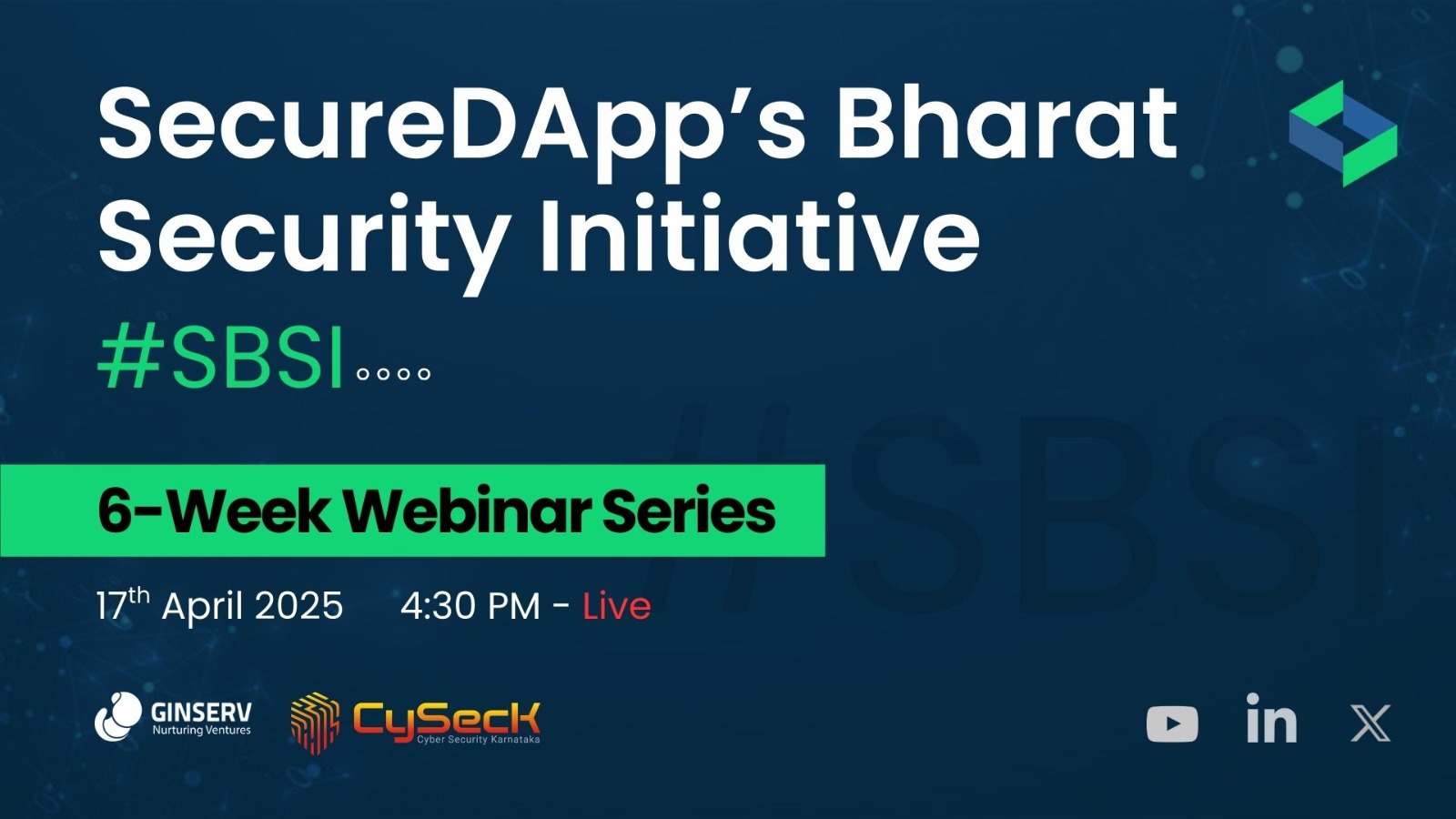
India’s Digital Defense Starts Now: Introducing SecureDApp’s Bharat Security Initiative (SBSI)
SecureDApp's Bharat Security Initiative (SBSI) launches a free 6-week webinar series from April 17 for Indians curious about cybersecurity. Students, founders, and tech enthusiasts explore blockchain, AI, data privacy, cloud protection, and Web3 threats through expert talks with…

SMART CONTRACT DISPUTE RESOLUTION
This blog decodes smart contract disputes from technical bugs and legal gaps to regulatory shifts. Blockchain users and businesses discover prevention via audits, arbitration, mediation, upgrades, plus future fixes like decentralized resolution and insurance for reliable digital agreements.

THE FUTURE OF TOKEN REGULATION: NAVIGATING PRIVACY AND DATA PROTECTION
This blog forecasts token regulation trends emphasizing privacy amid rising crypto, utility, security, and asset token adoption. Investors and developers learn about challenges like blockchain transparency, privacy coins such as Monero, tech solutions including zero-knowledge proofs, and balancing…

Blockchain, Smart Contracts and Tokenization
This blog traces blockchain's journey from Bitcoin's 2008 debut through smart contracts on Ethereum and tokenization's rise with ICOs, STOs, and NFTs. Developers and business leaders gain insights into use cases across DeFi and industries, plus future hurdles like scalability…

Navigating Regulatory Challenges for Tokenized Real-World Assets
This blog guides blockchain businesses and investors through regulatory hurdles for tokenized real-world assets like real estate and commodities. It details rules in the US, EU's MiCA, Asia-Pacific, plus best practices and SecureDApp tools for AML, audits, and smart contract…

Why Invest in Tokenized Real-World Assets? Key Benefits…
This blog outlines why tokenized real-world assets like real estate, art, and commodities attract investors through liquidity, fractional ownership, transparency via blockchain, and global access. Retail and institutional investors discover diversification benefits, cost savings from smart contracts, market opportunities, regulatory…

Unlocking the Potential: The Business Perspective of Tokenization
This blog examines tokenization's business impact, covering regulatory frameworks like EU's MiCA, US SEC rules, and Canada's OSC guidance. Business leaders explore tech innovations such as smart contracts and interoperability, plus applications in real estate, art, supply chain, and rising…

Blockchain Technology and Smart Contracts: Transforming Business and…
This blog explores blockchain's disruption via smart contracts that automate trust without intermediaries. Business and legal professionals uncover applications in finance and supply chains, regulatory compliance hurdles, auditing for security flaws, and tech challenges like scalability shaping the digital transformation.

Top 5 Smart Contract Vulnerabilities in 2025 —…
This blog warns developers about 2025's top smart contract risks like reentrancy, integer flaws, access control gaps, front-running, and oracle manipulation, with practical fixes such as checks-effects patterns and Chainlink. Blockchain teams learn IoT security pitfalls, emerging regulations in key…
India’s Digital Defense Starts Now: Introducing SecureDApp’s Bharat…
SecureDApp's Bharat Security Initiative (SBSI) launches a free 6-week webinar series from April 17 for Indians curious about cybersecurity. Students, founders, and tech enthusiasts explore blockchain, AI, data privacy, cloud protection, and Web3 threats through expert talks with certificates and…

SMART CONTRACT DISPUTE RESOLUTION
This blog decodes smart contract disputes from technical bugs and legal gaps to regulatory shifts. Blockchain users and businesses discover prevention via audits, arbitration, mediation, upgrades, plus future fixes like decentralized resolution and insurance for reliable digital agreements.

THE FUTURE OF TOKEN REGULATION: NAVIGATING PRIVACY AND…
This blog forecasts token regulation trends emphasizing privacy amid rising crypto, utility, security, and asset token adoption. Investors and developers learn about challenges like blockchain transparency, privacy coins such as Monero, tech solutions including zero-knowledge proofs, and balancing GDPR compliance…