

Enterprises are being asked to prove something that used to sit quietly in an audit checklist: that their cryptography is actually trustworthy. Regulators want evidence. Customers want assurance. And security teams want a standard that does not shift every time a new threat appears.
That standard, for most regulated industries, is FIPS 140. If your organization touches financial data, healthcare records, government contracts, or critical infrastructure, FIPS 140-2 140-3 Compliance is no longer optional. It is the baseline that determines whether your cryptographic modules, including the hardware security modules protecting your keys, can even be considered for deployment.
This guide breaks down what FIPS 140-2 and FIPS 140-3 actually require, how they differ, and why enterprises need to think about compliance differently as the post-quantum era approaches.
Why FIPS Compliance Has Become a Boardroom Issue
Cryptographic standards used to be a technical detail buried deep in procurement documents. That has changed. Boards and CISOs now treat FIPS validation as a direct signal of enterprise risk posture, not a formality reserved for government vendors.
Several forces are driving this shift. First, regulators across banking, healthcare, and critical infrastructure increasingly reference FIPS 140 validation as a baseline expectation, even outside the United States. Second, enterprise customers now request proof of validated cryptographic modules before signing vendor contracts. Third, the growing urgency around quantum-safe migration has forced security architects to reconsider how their key management infrastructure will hold up over the next decade.
As a result, compliance managers are being pulled into conversations that once belonged exclusively to engineering teams. Understanding FIPS 140-2 140-3 Compliance is no longer a niche technical requirement. It has become a shared responsibility across security, legal, and procurement functions.
What Is FIPS 140-2? Understanding the Legacy Standard
FIPS 140-2, published by the National Institute of Standards and Technology, defines the security requirements for cryptographic modules used to protect sensitive information. It has served as the dominant benchmark for hardware security modules, key management systems, and encryption libraries for over two decades.
The standard organizes requirements into four security levels, ranging from basic software-based protections at Level 1 to tamper-responsive, physically hardened modules at Level 4. Most enterprise HSMs used in banking and government environments are validated at Level 3, which requires identity-based authentication and physical tamper evidence.
FIPS 140-2 evaluates several core areas, including cryptographic module specification, roles and authentication, physical security, operational environment, and self-tests. Vendors submit their modules to accredited testing laboratories, and validated modules are listed on NIST’s Cryptographic Module Validation Program registry.
However, FIPS 140-2 was designed for a threat landscape that predates modern attack techniques and, notably, predates any serious operational concern around quantum computing. That gap is exactly why FIPS 140-3 exists.
What Is FIPS 140-3? The New Baseline for Cryptographic Modules
FIPS 140-3 replaces FIPS 140-2 as the current standard, aligning with the international ISO/IEC 19790 standard for cryptographic module security. NIST stopped accepting new FIPS 140-2 submissions in 2021, and existing FIPS 140-2 certificates are being phased toward historical status on a rolling schedule.
FIPS 140-3 retains the same four security levels but tightens requirements around software and firmware integrity, non-invasive attack resistance, and lifecycle assurance. It also introduces more rigorous documentation expectations, requiring vendors to demonstrate consistent security behavior across the entire lifecycle of a cryptographic module rather than at a single validation snapshot.
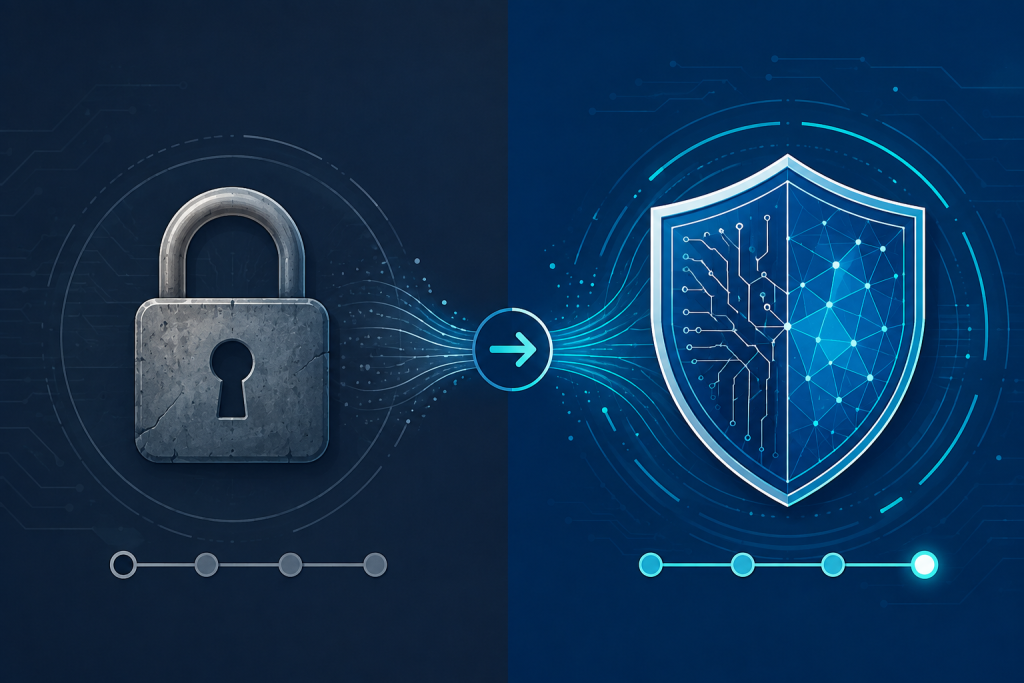
Importantly, FIPS 140-3 validation is now the only path forward for new hardware security modules and cryptographic libraries. Enterprises still running FIPS 140-2 validated systems are not immediately non-compliant, but they are operating on a standard that is actively being retired, which introduces long-term risk.
Key Differences Between FIPS 140-2 and FIPS 140-3
Understanding FIPS 140-2 140-3 Compliance requires knowing exactly where the two standards diverge, since the differences directly affect procurement and audit decisions.
FIPS 140-3 introduces stricter non-invasive security testing, addressing side-channel attacks that FIPS 140-2 did not formally evaluate. It also mandates more detailed software and firmware load testing, ensuring that updates to a cryptographic module cannot silently weaken its security posture.
Documentation requirements have expanded significantly. Vendors must now provide a more comprehensive security policy, along with evidence of ongoing conformance rather than a one-time snapshot. Additionally, FIPS 140-3 aligns validation testing more closely with international standards, which simplifies compliance for enterprises operating across multiple jurisdictions.
For compliance managers, the practical takeaway is straightforward. Any new HSM or key management platform procurement should require FIPS 140-3 validation, not FIPS 140-2. Legacy systems should be reviewed against a migration timeline before their validation status lapses.
Why Enterprises Cannot Treat HSM Certification as a Checkbox
It is tempting to view FIPS validation as a procurement checkbox, something to confirm once and forget. That approach creates blind spots.
Cryptographic modules degrade in relevance as attack techniques evolve. A hardware security module validated years ago under FIPS 140-2 may still function correctly, yet fail to defend against non-invasive attack vectors that FIPS 140-3 was specifically designed to address. Treating certification as a static fact, rather than an ongoing requirement, leaves enterprises exposed.
There is also a governance dimension. Auditors increasingly expect organizations to demonstrate not just that a module was validated, but that its validation status is actively tracked and that expiring certificates are managed proactively. Without a clear compliance standards framework, this tracking often falls through the cracks between security, IT, and legal teams.
Enterprises with distributed infrastructure face an additional challenge. Multi-cloud and hybrid environments frequently rely on different HSM vendors across regions, each with its own validation status and renewal timeline. Without centralized visibility, compliance managers can lose track of which modules remain validated and which are quietly approaching expiration.
The Compliance Gap Most Enterprises Do Not See Coming
Most organizations assume their existing key management infrastructure is compliant simply because it was compliant at deployment. That assumption is where the real risk hides.
Consider what happens as FIPS 140-2 certificates transition to historical status. Systems built on those validations do not stop working, but they can no longer be presented as meeting the current federal standard. For enterprises in regulated sectors, that distinction matters enormously during audits, vendor risk assessments, and government contract renewals.
There is a second, less obvious gap. Many enterprises evaluate cryptographic compliance in isolation from their broader security roadmap, without accounting for the fact that classical cryptography itself is entering a transition period. Compliance teams focused solely on FIPS 140-3 validation status can miss the parallel requirement building around quantum-resistant algorithms.

This is where compliance and cryptographic strategy start to intersect directly.
FIPS Compliance in a Post-Quantum World
Quantum computing has moved from theoretical concern to active planning priority for compliance and security teams. NIST has already finalized post-quantum cryptography standards, including ML-KEM and ML-DSA, and regulators are beginning to reference PQC migration timelines alongside existing FIPS requirements.
This creates a layered compliance challenge. Enterprises must maintain FIPS 140-2 140-3 Compliance for their current cryptographic modules while simultaneously preparing for a quantum-safe transition that will eventually require those same modules to support post-quantum algorithms. Treating these as separate initiatives, handled by separate teams on separate timelines, is inefficient and increases long-term risk.
Cryptographic agility becomes the connecting principle. An enterprise with crypto-agility built into its infrastructure can update algorithms, including moving toward hybrid encryption that combines classical and quantum-resistant methods, without re-architecting its entire key management environment. Without that agility, every algorithm transition becomes a multi-year infrastructure project.
Security architects evaluating new HSM and key management platforms should therefore ask a forward-looking question. Does this platform only satisfy today’s FIPS 140-3 requirements, or does it also support a quantum-ready migration path as PQC governance expectations mature? A platform that answers only the first question will likely require replacement sooner than procurement teams expect.
Building a FIPS-Ready, Quantum-Ready Compliance Strategy
A durable compliance strategy treats FIPS 140-2 140-3 Compliance and quantum-safe readiness as two threads of the same rope, not two separate projects competing for budget.
The first step is establishing full visibility into every cryptographic module currently in use, including its validation level, certificate status, and renewal timeline. Many enterprises are surprised to discover how fragmented this inventory actually is once they attempt to compile it.
The second step is centralizing key management wherever possible. Distributed HSM deployments, each governed independently, make it nearly impossible to maintain consistent compliance standards across an enterprise. A unified platform gives compliance managers a single source of truth for validation status, audit logs, and policy enforcement.
The third step is building crypto-agility into procurement criteria going forward. Any new key management or HSM investment should be evaluated not only against current FIPS 140-3 requirements, but against its ability to support hybrid crypto approaches and future PQC migration without a full infrastructure overhaul.
This is precisely the gap QuantumVault was built to close.
How QuantumVault Simplifies FIPS 140-2 140-3 Compliance
QuantumVault is an enterprise key management and quantum-safe cryptography platform designed for organizations that need certified assurance today while preparing for a post-quantum tomorrow. Rather than treating compliance and quantum readiness as separate concerns, QuantumVault addresses both within a single governance layer.
For compliance managers, QuantumVault provides centralized visibility into cryptographic module status across hybrid and multi-cloud environments, making it significantly easier to demonstrate FIPS 140-2 140-3 Compliance during audits and vendor assessments. Instead of chasing validation records across disconnected systems, teams get a consolidated view of certificate status, key lifecycle events, and policy enforcement.
For security architects, QuantumVault brings crypto-agility directly into the key management layer. The platform supports hybrid encryption models that pair classical algorithms with post-quantum alternatives, allowing enterprises to begin PQC migration incrementally rather than through a disruptive, all-at-once transition. As NIST-approved algorithms mature and regulatory expectations shift, QuantumVault’s architecture is built to adapt without forcing a rebuild of the underlying infrastructure.

QuantumVault also supports enterprise-grade governance requirements, including detailed audit logging, granular access policies, and a PQC policy engine that lets security teams define how and when quantum-resistant algorithms are applied across different workloads. This matters because compliance is rarely just about passing a single audit. It is about proving, continuously, that cryptographic controls remain sound as standards evolve.
A Real-World Scenario: Compliance Under Pressure
Picture a regional bank preparing for its annual regulatory examination. Its HSM infrastructure was validated under FIPS 140-2 several years earlier, and the compliance team assumed that validation still satisfied current requirements.
During the examination, auditors flag the transition of those certificates toward historical status and ask for a documented migration plan toward FIPS 140-3 validated modules. The compliance team, unable to produce centralized records of every module’s validation status across its cloud and on-premises environments, scrambles to compile the information manually.
With a unified platform like QuantumVault in place, that same scenario looks different. Validation status, renewal timelines, and migration planning are already documented and accessible. The compliance manager can produce a clear, current record within minutes rather than weeks, turning what could have been a regulatory finding into a routine confirmation.
This is the practical value of treating compliance as an ongoing operational capability rather than a periodic scramble.
Common Mistakes Enterprises Make With FIPS Compliance
Even well-resourced security teams stumble on predictable issues when managing FIPS 140-2 140-3 Compliance. Recognizing these patterns early prevents costly surprises later.
One frequent mistake is assuming that FIPS validation transfers automatically when a vendor updates its firmware or software. In reality, significant changes to a cryptographic module can require re-validation, and deploying unvalidated updates can quietly break compliance without anyone noticing until an audit.
Another common issue is procurement teams evaluating HSMs purely on price and performance, without confirming current FIPS 140-3 status. This often results in enterprises unknowingly purchasing hardware validated under the retiring FIPS 140-2 standard, creating a compliance gap almost immediately after deployment.
A third mistake involves siloed ownership. When compliance, security, and infrastructure teams each hold partial visibility into cryptographic module status, nothing gets tracked end to end. Centralizing this responsibility, ideally through a platform that provides shared visibility, closes that gap.
A fourth mistake, often overlooked, is treating FIPS documentation as static paperwork rather than a living record. Security policies, module boundaries, and operating environments described in a vendor’s original validation documentation can drift from actual deployment over time. If an HSM is later reconfigured, moved to a new environment, or integrated differently than originally validated, the compliance team needs to know whether that change affects its FIPS status. Without a process for flagging these changes, enterprises can operate for years under the false assumption that their environment still matches the validated configuration.
Finally, many organizations underestimate how long re-validation and vendor transitions actually take. Moving from a FIPS 140-2 validated HSM to a FIPS 140-3 validated replacement is not a weekend project. It involves procurement cycles, integration testing, and often a parallel-run period to confirm operational stability. Compliance managers who start this planning only after an audit finding puts them under pressure, rather than building a proactive migration timeline, consistently end up making rushed decisions under regulatory scrutiny.
Preparing for What Comes Next
FIPS 140-3 is not the final chapter in cryptographic standards evolution. As post-quantum cryptography moves from standardization into mandatory adoption timelines, expect future FIPS guidance to formally incorporate quantum-resistant requirements into certification criteria.
Enterprises that build crypto-agility and centralized key governance into their infrastructure now will be far better positioned when that shift arrives. Those relying on rigid, single-purpose HSM deployments will likely face another disruptive migration cycle, similar to the one currently underway between FIPS 140-2 and FIPS 140-3.
The organizations that treat compliance as a continuous capability, rather than a one-time certification event, will move through future standards transitions with far less friction.
Conclusion
FIPS 140-2 140-3 Compliance sits at the intersection of regulatory obligation and genuine security assurance. Understanding the differences between the two standards, and recognizing that FIPS 140-2 is being phased out in favor of FIPS 140-3, is essential for any enterprise handling sensitive data through hardware security modules.
The organizations best positioned for what comes next are the ones building compliance and quantum-safe readiness together, rather than treating them as separate initiatives on separate timelines. Cryptographic agility, centralized key governance, and forward-looking procurement decisions are what turn compliance from a recurring audit burden into a durable operational strength.
QuantumVault gives compliance managers and security architects a single platform to manage FIPS 140-2 140-3 Compliance today while building the crypto-agility needed for tomorrow’s quantum-safe requirements. As your organization plans its next HSM procurement or compliance review, it is worth evaluating whether your current infrastructure can ensure FIPS 140-2 compliance while also supporting the post-quantum migration path regulators are increasingly expecting.
Frequently Asked Questions
1. What is the difference between FIPS 140-2 and FIPS 140-3? FIPS 140-3 replaces FIPS 140-2 and aligns with the international ISO/IEC 19790 standard. It introduces stricter non-invasive attack testing, expanded documentation requirements, and tighter software and firmware integrity checks.
2. Is FIPS 140-2 still valid for enterprise use? Existing FIPS 140-2 validated modules remain operational, but NIST stopped accepting new submissions in 2021. Certificates are transitioning toward historical status, so relying on FIPS 140-2 long term introduces compliance risk.
3. Which industries require FIPS 140-2 140-3 Compliance? Banking, healthcare, government contracting, and critical infrastructure sectors most commonly require FIPS validation. Many enterprise customers now also request it as part of vendor risk assessments, even outside regulated industries.
4. What are the four FIPS 140 security levels? The levels range from Level 1, covering basic software-based protections, to Level 4, which requires tamper-responsive, physically hardened modules. Most enterprise HSMs used in regulated environments are validated at Level 3.
5. How does FIPS 140-3 relate to post-quantum cryptography? FIPS 140-3 does not yet mandate post-quantum algorithms, but regulatory expectations are shifting quickly. Enterprises that build crypto-agility into their infrastructure now will adapt more easily once quantum-resistant requirements are formally incorporated.
6. What happens if our HSM’s FIPS validation expires? An expired or historical validation does not immediately disable the hardware, but it can no longer be presented as meeting current federal standards. This creates risk during audits, government contract renewals, and customer security reviews.
7. Do software updates affect FIPS validation status? Yes. Significant firmware or software changes to a validated cryptographic module can require re-validation. Deploying updates without confirming their impact on FIPS status can unintentionally break compliance.
8. What is hardware security module certification exactly? It refers to the formal validation process, conducted by accredited testing laboratories, confirming that an HSM meets the cryptographic and physical security requirements defined by FIPS 140-2 or FIPS 140-3.
9. How can enterprises track FIPS validation across multi-cloud environments? Centralized key management platforms provide visibility into validation status, certificate renewal timelines, and policy enforcement across distributed infrastructure, eliminating the fragmented tracking that leads to compliance gaps.
10. What is crypto-agility and why does it matter for compliance? Crypto-agility refers to an infrastructure’s ability to update cryptographic algorithms without a full system rebuild. It matters because it allows enterprises to adapt to evolving FIPS requirements and post-quantum migration timelines efficiently.
11. How does QuantumVault support FIPS 140-2 140-3 Compliance? QuantumVault centralizes cryptographic module visibility, supports hybrid encryption models, and provides audit-ready documentation, helping compliance managers demonstrate validated status across hybrid and multi-cloud environments.
12. What should compliance managers prioritize when evaluating a new HSM vendor? Confirm current FIPS 140-3 validation status rather than legacy FIPS 140-2, and evaluate whether the platform supports crypto-agility for future post-quantum migration, not just today’s compliance requirements.