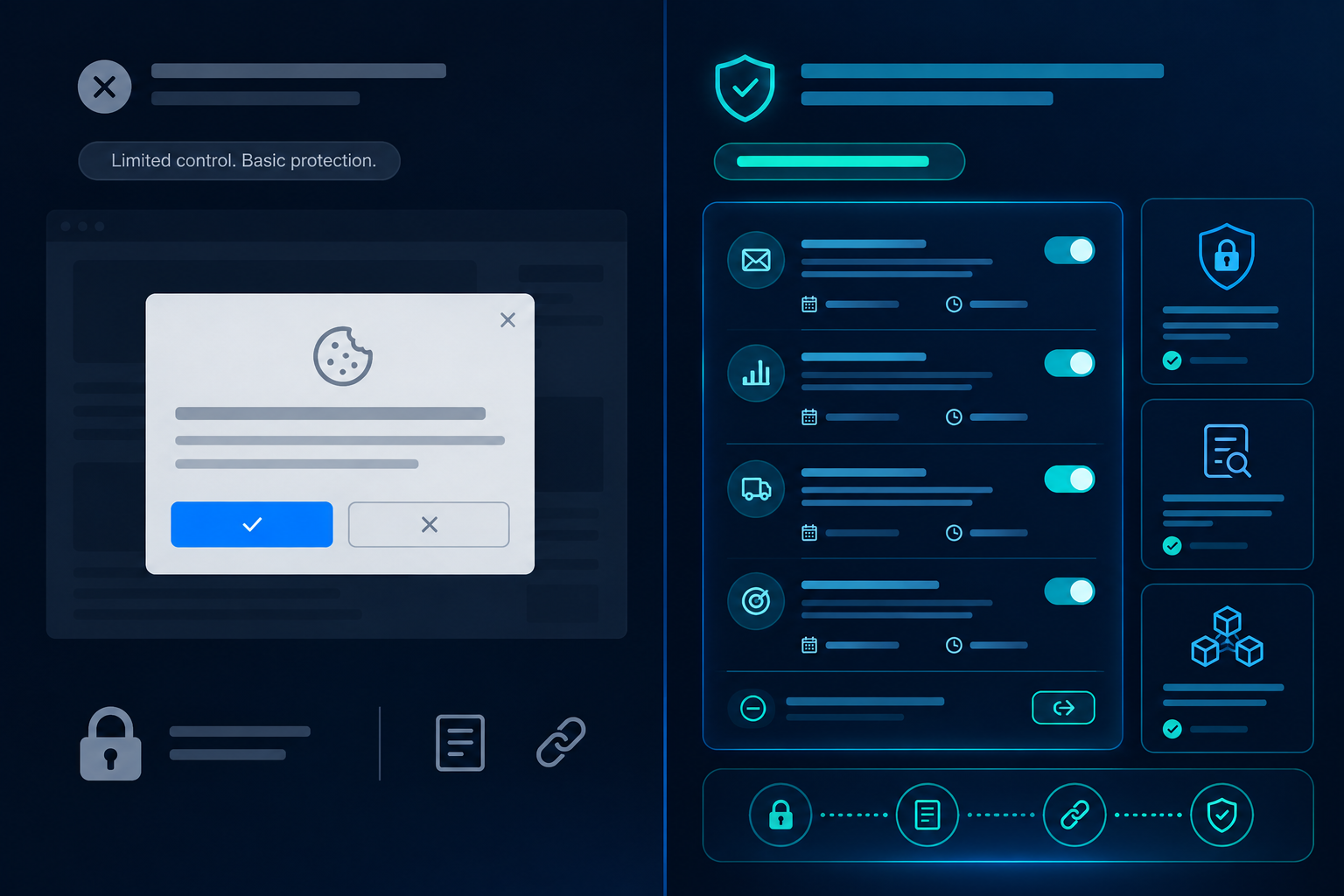

Enterprise data breaches rarely make headlines because of a single catastrophic failure. Instead, they compound from dozens of small oversights: API keys stored in version control, database credentials hardcoded into configuration files, encryption keys duplicated across multiple systems without proper rotation, and access logs that nobody monitors. What ties these failures together is a common thread: the organization never implemented proper secrets management integrated with Hardware Security Modules (HSM) to protect sensitive data at the source.
The stakes have risen. Compliance frameworks from SOC 2 to PCI-DSS to HIPAA all demand cryptographic key management that can survive audits, insider threats, and quantum computing’s emerging threat to classical encryption. A secrets management platform without HSM integration is like a firewall without rules: it creates an illusion of security while actual sensitive data remains exposed.
This guide walks through what enterprise secrets management actually requires, why HSM integration transforms compliance from a checkbox exercise into real protection, how quantum-safe cryptography changes the calculation, and what a production-ready implementation looks like. More importantly, we will show you why the integration between secrets management and HSM infrastructure is not a technical nice-to-have; it is the foundation of every modern application security stack.
Understanding the Secrets Management Problem at Enterprise Scale
Before diving into solutions, it helps to understand exactly why secrets management becomes a critical problem as organizations scale.
In a small startup, a team of five engineers might reasonably memorize which database is which and pass credentials around via messaging apps or shared Google Docs. It is not ideal, but it works. At enterprise scale, this approach collapses immediately. You have hundreds of applications talking to dozens of databases, message queues, third-party APIs, and microservices. Each one needs credentials. Each credential needs rotation on a schedule. Access to those credentials needs to be restricted, audited, and revocable. The moment you try to manage this manually, you have a problem.
The problem manifests in several ways. First, credentials proliferate across your infrastructure faster than any team can track. Database passwords end up in Kubernetes secrets, environment variables, configuration files, and somebody’s local laptop that never got wiped. Second, nobody knows what credentials are actually in use. A developer wrote a script three years ago that still pulls AWS keys from a file, and nobody has deleted those keys since because nobody remembers they exist. Third, rotation becomes impossible. If you do not know where all your credentials live, you cannot rotate them safely because you will break something, so you do not rotate them at all. That is when an attacker who found a password from six years ago suddenly has access to your production database.

Add to this the compliance layer. Your auditor asks for a complete inventory of all encryption keys, when they were created, who accessed them, when they were rotated, and proof that they were never exposed. If your secrets are scattered across configuration files and local systems, that answer is “we do not know.” That answer closes funding rounds and triggers investigations from regulators.
This is where secrets management platforms come in. They create a single source of truth for all sensitive data. Every application that needs credentials requests them from the platform, not from files or environment variables. Access is logged and auditable. Rotation happens automatically on a schedule. If you suspect a credential has been compromised, you revoke it immediately and know exactly which applications will be affected.
But here is the catch: if your secrets management platform itself is not protected, you have just moved the problem, not solved it. Someone with access to your secrets management system can steal every credential inside it. That is why the best-in-class approach integrates Hardware Security Modules into the architecture.
Why HSM Integration Matters More Now Than Ever
A Hardware Security Module is a specialized piece of hardware designed for one job: protecting cryptographic keys. It does this by storing keys inside a tamper-resistant physical device that is virtually impossible to access without triggering detection and automatic erasure mechanisms.
The naive question is: why not just encrypt all your secrets with a key stored in your secrets management platform? The answer reveals why HSM integration is non-negotiable: that approach creates a key hierarchy that needs a root key, and that root key needs to be stored somewhere secure, which means you are back to the original problem.

An HSM breaks that circular dependency. The root keys that protect everything else are stored in physical hardware that nobody, not even your infrastructure team, can directly access. When your application needs to decrypt a database password, it sends a request to the HSM, which performs the decryption inside the secure hardware and returns only the decrypted result. The key never leaves the hardware. If an attacker compromises your server, the keys are still out of reach.
This architecture creates several concrete security benefits. First, it implements what cryptographers call the “keys never leave the HSM” principle. Second, it provides cryptographic proof that certain operations happened inside trusted hardware, useful for compliance audits. Third, it enables policy enforcement at the hardware level, not just at the application level. You can configure an HSM to refuse decryption requests outside of certain time windows, or to require dual-control approval for sensitive operations.
But there is a newer reason why HSM integration has become urgent: the quantum computing threat.
Classical encryption algorithms like RSA and ECDSA rely on mathematical problems that are hard for classical computers but trivial for quantum computers. Security agencies and standards bodies have been warning about this for years, and NIST finalized post-quantum cryptography (PQC) standards in 2022. The timeline for quantum computers that can break encryption is still uncertain, but the threat is real enough that enterprises are moving now.
Here is where the integration between secrets management and HSM becomes even more critical: migrating from classical to quantum-safe cryptography is not something you can do in five minutes. You need to maintain both classical and PQC algorithms in parallel during transition. You need to rotate keys according to new schedules. You need to maintain an immutable audit trail of which keys were used for which purposes. An HSM integrated into your secrets management infrastructure makes this transition manageable. Without it, the migration becomes a nightmare of distributed key management and audit gaps.
The Architecture of Production-Ready Secrets Management with HSM
A production-ready secrets management system integrated with HSM hardware has several layers, each serving a specific purpose.
The first layer is the application interface. Applications do not talk directly to the HSM. Instead, they talk to a secrets management platform through APIs. This abstraction matters because it allows you to add logic, monitoring, and policy enforcement before any request reaches the hardware. An application requests “the production database password,” and the secrets management system does several things: checks that the requesting application is authorized, logs the request with a timestamp and user ID, verifies that the secret has not been compromised recently, and then forwards the request to the HSM.

The second layer is the secrets management platform itself. This is where the actual credential lifecycle happens. New secrets are generated, stored, and encrypted. The platform tracks which applications use which secrets, manages rotation schedules, and automatically updates applications when secrets change. Modern platforms also handle secret discovery, scanning your infrastructure to find hardcoded credentials and alerting you to remediate them.
The third layer is the HSM. This is where root keys are stored and where cryptographic operations on sensitive data occur. The HSM is connected to your infrastructure through a dedicated, encrypted channel. All requests to the HSM are logged and timestamped. The HSM can be configured to require dual-control approval for sensitive operations, adding an extra layer of protection against insider threats.
The fourth layer is the audit and compliance infrastructure. Every action on every secret is logged: who accessed it, when, from where, and why. These logs are immutable and tamper-evident, so if an attacker gains access to your systems and tries to cover their tracks by editing logs, the tampering is immediately detectable.
An architecture like this does several things well. It centralizes control, so you have one source of truth for all secrets. It separates concerns, so the platform layer handles policy and the HSM handles cryptography. It enables automated rotation, so credentials are regularly updated without human intervention. It creates an audit trail that satisfies compliance requirements. And it prepares you for the quantum transition by supporting both classical and PQC algorithms during the migration period.
How Quantum-Safe Cryptography Changes Secrets Management
The quantum computing threat has profound implications for how you should think about secrets management and HSM integration going forward.
In the current environment, if someone steals an encrypted secret protected by an RSA key, they cannot decrypt it because breaking RSA requires computational resources that do not exist. But that calculation changes if quantum computers become available. An attacker with a quantum computer could potentially decrypt that stolen ciphertext, even though it was encrypted months or years ago. This is called “store now, decrypt later” risk, and it is already relevant for any secrets with long-term value.

The NIST post-quantum cryptography standards introduce new algorithms like ML-KEM for key encapsulation and ML-DSA for digital signatures that are believed to be resistant even to quantum attacks. The key word here is “believed.” These algorithms are newer and have less analysis than RSA, but they are the best protection available today against quantum threats.
For secrets management and HSM integration, this creates a specific challenge: you cannot simply flip a switch and move all your secrets to quantum-safe encryption overnight. Instead, you need to implement a hybrid approach where both classical and PQC algorithms run in parallel. New secrets are generated using quantum-safe algorithms. Existing secrets are gradually re-encrypted. The migration period could stretch for years.
An HSM integrated with a comprehensive secrets management platform becomes the cornerstone of this migration. The platform tracks which secrets use classical algorithms and which use quantum-safe algorithms. It manages rotation schedules separately for each category. The HSM performs cryptographic operations using whichever algorithms are required. The audit trail clearly shows which algorithms were used for which secrets and when the transition occurred.
This is not just theoretical. Organizations in regulated industries, from banking to healthcare, are already planning their quantum transition. If your secrets management infrastructure was not designed with this in mind, you are building technical debt that will be expensive to fix later.
QuantumVault: Enterprise HSM Integration for Secrets Management
QuantumVault is purpose-built for this challenge. It combines enterprise-grade secrets management with integrated HSM hardware support and native post-quantum cryptography capabilities.
QuantumVault’s architecture treats HSM integration as a first-class feature, not an add-on. Secrets never leave the HSM. All cryptographic operations, whether classical or quantum-safe, happen inside the hardware. The platform provides a unified interface for managing secrets across classical and PQC algorithms, simplifying the migration process.
Here is what this looks like in practice. Your application needs a database password. It sends a request to QuantumVault. The platform checks authorization, logs the request, verifies the secret is still valid, and then retrieves the decrypted value from the HSM. The application never sees the encryption key. If an attacker compromises your application server, they get nothing: no keys, no plaintext secrets, just an API call log that proves the attacker tried to access something they did not have permission for.

QuantumVault also handles the operational complexity of secrets lifecycle management. Rotation schedules are configured once and then run automatically. When a database password rotates, QuantumVault updates not just the secret itself but also every application that needs that password, potentially through automated configuration management. You can implement policies like “all secrets must be rotated every 90 days” or “any secret accessed by multiple applications must use HSM-backed encryption.” The platform enforces these policies consistently across your entire infrastructure.
The audit and compliance capabilities are equally important. Every access to every secret is logged with full context: the requesting application, the user, the timestamp, the outcome, and the reason. These logs are tamper-evident and immutable, satisfying the most stringent compliance requirements. When your auditor asks for evidence that a specific secret was never compromised, you can produce a cryptographically verifiable audit trail.
For organizations planning their quantum transition, QuantumVault’s support for hybrid encryption is particularly valuable. You configure which secrets use classical algorithms, which use PQC algorithms, and which use hybrid protection where both algorithms are applied. The platform automates the gradual re-encryption of legacy secrets. The audit trail clearly documents the transition, which is essential for demonstrating compliance during the migration period.
Implementing Secrets Management and HSM in Your Stack
Moving from theory to practice, here is what an actual implementation looks like.
The first step is a secrets audit. Walk through your infrastructure and identify every place where secrets are currently stored: configuration files, environment variables, shared password managers, documentation that nobody is supposed to read, developers’ laptops. This audit is uncomfortable because you will find more secrets than you thought, many of them probably forgotten and no longer in use. But this audit is necessary because you cannot protect what you do not know exists.
The second step is establishing the HSM infrastructure. This typically means acquiring hardware, placing it in a secure location with proper physical access controls, and configuring it with appropriate backup and disaster recovery policies. The HSM vendor, whether you choose an on-premise device or a cloud-based HSM service, will provide documentation on setup. This is not trivial but it is straightforward: follow the procedures, test them, and document everything.
The third step is deploying the secrets management platform. Start small, with a pilot application. Configure the platform to manage just the secrets that application needs. Get your team comfortable with the APIs and the operational model. Make sure the integration with your HSM works reliably under load. This is where most implementations either succeed or fail. If the pilot works smoothly, you have confidence to scale. If you run into problems, you have a small scope to debug.
The fourth step is integrating secrets management into your deployment pipeline. When you deploy a new application, the deployment process should automatically request secrets from QuantumVault, not look for them in files. This typically means updating your Docker containers, Kubernetes manifests, or infrastructure-as-code templates to pull secrets at runtime rather than baking them into images. This is a big change to how many teams work, so communication and training are important.
The fifth step is migration. Take existing applications one at a time and move them to QuantumVault. This should not require rewriting the application; it just means changing where the application gets its credentials from. Start with non-critical systems so your team learns the process before touching your production database.
The sixth step is automation and policy enforcement. Configure automatic rotation for all secrets. Set up alerts when secrets are accessed from unexpected locations. Implement policies about which users and applications can access which secrets. The platform should be continuously enforcing these policies, not just documenting them.
Throughout this implementation, the audit trail is your friend. Every decision is logged. Every access is recorded. Every change is tracked. When something goes wrong, you have a complete history of what happened and who did it.
Compliance and Audit Implications
Implementing secrets management with HSM integration transforms your compliance posture.
For SOC 2 Type II audits, auditors want to see that you have controls over access to sensitive data. When you can show them an immutable audit trail of every access to every secret, complete with context about who accessed what and from where, the auditor’s job becomes much easier. You are not asking them to trust that your processes are secure; you are showing them evidence.
For PCI-DSS compliance, if you are handling credit card data, HSM-backed key management is not optional, it is required. Requirements 3.4 and 3.6 specifically mandate hardware security modules for key protection. A secrets management platform integrated with HSM hardware is the standard way to meet these requirements.
For HIPAA, if you handle healthcare data, you need to demonstrate that encryption keys are protected at least as well as the data they protect. An HSM integrated with comprehensive audit logging meets and exceeds this requirement.
For SOC 2 or ISO 27001 compliance more broadly, the audit trail created by HSM-integrated secrets management is invaluable. You can demonstrate that you have implemented the controls the standard requires, and you have evidence that those controls are actually being used.
There is also a quantum compliance angle that is just beginning to matter. Regulatory agencies have not yet mandated post-quantum cryptography, but they are watching. If you can demonstrate that your organization has a plan for quantum-safe migration and that you have already begun implementing quantum-safe algorithms for new secrets, you are ahead of compliance expectations. This is particularly important for organizations in sectors like banking and healthcare where regulatory timelines often require years to plan and implement major security changes.
Common Pitfalls and How to Avoid Them
Having seen many organizations implement secrets management and HSM, certain mistakes appear repeatedly.
The first pitfall is underestimating the operational overhead. Some teams treat HSM integration as something that should be completely transparent to developers. It is not. Developers need to understand why they cannot just read a hardcoded password from a configuration file anymore. They need to learn the APIs. They need to handle the case where a secrets management request fails. A few hours of training and documentation, provided up front, prevents weeks of confusion and frustration later.
The second pitfall is HSM as a compliance checkbox rather than operational reality. Some organizations deploy an HSM and then do not actually use it for their most sensitive operations. The keys protecting your database are still in software, while the HSM sits unused in your server room. This defeats the entire purpose. If you deploy an HSM, make sure it is actually protecting your crown jewels.
The third pitfall is inadequate backup and disaster recovery planning. Your HSM contains keys that cannot be recreated. If the hardware fails, your keys are gone. You need a disaster recovery plan that includes backing up keys to a secondary HSM in a different geographic location. This needs to be tested regularly, not just documented.
The fourth pitfall is treating secrets management as a one-time implementation rather than an ongoing operational practice. You implement it once and then move on to the next project. But secrets management requires continuous maintenance: regular rotation, periodic access reviews, monitoring for suspicious patterns, updates when new threats emerge. Make it part of your regular security operations, not a project that ends.
The fifth pitfall, specific to quantum-safe migration, is treating it as something to worry about later. “Quantum computers are years away, so we can ignore this for now.” That might be true about the quantum threat itself, but the migration to quantum-safe cryptography takes years of planning and careful execution. Starting now gives you time to do it right rather than in a panic when the threat becomes imminent.
The Integration Between Application Security and HSM-Backed Secrets
Secrets management with HSM integration does not exist in isolation. It is part of a broader application security architecture.
On the input side, secrets management needs to integrate with your identity and access management system. When a user or application requests a secret, the first thing that happens is identity verification. Who is asking? Do they have permission? This means integrating your secrets management platform with your authentication and authorization systems, which might be LDAP, Active Directory, OAuth, or a custom system.
On the output side, secrets management integrates with your deployment and configuration management tools. When you deploy a new version of an application, how does it get the credentials it needs? Does it read them from a Kubernetes secret? Does it call an API at startup? Does it use a webhook to pull credentials on-demand? These decisions affect how your application is built and deployed.
In the middle, your monitoring and logging systems need visibility into what is happening with secrets. Are there unusual access patterns? Is a particular secret being accessed much more frequently than normal, possibly indicating a compromise? Are there failed access attempts that might indicate an attack? Your secrets management platform should export logs to your SIEM system so you have unified visibility across your security stack.
QuantumVault integrates with all these layers. It provides APIs for authentication integration, so your existing identity system controls access to secrets. It provides hooks for deployment systems, so credentials are injected automatically at deployment time. It exports comprehensive audit logs in standard formats, so your existing monitoring and alerting systems can consume them.
Planning Your Secrets Management Migration
If you are starting from scratch, you are in an enviable position. You can build secrets management and HSM integration into your architecture from day one. But most organizations are in the position of retrofitting secrets management into an existing infrastructure, which is more complex.
A phased approach works best. Start by identifying which secrets are most critical and most frequently accessed. These are your pilot candidates. Implement secrets management and HSM protection for these first. Prove that it works reliably and that your team can operate it. Then move to the next tier of secrets, and so on.
During this migration, you will almost certainly encounter applications that are difficult to modify to use the new secrets management system. Maybe the code is in a language your team does not know well. Maybe it is a legacy system that everyone is afraid to touch. Maybe it was written years ago and nobody remembers how it works. These difficult cases are where the real integration challenge lies, not in the straightforward cases.
A comprehensive secrets management platform like QuantumVault makes these difficult cases easier to handle. It can transparently intercept environment variables or configuration file reads and replace them with calls to the secrets management API. It can integrate with your infrastructure-as-code tools to inject secrets at deployment time. It can work with your monitoring systems to detect when applications are using old secrets and alert you to migrate them. These capabilities turn a potentially nightmare migration into a manageable project.
The Role of Cryptographic Agility in Modern Application Security
Cryptographic agility is the ability to swap out cryptographic algorithms without rewriting code or rebuilding systems. It is becoming increasingly important as threats evolve and new algorithms emerge.
Five years ago, choosing an encryption algorithm was something you did once when you built a system and then never thought about again. Today, the threat landscape is changing fast enough that you need the ability to upgrade algorithms if a weakness is discovered or if a new threat emerges. Post-quantum cryptography adds another dimension: supporting both classical and PQC algorithms during the transition period requires cryptographic agility.
An HSM integrated with a comprehensive secrets management platform provides cryptographic agility at the infrastructure level. The HSM can support multiple algorithms simultaneously. The secrets management platform can be configured to use different algorithms for different secrets or different classes of data. Your application code does not need to know or care which algorithm is being used; it just requests a secret from QuantumVault and gets back a value protected by whatever algorithm the platform determines is appropriate.
This agility also simplifies incident response. If a cryptographic vulnerability is discovered, you can immediately re-encrypt all affected secrets with a different algorithm without touching application code. You can even do this gradually, re-encrypting high-risk secrets first and working your way through the rest of your infrastructure. The audit trail documents exactly which secrets were re-encrypted and when, providing evidence of swift remediation if regulators ask.
Measuring Success: What Good Secrets Management Looks Like
How do you know if your secrets management implementation is actually working? Here are the key metrics:
First, secret rotation compliance. One hundred percent of secrets should be rotated on schedule. If you are only hitting ninety percent, you have a problem. Missing even ten percent of rotations means those secrets are not being protected as designed.
Second, audit trail completeness. Every access to every secret should be logged. You should be able to run a query and answer “exactly how many times was this secret accessed in the last week, by which applications, from where?” If you cannot answer that with precision, your audit trail is incomplete.
Third, unauthorized access attempts. Your logs should show attempts by unauthorized applications or users to access secrets they do not have permission for. These attempts should be failing consistently. If some of them are succeeding, you have an access control problem.
Fourth, mean time to remediation for secret compromise. When you discover that a secret might be compromised, how long does it take to revoke it and deploy a new one to all applications that use it? This should be measured in minutes, not hours. If it takes hours, you are still vulnerable during that window.
Fifth, deployment time for new applications. When your team builds a new application, how long does it take to get it connected to your secrets management platform? This should be a straightforward, mostly automated process. If it takes days, there are integration problems that need fixing.
Frequently Asked Questions
1. Why is HSM integration necessary if my secrets management platform already encrypts everything?
Encrypting secrets within a software platform creates a circular dependency: the encryption key protecting those secrets needs to be stored somewhere secure, which means it goes into the same platform. An HSM breaks this cycle by storing root keys in physical hardware that is tamper-resistant and auditable. If an attacker compromises your server, they still cannot access the HSM because keys never leave the hardware. Additionally, an HSM provides cryptographic proof of operations and enables policy enforcement at the hardware level, which software alone cannot achieve.
2. How long does it take to implement secrets management with HSM, and what does it cost?
A pilot project with one application can typically be deployed in four to six weeks. Full organizational rollout usually takes three to six months in a phased approach. Hardware costs range from USD 3,000 to USD 10,000 for on-premise devices, or per-operation pricing for cloud-based services. Software licensing for QuantumVault ranges from USD 10,000 to USD 50,000 annually depending on scale. Total first-year costs for mid-sized enterprises typically range from USD 50,000 to USD 150,000. The ROI comes from reduced breach risk, faster incident response, and compliance cost reduction.
3. Does secrets management work with cloud environments like AWS, Azure, and Google Cloud?
Yes. All major cloud providers offer HSM services that integrate with secrets management platforms. AWS CloudHSM, Azure Dedicated HSM, and Google Cloud CloudHSM provide hardware you control. QuantumVault integrates with these cloud HSM services, allowing you to implement the same architecture whether your infrastructure is on-premise, cloud-based, or hybrid. The cloud approach eliminates physical hardware management while maintaining the security benefits of HSM-backed key protection.
4. How does post-quantum cryptography integration affect secret rotation and key management?
During the transition to quantum-safe cryptography, you need to support both classical and PQC algorithms in parallel. QuantumVault automates this complexity by allowing you to configure which algorithms protect different classes of secrets. New secrets can automatically use quantum-safe algorithms like ML-KEM or ML-DSA while existing secrets are gradually re-encrypted. The platform maintains separate rotation schedules and the audit trail documents which algorithms were used and when transitions occurred, simplifying your quantum-safe migration.
5. What are the main compliance requirements that secrets management with HSM helps satisfy?
Secrets management with HSM integration helps satisfy SOC 2 Type II audits through auditable controls over sensitive data access. PCI-DSS explicitly mandates HSM-based key management for payment card protection. HIPAA requires encryption key protection at least as strong as the data being protected. ISO 27001 requires cryptographic key management with audit trails. GDPR and similar frameworks require demonstrable security controls over personal data. QuantumVault’s comprehensive audit logging and HSM integration provides evidence of compliance across all these frameworks simultaneously.
6. What should I do if I suspect a secret has been compromised?
Immediate actions include checking your audit trail for who accessed the secret and from where, revoking the compromised secret immediately, and triggering deployment of a new secret to all dependent applications. QuantumVault automates these steps, reducing mean time to remediation from hours to minutes. Monitor systems for suspicious activity using the accounts secured with that secret, and review audit logs to understand the scope of exposure. Most incidents can be fully contained within 30 minutes if your secrets management platform is properly configured.
Conclusion: Building the Security Foundation Your Enterprise Needs
Enterprise secrets management integrated with Hardware Security Modules is not a luxury or an optional security enhancement. It is the foundation that everything else in your application security stack relies on.
Without proper secrets management and HSM integration, your credentials scatter across your infrastructure, forgotten and unrotated. Your audit trail is incomplete or nonexistent. Your compliance posture is weaker than you think. Your ability to respond to a security incident is hampered by the fact that you do not know what credentials might be compromised.
With secrets management and HSM integration properly implemented, every credential is centrally managed and rotated on schedule. Every access is logged and auditable. Compliance requirements are met with evidence, not hope. Your ability to respond to incidents is swift and decisive. And you have a solid foundation for the quantum transition that is coming.
QuantumVault provides the platform to make this reality. It integrates HSM hardware with comprehensive secrets management, supports both classical and quantum-safe cryptography, and provides the audit and compliance capabilities that modern enterprises require.
The question is not whether to implement secrets management and HSM integration, but when. Organizations that start now will be ahead of the curve. Those that wait will be scrambling to catch up when regulations change or threats escalate.
Schedule a demo with QuantumVault today to see how enterprise secrets management with HSM integration works in practice. Our team can walk through your specific infrastructure and show you how to implement secrets management that actually protects your sensitive data while meeting your compliance requirements.