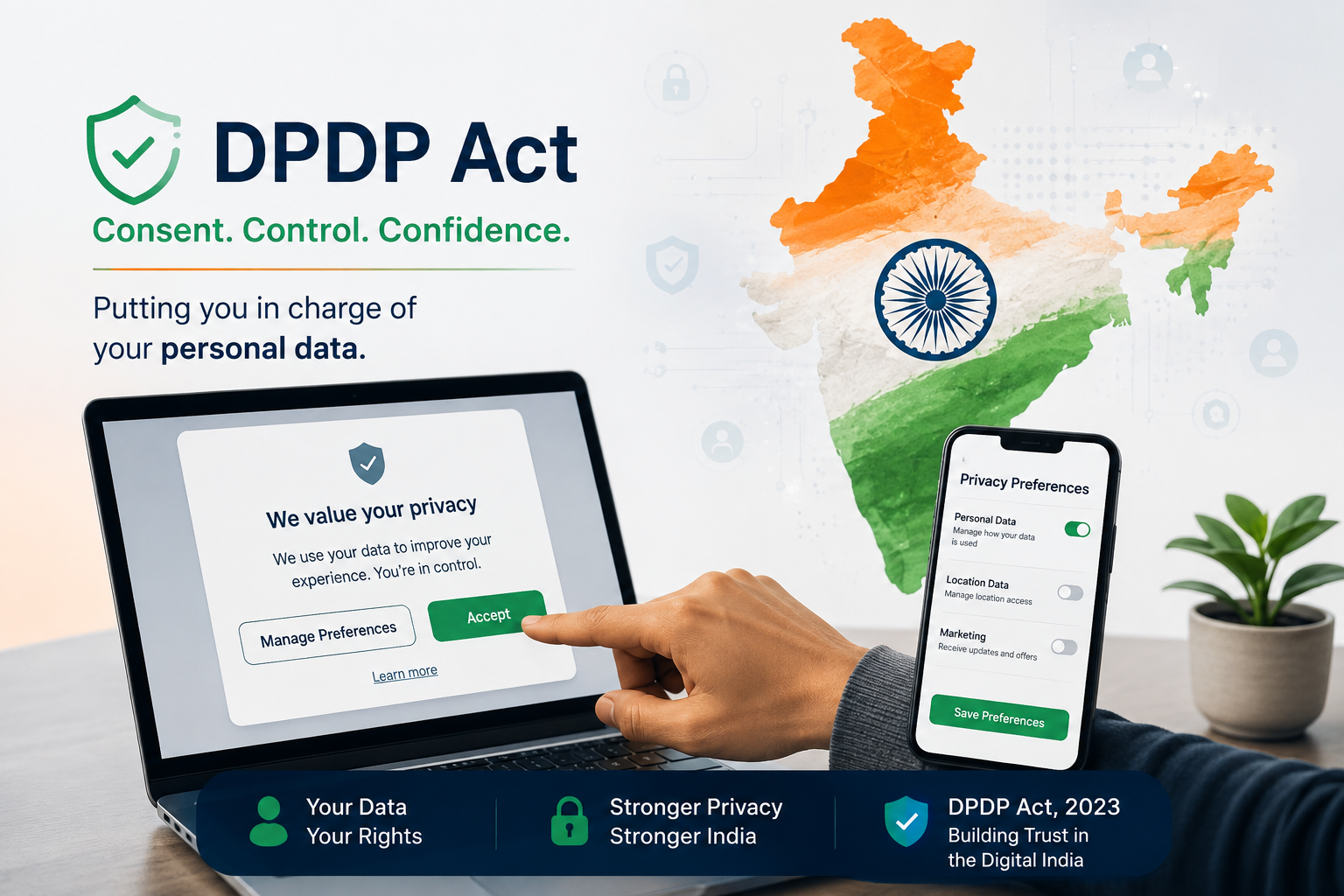

India’s data privacy landscape changed permanently on August 11, 2023. The Digital Personal Data Protection Act arrived, and with it came a reality that businesses can no longer sidestep: if you collect personal data from Indian users, you need their explicit, informed, and revocable consent. Not a checkbox. Not a buried privacy policy. Real consent.
The DPDP Act is unambiguous about the consequences of non-compliance. Penalties can reach up to ₹250 crore per violation. For many organisations, that number alone warrants an immediate audit of how they currently collect and manage user consent. However, beyond the fear of penalties, there is something more fundamental at stake: user trust.
This is where a robust DPDP Consent Management Platform becomes not just a compliance tool, but a business asset. The right consent management system ensures that every interaction you have with user data is transparent, documented, and legally defensible.
In this article, we break down the top 5 consent management platforms in India that are purpose-built or well-adapted for DPDP compliance. Each platform brings something distinct to the table. Moreover, the goal here is to help you make an informed decision, not simply present a list.
What the DPDP Act Actually Demands from Your Consent Management System
Before comparing platforms, it helps to understand exactly what the law requires. Many businesses assume that adding a cookie banner is sufficient. Under DPDP, it is not.
The Act mandates that consent must be free, specific, informed, unconditional, and unambiguous. There can be no pre-ticked boxes. Every consent request must be accompanied by a standalone notice in plain language, available in English or any of the 22 languages listed in the Eighth Schedule of the Indian Constitution. Furthermore, users must be able to withdraw their consent as easily as they gave it, and organisations must honour that withdrawal immediately.
This means your consent platform needs to handle several interconnected tasks simultaneously. First, it must collect purpose-specific consent, not blanket permissions. Second, it must store immutable, time-stamped consent records that can withstand regulatory scrutiny. Third, it must offer users a clear dashboard to view, update, or revoke their choices. Fourth, it must sync those choices in real time across every system that processes personal data.
That is a significant technical and operational undertaking. A strong DPDP Consent Management Platform handles all of this automatically, reducing both compliance risk and internal workload.
Why the Right Consent Platform Matters More Than You Think
Here is an insight that most compliance discussions overlook. Many organisations focus heavily on the initial consent collection, which is just one part of the challenge. The harder problem is what happens after.
What happens when a user withdraws consent six months later? Is your CRM updated instantly? Does your analytics pipeline stop processing their data? Can you produce a timestamped audit trail proving that their withdrawal was honored?
Without a centralised consent management platform, answering these questions is nearly impossible. You would be relying on a patchwork of manual processes across multiple systems, which inevitably creates compliance gaps.
A well-implemented consent solution becomes your single source of truth for all consent-related data. It tracks every grant, every update, and every revocation. It connects to your downstream systems. And when an auditor from the Data Protection Board asks for proof of compliance, you can generate a complete report in minutes, not weeks.
With that context in place, let us look at the platforms that are leading this space in India.
Top 5 DPDP Consent Management Platforms in India
1. Secure CMS by SecureDApp — The Enterprise-Grade, Security-First Choice
When it comes to combining enterprise consent management with genuine security expertise, Secure CMS by SecureDApp stands apart from the crowd. Most consent platforms are built by privacy specialists. Secure CMS is built by a cybersecurity company that deeply understands what happens when data is mishandled, and has engineered its platform accordingly.
SecureDApp is a recognised leader in blockchain security and data protection, and that security-first philosophy is embedded in every layer of Secure CMS. The platform is designed to do far more than collect consent. It is built to protect consent data with the same rigor that enterprises apply to their most sensitive assets.
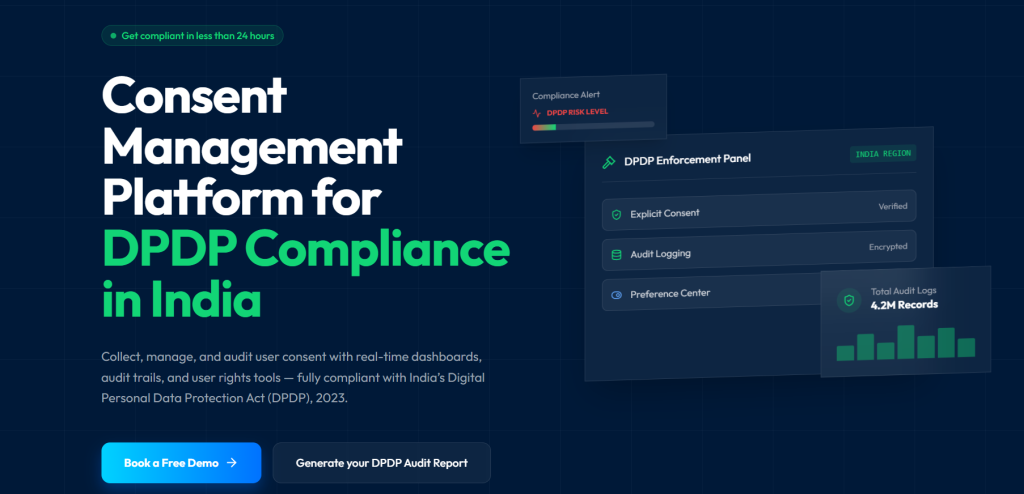
Key Features of Secure CMS:
Centralised Consent Dashboard:
SecureCMS allows organisations to design and enforce enterprise-wide consent and preference policies from a single, unified dashboard. Every touchpoint across web, mobile, and backend systems is aligned with DPDP Act Section 6, GDPR Article 7, CPRA Section 1798, and other global frameworks simultaneously. For businesses operating across jurisdictions, this multi-jurisdiction capability is invaluable.
Real-Time Consent Orchestration:
When a user updates or withdraws their consent, SecureCMS streams those updates instantly across all connected systems. There is no lag, no manual sync, and no compliance gap. This real-time consent orchestration ensures that customer choices are honoured the moment they are made, across every channel where their data is processed.
Developer-Friendly API Integration:
SecureCMS is built for seamless integration. It offers plug-and-play connectors and developer-friendly APIs that embed consent management directly into marketing, product, and analytics workflows. This means your engineering team is not building consent infrastructure from scratch; instead, they are connecting a battle-tested system to your existing stack.
Granular Role-Based Access Control:
Not everyone in your organisation needs the same level of access to consent data. SecureCMS enables fine-grained role and permission configuration, ensuring that each team member can view or act only on the consent data relevant to their function. This principle of least privilege is critical for maintaining data integrity and preventing internal misuse.
Audit-Ready Compliance Packs:
When regulatory scrutiny arrives, SecureCMS delivers. The platform generates exportable compliance packs that document consent capture, preference changes, and processing purposes for every applicable jurisdiction. These packs are specifically aligned with DPDP Act Section 6 requirements, making them immediately usable in audits or investigations.
Encrypted Storage and Retention Controls:
Consent records are sensitive data in their own right. SecureCMS stores them with full encryption, redundancy, and retention controls engineered to protect this data at scale. This is not a bolt-on security feature. It is a foundational architectural decision, reflecting SecureDApp’s broader commitment to security-first design.
Automated Rights Management Workflows:
Handling data principal rights requests, such as access, correction, and erasure, manually is both slow and error-prone. SecureCMS automates these approval chains and preference updates so that requests under DPDP, GDPR, LGPD, and CPRA are honoured instantly while minimising the manual effort required from your compliance team.
Why Secure CMS Stands Out:
The market is increasingly crowded with consent platforms that offer similar feature lists. What sets SecureCMS apart is where it comes from. SecureDApp’s core expertise lies in protecting digital systems from sophisticated threats. That same DNA is what makes SecureCMS uniquely suited for enterprises that take data security as seriously as they take compliance.
Most consent management tools store consent records and call it a day. SecureCMS treats those records as critical assets that need the same protection afforded to financial data or intellectual property. For CTOs and CISOs evaluating a DPDP Compliance Consent Management Platform, that distinction matters enormously.
Additionally, SecureCMS is designed for scale. Whether you are a growing startup managing thousands of consent records or a large enterprise handling millions of data principals across multiple channels, the platform is architected to grow with you without requiring a system overhaul.
Best For: Enterprises, security-conscious organisations, companies operating across multiple privacy jurisdictions, and teams that need a unified consent management system with robust security controls.
2. Concur — The India-Native Consent Platform for DPDP Compliance
Among the platforms built specifically for the Indian market, Concur has emerged as a widely recognised name in DPDP consent management. Unlike many global platforms that retrofitted their products to meet Indian regulatory requirements, Concur was built from the ground up with the DPDP Act in mind.
This India-first approach is visible in how the platform handles some of the compliance requirements that trip up foreign tools. Concur supports multilingual consent notices across Indian languages, which is a core DPDP requirement. It also provides a clean, intuitive interface that makes it accessible not just to compliance teams, but to business users who need to set up consent flows without deep technical expertise.
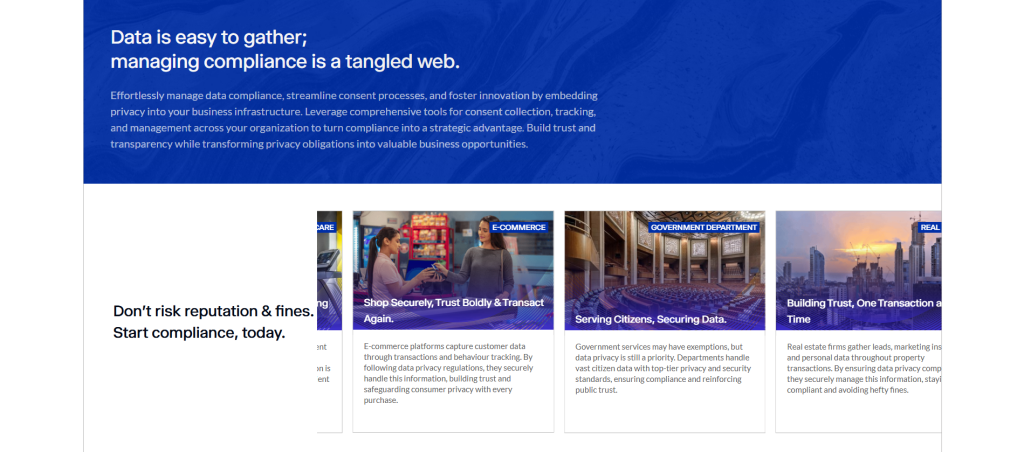
Key Capabilities:
Concur offers real-time consent orchestration, ensuring that user choices are honoured across websites, apps, and enterprise systems the moment they are updated. Its consent dashboard gives organisations a centralised view of all consent activity, including withdrawal events, preference changes, and processing logs.
The platform is particularly well-regarded for its audit trail depth. Every consent interaction is timestamped and stored with full traceability, making regulatory reporting straightforward. Furthermore, Concur provides flexible APIs for integration with existing digital ecosystems, which is essential for businesses that need a consent solution to plug into their current marketing and CRM infrastructure.
For startups and small-to-medium businesses entering the DPDP compliance journey, Concur’s no-code setup and ready-to-use templates lower the barrier significantly. Organisations can deploy DPDP-compliant consent banners and preference centers in a short time, which is valuable given the tight compliance timelines businesses are now navigating.
Concur also offers data lifecycle management and third-party risk management features, extending its value beyond pure consent collection into broader DPDP compliance territory.
Best For: Startups, SMBs, and India-first organisations looking for a purpose-built, straightforward DPDP consent management tool with strong local compliance alignment.
3. Seqrite Data Privacy — Enterprise Depth with Cybersecurity Integration
Seqrite, a subsidiary of Quick Heal Technologies and a well-established name in Indian enterprise cybersecurity, brings a distinctive approach to consent management. Its data privacy platform treats consent management as one component of a broader, integrated privacy and security posture, which is a fundamentally different perspective from standalone consent tools.
What makes Seqrite particularly noteworthy is its Bhashini-powered multilingual support. Consent notices and preference options are available in all 22 Indian languages, which directly addresses one of the most operationally complex aspects of DPDP compliance for organisations serving users across India’s diverse linguistic landscape.
Key Capabilities:
Seqrite’s consent management module handles the full consent lifecycle, including explicit purpose linkage, multilingual notices, and immutable time-stamped audit logs that cover consent grant, update, and withdrawal. This lifecycle approach ensures that consent data remains accurate and traceable at every stage, not just at the point of initial collection.
The platform automatically discovers cookies across websites and implements customizable consent banners, giving web teams a ready-made solution that stays current with evolving privacy requirements. Users are empowered with an intuitive preference portal to update or revoke their choices easily.
One of Seqrite’s most compelling differentiators is its integration with the broader Seqrite security ecosystem. Organisations using Seqrite’s endpoint protection, data loss prevention, or threat intelligence capabilities can extend those security controls directly into their data privacy operations. This makes Seqrite an exceptionally strong choice for enterprises that want their consent management to operate as part of a unified security and privacy framework rather than as a siloed tool.
Seqrite also covers breach notification workflows, automating alerts and notification templates for both the Data Protection Board and affected individuals. Given that breach management is directly tied to consent-related failures under DPDP, having this capability within the same platform is a meaningful operational advantage.
Best For: Enterprises in BFSI, healthcare, and IT sectors that need consent management embedded within a broader cybersecurity and data governance infrastructure.
4. GoTrust — Multi-Jurisdictional Consent with a Regional Focus
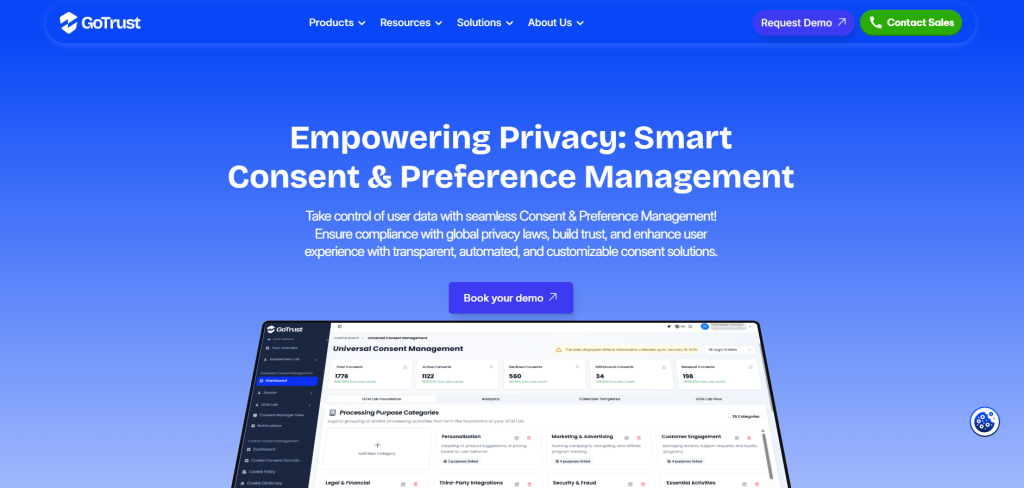
GoTrust takes a consent and preference management approach that is notable for its emphasis on India’s linguistic diversity and its readiness for multi-jurisdictional compliance. For organisations that operate across both Indian and global markets, GoTrust offers a unified consent management platform capable of aligning with GDPR, DPDPA, CCPA, and other major privacy frameworks from a single system.
The platform supports consent banners in over 12 regional Indian languages, including Hindi, Tamil, Marathi, and Bengali. For brands that serve users in tier-2 and tier-3 cities, or those with significant rural user bases, this regional language capability is not a nice-to-have. It is a compliance requirement under DPDP and a meaningful driver of user comprehension and trust.
Key Capabilities:
GoTrust integrates with websites and applications to collect and manage consent in real time, storing records in a centralised system that supports audit reporting and compliance assessments. It enforces user choices across all platforms and provides granular consent options that allow users to specify their preferences with precision rather than accepting blanket permissions.
The platform’s mobile-first design reflects an understanding of how Indian users actually interact with digital services. Real-time analytics help organisations understand consent rates and identify friction points in the consent experience. Geolocation targeting allows businesses to serve appropriate consent experiences to users based on their location, which is valuable for global consent management platforms operating across different regulatory environments.
GoTrust positions itself as a partner for organisations at various stages of their privacy journey, from early-stage fintech and healthtech startups to established enterprises navigating multi-regulation compliance.
Best For: Organisations targeting diverse Indian audiences across linguistic regions, businesses managing consent across multiple jurisdictions, and companies looking for a mobile-optimised consent solution.
5. Privy by IDfy — Identity-Linked Consent for Trust-Sensitive Industries
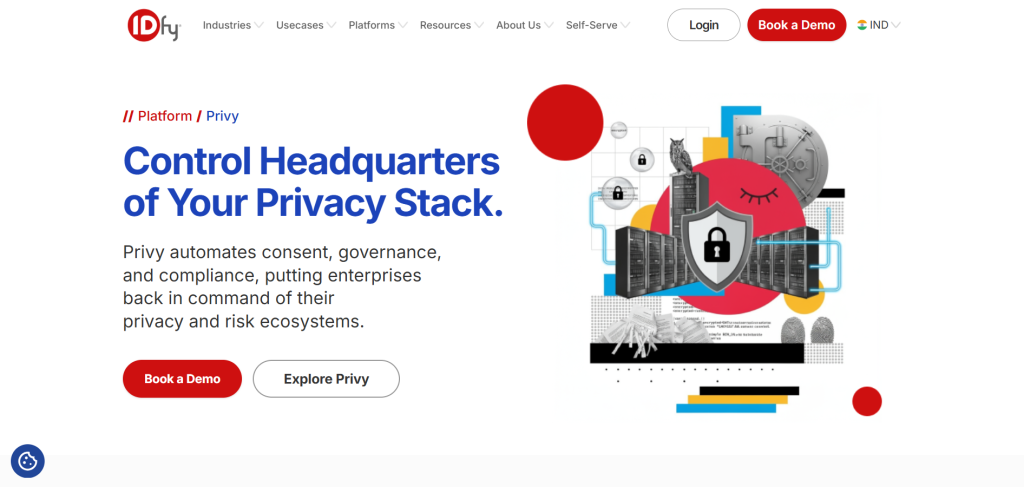
Privy by IDfy brings a perspective on consent management that is closely tied to digital identity infrastructure. IDfy is a well-known identity verification platform in India, and Privy extends that expertise into consent management with a focus on verifiable, identity-anchored consent flows.
For industries where consent is closely coupled with identity verification, such as BFSI, lending, insurance, and healthcare, this linkage is operationally significant. When you can tie a consent record directly to a verified identity, the evidentiary value of that record in a regulatory context is substantially higher.
Key Capabilities:
Privy offers an AI-driven compliance gap detection system that automatically identifies areas where consent collection may fall short of applicable requirements. This proactive monitoring is valuable for organisations that are managing consent across complex, multi-product digital ecosystems where gaps can appear in unexpected places.
The platform supports data handling across multiple languages and regions, making it relevant for organisations with geographically distributed user bases. Its design emphasises transparency and user trust, presenting consent options in a clear, accessible format that helps users make informed decisions rather than simply clicking through prompts.
Privy is built to integrate with IDfy’s broader identity verification and KYC infrastructure, which makes it particularly well-suited for regulated industries where identity and consent are inseparable parts of the same compliance workflow. For financial institutions, lending platforms, and insurance providers navigating both DPDP requirements and sector-specific regulations like RBI guidelines, this integration can meaningfully reduce the complexity of compliance operations.
Best For: Financial services, lending, insurance, and other regulated industries where consent management needs to be closely integrated with identity verification and KYC workflows.
How to Choose the Right DPDP Consent Management Platform for Your Business
Selecting a consent platform is not a one-size-fits-all decision. The right choice depends on your organisation’s scale, technical architecture, industry, and the specific compliance requirements you face.
Start by mapping your consent touchpoints. Where are you currently collecting user data? Websites, mobile apps, offline forms, IVR systems, marketing emails? Each of these touchpoints needs a compliant consent mechanism, and your platform must be able to manage all of them from a single system.
Next, consider your integration requirements. A consent management system that operates in isolation is only partially effective. It needs to connect to your CRM, your marketing automation platform, your analytics tools, and your data processing systems. The more seamlessly it integrates, the more reliably it enforces user consent choices across your operations.
Think carefully about audit readiness. When the Data Protection Board requests proof of compliance, you need to produce complete, accurate, and timestamped records of every consent interaction. A platform that generates audit-ready exports on demand dramatically reduces the operational burden of regulatory engagement.
Finally, consider your longer-term privacy strategy. DPDP compliance is not a one-time project. It is an ongoing operational commitment that will evolve as the Act’s rules are refined and as your business grows. Choose a platform that scales with you and that is actively maintained to keep pace with regulatory changes.
Conclusion: Consent Management Is a Strategic Decision, Not Just a Compliance Checkbox
The DPDP Act has fundamentally redefined what it means to responsibly handle personal data in India. At its core, the Act is about returning control to the individual; therefore, every business that processes personal data must, in turn, rebuild its consent infrastructure to meet this new standard.
In this context, choosing the right DPDP Consent Management Platform is not merely about staying on the right side of the law, although, undeniably, that alone is a compelling reason. Rather, it is about building a transparent and trustworthy data relationship with users, which, in the long run, translates into sustained business value. Moreover, as user awareness around data rights continues to grow, organisations are increasingly expected to demonstrate accountability at every stage of data processing.
Among the platforms reviewed, SecureCMS by SecureDApp stands out, primarily because it offers a comprehensive combination of enterprise-grade consent management, a security-first architecture, and robust multi-jurisdiction compliance capabilities. In addition, for organisations that recognise that consent data is, in fact, highly sensitive, and therefore requires equally strong protection mechanisms, SecureCMS delivers a level of depth and reliability that few platforms can match.
Whether you are a startup beginning your DPDP compliance journey or an enterprise managing millions of consent records across multiple channels, the time to act is now. This is especially important because the Data Protection Board’s enforcement mechanisms are steadily taking shape. Consequently, organisations that implement robust consent solutions today will be far better positioned to demonstrate compliance. At the same time, they will be able to build stronger user trust and, ultimately, operate with greater confidence in India’s rapidly evolving data privacy landscape.
Frequently Asked Questions
1. What is a DPDP Consent Management Platform?
A DPDP Consent Management Platform is a software system that helps businesses collect, store, manage, and audit user consent in compliance with India’s Digital Personal Data Protection Act 2023. It ensures that every instance of personal data processing is backed by valid, documented, and legally compliant user consent.
2. Is a Consent Management Platform mandatory under the DPDP Act?
Under the DPDP Act, Data Fiduciaries are required to obtain free, specific, informed, and unambiguous consent before processing personal data. However, while the Act does not explicitly mandate the use of a specific software platform, in practice, the operational complexity involved in managing consent at scale significantly increases. As a result, for businesses handling large volumes of user data, implementing a dedicated Consent Management Platform becomes not just beneficial, but practically necessary.
3. What happens if a business does not implement proper consent management?
Non-compliance with the DPDP Act’s consent requirements can result in penalties of up to ₹250 crore per violation from the Data Protection Board of India. Beyond financial penalties, organisations face reputational damage and potential operational restrictions.
4. Can a single Consent Management Platform handle both Indian and global privacy regulations?
Yes. Platforms like Secure CMS and GoTrust are designed as multi-jurisdiction consent management platforms capable of aligning with GDPR, CCPA, DPDPA, LGPD, and other major frameworks from a single system.
5. What is the difference between a Consent Management Platform and a Cookie Consent Platform?
A Cookie Consent Platform addresses the specific requirement to obtain user permission for cookie usage on websites. A full Consent Management Platform is broader in scope. It manages consent across all types of personal data processing, across multiple channels and touchpoints, and across multiple regulatory frameworks.