

Most Web3 projects launch with confidence. The whitepaper is solid, the tokenomics make sense, the team is capable. And then, sometimes within weeks of going live, a vulnerability in a smart contract drains everything.
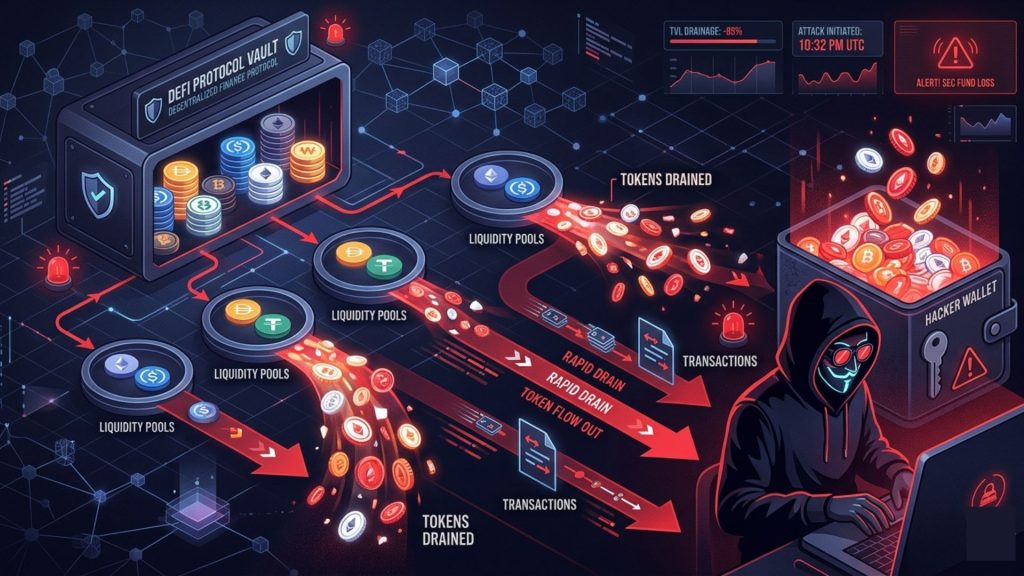
This is not a rare edge case. It is a recurring pattern across DeFi protocols, NFT platforms, cross-chain bridges, and Web3 applications of every size. The common thread is not negligence. It is a fundamental misunderstanding of why smart contract security is critical for every Web3 project, regardless of how well-built the rest of the stack appears to be.
In 2026, the blockchain threat landscape is more sophisticated than it has ever been. Attacks are faster, more targeted, and often orchestrated by groups with deep technical expertise and significant capital. Understanding what you are up against, and why security cannot be treated as an afterthought, is the starting point for building anything durable in this space.
The Immutability Problem: Why Blockchain Creates Unique Security Stakes
Traditional software has a safety net that most developers take for granted. When a bug is found in a web application or a mobile app, a patch can be deployed within hours. Users might experience a brief disruption, but the underlying system can be corrected.
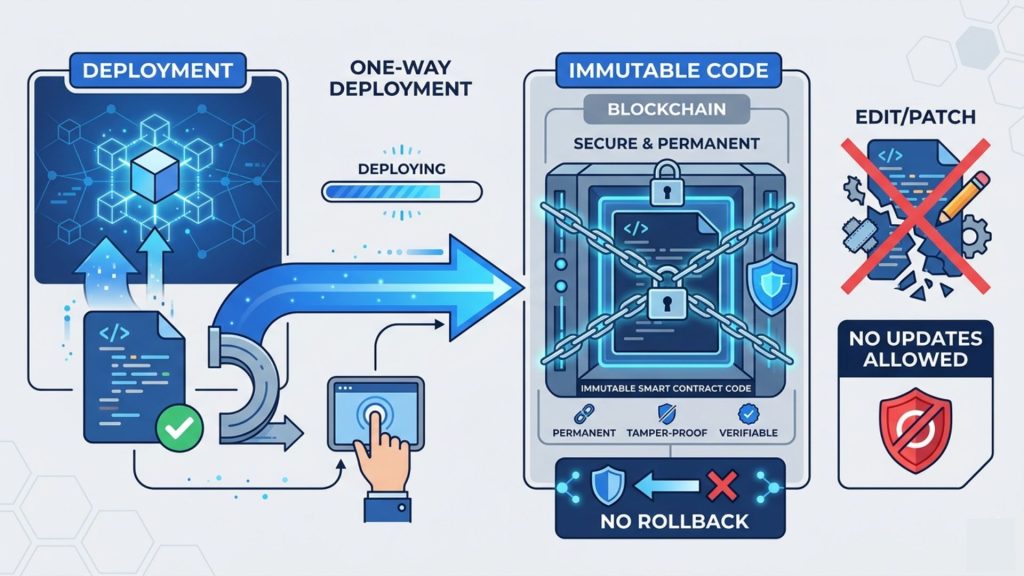
Smart contracts do not work this way. Once deployed on a public blockchain, code is typically immutable. There is no central server to update, no database rollback to trigger, no administrator account to log into and fix the problem. The contract executes exactly as written, indefinitely, regardless of whether those instructions contain flaws.
This immutability is the core of what makes blockchain trustworthy. It is also what makes smart contract security critical in a way that no other software category quite matches. A vulnerability in a deployed contract is not a problem you can fix later. It is a permanent liability, sitting on-chain, waiting to be discovered by someone with the skills and motivation to exploit it.
For Web3 founders and CTOs evaluating their security posture, this asymmetry should inform every architectural decision made during development. The cost of getting it right before deployment is always lower than the cost of getting it wrong after.
What Is Actually at Risk in a Smart Contract Exploit?
When security professionals talk about smart contract vulnerabilities, the conversation often gravitates toward technical details. Reentrancy functions, integer overflow conditions, oracle price manipulation. These are real and important, but they can obscure the bigger picture for non-technical stakeholders.
So let us be direct about what is actually at stake.
First and most obviously, there is financial loss. Smart contracts in DeFi protocols routinely hold tens or hundreds of millions of dollars in liquidity. An exploit that drains a lending pool, arbitrages a pricing vulnerability, or manipulates a governance mechanism can transfer enormous value out of a protocol within a single block.
Second, there is user trust. A protocol that suffers a major security incident often does not recover its user base, even if the team attempts a compensatory token distribution or a technical post-mortem. The relationship between a Web3 project and its users is built almost entirely on trust in the code. When that trust breaks, the community often does not return.
Third, there is regulatory exposure. In 2026, regulators across multiple jurisdictions are paying close attention to blockchain projects, particularly those with significant user bases or those handling tokenized real-world assets. A security breach that results in user losses now carries the additional risk of attracting regulatory scrutiny, potential enforcement action, and accelerated compliance obligations that the team was not prepared for.
Fourth, and often underestimated, there is reputational damage to the broader ecosystem. Every major exploit generates negative headlines that affect sentiment across the entire space. Projects that take security seriously and build visible security practices into their operations contribute to a healthier ecosystem reputation. Those that cut corners do the opposite.
The Hidden Attack Surface Most Web3 Teams Underestimate
Ask a Web3 developer about their security strategy, and most will mention their audit. Ask them about their dependencies, their oracle integrations, their upgrade mechanisms, and their cross-chain bridge configurations, and the conversation often becomes less confident.
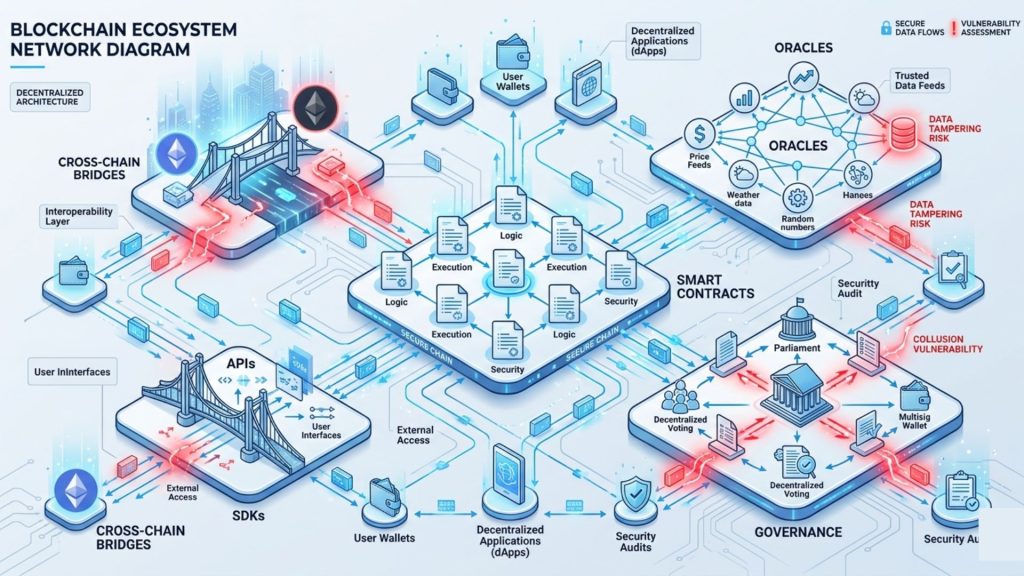
This is the hidden attack surface that makes smart contract security so challenging in practice. It is rarely just one contract. Modern Web3 protocols are systems of interconnected contracts, external dependencies, price feeds, governance modules, and infrastructure components. The security of the overall system is only as strong as its weakest interaction.
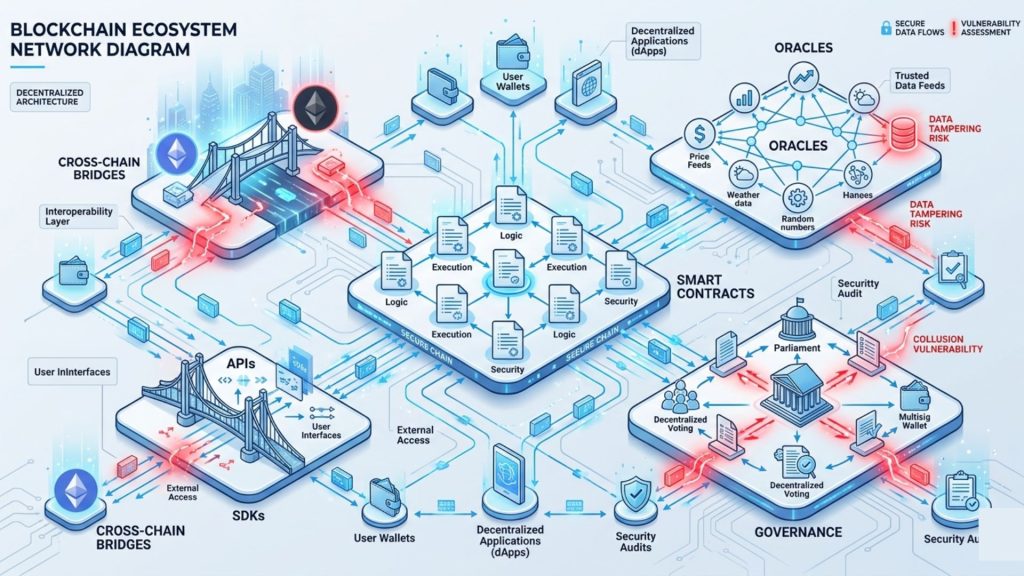
Consider the role of price oracles. Many DeFi protocols rely on external data feeds to calculate asset valuations, determine collateralization ratios, and trigger liquidations. An attacker who can temporarily distort the price feed that a contract trusts, using a large flash loan to manipulate a thinly-traded market, for example, can create conditions the contract’s logic was never designed to handle. The code executes correctly based on the information it received. The exploit is in the system design, not the syntax.
Or consider upgrade proxies. To preserve some flexibility after deployment, many protocols implement upgradeable proxy patterns. These are genuinely useful but introduce their own security considerations. Who controls the upgrade mechanism? Under what conditions can it be triggered? What governance safeguards exist to prevent a single compromised key from pushing a malicious upgrade? These questions fall outside the scope of a standard code review unless the auditing team specifically examines governance and access control architecture.
Cross-chain bridge integrations add yet another layer of complexity. As protocols expand across multiple chains to access broader liquidity and user bases, the bridge contracts that connect these chains have become some of the most attractive targets in the ecosystem, accounting for a disproportionate share of the largest exploits in recent years.
Understanding the full attack surface, not just the primary contract file, is essential to understanding why smart contract security is critical at the project level rather than just the code level.
Pre-Deployment Security: What a Serious Audit Actually Covers
For most teams, the audit is the most familiar piece of the security picture. It is also the most frequently misunderstood in terms of what it does and does not guarantee.
A serious pre-deployment smart contract audit is not a rubber stamp. It is a systematic, expert-driven examination of code designed to surface vulnerabilities before they can be exploited on a live network. The quality of this examination varies enormously across providers, which is why understanding what a thorough audit involves matters for teams making procurement decisions.
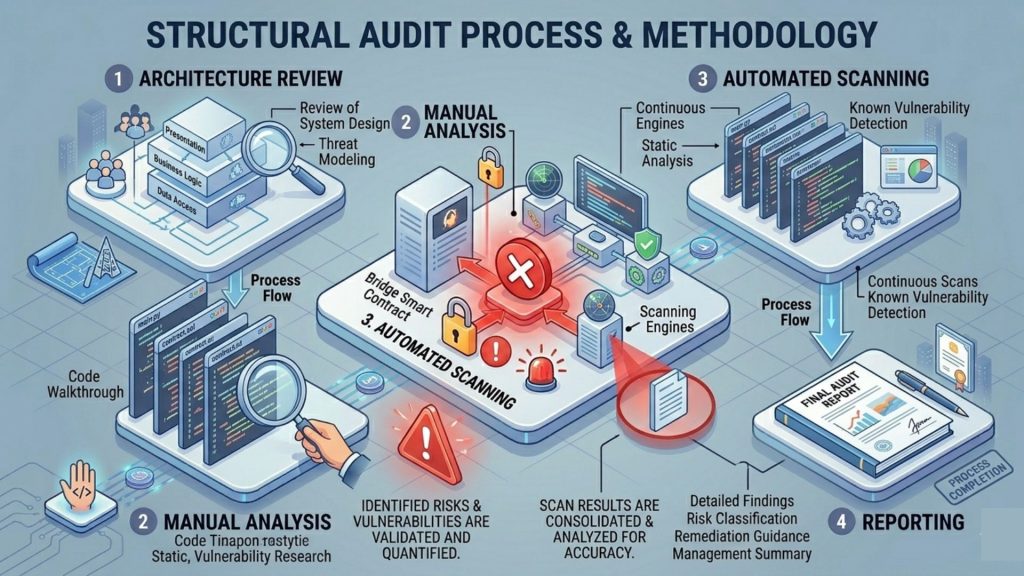
Strong auditing begins with a thorough architecture review. Before examining individual contract functions, experienced auditors map the full system: how contracts interact with each other, what roles have elevated permissions, how funds flow through the protocol, and what external dependencies the system trusts. This architectural understanding shapes every subsequent finding.
The core review combines manual analysis with automated tooling. Manual review by security researchers with Solidity expertise is irreplaceable for catching logic errors, economic design flaws, and contextual vulnerabilities that automated scanners cannot recognize. Automated static analysis tools scan efficiently for known vulnerability patterns and flag potential issues at scale. Neither approach alone is sufficient. The strongest audits use both.
Economic security analysis is the component most often absent from lower-quality audits. The question is not just whether the code is syntactically correct, but whether the incentive structures and economic assumptions underlying the protocol hold up under adversarial pressure. Flash loan attacks, governance manipulation, and liquidity-based exploits frequently target economic logic rather than code bugs.
Solidity Shield, the smart contract auditing tool from SecureDApp, is built around this kind of comprehensive scope. Rather than limiting the review to surface-level vulnerability scanning, it is designed to address both the technical and structural risk dimensions that a complete pre-deployment review requires.
Beyond the audit itself, remediation matters. A finding that is identified but not properly addressed before deployment is effectively a known vulnerability. Teams should budget not just for the initial audit engagement but for the remediation cycle and re-review of critical findings. Rushing through remediation to meet a launch deadline is a pattern that has preceded some notable incidents in the space.
The Audit Is a Starting Line, Not a Finish Line
This is the insight that separates security-mature Web3 teams from those who have not yet had the experience of a post-audit incident. Passing an audit is a meaningful achievement. It is also just the beginning of the security journey.
The moment a smart contract goes live, it enters an environment that no audit can fully anticipate. Real users interact with it in unexpected ways. New tokens appear that create novel edge cases in pricing logic. Governance proposals modify parameters with unintended downstream effects. External protocols that yours integrates with get updated, changing their behavior in ways that were not tested against your codebase.
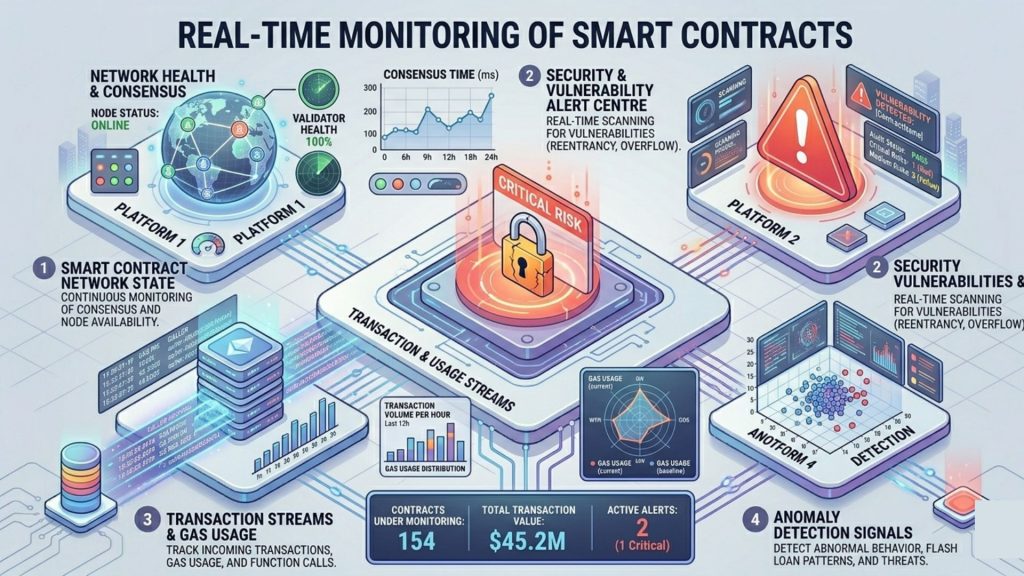
Audits assess the code as it existed at a point in time. They cannot monitor what happens to that code in a live environment where conditions are constantly changing. This is the fundamental limitation that makes post-deployment monitoring not a luxury but a necessity for any protocol managing meaningful value.
Post-deployment monitoring means watching on-chain contract behavior continuously, looking for anomalies that deviate from expected patterns. Unusual transaction volumes. Function calls outside normal parameters. Asset flows that do not match the protocol’s intended mechanics. The goal is not just to know that an exploit happened, but to detect the early signals of an exploit in progress and enable intervention before losses become catastrophic.
SecureDApp’s SecureWatch platform is designed specifically for this layer of protection. It provides AI-driven threat detection with continuous on-chain monitoring, and critically includes AutoPause, a mitigation capability that can automatically suspend suspicious transactions or contract activity when a threat signature is detected. For protocols where the difference between early detection and a full exploit can be measured in millions of dollars, this kind of active defense posture changes the risk profile substantially.
The combination of a thorough pre-deployment audit and continuous post-deployment monitoring is the foundation of a security strategy that actually matches the threat environment in 2026.
Governance Security: The Vector Most Projects Ignore Until It Is Too Late
Decentralized governance is one of the defining features of Web3. It is also an attack surface that receives far less security attention than it deserves.
Governance exploits are not theoretical. Several high-profile protocols have suffered attacks in which a threat actor accumulated governance tokens, often via flash loans, and used them to push through a malicious proposal that redirected treasury funds or modified critical protocol parameters. Because the governance mechanism functioned exactly as designed, these exploits did not trigger conventional security alerts.
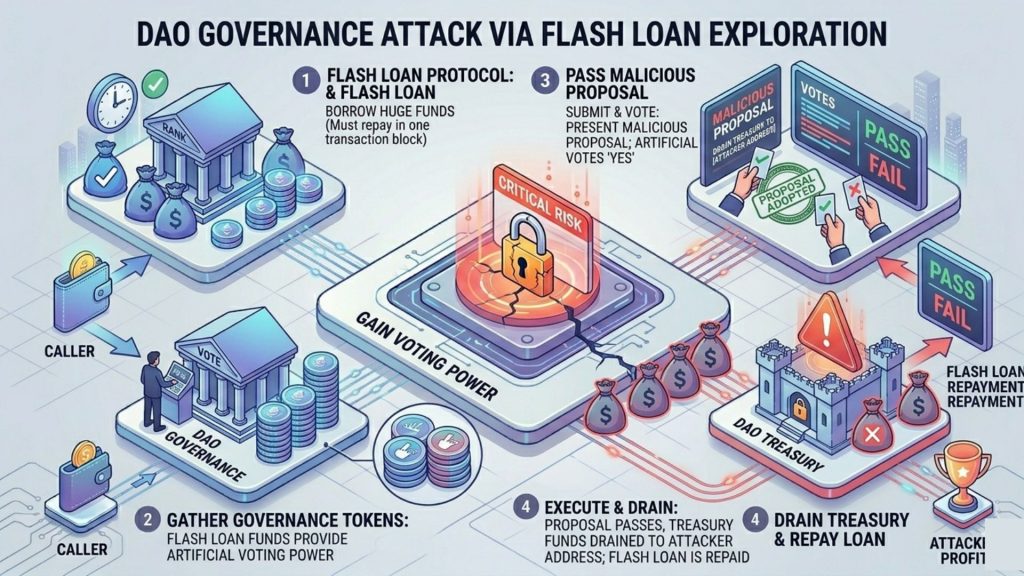
The security considerations around governance are distinct from code-level vulnerability analysis. They include questions about voting power distribution, proposal timelock periods, quorum requirements, and the conditions under which emergency actions can be taken. They also include questions about who controls privileged roles in the system and how those keys are secured.
Multi-signature wallet configurations, hardware security modules for key storage, and robust operational security practices for team members with elevated system access all fall under the umbrella of smart contract security even though none of these appear in the Solidity code itself.
Web3 teams that think about security purely in terms of code review are leaving their governance layer largely unexamined. And in a space where a single governance vote can redirect significant protocol value, that is a meaningful blind spot.
Transaction Monitoring, Forensics, and the Importance of Knowing What Happened
Even with strong pre-deployment auditing and continuous runtime monitoring, incidents can still occur. The blockchain security landscape is adversarial, and determined attackers with sophisticated techniques will occasionally find paths that defenses did not anticipate. This is not a reason to abandon security investment. It is a reason to also invest in the capability to understand and respond effectively when something goes wrong.
Blockchain forensics refers to the analysis of on-chain transaction data to reconstruct what happened during and after a security incident. Which functions were called, in what sequence, by which addresses, across which chains. Tracing fund movements through wallet clusters, mixers, bridges, and exchanges. Understanding the attack vector and quantifying the total loss.
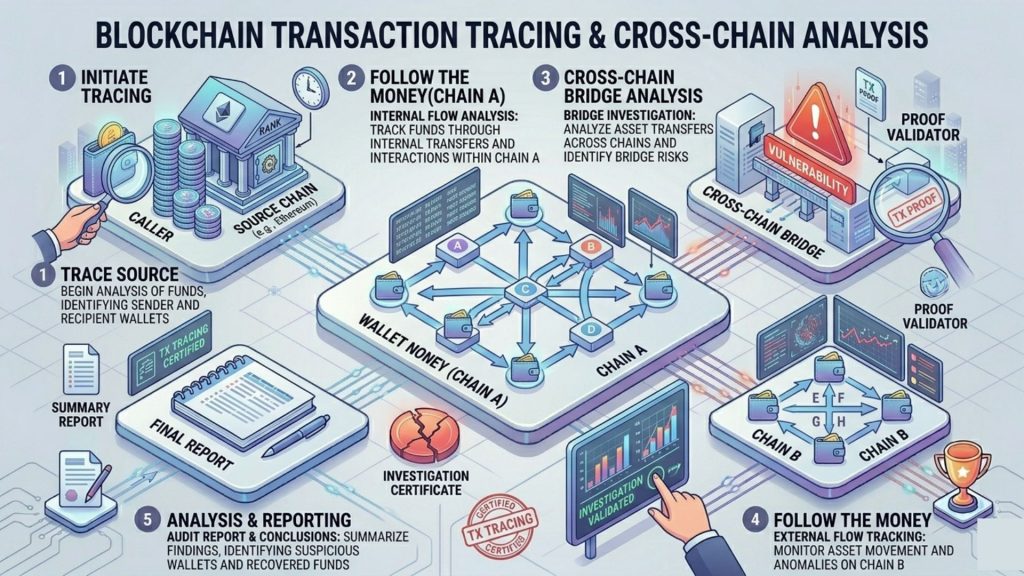
This capability matters for multiple reasons. For protocol teams, it enables a complete post-mortem that can inform architectural improvements and prevent recurrence. For affected users, it provides transparency about what occurred and how. For regulators and law enforcement, it creates the evidentiary record necessary for any investigative or recovery efforts.
SecureDApp’s SecureTrace product addresses this layer, providing transaction tracking and blockchain forensics capabilities that support investigation, reporting, and compliance documentation following security incidents. In an environment where regulatory scrutiny of blockchain projects is increasing across multiple jurisdictions, the ability to demonstrate transparent, documented incident response is increasingly valuable.
Compliance, Identity, and the Evolving Regulatory Dimension
Smart contract security in 2026 does not exist in a regulatory vacuum. Across the EU, the US, India, Singapore, and the Gulf states, blockchain and DeFi regulation has moved from discussion to active implementation. For Web3 projects that serve broad user bases or handle tokenized real-world assets, compliance obligations now intersect directly with security architecture.
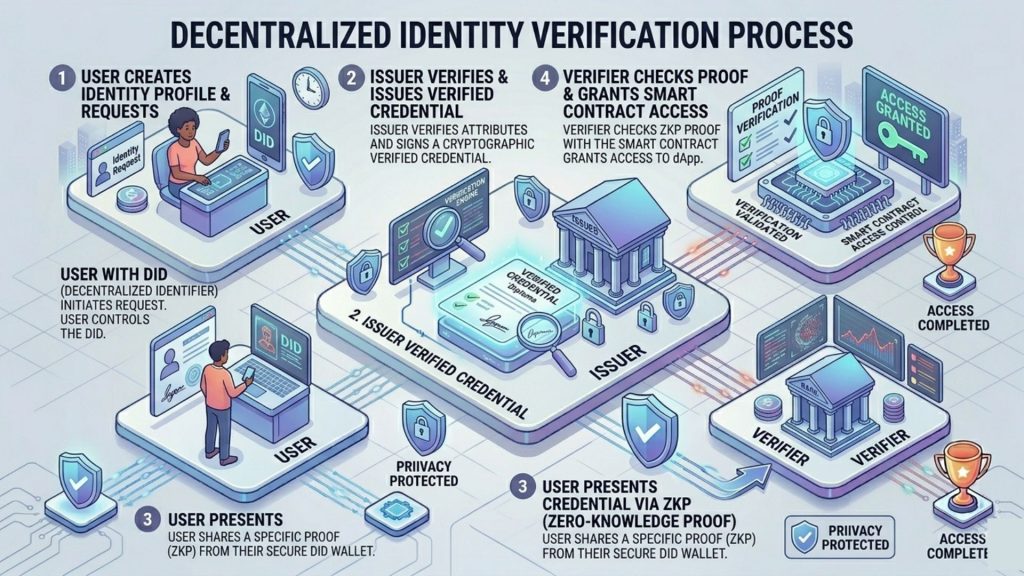
Anti-money laundering requirements, know-your-customer verification, and transaction reporting obligations are increasingly being applied to DeFi protocols, not just centralized exchanges. For protocol teams, this creates a technical challenge: how do you implement compliance requirements on a system designed for permissionless access without compromising the core user experience?
Decentralized identity, or DiD, infrastructure is one part of the answer. DiD systems allow users to prove verified attributes such as KYC status, residency, or accreditation without exposing sensitive personal data on-chain. Smart contracts can reference these verified credentials to gate access to specific protocol functions while preserving privacy and user autonomy.
SecureDApp’s Secure X-DiD solution operates in this space, holding OVIS SE certification from UIDAI, the Unique Identification Authority of India. For Web3 platforms navigating the intersection of permissionless design and regulatory compliance requirements, a certified decentralized identity layer provides a credible pathway that does not require abandoning Web3 principles.
The broader point is that security and compliance are converging disciplines for Web3 projects in 2026. A protocol that is genuinely secure, with strong access controls, auditability, transaction traceability, and documented security practices, is also a protocol that is substantially more prepared for the compliance obligations that are becoming unavoidable in major markets.
Building a Security Culture, Not Just a Security Checklist
The teams that build the most durable Web3 projects share something beyond technical competence. They treat security as a core value rather than a line item in a pre-launch checklist.
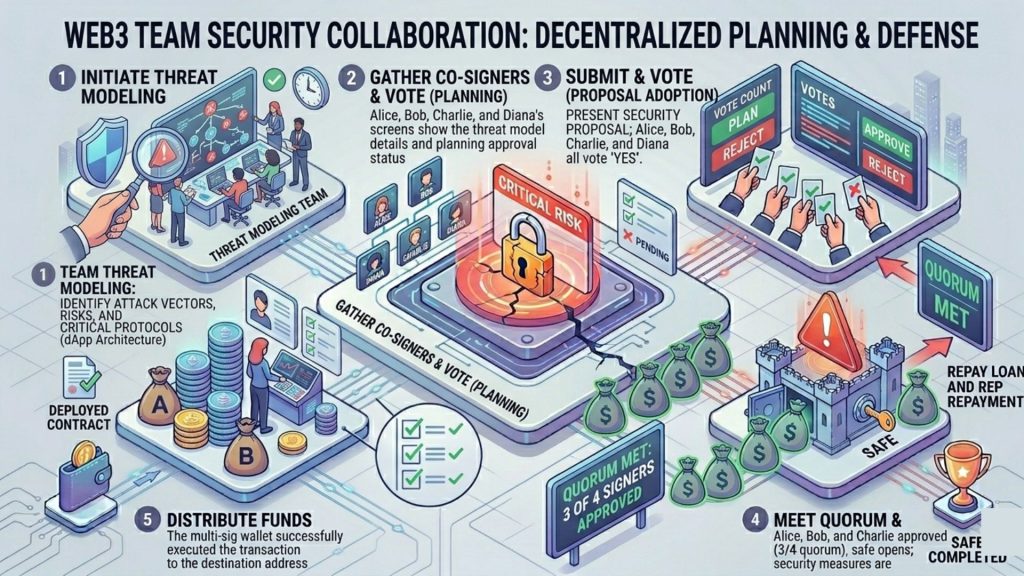
This cultural dimension is harder to quantify than a list of audit findings, but it shows up clearly in how decisions get made. Security-conscious teams ask adversarial questions during architecture review meetings. They allocate time for threat modeling before writing production code. They include security researchers in protocol design discussions, not just code reviews. They build incident response plans before they are ever needed, and they practice those plans.
This kind of approach does not guarantee that no incident will ever occur. The threat environment is too dynamic for any absolute guarantee. But it substantially changes the probability and severity distribution of security outcomes. Protocols with embedded security cultures tend to catch vulnerabilities earlier, respond to incidents more effectively, and recover their community relationships more successfully when problems do arise.
For Web3 founders building teams and practices in this space, the investment in security culture is as important as the investment in any specific tool or audit engagement.
Conclusion
Why smart contract security is critical for every Web3 project comes down to a simple and uncomfortable truth: in this environment, a single vulnerability can undo everything else a team has built. The immutability of on-chain code, the scale of value at risk, the sophistication of the threat actors, and the growing weight of regulatory expectation have collectively made security not optional but foundational.
The good news is that the tools and practices to build genuinely secure protocols exist. Pre-deployment auditing that covers both technical and economic risk. Continuous post-deployment monitoring with active mitigation capability. Blockchain forensics for incident response. Decentralized identity infrastructure for compliance. These are not aspirational categories. They are available now, and the teams using them are building more durable, more trustworthy protocols as a result.
SecureDApp’s suite of products, from Solidity Shield for pre-deployment auditing through SecureWatch for runtime threat detection, SecureTrace for forensics, and Secure X-DiD for on-chain identity, reflects what a complete Web3 security architecture looks like when built with the real threat environment in mind. Not a single tool. Not a single audit. A connected set of defenses matched to the full lifecycle of on-chain risk.
Security is not a cost. In Web3, it is the precondition for everything else.
Frequently Asked Questions
1. Why is smart contract security critical for every Web3 project?
Because smart contracts are immutable once deployed, financially consequential, and increasingly targeted by sophisticated attackers. A vulnerability cannot be patched after the fact, and the losses from an exploit can be irreversible.
2. Does every Web3 project need a smart contract audit?
Yes. Any contract managing user funds or critical protocol logic should be audited by an independent, qualified security team before deployment, regardless of the protocol’s size or stage.
3. What is the difference between a smart contract audit and continuous monitoring?
An audit is a pre-deployment, point-in-time code review. Continuous monitoring watches on-chain contract behavior in real time after deployment, detecting anomalies that may signal an ongoing attack.
4. What are the most common causes of smart contract exploits?
Reentrancy vulnerabilities, access control failures, oracle manipulation, flash loan attacks, and economic design flaws are among the leading causes of smart contract security incidents.
5. What is AutoPause in smart contract monitoring?
AutoPause is a mitigation feature that can automatically suspend suspicious transactions or contract activity when a threat is detected in real time, limiting potential damage before manual intervention occurs.
6. How does governance affect smart contract security?
Governance mechanisms control protocol upgrades, parameter changes, and treasury access. If governance is exploitable, such as through flash loan-based voting power accumulation, the protocol can be compromised even if the core contracts are technically sound.
7. What is blockchain forensics and when is it used?
Blockchain forensics involves analyzing on-chain transaction data to trace fund movements and reconstruct attack sequences following a security incident. It supports incident response, user communication, and regulatory compliance.
8. Can smart contract security help with regulatory compliance?
Yes. Strong security practices, including transaction monitoring, audit trails, access controls, and decentralized identity integration, directly support the compliance obligations that are increasingly being applied to Web3 protocols.
9. What is a flash loan attack?
A flash loan attack uses uncollateralized, same-transaction borrowing to temporarily distort market conditions or accumulate voting power, exploiting protocol logic that was not designed to handle such conditions.
10. What is decentralized identity (DiD) and how does it relate to security?
DiD systems allow users to prove verified attributes on-chain without exposing personal data. They enable smart contracts to enforce access controls based on verified credentials, supporting compliance requirements in a privacy-preserving way.
11. How should a Web3 team respond to a smart contract security incident?
Activate the incident response plan, engage monitoring and forensics tools to understand the attack vector, communicate transparently with users, and work with security specialists to assess options for mitigation or recovery.
12. What is Solidity Shield?
Solidity Shield is a smart contract auditing tool designed for pre-deployment vulnerability detection, covering both technical and structural risk dimensions across a protocol’s full architecture.
13. How does oracle manipulation work as an attack vector?
If a protocol relies on an external price feed that can be temporarily distorted through large trades, an attacker can create conditions the contract logic was not designed to handle, triggering liquidations, enabling arbitrage, or draining funds.
14. What security considerations apply to smart contract upgrade mechanisms?
Upgrade proxies introduce questions about who controls the upgrade key, what governance safeguards exist, and how the upgrade process is protected from a single point of compromise. These require explicit security review beyond standard code analysis.
15. What is VAPT in a Web3 security context?
Vulnerability Assessment and Penetration Testing for blockchain environments involves systematically identifying and testing weaknesses across smart contracts, APIs, infrastructure, and supporting systems through both manual and automated techniques.