
Many founders and CTOs have heard the phrase often enough: you need to audit your smart contracts before launch. The message is clear. The process behind it, however, remains a mystery to most teams who have never been through one.
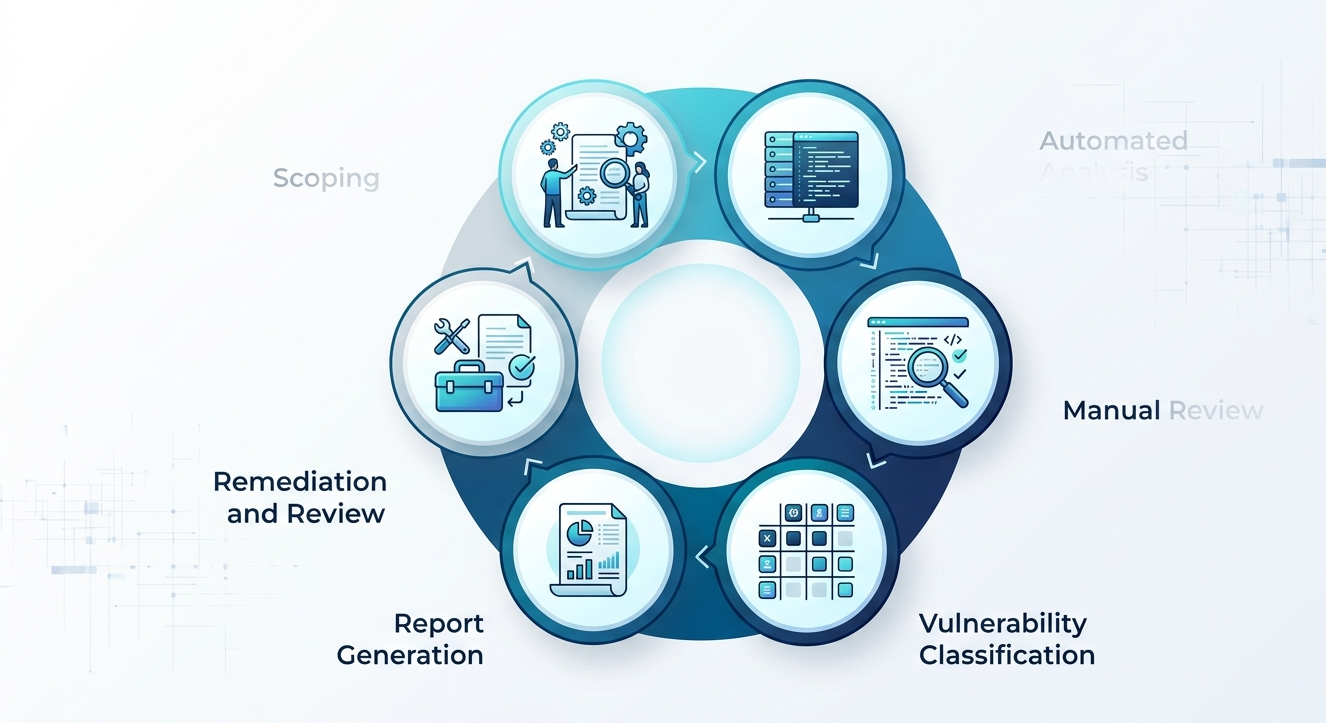
What does an auditor actually do with your code? How does a vulnerability get found? What does the report look like, and what happens after you receive it? These are reasonable questions, and the answers matter for setting expectations, preparing properly, and getting the most out of the engagement.
This guide walks through the full lifecycle of a smart contract security audit, from the first scoping conversation to the final remediation review, so your team knows exactly what to expect and how to prepare.
Phase 1: Scoping and Kickoff
Every audit begins before a single line of code is reviewed. The scoping phase is where the firm and the development team align on what will be reviewed, what the intended behavior of each contract is, and what success looks like.
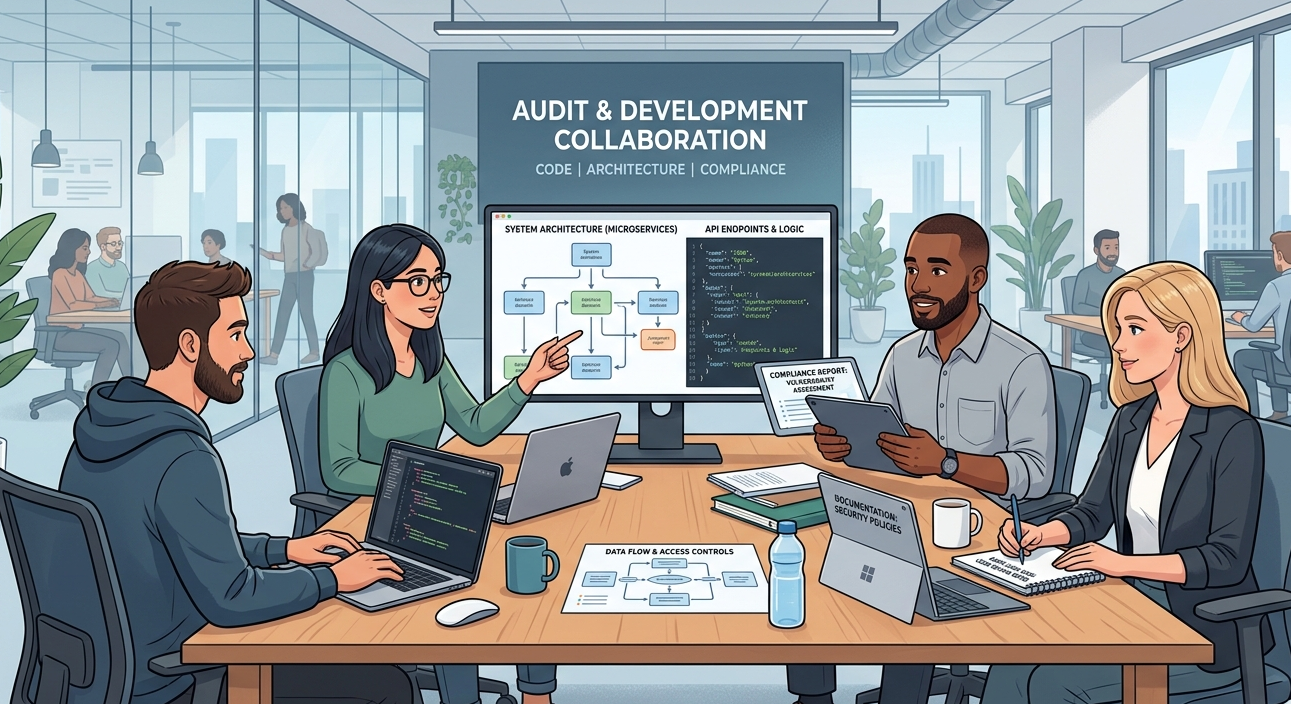
During scoping, you will typically be asked to provide your full codebase, documentation, architecture diagrams, and any relevant specifications. You will be asked about the intended functionality of each contract, the user flows that matter, and any specific areas of concern you already have.
Good auditors take this phase seriously. They use it to understand the purpose of your system, not just its structure. A contract that looks unusual to an auditor who does not understand your business logic might be perfectly rational in context. Misunderstanding intent leads to false findings and missed real ones.
At the end of scoping, you should receive a clear document outlining the audit scope, the methodology, the timeline, and the expected deliverables. If a firm skips this phase and goes straight to billing, that is a red flag.
Phase 2: Automated Analysis
Once scoping is complete, most serious audit firms begin with a layer of automated analysis. Tools like Slither perform static analysis, identifying known vulnerability patterns, code quality issues, and structural problems. Fuzzing tools like Echidna or Foundry-based property testing run your contracts through large numbers of randomized inputs, looking for conditions that break invariants.
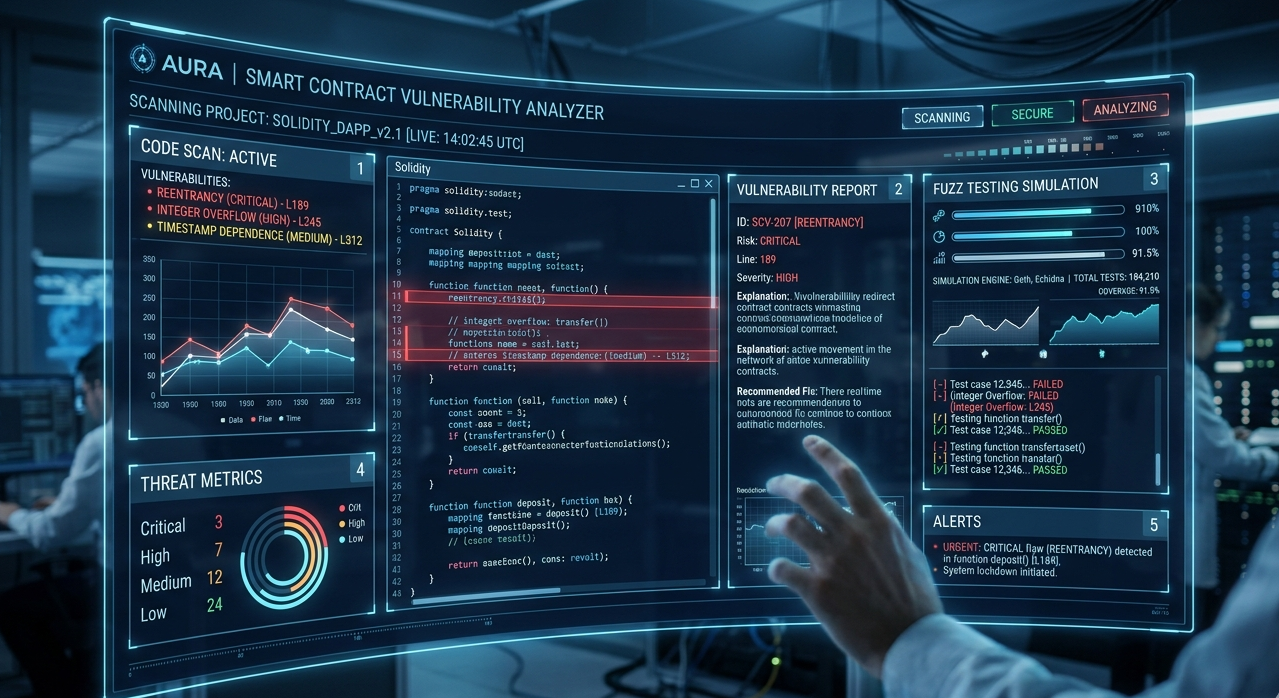
Automated analysis is efficient and broad. It covers your entire codebase consistently, without the attention fluctuations that human reviewers experience. It is particularly good at catching common vulnerability classes: reentrancy without proper guards, integer arithmetic issues, unchecked return values, and access control patterns that do not match expected behavior.
However, automated analysis has well-understood limitations. It generates false positives that require human judgment to filter. It cannot understand the economic logic of your protocol. And it cannot identify vulnerabilities that emerge from the interaction of correct-looking components in unexpected sequences.
The findings from automated analysis are typically filtered and triaged by experienced auditors before being included in any report. Raw scanner output without expert curation is not an audit. It is noise.
Phase 3: Manual Code Review
Manual review is the heart of a thorough smart contract security audit. This is where experienced auditors read your code the way an attacker would, exploring every path, questioning every assumption, and asking what could go wrong that the original developers did not anticipate.

During manual review, auditors trace execution paths through your contracts, paying particular attention to state changes, value transfers, and permission checks. They look at how your contracts handle edge cases: what happens at zero values, at maximum values, when multiple transactions execute in the same block, when a user passes unexpected input.
They also examine the economic logic of your protocol. For DeFi projects specifically, this means modeling how the protocol behaves under adversarial market conditions, including flash loan attacks, price oracle manipulation, and liquidity withdrawal sequences that your normal user assumptions would not predict.
Manual review takes time because it requires genuine understanding of your codebase, not just pattern recognition. A competent auditor reading a complex DeFi protocol for the first time may need several days just to develop an accurate mental model before meaningful vulnerability hunting can begin.
Phase 4: Vulnerability Classification
As findings emerge, auditors classify them by severity. The classification system varies slightly between firms, but the standard framework includes five levels.
Critical findings represent vulnerabilities that can be exploited to drain funds, take control of the protocol, or cause irreversible damage. These must be fixed before any deployment.
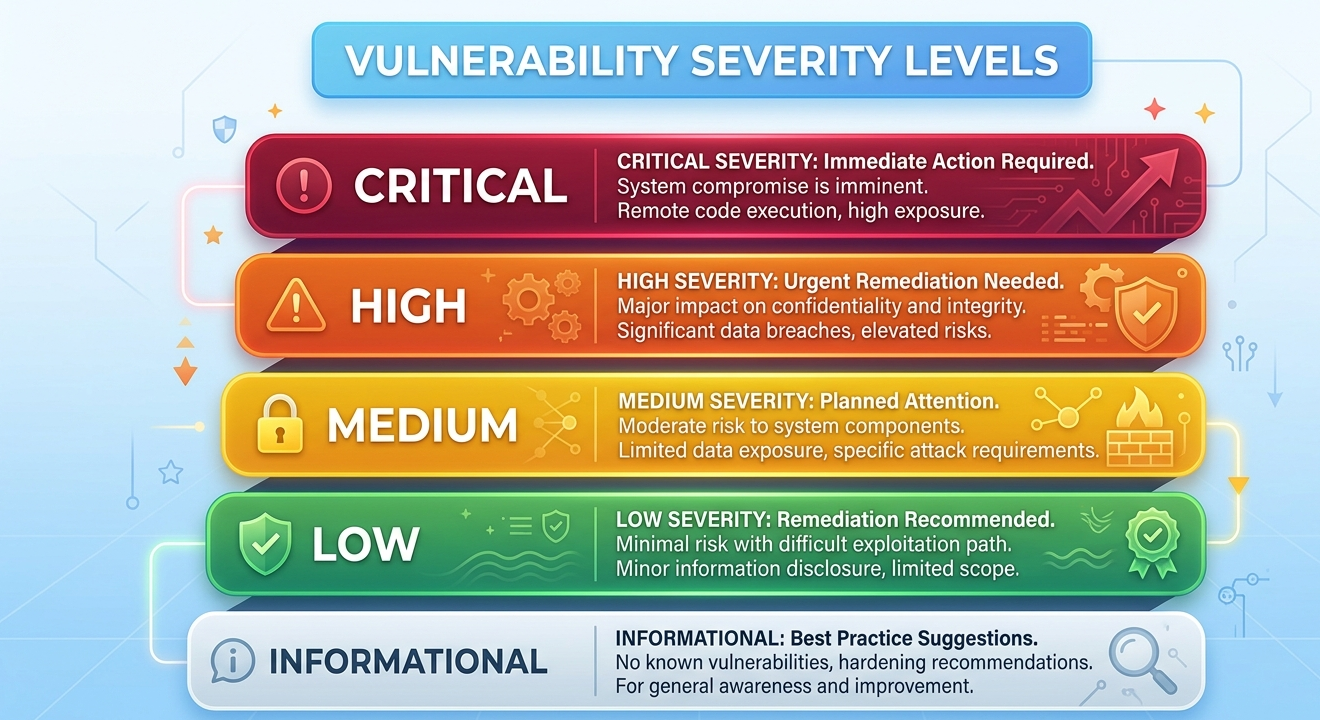
High findings represent significant vulnerabilities that could result in substantial financial loss or system compromise under realistic conditions. These require immediate attention.
Medium findings represent vulnerabilities that could cause problems under specific conditions or require multiple steps to exploit. These should be addressed before launch.
Low findings represent issues with limited exploit potential or requiring highly unlikely preconditions. These should be reviewed and addressed where practical.
Informational findings represent code quality issues, best practice deviations, and areas for improvement that do not represent direct security risks but contribute to overall code health.
The classification process requires judgment. Two auditors might classify the same finding differently based on their assessment of exploit likelihood and impact. Ask your auditor to explain their reasoning for critical and high findings if you disagree with the assessment.
Phase 5: Report Generation
The audit report is the primary deliverable of the engagement. A quality report includes a clear executive summary, a detailed description of each finding, the affected code with precise file and line number references, the potential impact of each vulnerability, and a recommended remediation approach.
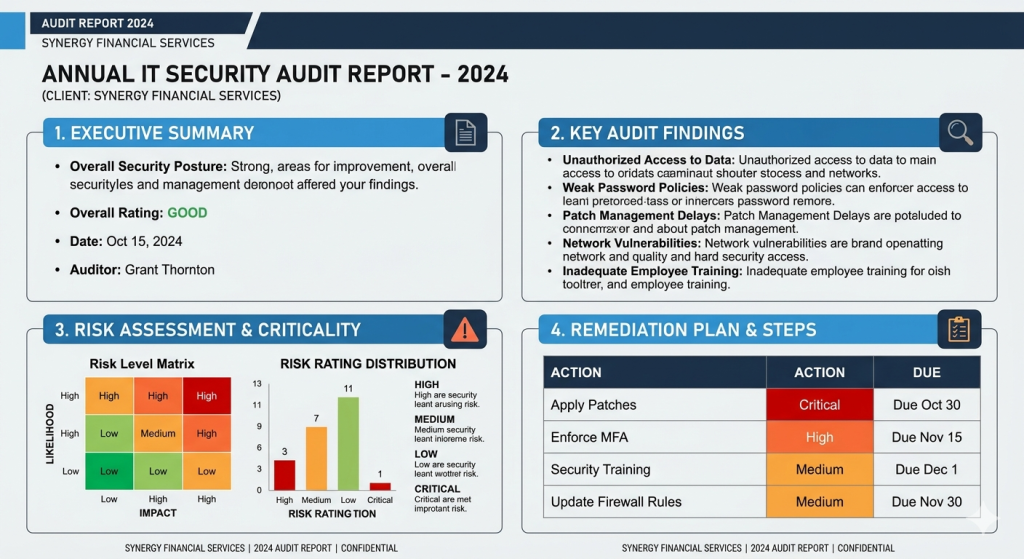
Reports also typically include an overall assessment of the codebase quality, observations about architecture and design patterns, and sometimes a risk rating for the protocol overall.
The best reports are written for two audiences simultaneously. The executive summary speaks to founders and non-technical stakeholders. The detailed findings speak to developers who need to understand the vulnerability in precise technical terms to fix it correctly.
Be wary of reports that are heavy on formatting and light on technical depth. A finding that says ‘reentrancy vulnerability found’ without explaining the specific execution path, the conditions required for exploitation, and the precise mechanism of the fix is not giving you the information you need to address it properly.
Phase 6: Developer Remediation
Receiving the report is not the end. It is the beginning of the most operationally intensive phase for your team. Your developers must now address each finding, starting with the critical and high severity issues.

Remediation requires careful thinking. Fixing one vulnerability carelessly can introduce a new one. Particularly for critical findings that involve fundamental architectural issues, the correct fix may require rethinking significant portions of your codebase.
Communicate with your auditors during this phase. Most quality firms remain available for questions as your team addresses findings. If you are uncertain whether your proposed fix correctly addresses a finding, ask before implementing it.
Build timeline buffer for this phase. Many teams underestimate how long thorough remediation takes. Rushing fixes under launch deadline pressure is a common path to deploying contracts with improperly addressed vulnerabilities.
Phase 7: Remediation Review
Once your team has addressed the findings, the auditor reviews your fixes. This step is critically important and should not be skipped, even under time pressure.
Remediation review confirms that each fix is correct and complete, that the fix does not introduce new vulnerabilities, and that the changes are consistent with the intended behavior of the contract.
A finding marked as ‘resolved’ in your own tracking system is not verified secure until an auditor has confirmed it. Many teams have deployed contracts with improperly implemented fixes for audit findings, creating a false sense of security that is in some ways worse than no audit at all.
How Solidity Shield Supports the Audit Process
Solidity Shield from SecureDApp is designed to strengthen your security posture both during development and in preparation for a formal audit engagement. By running deep automated vulnerability analysis against your Solidity codebase continuously during development, teams can catch and resolve basic issues before they consume expensive audit time.
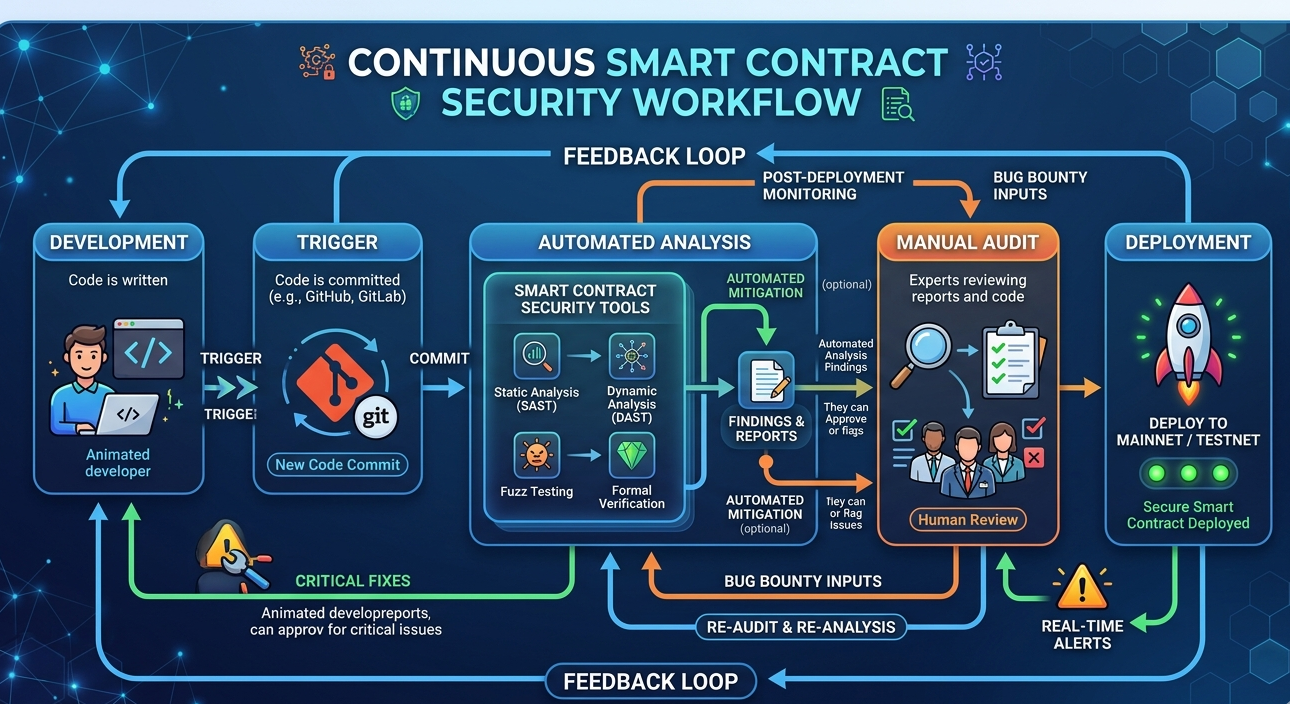
When your code goes into a formal manual audit with common vulnerability patterns already resolved, auditors can focus their expertise on the complex logical, architectural, and economic issues that require human judgment. This improves audit quality without increasing cost.
Think of Solidity Shield as the layer that ensures your audit starts from the strongest possible baseline, so the manual review process can go deeper where depth matters most.
After the Audit: What Comes Next
A completed audit with all critical findings resolved is a significant milestone. However, it marks the beginning of your protocol’s operational security lifecycle, not the end.
After launch, your protocol will encounter conditions that no pre-deployment analysis could fully anticipate. Market dynamics change. New transaction patterns emerge. Governance decisions create new attack surfaces. Ongoing security vigilance is necessary to maintain the protection that your pre-launch audit established.
Smart contract security is not a destination. It is a practice. The audit establishes your starting point. What you do from there determines how well that starting point holds.
Frequently Asked Questions
How long does a typical smart contract security audit take?
Timeline varies significantly with codebase complexity. Simple contracts may be reviewed in three to five business days. Mid-complexity protocols typically take one to three weeks. Complex DeFi systems with multiple interconnected contracts can take four to six weeks or more for a thorough review.
Do I need to prepare documentation before the audit begins?
Yes. Well-prepared documentation, including architecture diagrams, intended behavior specifications, and clear NatSpec comments in your code, makes a meaningful difference in audit quality. Auditors who understand your intended design can distinguish intentional behavior from genuine vulnerabilities more accurately.
Can auditors find every possible vulnerability?
No audit can guarantee complete coverage of all possible vulnerabilities. Audits significantly reduce known risk and catch the vast majority of exploitable patterns. However, new vulnerability classes continue to emerge, and complex system interactions can create issues that no static analysis can fully anticipate.
What should I do if I disagree with a finding?
Raise your objection with the auditor and provide the reasoning behind your interpretation. Good auditors welcome this dialogue. Sometimes your explanation of intent will cause the finding to be reclassified. Sometimes the auditor’s explanation will reveal why your interpretation misses the vulnerability. Either way, the conversation improves the outcome.
How does Solidity Shield fit into an audit workflow?
Solidity Shield works best as a continuous development-phase tool that prepares your codebase for formal audit. Running it throughout development catches common patterns early, so your code arrives at the manual audit phase in a stronger state, allowing auditors to focus on the deep issues that matter most.