
A single wallet moved 340,000 USDC across four bridges in under ninety seconds last year, and by the time most monitoring dashboards flagged it, the funds had already been laundered through six different chains. That is the reality of Web3 security today. Attackers move at machine speed, and defenders who rely on manual review or delayed alerts are always one step behind.
This is exactly why real-time threat monitoring has become the backbone of modern blockchain security. Anomalous wallet detection is no longer a nice-to-have feature bolted onto an audit report. It is the difference between catching an exploit while it is happening and reading about it in a post-mortem.
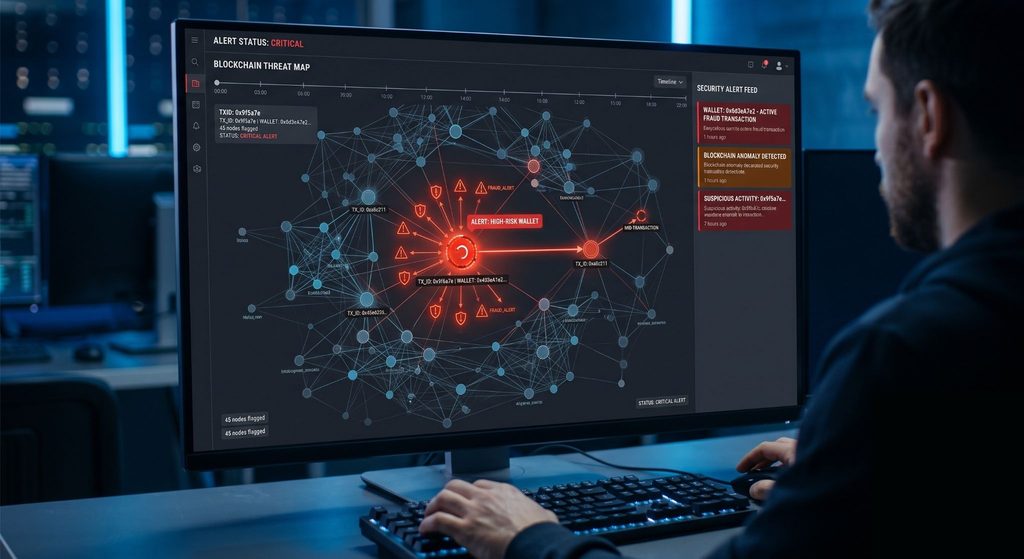
In this guide, we will break down how anomalous wallet detection actually works, what signals matter, which real-time on-chain techniques separate serious security teams from reactive ones, and how protocols can build detection systems that keep pace with attackers instead of chasing them.
Why Anomalous Wallet Detection Matters More Than Ever
DeFi protocols, exchanges, and Web3 platforms operate in an environment where transactions settle in seconds and cannot be reversed. Once funds leave a contract, there is no customer support line to call. Consequently, the entire security model shifts from “detect and recover” to “detect and prevent.”
Wallet behavior is often the earliest and clearest signal that something is wrong. Smart contract exploits, flash loan attacks, rug pulls, and wash trading schemes all leave behavioral fingerprints on the wallets involved, long before the damage becomes irreversible. A wallet that suddenly interacts with a contract it has never touched, moves an unusual volume, or times its transactions around a governance vote is telling a story.
Real-time threat monitoring exists to read that story as it unfolds. Instead of waiting for a batch report the next morning, security teams get alerted the moment behavior deviates from the norm, giving them a window to pause contracts, freeze liquidity, or alert users before the exploit completes.
Moreover, regulators and institutional investors increasingly expect this level of vigilance. As Web3 protocols mature and attract serious capital, the bar for security infrastructure rises with it. A protocol without real-time anomaly detection is, frankly, operating with a blind spot that sophisticated attackers are actively searching for.
What Counts as an Anomalous Wallet
Before diving into detection techniques, it helps to define what “anomalous” actually means in an on-chain context. Not every unusual transaction is malicious, and not every malicious actor behaves erratically. The goal is to identify statistically meaningful deviations from expected patterns.
Behavioral Red Flags
Several patterns consistently show up across historical exploits and scams:
- Sudden interaction with high-risk contracts, such as newly deployed or unaudited protocols
- Rapid sequences of transactions that bypass normal user timing patterns
- Wallets funded exclusively through mixers or privacy protocols immediately before a large transaction
- Coordinated activity across multiple wallets that appear unrelated on the surface
- Transfers structured just below reporting or alert thresholds
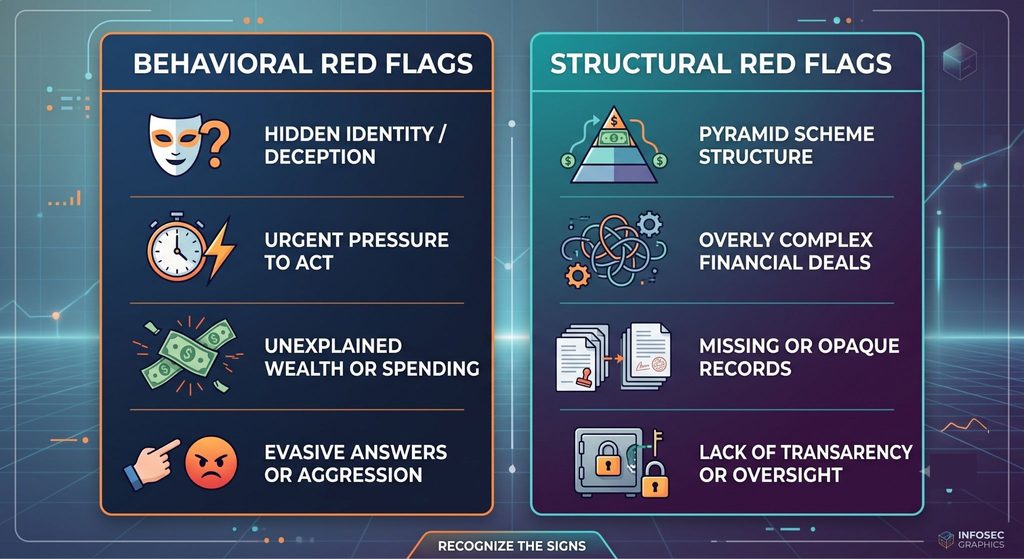
Structural Red Flags
On top of behavioral signals, structural properties of a wallet itself can raise suspicion. A wallet created minutes before executing a large transaction, one with no prior transaction history, or one connected through funding chains to previously flagged addresses all warrant closer inspection.
Therefore, effective detection systems combine both dimensions. Behavior tells you what a wallet is doing right now, while structure tells you where that wallet came from and what it is connected to. Neither alone gives the full picture.
The Cost of Getting Detection Wrong
Before exploring the techniques themselves, it is worth pausing on what happens when detection fails or arrives too late. In several high-profile DeFi exploits, the attack itself lasted only minutes, yet the funds took hours or days to fully launder across bridges, mixers, and exchanges. That gap represents a missed opportunity.
Every minute between the first anomalous transaction and the first security response is a minute an attacker uses to obscure the trail. Consequently, protocols that treat monitoring as a background process rather than a real-time discipline are effectively giving attackers a head start they do not need to have.
There is also a reputational cost that outlasts the financial one. Users remember which protocols responded quickly and transparently, and which ones stayed silent for days while investigators pieced together what happened. Real-time threat monitoring is not just a technical safeguard; it is also what allows a team to communicate with confidence the moment something goes wrong, rather than scrambling to understand the situation themselves.
The Core Techniques Behind Real-Time On-Chain Monitoring
Now let’s get into the actual mechanics. Building a system capable of real-time threat monitoring requires several layers working together, each catching different types of anomalies.
1. Rule-Based Threshold Detection
The simplest and fastest layer involves predefined rules: transaction size limits, velocity caps, and interaction blacklists. If a wallet moves more than a set percentage of a pool’s total value in a single transaction, or interacts with a known malicious contract address, the system triggers an immediate alert.
Rule-based detection is not sophisticated, but it is fast, and speed matters enormously in real-time systems. It catches the obvious cases instantly while more complex models process subtler patterns in the background.
2. Graph-Based Relationship Analysis
Every wallet exists within a network of transactions, and that network reveals far more than any single address in isolation. Graph analysis maps the connections between wallets, tracing fund flows across multiple hops to identify clusters of coordinated activity.
This technique is particularly powerful against Sybil attacks and wash trading, where dozens of seemingly unrelated wallets are actually controlled by a single actor. By analyzing shared funding sources, similar transaction timing, and common destination addresses, graph-based systems expose these hidden relationships in near real time.
3. Behavioral Baselining and Statistical Deviation
Every wallet, protocol, and liquidity pool has a baseline of normal activity. Behavioral baselining establishes what “normal” looks like for a given address or contract, then flags deviations that fall outside expected statistical ranges.
For instance, if a wallet typically executes two to three transactions per week averaging a few hundred dollars, a sudden transaction worth fifty times that average is a clear deviation. Consequently, this technique adapts naturally to each wallet’s unique history rather than applying a single rigid threshold across the board.
4. Machine Learning Anomaly Scoring
Machine learning models add a layer of pattern recognition that static rules simply cannot match. These models are trained on historical exploit data, labeled fraudulent transactions, and known attack patterns, allowing them to score new transactions on a probability scale rather than a binary flag.
Unsupervised learning models, such as clustering and isolation forests, are especially useful here because they can identify novel attack patterns that have never been seen before. This matters because attackers constantly evolve their methods specifically to evade known detection rules.
5. Mempool-Level Monitoring
Perhaps the most powerful real-time technique is monitoring the mempool itself, the pool of pending transactions before they are confirmed on-chain. By analyzing transactions before they settle, security teams gain a critical head start.
Mempool monitoring allows detection systems to spot front-running attempts, sandwich attacks, and flash loan exploits in the milliseconds before execution. In practice, this is often the only layer fast enough to enable actual prevention rather than after-the-fact response.
6. Cross-Chain Correlation
Attackers increasingly exploit the fragmentation of blockchain ecosystems, moving funds across bridges to obscure their trail. Effective anomaly detection today cannot stop at a single chain. Cross-chain correlation tracks wallet activity across multiple networks simultaneously, stitching together a unified view of fund movement.
This is technically demanding, since it requires ingesting and normalizing data from different chains with different block times and data structures. However, without it, an attacker can simply hop chains to disappear from a single-chain monitoring system entirely.
7. Smart Contract Interaction Fingerprinting
Beyond wallet-to-wallet analysis, another layer worth examining is how a wallet interacts with smart contracts over time. Legitimate users tend to follow predictable patterns: approving a token, swapping through a familiar router, and interacting with a small set of trusted protocols repeatedly.
Attackers, on the other hand, often interact with a contract exactly once, in a very specific sequence designed to exploit a vulnerability. Fingerprinting the shape of these interaction sequences, rather than just the destination addresses, helps detection systems catch exploit attempts that would otherwise look like ordinary contract calls in isolation.
8. Liquidity and Pool-Level Anomaly Tracking
Individual wallet analysis is essential, but it is not the whole picture. Monitoring systems also need to watch pool-level metrics such as total value locked, price impact per trade, and slippage patterns. A wallet that appears unremarkable on its own can still trigger a significant anomaly if its transaction causes an outsized shift in a pool’s balance.
This technique works hand in hand with wallet-level detection. When an unusual wallet interacts with a pool in a way that produces an unusual price movement, the combination of both signals dramatically increases confidence that something is wrong, reducing false positives that either signal alone might produce.
Building a Real-Time Detection Pipeline
Understanding individual techniques is useful, but they only deliver value when integrated into a cohesive pipeline. Here is how the pieces typically fit together in a production-grade system.
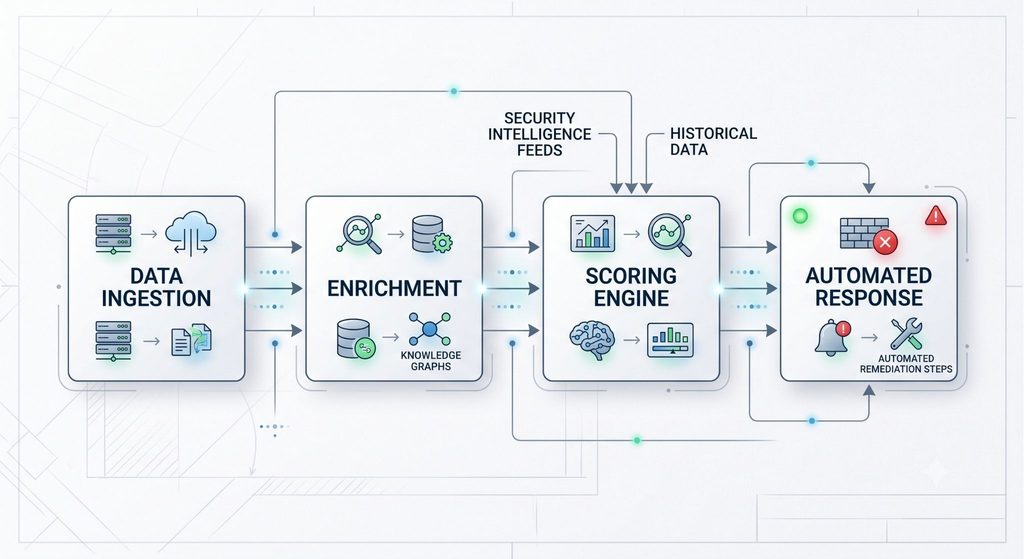
Data Ingestion Layer
The pipeline begins with continuous ingestion of blockchain data, including confirmed blocks, mempool transactions, and event logs from relevant smart contracts. This layer must handle extremely high throughput without introducing latency, since even a few seconds of delay can mean the difference between prevention and cleanup.
Enrichment and Contextualization
Raw transaction data alone tells an incomplete story. Enrichment adds context: wallet age, historical behavior, known labels from threat intelligence feeds, and relationships to previously flagged addresses. This step transforms a plain transaction hash into a meaningful security signal.
Scoring and Alerting Engine
Once enriched, transactions pass through the scoring engine, which applies the combined weight of rule-based checks, behavioral baselines, and machine learning models. Each transaction or wallet receives a risk score, and scores above a defined threshold trigger immediate alerts to security teams or, in more advanced setups, automated response systems.
Automated Response Layer
The most mature protocols do not stop at alerting. They integrate automated response mechanisms such as circuit breakers, transaction pausing, or temporary liquidity locks that activate the moment a critical threshold is breached. This closes the loop between detection and prevention, which is ultimately the entire point of real-time threat monitoring.
Real-Time vs Traditional Monitoring: A Clear Comparison
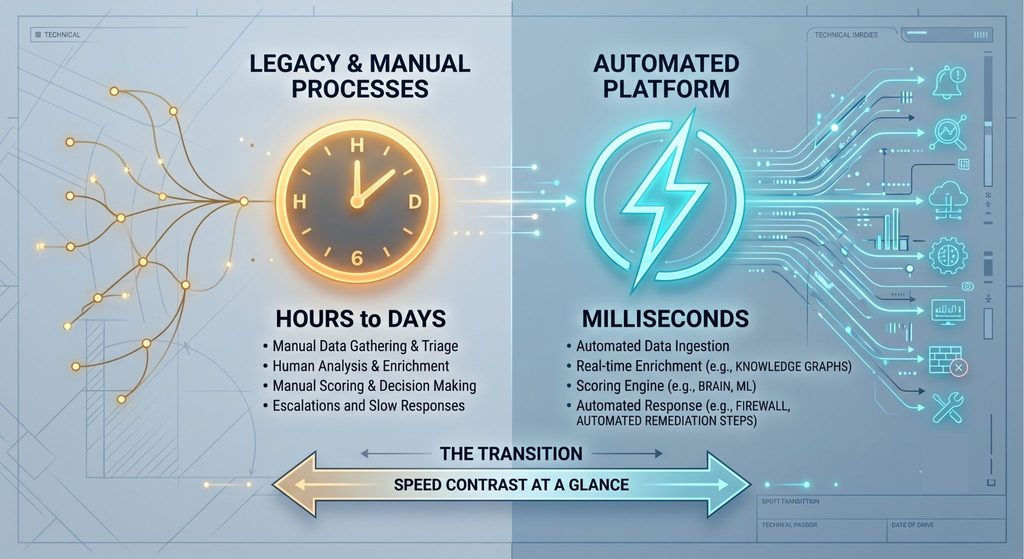
| Factor | Traditional Monitoring | Real-Time On-Chain Monitoring |
|---|---|---|
| Detection speed | Hours to days | Seconds to milliseconds |
| Data source | Post-transaction reports | Live blocks and mempool data |
| Response capability | Manual investigation | Automated alerts and circuit breakers |
| Attack coverage | Known patterns only | Known and emerging patterns |
| Cross-chain visibility | Limited or absent | Correlated across networks |
| Business impact | Damage control | Damage prevention |
As the table illustrates, the gap between these two approaches is not incremental. It is a fundamental shift in what security teams are actually capable of doing.
Common Challenges in Implementing Anomalous Wallet Detection
Building this kind of system is not without obstacles, and it is worth being honest about them rather than glossing over the difficulty.
False positives remain one of the biggest operational headaches. A system tuned too aggressively floods security teams with alerts, causing genuine threats to get lost in the noise. On the other hand, a system tuned too conservatively misses real attacks. Striking the right balance requires continuous calibration based on real-world outcomes.
Data volume presents another challenge. Popular chains process thousands of transactions per minute, and monitoring every wallet interaction in real time demands significant infrastructure investment. Scalability cannot be an afterthought; it has to be designed into the system from day one.
Additionally, attackers actively study detection systems and adapt their behavior to stay under the radar. This means detection models cannot remain static. They need continuous retraining and rule updates informed by the latest exploit patterns observed across the industry.
There is also the challenge of coordination between teams. Detection is only useful if the people or systems receiving alerts can act on them immediately. A brilliant anomaly detection engine paired with a slow incident response process still results in losses. Consequently, protocols need to treat detection and response as a single integrated workflow rather than two separate concerns handled by different teams on different timelines.
Finally, privacy-preserving technologies, while valuable for legitimate users, complicate detection efforts. Mixers, privacy coins, and zero-knowledge based transfers can obscure the very signals detection systems rely on. This does not mean privacy tools are inherently malicious, but it does mean detection systems need additional heuristics to distinguish between privacy-conscious legitimate users and bad actors deliberately using these tools to break the trail of stolen funds.
Best Practices for Teams Implementing Anomalous Wallet Detection
For teams building or upgrading their own detection capabilities, a few practical principles consistently separate effective systems from ones that generate noise without real protection.
Start with clear risk tiers rather than a single alert level. Not every anomaly deserves the same response. Low-confidence signals can be logged for later review, while high-confidence signals tied to large sums should trigger immediate escalation, and potentially automated protective action.
Invest in historical data before going live. A detection system without a baseline of normal behavior for its protocol is essentially guessing. Feeding the system months of prior transaction history allows behavioral baselining to function accurately from day one, rather than generating a flood of false positives during the first weeks of operation.
Keep humans in the loop, but do not depend on them for speed. Automated systems should handle the first line of defense, pausing contracts or flagging transactions within milliseconds. Human analysts then review flagged activity, refine detection rules, and make judgment calls that automated systems are not equipped to make, such as distinguishing a large legitimate institutional trade from a genuine attack.
Finally, treat detection systems as living infrastructure. Attack patterns evolve constantly, and a detection model trained on last year’s exploits will inevitably miss next year’s techniques. Regular retraining, rule audits, and red-team testing against the detection system itself should be part of standard operating procedure, not an occasional afterthought.
How SecureDApp Approaches Real-Time Threat Monitoring
At SecureDApp, we built SecureWatch around the exact principles outlined in this guide: combining rule-based detection, behavioral baselining, graph analysis, and machine learning into a single pipeline capable of monitoring wallet activity across chains in real time.
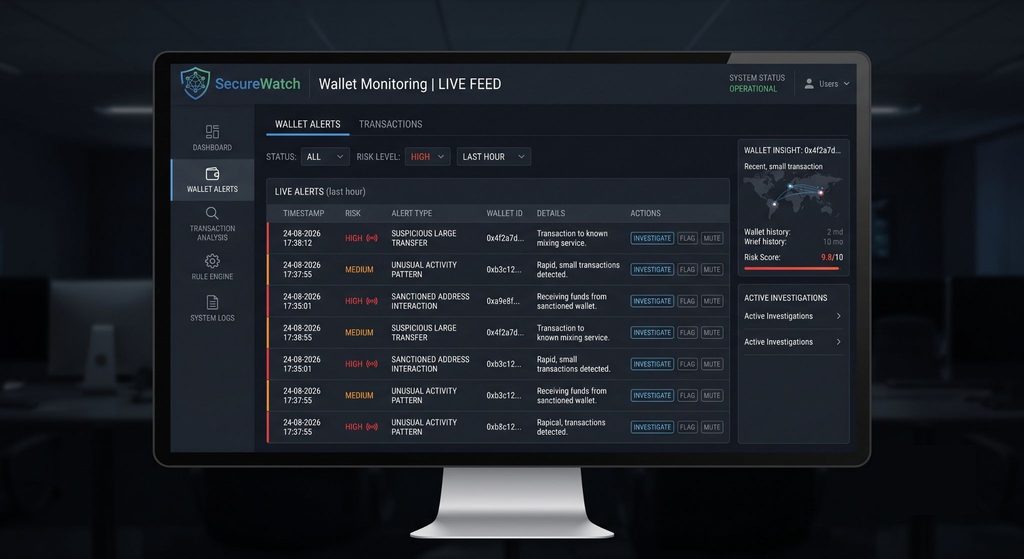
Rather than treating anomaly detection as a standalone feature, SecureWatch integrates it into a broader security posture that includes smart contract auditing, forensic investigation tools, and identity verification. This layered approach reflects a simple reality: no single technique catches everything, and the strongest protocols are the ones that treat security as a continuous process rather than a one-time checkbox.
For protocols evaluating their own security posture, the question worth asking is not whether an exploit will be attempted, but whether the infrastructure in place can detect and respond to it before real damage occurs.
Conclusion
Anomalous wallet detection has moved from a specialized security add-on to a foundational requirement for any protocol handling meaningful value on-chain. The techniques covered here, from rule-based thresholds and graph analysis to mempool monitoring and machine learning scoring, each play a distinct role in building a defense system capable of matching the speed of modern attacks.
What ties all of these techniques together is a single principle: real-time threat monitoring only delivers value when detection happens fast enough to enable actual prevention, not just documentation after the fact. As blockchain ecosystems grow more interconnected and attackers grow more sophisticated, protocols that invest in this kind of infrastructure now will be the ones still standing when the next major exploit attempt comes knocking.
Security in Web3 is not a destination. It is an ongoing commitment to staying one step ahead, and real-time on-chain monitoring is how that commitment gets put into practice.
Frequently Asked Questions
1. What is anomalous wallet detection in blockchain security?
Anomalous wallet detection is the process of identifying wallet addresses whose transaction behavior deviates significantly from expected or historical patterns, often signaling fraud, exploits, or coordinated malicious activity.
2. Why is real-time threat monitoring important for DeFi protocols?
Because blockchain transactions are irreversible and settle within seconds, real-time threat monitoring gives security teams the narrow window needed to detect and respond to attacks before funds are permanently lost.
3. What on-chain data is used to detect anomalous wallets?
Detection systems typically analyze transaction size, frequency, timing, wallet age, funding sources, contract interactions, and mempool activity to build a complete behavioral profile of each wallet.
4. Can machine learning models detect new, unseen attack patterns?
Yes. Unsupervised machine learning techniques, such as clustering and isolation forests, can flag statistically unusual behavior even when it does not match any previously known exploit pattern.
5. How does mempool monitoring improve real-time threat monitoring?
Mempool monitoring analyzes pending transactions before they are confirmed, allowing security systems to detect and potentially block malicious activity like front-running or flash loan attacks in the milliseconds before execution.