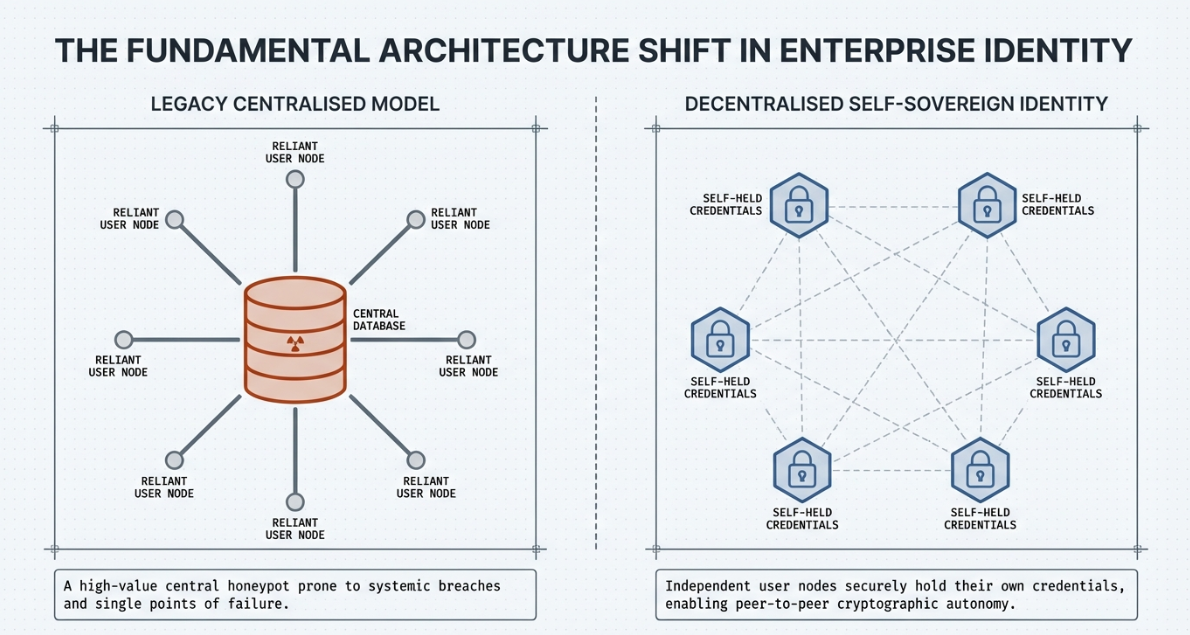

The blockchain landscape has fundamentally changed how we think about digital security. While traditional security measures served us well in centralized systems, the decentralized nature of blockchain technology demands a completely different approach. Organizations building on blockchain infrastructure are discovering that their old security playbooks don’t just need updating they need a complete rewrite.
If you’re managing blockchain applications or considering blockchain integration, understanding the difference between real-time blockchain threat monitoring and traditional security isn’t just academic it’s essential for survival in an environment where attacks happen in milliseconds and losses can reach millions before anyone notices.
Understanding the Security Paradigm Shift
Traditional security systems were built for a different world. They evolved in environments where central authorities controlled access, transactions could be reversed, and security teams had time to respond to threats. Blockchain technology turned all of those assumptions upside down.
The Traditional Security Foundation
Traditional security operates on well-established principles that have protected digital systems for decades. These systems rely heavily on perimeter defense, where organizations create boundaries between trusted internal networks and untrusted external ones. Firewalls act as gatekeepers, intrusion detection systems watch for suspicious patterns, and security information and event management platforms collect logs for later analysis.
These approaches work remarkably well for their intended purpose. A bank’s traditional security infrastructure can prevent unauthorized access to customer accounts. An e-commerce platform can detect fraudulent credit card transactions. Enterprise networks can identify malware before it spreads too far. The key word here is “traditional” these systems excel at protecting centralized architectures where control points exist and administrators hold ultimate authority.
Why Blockchain Changes Everything
Blockchain technology operates on fundamentally different principles. There’s no central authority to roll back fraudulent transactions. No perimeter exists that separates internal from external networks everything is transparent and publicly accessible. Transactions execute automatically through smart contracts, and once deployed, code becomes immutable.
This creates a security paradox. The very features that make blockchain powerful decentralization, transparency, immutability also create attack surfaces that traditional security simply cannot address. A compromised smart contract doesn’t trigger traditional intrusion detection systems. A reentrancy attack doesn’t look like typical network intrusion patterns. Flash loan attacks can drain millions from protocols before traditional monitoring systems even notice unusual activity.
Real-time blockchain threat monitoring emerged from this necessity. It’s not an evolution of traditional security it’s a completely new approach designed specifically for blockchain’s unique architecture and threat landscape.
Traditional Security: Strengths and Limitations
To understand why real-time blockchain threat monitoring is essential, we need to appreciate both what traditional security does well and where it falls short in blockchain environments.
What Traditional Security Does Well
Traditional security excels in controlled environments. Network firewalls effectively filter traffic based on predetermined rules. Endpoint protection stops known malware from executing on workstations. Access control systems ensure only authorized personnel can reach sensitive data. These tools have been refined over decades and form the backbone of enterprise security.
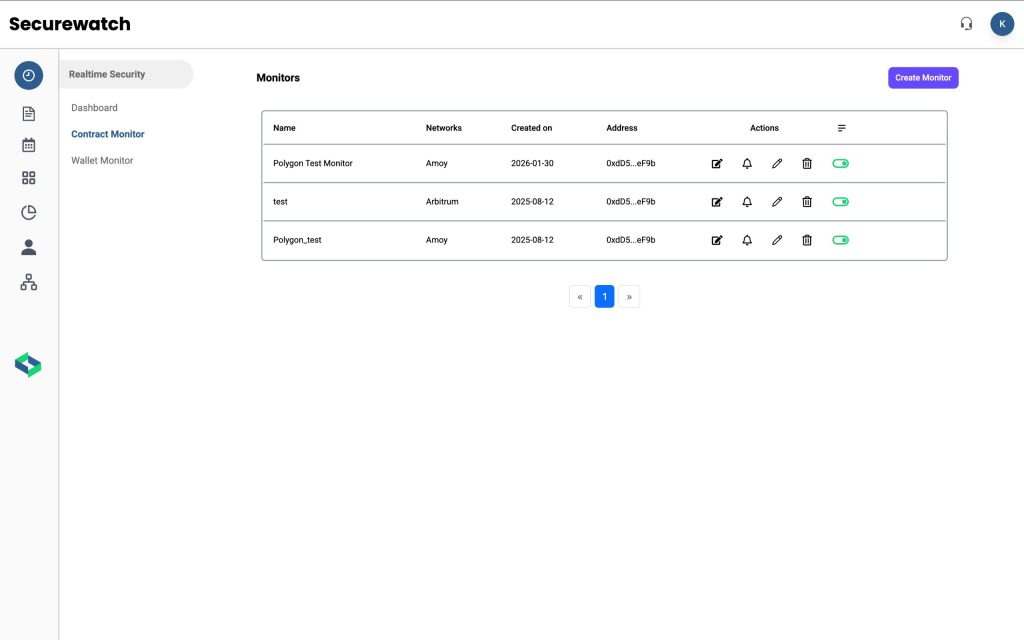
The reactive approach of traditional security makes sense in most contexts. Security teams collect logs, analyze patterns, and respond to incidents. When a server shows unusual activity, administrators can investigate. If malware is detected, systems can be isolated and cleaned. The ability to respond after detection, rather than preventing every possible attack in real-time, provides a practical balance between security and usability.
Traditional security also benefits from mature incident response procedures. Organizations have established playbooks for different types of attacks. Security operation centers monitor alerts around the clock. Threat intelligence feeds keep defenders informed about emerging risks. This ecosystem works because time is usually available hours or even days to detect, investigate, and remediate threats.
Critical Gaps in Blockchain Contexts
Blockchain environments expose fundamental limitations in traditional security approaches. The first issue is timing. Traditional security monitoring operates in intervals collecting logs, aggregating events, analyzing patterns. These intervals might be seconds or minutes, which seems fast until you realize blockchain transactions execute in milliseconds. By the time traditional systems detect an anomaly, an attack may have already drained a protocol’s entire liquidity.
The second issue is architecture. Traditional security assumes centralized control points where administrators can intervene. Blockchain has no such control points. Smart contracts execute autonomously based on code logic. No security team can pause a suspicious transaction mid-execution. No administrator can roll back unauthorized transfers. Once a blockchain transaction confirms, it becomes part of an immutable ledger.
The third issue is visibility. Traditional security monitors network traffic, system logs, and application events within controlled infrastructure. Blockchain operates across decentralized networks where most activity occurs outside any single organization’s visibility. Traditional monitoring can’t see what’s happening in smart contracts across multiple chains. It can’t detect manipulation happening in mempool transactions before they’re confirmed.
The fourth issue is threat models. Traditional security focuses on network intrusions, malware, phishing, and insider threats. Blockchain introduces entirely new attack vectors: flash loan exploits, reentrancy attacks, oracle manipulation, governance attacks, and MEV (Maximal Extractable Value) extraction. Traditional security tools don’t recognize these as threats because they weren’t designed to understand blockchain transaction logic.
The Response Time Problem
Perhaps the most critical limitation is response time. Traditional security accepts that detection and response will always lag behind initial compromise. The goal is to minimize that lag to hours or minutes. This works when attackers need time to move through networks, escalate privileges, and exfiltrate data.
Blockchain attacks operate on entirely different timescales. A flash loan attack borrows millions, exploits a vulnerability, and returns the funds within a single transaction block often in under fifteen seconds. A MEV bot can front-run transactions in mempool, extracting value before legitimate users even know their transactions are pending. By the time traditional monitoring systems flag unusual activity, the attack is complete and funds are gone.
This isn’t a criticism of traditional security these tools accomplish exactly what they were designed to do. The problem is that blockchain environments require capabilities these tools were never meant to provide.
Real-time Blockchain Threat Monitoring: A Purpose-Built Approach
Real-time blockchain threat monitoring represents a fundamental rethinking of security for decentralized environments. Rather than adapting traditional tools, this approach was built from the ground up to address blockchain’s unique characteristics and threats.
How Real-time Monitoring Works
Real-time blockchain threat monitoring operates at the protocol level, analyzing transactions and smart contract interactions as they occur. Instead of collecting logs for later analysis, these systems examine every transaction in real-time, checking for patterns that indicate potential attacks.
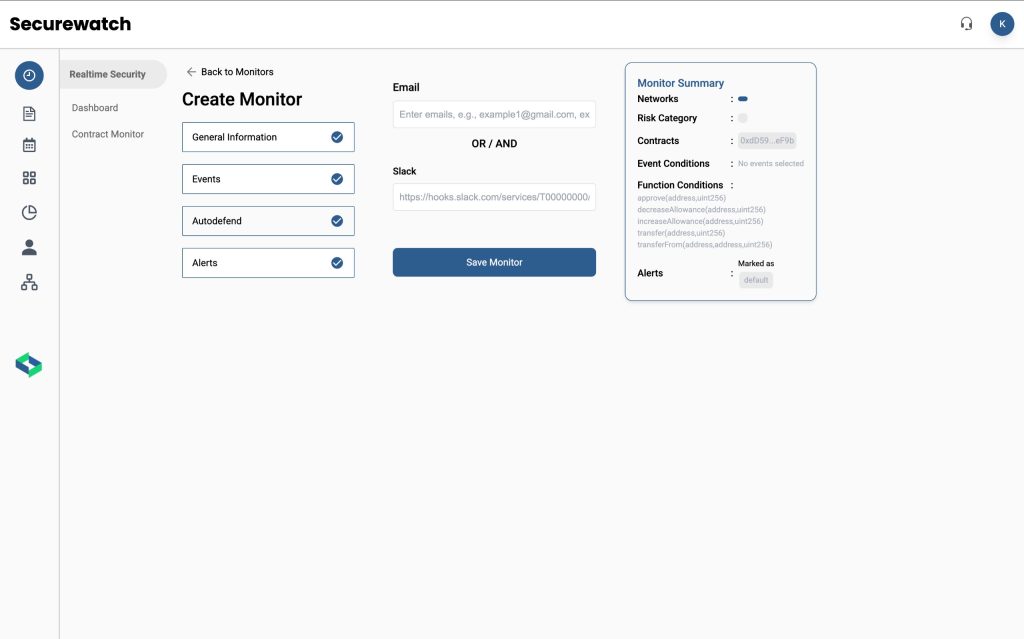
The monitoring happens in multiple layers. At the network layer, systems track transaction flow across blockchain networks, identifying unusual patterns in transaction volume, gas prices, or routing. At the protocol layer, monitoring analyzes smart contract interactions, checking for known vulnerability patterns like reentrancy or integer overflow. At the application layer, systems understand business logic and can detect when transactions violate expected behavior even if they’re technically valid.
This requires sophisticated technology. Real-time monitoring systems must process thousands of transactions per second, running complex analysis algorithms fast enough to detect threats before they execute. Machine learning models identify anomalies that don’t match known attack patterns. Behavioral analysis establishes baseline activity for protocols and flags deviations that might indicate exploitation.
Millisecond-Level Detection
The defining characteristic of real-time blockchain threat monitoring is speed. These systems operate on timescales measured in milliseconds, not minutes. They can detect suspicious transactions in mempool before they’re confirmed, identify attack patterns as they unfold, and alert security teams while exploitation is still in progress.
This speed requires specialized infrastructure. Traditional security systems process events in batches collecting logs over intervals, then analyzing aggregated data. Real-time blockchain monitoring processes each transaction individually as it occurs. This means maintaining connections to blockchain nodes, streaming transaction data, and running analysis algorithms with minimal latency.
The technology behind this is sophisticated but essential. Systems like those provided by SecuredApp.io use advanced algorithms to monitor transaction patterns across multiple blockchains simultaneously. They understand smart contract logic well enough to identify when interactions deviate from safe parameters. They can distinguish between legitimate high-volume activity and potential attacks that look similar at first glance.
Understanding Blockchain-Specific Threats
Real-time monitoring succeeds because it’s designed specifically for blockchain attack vectors. Consider a reentrancy attack, where a malicious contract repeatedly calls back into a victim contract before the first call completes. Traditional security might see this as ordinary smart contract interaction. Real-time blockchain monitoring recognizes the pattern—multiple calls to the same function before state updates complete and flags it immediately.
Flash loan attacks present another example. An attacker borrows millions in cryptocurrency, uses those funds to manipulate prices or exploit vulnerabilities, then repays the loan all within a single transaction. Traditional security systems struggle with this because nothing about the transaction appears individually suspicious. Real-time monitoring understands the economic logic, recognizing when someone borrows large sums, interacts with multiple protocols in unusual sequences, and generates outsized profits in a single block.
Oracle manipulation attacks exploit the way smart contracts receive external data. An attacker might manipulate price feeds to trigger liquidations or enable profitable arbitrage. Real-time monitoring watches for unusual oracle updates, cross-references prices across multiple sources, and detects when smart contracts act on manipulated data.
Proactive Prevention vs Reactive Response
The most significant advantage of real-time blockchain threat monitoring is its potential for proactive intervention. Traditional security accepts that attacks will succeed initially, focusing on minimizing damage and preventing recurrence. Real-time monitoring can stop attacks in progress.
When systems detect suspicious transactions in mempool, they can alert protocol operators before confirmation. When unusual smart contract interactions occur, automated systems can pause contracts through emergency functions. When economic anomalies suggest exploitation, monitoring can trigger protective mechanisms like circuit breakers that halt trading until the situation is resolved.
This proactive capability matters enormously in blockchain environments where damage is often irreversible. A traditional security approach might detect a smart contract exploit within minutes and begin incident response. But if the exploit drained protocol funds in seconds, that quick detection still comes too late. Real-time monitoring that detects the exploit in progress might enable intervention before funds leave the protocol.
Comparing Detection Capabilities
The most practical way to understand the difference between traditional security and real-time blockchain threat monitoring is examining how each approach handles specific threats.
Network Security
Traditional security provides strong network-level protection. Firewalls filter traffic based on ports, protocols, and IP addresses. Intrusion detection systems identify suspicious network patterns. DDoS protection services absorb volumetric attacks. These capabilities remain valuable even in blockchain environments they protect the infrastructure supporting blockchain applications.
Real-time blockchain threat monitoring adds blockchain-specific network analysis. It tracks transaction propagation across blockchain networks, identifying when unusual routing patterns might indicate attack preparation. It monitors gas price fluctuations that could signal front-running attempts. It analyzes mempool transactions to detect attack patterns before confirmation.
The two approaches are complementary rather than competitive. Traditional network security protects the infrastructure layer, while real-time monitoring operates at the blockchain protocol layer. Organizations need both, but they serve different purposes.
Application Security
Traditional application security focuses on protecting software from exploitation. Code analysis tools identify vulnerabilities like SQL injection or buffer overflows. Web application firewalls block malicious requests. Runtime protection monitors application behavior and blocks suspicious activity.
Real-time blockchain threat monitoring provides similar protection for smart contracts but with blockchain-specific capabilities. It analyzes smart contract code for vulnerability patterns specific to blockchain—reentrancy, integer overflow, access control issues. It monitors contract interactions for exploitation attempts. It tracks token flows to identify unauthorized movements.
The key difference is that traditional application security can often stop attacks after detection. If a web application firewall detects SQL injection, it blocks the request no damage done. Smart contract security rarely allows such clean intervention. Once a transaction begins executing, it typically runs to completion. This makes real-time detection even more critical because preventing the attack from starting is often the only way to prevent damage.
Transaction Monitoring
Traditional security has limited transaction monitoring capabilities in blockchain contexts. Banking security systems excel at detecting fraudulent transactions in traditional payment systems. They analyze transaction patterns, flag unusual amounts or destinations, and can reverse suspicious transactions. These capabilities don’t translate to blockchain.
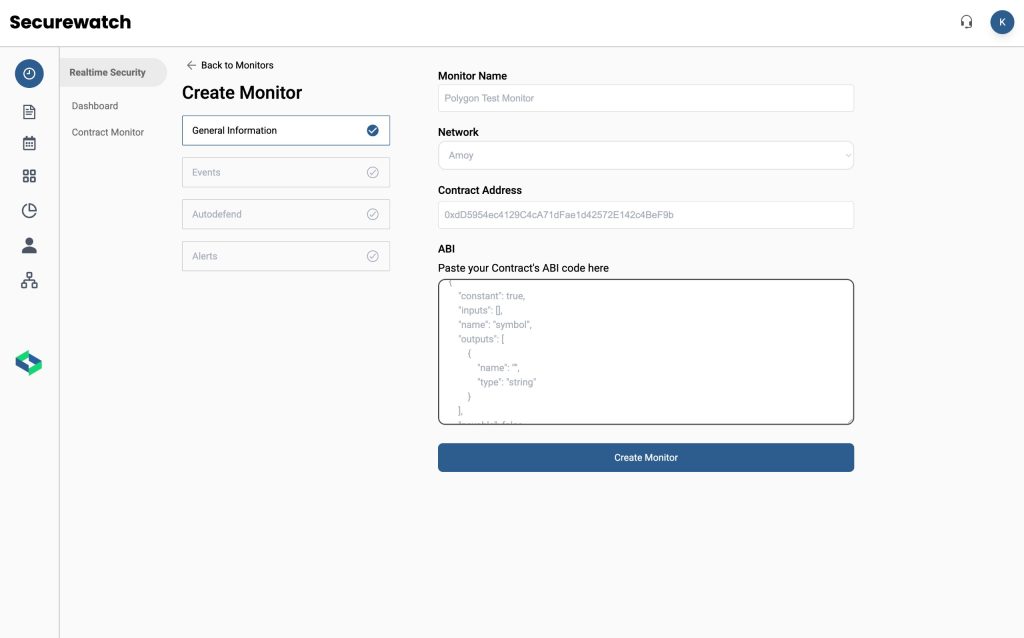
Real-time blockchain threat monitoring was built specifically for transaction analysis in decentralized environments. These systems understand transaction semantics what a transaction actually does when it executes. They can identify when transactions interact with smart contracts in unexpected ways. They recognize economic anomalies like arbitrage opportunities that shouldn’t exist or price manipulations that enable profitable attacks.
Perhaps most importantly, real-time monitoring understands that blockchain transactions are final. This changes the monitoring approach fundamentally. Traditional fraud detection can afford false positives because legitimate transactions can be temporarily held and then released. Blockchain monitoring must balance sensitivity against false positives more carefully because stopping legitimate transactions causes real problems in decentralized systems.
Anomaly Detection
Traditional security uses anomaly detection extensively. Security information and event management platforms establish baselines for normal system behavior, then alert when activity deviates significantly. This works well for identifying unusual login patterns, abnormal network traffic, or suspicious file access.
Real-time blockchain threat monitoring employs similar techniques but adapted for blockchain’s unique characteristics. It establishes baselines for normal protocol activity typical transaction volumes, common interaction patterns, expected token movements. When activity deviates from these baselines, monitoring systems investigate further.
The sophistication of blockchain anomaly detection exceeds traditional approaches in some ways. Blockchain monitoring must understand complex economic relationships between protocols. It needs to recognize when sophisticated attacks create patterns that appear individually normal but collectively indicate exploitation. This requires deeper contextual understanding than traditional anomaly detection typically provides.
Response Mechanisms and Limitations
Understanding detection capabilities is only half the picture. How security systems respond to threats matters just as much, and this is where traditional security and real-time blockchain threat monitoring diverge most dramatically.
Traditional Security Response
Traditional security response follows established procedures. When systems detect potential threats, they alert security teams. Analysts investigate alerts, determining whether they represent actual attacks or false positives. If threats are confirmed, teams follow incident response playbooks isolating affected systems, containing the threat, eradicating malware, recovering systems, and analyzing lessons learned.
This approach works well in traditional environments. Security teams can disconnect compromised servers from networks. They can restore systems from backups. They can reset compromised credentials. They control the infrastructure and can take whatever actions necessary to contain and remediate threats.
The timeline for traditional security response typically spans hours to days. Organizations measure success by mean time to detect and mean time to respond. Industry standards suggest that detecting threats within hours and responding within days represents reasonable performance. This timeline reflects reality even with 24/7 security operation centers, investigating alerts, confirming threats, and implementing responses takes time.
Blockchain’s Response Challenge
Blockchain environments make traditional response mechanisms impossible or ineffective. Security teams can’t simply disconnect compromised smart contracts from the network. They can’t restore blockchain state from backups. They can’t revoke transactions after confirmation. The decentralized, immutable nature of blockchain removes most traditional response tools.
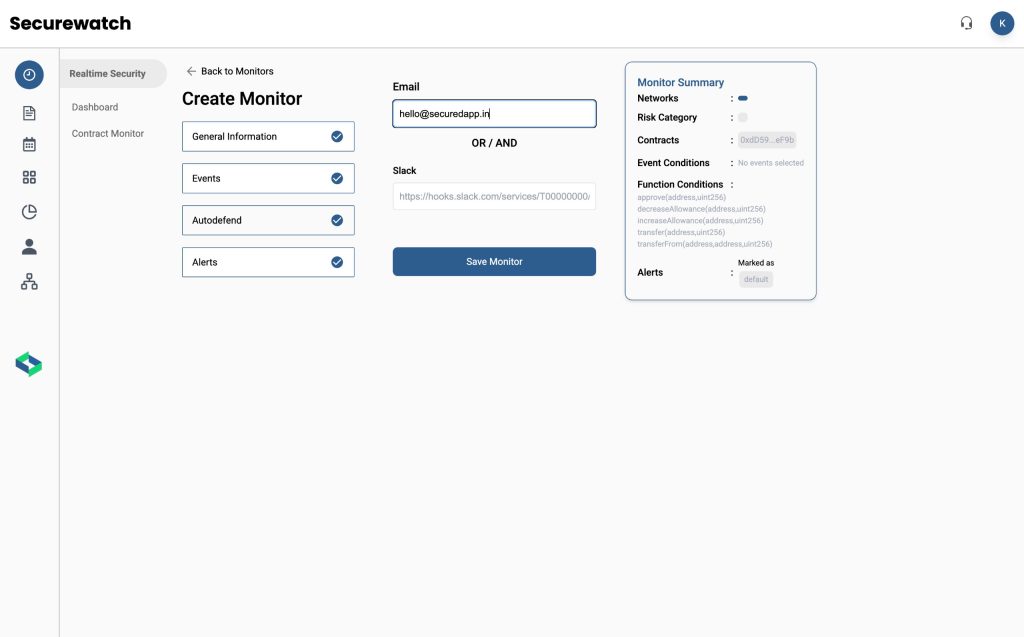
This creates a difficult situation. Even when security teams detect attacks quickly, their response options are limited. If a smart contract contains a vulnerability, defenders can’t simply patch it smart contracts are immutable once deployed. If an attack drains protocol funds, defenders can’t reverse the transactions. The only effective response to many blockchain attacks is preventing them from succeeding in the first place.
Some response mechanisms do exist. Many modern smart contracts include emergency pause functions that protocol administrators can trigger. Some protocols implement time-locks that delay certain operations, giving security teams time to intervene if attacks are detected. Some maintain multi-signature wallets requiring multiple approvals for significant actions, making exploitation harder.
But these mechanisms have limitations. Emergency pause functions must be implemented before deployment they can’t be added retroactively. Time-locks delay all operations, not just malicious ones, impacting user experience. Multi-signature requirements slow legitimate operations and create centralization concerns in supposedly decentralized protocols.
Real-time Response Capabilities
Real-time blockchain threat monitoring enables faster response because it detects threats while they’re developing rather than after completion. When monitoring systems identify suspicious mempool transactions, protocol teams can trigger emergency responses before attacks confirm. When unusual smart contract interactions occur, automated systems can pause protocols immediately rather than waiting for human analysis.
This speed matters enormously. If traditional security takes hours to detect and respond to threats, and blockchain attacks complete in seconds, traditional approaches will always fail. Real-time monitoring that detects threats in seconds and responds in milliseconds operates on appropriate timescales for blockchain environments.
Real-time systems also enable automated responses. Security teams can configure monitoring to trigger automatic emergency pauses when certain threat patterns appear. This removes human response time from the equation entirely. The system detects the threat and responds automatically, faster than any human operator could react.
SecuredApp.io platforms exemplify this approach, providing automated threat response capabilities that activate within milliseconds of threat detection. These systems can integrate directly with smart contract emergency functions, enabling immediate protective actions when attacks are identified.
The Irreversibility Problem
Both traditional security and real-time blockchain threat monitoring face blockchain’s irreversibility problem, but with different implications. Traditional security approaches often arrive too late by the time they detect threats, damage is irreversible. Real-time monitoring detects threats faster but still faces limitations on what can be done once transactions confirm.
This makes prevention absolutely critical in blockchain security. Organizations can’t rely on detecting and responding to attacks after they occur. They must prevent attacks from succeeding in the first place, or at minimum detect attacks early enough that intervention remains possible.
This reality drives the need for real-time monitoring. Traditional security’s reactive approach, which works adequately in environments where damage can be reversed or contained, fails in blockchain contexts where prevention is the only truly effective strategy.
Cost and Resource Considerations
Security decisions always involve tradeoffs between protection and resources. Understanding the costs and resource requirements for traditional security versus real-time blockchain threat monitoring helps organizations make informed choices.
Traditional Security Economics
Traditional security has well-understood economics. Organizations know what firewalls cost, what security operation center staffing requires, what enterprise security tools cost annually. These costs scale relatively predictably with organization size. The technology is mature, competition exists among vendors, and organizations can benchmark their security spending against industry peers.
Traditional security also benefits from general-purpose applicability. The same firewall protecting web applications also protects other network services. Security operation center analysts monitoring for network intrusions also investigate other security alerts. This sharing of resources across security functions makes traditional security economically efficient for organizations needing broad protection.
The hidden costs of traditional security often emerge during incidents. While preventive security spending is predictable, the costs of actually responding to attacks can be dramatic. Data breaches involve investigation costs, legal expenses, regulatory fines, customer notification, credit monitoring, and reputation damage. These incident costs often dwarf preventive security spending.
Real-time Monitoring Economics
Real-time blockchain threat monitoring involves different economics. The technology is more specialized, the vendor pool smaller, and the expertise required more rare. Organizations can’t leverage existing security investments as easily blockchain monitoring requires purpose-built systems specifically designed for blockchain threats.
However, real-time monitoring economics look different when considering incident costs in blockchain environments. Traditional security’s incident costs, while high, pale compared to potential blockchain losses. Major DeFi exploits have resulted in losses exceeding hundreds of millions of dollars. For organizations managing significant blockchain assets or protocols handling substantial value, the cost of real-time monitoring is negligible compared to potential loss from a single major attack.
Real-time monitoring also provides more focused value. While traditional security broadly protects general IT infrastructure, real-time blockchain threat monitoring specifically protects blockchain assets and protocols. Organizations managing large blockchain positions or operating DeFi protocols can directly calculate the value protected by real-time monitoring, making ROI analysis straightforward.
Resource Requirements
Traditional security requires substantial but general resources. Organizations need security staff with broad IT knowledge. They need infrastructure for security operations centers. They need various security tools and platforms. These resources serve multiple purposes across the organization’s security posture.
Real-time blockchain threat monitoring requires specialized resources. Organizations need staff who understand both security and blockchain deeply. They need infrastructure for processing blockchain transaction streams in real-time. They need specialized monitoring platforms designed for blockchain threats.
This specialization creates challenges for smaller organizations or those newer to blockchain. Traditional security skills are widely available; blockchain security expertise is scarce. Traditional security tools have established vendors; blockchain monitoring is a newer market with fewer mature options.
Making the Investment Decision
For organizations managing blockchain applications or significant crypto assets, the question isn’t whether to invest in real-time blockchain threat monitoring but how quickly to implement it. The unique characteristics of blockchain environments transaction finality, attack speed, potential loss magnitude—make real-time monitoring less an optional enhancement and more a fundamental requirement.
Organizations can approach this strategically. They might maintain traditional security for general infrastructure protection while adding real-time blockchain threat monitoring specifically for blockchain assets and applications. This layered approach leverages strengths of both approaches while addressing their respective limitations.
Implementation and Integration Strategies
Understanding the differences between traditional security and real-time blockchain threat monitoring is academic unless organizations can actually implement effective protection. The practical challenges of implementation matter as much as theoretical capabilities.
Traditional Security Implementation
Traditional security implementation follows established patterns. Organizations assess risks, select appropriate tools, deploy and configure systems, train staff, and establish operational procedures. The maturity of traditional security means extensive best practices exist, implementation partners are available, and organizations can learn from peers’ experiences.
Integration is straightforward in traditional environments. Security tools work with standard protocols and interfaces. Organizations can deploy security information and event management platforms that aggregate logs from diverse sources. They can implement firewalls that protect multiple applications. The general-purpose nature of traditional security tools simplifies integration.
Blockchain Monitoring Implementation
Real-time blockchain threat monitoring requires more specialized implementation. Organizations must first understand their specific blockchain exposure—which chains they use, what protocols they interact with, what smart contracts hold their assets. This assessment itself requires blockchain expertise that organizations may lack.
Implementation involves connecting monitoring systems to blockchain networks, configuring detection rules for relevant threats, integrating with protocol emergency functions for automated response, and training staff on blockchain-specific threat patterns. Each step requires specialized knowledge that traditional security teams may not possess.
The specialized nature of blockchain monitoring creates implementation challenges. Organizations may need external expertise to properly configure monitoring. They need staff training on blockchain security concepts. They must establish new operational procedures specifically for blockchain threats rather than leveraging existing incident response playbooks.
Hybrid Approaches
The most effective security approach for blockchain organizations typically combines traditional security and real-time blockchain threat monitoring in complementary ways. Traditional security protects infrastructure the servers running blockchain nodes, the networks connecting systems, the endpoints accessing protocols. Real-time monitoring protects blockchain-specific assets and applications.
This hybrid approach requires thoughtful integration. Security teams need visibility across both traditional and blockchain security tools. Incident response procedures must address both traditional security incidents and blockchain-specific attacks. The organization’s overall security posture should reflect both protection layers without gaps or redundant coverage.
SecuredApp.io solutions facilitate this hybrid approach by providing blockchain-specific monitoring that integrates with existing security infrastructure. Organizations can maintain their traditional security investments while adding specialized blockchain protection, creating comprehensive security that addresses all risk vectors.
Operational Considerations
Running real-time blockchain threat monitoring requires operational capabilities that differ from traditional security operations. Security teams must monitor blockchain transactions continuously, requiring 24/7 operations. They must respond to alerts on timescales measured in minutes, not hours. They need expertise in blockchain threats that traditional security training doesn’t provide.
Organizations should consider whether to build internal capabilities or partner with specialized providers. Building internal blockchain security teams requires significant investment in hiring, training, and tooling. Partnering with specialized providers like SecuredApp.io leverages existing expertise and infrastructure, enabling faster implementation and more reliable protection.
Real-World Scenarios and Outcomes
Theory matters less than results. Examining how traditional security and real-time blockchain threat monitoring perform in actual scenarios illustrates their practical differences.
Flash Loan Attack Scenario
Consider a flash loan attack on a DeFi protocol. The attacker borrows millions in cryptocurrency, manipulates prices through a series of trades, triggers liquidations that shouldn’t occur under normal conditions, profits from the manipulated state, and repays the loan all within a single transaction taking seconds to execute.
Traditional security monitoring would likely miss this attack entirely during execution. Transaction logs might show the activity, but traditional systems analyzing these logs in batch processes would flag the unusual activity only after the attack completed. By then, millions could be drained, and the blockchain’s immutability means no recovery is possible.
Real-time blockchain threat monitoring would detect the attack as it unfolds. Monitoring systems would identify the unusual flash loan, recognize the manipulated trading patterns, flag the economic anomalies, and alert protocol operators potentially while the attack is still in mempool before confirmation. Even if the attack does confirm, real-time detection enables immediate protocol pausing, preventing the attacker from repeating the exploit or targeting related protocols.
Smart Contract Vulnerability Exploitation
Consider a smart contract with a reentrancy vulnerability. An attacker identifies the flaw and deploys a malicious contract to exploit it. The attack repeatedly calls the vulnerable contract, withdrawing funds multiple times before the victim contract updates its state. Each call drains more value, and the pattern can repeat until the contract is emptied.
Traditional application security might have identified this vulnerability during code review, but many organizations deploy smart contracts without comprehensive security audits. Traditional runtime security monitoring would struggle to identify the attack—the transactions appear technically valid, and traditional systems don’t understand the semantic meaning of smart contract interactions.
Real-time blockchain threat monitoring specifically watches for reentrancy patterns. Monitoring systems recognize when contracts call back into themselves recursively, flag the unusual execution pattern, and alert operators immediately. Automated response systems could trigger emergency pause functions on the vulnerable contract, stopping the attack before it completes. Even if the first attack succeeds, real-time detection prevents subsequent exploitation by the same attacker or copycat attackers who learned about the vulnerability.
Oracle Manipulation Attack
Consider an attack targeting a protocol that relies on price oracles. The attacker manipulates prices on a low-liquidity exchange used as a price source. The protocol’s smart contracts read the manipulated price and trigger operations based on false data perhaps liquidating positions that shouldn’t be liquidated or enabling arbitrage that shouldn’t be profitable.
Traditional security has no visibility into this attack. The protocol’s infrastructure operates normally. Network traffic shows no anomalies. The manipulated exchange is external to the protocol’s control. Traditional monitoring sees nothing wrong because, from an infrastructure perspective, nothing is wrong.
Real-time blockchain threat monitoring detects the attack through economic anomalies. Monitoring systems track oracle prices across multiple sources, flag when prices diverge significantly, recognize when smart contracts act on outlier data, and identify the economic consequences of manipulated prices. This detection enables rapid response—updating oracle sources, pausing affected protocols, or alerting users to wait before transacting.
Cross-Chain Bridge Exploit
Consider an attack on a blockchain bridge connecting two networks. The attacker exploits a vulnerability that allows minting tokens on one chain without properly locking assets on another. This creates unbacked tokens that the attacker can immediately sell, draining liquidity from the bridge protocol.
Traditional security monitoring would see unusual activity only after significant damage occurred. The attack might trigger alerts when large token movements appear, but by then, the attacker has already minted and sold substantial unbacked tokens. The cross-chain nature of the attack makes traditional monitoring even less effective most traditional security tools monitor single networks or applications, not interactions across multiple blockchains.
Real-time blockchain threat monitoring would identify the cross-chain inconsistency as it occurs. Monitoring systems track asset movements on both chains, verify that locked assets on one chain match minted tokens on another, flag discrepancies immediately, and trigger emergency responses. This capability specifically addresses cross-chain attacks that completely evade traditional security monitoring.
The Future of Blockchain Security
Security evolves continuously as both attackers and defenders innovate. Understanding current differences between traditional security and real-time blockchain threat monitoring matters, but forward-looking organizations also need to anticipate how security will evolve.
Traditional Security’s Role
Traditional security isn’t disappearing from blockchain environments. Organizations will always need infrastructure protection, network security, endpoint defense, and access control. Blockchain applications run on traditional infrastructure, connect through traditional networks, and are managed by users with traditional endpoints. All of these require traditional security protection.
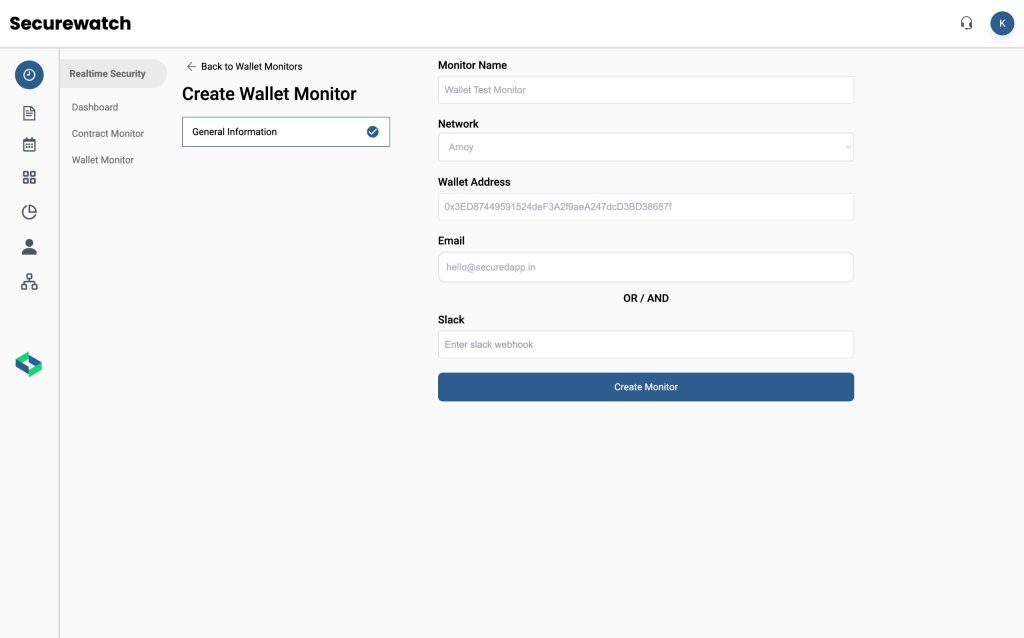
The future of traditional security in blockchain contexts involves better integration with blockchain-specific tools. Security information and event management platforms will incorporate blockchain transaction data. Network monitoring will understand blockchain protocols better. Access control will adapt to blockchain’s unique identity models. Traditional security won’t replace blockchain-specific monitoring, but it will become more blockchain-aware.
Real-time Monitoring Evolution
Real-time blockchain threat monitoring is evolving rapidly. Current systems focus primarily on known threat patterns and rule-based detection. Future systems will leverage artificial intelligence more extensively, learning from attack patterns to predict new variants before they appear. They’ll understand protocol interactions more deeply, recognizing complex attacks that span multiple protocols and chains.
Cross-chain monitoring will become increasingly important. As blockchain ecosystems grow more interconnected, attacks targeting interactions between chains will proliferate. Real-time monitoring will need comprehensive visibility across all chains rather than monitoring individual networks independently. Platforms like SecuredApp.io are already developing this multi-chain capability.
Automated response will become more sophisticated. Current systems can trigger basic emergency functions like pausing protocols. Future systems will implement more nuanced responses—selectively blocking suspicious transactions while allowing legitimate activity, automatically adjusting protocol parameters to mitigate exploitation, and coordinating responses across multiple protocols simultaneously.
Convergence and Specialization
The future likely involves both convergence and continued specialization. Some traditional security vendors are adding blockchain monitoring capabilities to their platforms, recognizing that organizations need comprehensive security rather than separate disconnected tools. This convergence will help organizations manage security more holistically.
Simultaneously, specialization will intensify. Blockchain security’s unique requirements ensure that specialized providers will continue offering capabilities general security vendors struggle to match. The most effective security approaches will combine broad traditional security with deeply specialized blockchain monitoring, leveraging strengths of each approach.
Regulatory Influence
Regulatory developments will significantly impact blockchain security evolution. As regulations increasingly address cryptocurrency and DeFi, compliance requirements will drive security practices. Organizations may need to demonstrate specific monitoring capabilities, maintain audit trails of security decisions, or implement mandatory security controls. These requirements will accelerate adoption of comprehensive real-time blockchain threat monitoring.
Making the Right Choice for Your Organization
Organizations face practical decisions about security investments. Understanding the comparison between traditional security and real-time blockchain threat monitoring helps, but organizations still need guidance on what security approach makes sense for their specific situations.
When Traditional Security Suffices
Organizations with minimal blockchain exposure might reasonably rely primarily on traditional security. If blockchain interaction is limited to employees occasionally transacting with personal wallets, traditional endpoint security and network monitoring provide adequate protection. If the organization holds small cryptocurrency amounts that don’t justify specialized monitoring, traditional security may suffice.
Even these organizations should understand blockchain security basics and monitor their exposure as it grows. What starts as minimal blockchain interaction often expands rapidly as organizations recognize blockchain’s potential. Security approaches should scale with exposure.
When Real-time Monitoring Becomes Essential
Organizations operating blockchain applications absolutely require real-time blockchain threat monitoring. If you’re running smart contracts holding user funds, operating DeFi protocols, managing blockchain bridges, or maintaining substantial cryptocurrency positions, traditional security alone is insufficient. The risks are too high, the attack speed too fast, and the potential losses too large to rely on security approaches not designed for blockchain threats.
Real-time monitoring becomes essential when attack prevention is the only viable strategy. If your blockchain applications can’t recover from successful attacks, if transaction finality means losses are irreversible, if attack speed outpaces traditional detection, you need real-time blockchain threat monitoring regardless of other factors.
Risk-Based Assessment
The right security approach depends on risk assessment. Organizations should evaluate several factors: the value of blockchain assets at risk, the potential impact of successful attacks, the sophistication of likely attackers, the organization’s security expertise, and the acceptable level of risk.
High-value targets need comprehensive protection. Organizations managing millions in cryptocurrency or operating protocols with substantial total value locked need real-time monitoring combined with traditional security. The potential loss from a single successful attack justifies significant security investment.
Organizations facing sophisticated attackers also need real-time monitoring. If you’re likely targets for advanced persistent threats or professional criminal groups, your security must match attacker sophistication. Real-time blockchain threat monitoring provides capabilities traditional security lacks for defending against blockchain-specific attacks.
Building Layered Defense
The most robust approach combines multiple security layers. Traditional security protects infrastructure and provides baseline protection. Real-time blockchain threat monitoring specifically addresses blockchain threats. Good security practices code audits, access controls, incident response planning complement both technological approaches.
Organizations should view security as a system rather than a product. No single tool provides complete protection. The goal is creating defense-in-depth where multiple security layers must fail before attacks succeed. This approach combines traditional security’s broad protection with real-time monitoring’s blockchain-specific capabilities, creating comprehensive security that addresses all risk vectors.
SecuredApp.io solutions enable this layered approach by integrating with existing security infrastructure while providing specialized blockchain monitoring. Organizations can build comprehensive security without replacing existing investments or managing disconnected tools.
Conclusion
The comparison between real-time blockchain threat monitoring and traditional security isn’t about determining which is better they serve different purposes and excel in different contexts. Traditional security provides essential infrastructure protection that remains necessary regardless of blockchain involvement. Real-time blockchain threat monitoring addresses blockchain-specific threats that traditional security cannot detect or prevent.
For organizations operating in blockchain environments, the question isn’t whether to choose traditional security or real-time monitoring it’s how to effectively combine both approaches. Blockchain’s unique characteristics transaction speed, immutability, decentralization demand specialized security capabilities that traditional approaches don’t provide. Simultaneously, blockchain applications still rely on traditional infrastructure that needs traditional security protection.
The blockchain security landscape will continue evolving. Attackers will develop new exploitation techniques. Defenders will create more sophisticated monitoring and response capabilities. But the fundamental truth remains: blockchain environments require security approaches specifically designed for blockchain’s unique architecture and threats. Organizations that recognize this reality and implement appropriate real-time blockchain threat monitoring will be far better positioned to protect their assets and operations than those relying solely on traditional security measures.
As blockchain adoption accelerates across industries, security approaches must evolve accordingly. The organizations that thrive will be those that embrace specialized blockchain security rather than attempting to force-fit traditional security into contexts where it cannot succeed. Real-time blockchain threat monitoring isn’t a luxury for the security-conscious it’s a necessity for anyone serious about protecting blockchain applications and assets in an increasingly complex threat landscape.
FAQ
Real-time blockchain threat monitoring is a specialized security approach designed specifically for blockchain environments. It analyzes transactions, smart contract interactions, and on-chain activities as they happen—often in milliseconds—to detect and respond to threats before they can cause damage. Unlike traditional security that reviews logs after events occur, real-time blockchain monitoring operates at the protocol level, examining each transaction for suspicious patterns, economic anomalies, and known attack signatures while the transaction is still in mempool or immediately upon execution.
The fundamental difference lies in speed, scope, and understanding of blockchain-specific threats. Traditional security monitors infrastructure, networks, and applications using established tools like firewalls and intrusion detection systems, typically detecting threats within minutes to hours. Real-time blockchain threat monitoring operates on millisecond timescales, specifically watching for blockchain attacks like flash loan exploits, reentrancy vulnerabilities, and oracle manipulation that traditional systems cannot recognize. Traditional security protects centralized infrastructure; real-time monitoring protects decentralized blockchain assets and protocols.
Traditional security tools provide essential infrastructure protection—securing the servers running blockchain nodes, protecting networks, and defending endpoints. However, they cannot protect against blockchain-specific threats. A firewall won’t stop a smart contract reentrancy attack. Antivirus software won’t detect flash loan manipulation. Traditional security remains necessary for infrastructure but is insufficient for comprehensive blockchain protection. Organizations need both traditional security for their infrastructure and real-time blockchain threat monitoring for their on-chain assets and applications.
Existing security tools weren’t designed for blockchain’s unique characteristics. They don’t understand smart contract logic, can’t detect on-chain economic anomalies, and operate too slowly for blockchain’s transaction speeds. Traditional tools monitor centralized systems where administrators control infrastructure and can reverse transactions. Blockchain is decentralized, immutable, and executes transactions in seconds. By the time traditional security detects unusual activity, blockchain attacks have already completed and the damage is irreversible. Your existing tools remain valuable for infrastructure protection but need supplementation with blockchain-specific monitoring.