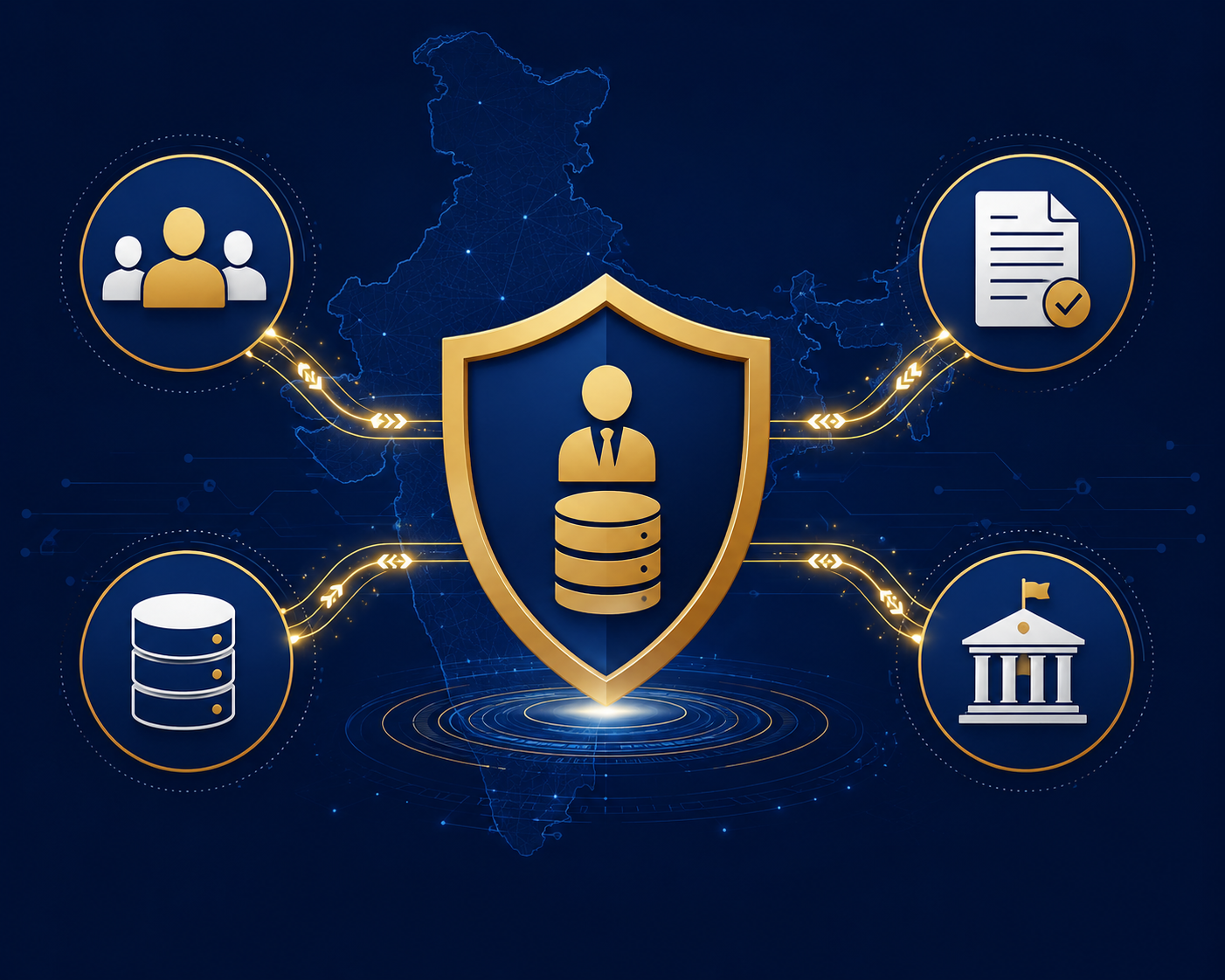

A cryptographically relevant quantum computer does not need to exist today for your enterprise data to be at risk today. That sentence alone should stop most CTOs mid-scroll. Nation-state actors and well-funded adversaries are already collecting encrypted data, financial records, health information, intellectual property, government communications, with a simple bet: decrypt it later once quantum computing matures. This strategy has a name, “harvest now, decrypt later,” and it turns Post-Quantum Cryptography from a distant research topic into an active enterprise risk decision.
For organizations running enterprise hardware security modules, the question is no longer whether quantum computing will break current public-key cryptography. It is when, and whether your HSM infrastructure will be ready. This guide walks through what enterprise leaders need to understand about post-quantum cryptography, why traditional HSM architecture faces a structural challenge, and how to build a realistic migration roadmap grounded in cryptographic agility.
The Quantum Threat Timeline: Why Enterprise Leaders Can’t Wait
Quantum computing progress has moved faster than many security roadmaps anticipated. Major research labs and cloud providers have demonstrated steady increases in qubit stability and error correction, narrowing the gap between today’s noisy quantum machines and a system capable of running Shor’s algorithm against RSA and ECC at scale.
Security researchers generally frame the risk using a simple formula: if the time your data needs to stay confidential exceeds the time before quantum computers can break current encryption, you already have a problem. For banking records, healthcare data, defense communications, and long-term intellectual property, that confidentiality window often stretches ten, twenty, or thirty years. Quantum-safe security, therefore, is not a future initiative. It is a present-day data protection requirement measured against a moving deadline.
Regulatory bodies have taken notice. NIST finalized its first set of post-quantum cryptography standards, and financial regulators across major markets are beginning to reference quantum readiness in supervisory guidance. Enterprises that wait for a mandate before acting will find themselves migrating under pressure rather than on their own terms.
Understanding Post-Quantum Cryptography and NIST Standards
Post-quantum cryptography refers to cryptographic algorithms designed to remain secure against both classical and quantum computer attacks. Unlike quantum key distribution, which requires specialized hardware, PQC algorithms run on existing computing infrastructure while relying on mathematical problems that quantum computers cannot efficiently solve.
NIST’s standardization process selected several algorithm families after years of public evaluation. ML-KEM, formerly known as CRYSTALS-Kyber, handles key encapsulation for secure key exchange. ML-DSA, based on CRYSTALS-Dilithium, provides digital signatures. SLH-DSA offers a stateless hash-based signature scheme as an additional layer of algorithmic diversity.
This diversity matters. Relying on a single mathematical approach creates the same single-point-of-failure risk that made RSA vulnerable to Shor’s algorithm in the first place. A quantum-safe security strategy built around multiple algorithm families reduces the chance that a future cryptanalytic breakthrough compromises everything at once.
For enterprise architects, understanding these standards is only step one. The harder question is how these new algorithms integrate with existing key management systems, signing workflows, and hardware security modules that were never designed with post-quantum key sizes or performance characteristics in mind.
Why Your Current HSM Infrastructure Faces a Quantum Reckoning
Hardware security modules were engineered around RSA and elliptic curve cryptography. These algorithms have small, predictable key sizes and well-understood performance profiles. Post-quantum algorithms behave differently. ML-KEM and ML-DSA keys and signatures are considerably larger, and some PQC schemes demand more computational overhead during key generation and signing operations.
This creates three concrete challenges for enterprise HSM environments. First, storage and memory allocation within existing HSM modules may not accommodate larger PQC key material without firmware or hardware upgrades. Second, throughput expectations built around classical cryptography may not hold once quantum-resistant algorithms are introduced into high-volume signing or transaction workflows. Third, many legacy HSM platforms lack the flexibility to support multiple algorithm families simultaneously, which is essential during a transition period.

Banking technology leaders in particular should note that FIPS 140-2 and FIPS 140-3 validated modules are gradually being updated to include post-quantum algorithm support. Procurement decisions made today without confirming a vendor’s PQC roadmap risk locking enterprises into infrastructure that cannot support tomorrow’s compliance requirements.
There is also a network-level dimension to this challenge that often gets overlooked. HSMs do not operate in isolation, they sit within a broader ecosystem of TLS termination points, VPN concentrators, and secure gateways that all negotiate cryptographic parameters. If an HSM supports PQC algorithms but the surrounding infrastructure does not, the enterprise gains little practical protection. A genuine quantum-safe network requires coordinated upgrades across key management, certificate authorities, and the gateways that enforce cryptographic policy at the perimeter.
Enterprises should also account for signing throughput in high-volume environments. Code-signing pipelines, document approval workflows, and transaction authorization systems that process thousands of signing operations per minute may see measurable latency increases when larger PQC signatures are introduced. Capacity planning, not just algorithm selection, needs to be part of any serious HSM modernization conversation.
The Hidden Risk: Harvest Now, Decrypt Later Attacks
Most enterprise security conversations focus on active threats, malware, phishing, unauthorized access. Harvest now, decrypt later attacks are different because they are passive today and devastating tomorrow. An adversary intercepts encrypted traffic, stores it, and waits.

Consider a scenario. A financial institution transmits encrypted transaction records and customer PII across its network daily. If that traffic is intercepted and archived now, a future quantum computer capable of breaking RSA-2048 or ECC could retroactively decrypt years of accumulated data in one exposure event. The damage would not be theoretical, it would include exposed account details, contractual terms, and regulatory violations tied to data that was considered secure at the time it was encrypted.
This is precisely why post-quantum cryptography readiness cannot be treated as a checkbox exercise scheduled for whenever quantum computers arrive. Sensitive data encrypted with classical algorithms today is already exposed to future decryption. The migration window matters as much as the algorithm choice itself.
Building Cryptographic Agility Into Your HSM Strategy
Cryptographic agility is the ability to swap, update, or run multiple cryptographic algorithms without re-architecting core systems. It is the single most important design principle for any organization planning a PQC migration, because no enterprise wants to repeat this transition disruption when the next algorithmic shift arrives.
A crypto-agile HSM strategy typically includes centralized key management that supports multiple algorithm types simultaneously, policy-driven controls that determine which algorithm applies to which workload, and abstraction layers that decouple applications from specific cryptographic implementations. Instead of hardcoding RSA or ECC into application logic, crypto-agile systems reference cryptographic policy that can be updated centrally.
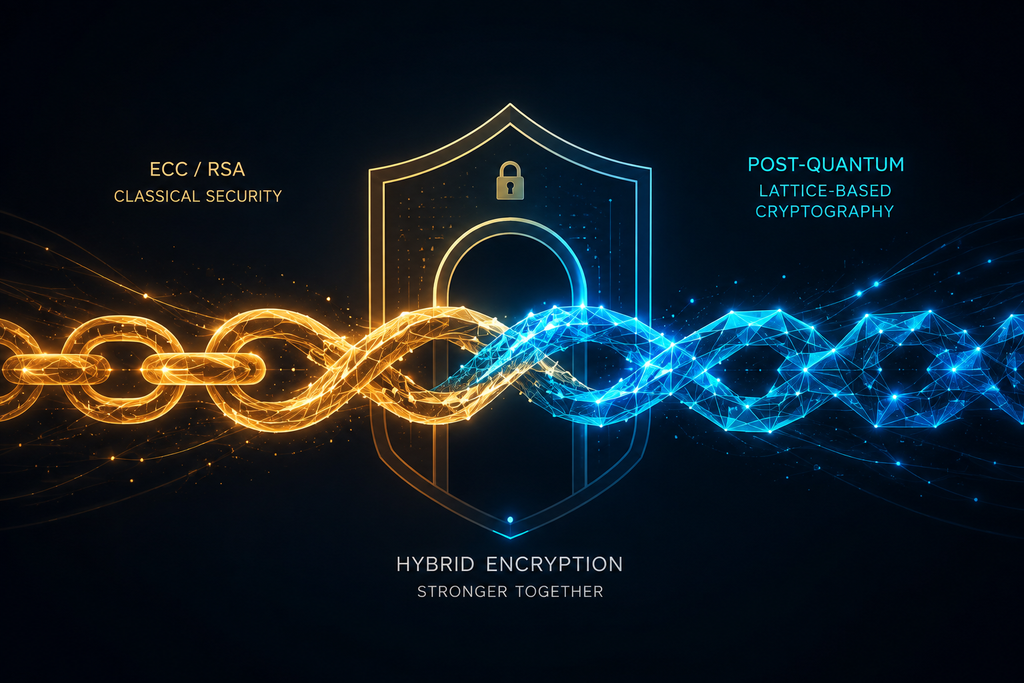
Enterprises building crypto-agility into their HSM planning should evaluate vendors on a few specific dimensions. Does the platform support hybrid classical and post-quantum algorithms side by side? Can policy changes be pushed without touching application code? Does the key management layer scale across multi-cloud and on-premises environments without duplicating governance effort? These questions separate genuine quantum-readiness from marketing language.
Hybrid Encryption: The Practical Bridge to Quantum-Safe Security
Few enterprises can flip a switch and move entirely to post-quantum algorithms overnight. Hybrid encryption offers a practical middle path. It combines a classical algorithm, such as ECC, with a post-quantum algorithm, such as ML-KEM, within the same cryptographic operation. If one algorithm is later broken, either by a quantum computer or an unforeseen classical weakness, the other still protects the data.
Hybrid approaches also solve a real operational problem: interoperability. Many partner systems, payment networks, and regulatory infrastructures have not yet adopted PQC. Hybrid encryption allows an enterprise to strengthen its cryptographic posture today while maintaining compatibility with systems that have not caught up.
Industry standards bodies, including the Internet Engineering Task Force, have already published hybrid key exchange mechanisms for TLS, and major browser vendors have piloted hybrid post-quantum key exchange in production traffic. This signals that hybrid cryptography is not an interim workaround, it is becoming the accepted transition architecture for the next several years.
PQC Migration Roadmap: A Phased Approach for Enterprise HSMs
A structured PQC migration roadmap reduces disruption and gives security and infrastructure teams a realistic path forward. Most successful enterprise transitions follow a similar sequence.
The first phase involves cryptographic discovery. Security teams inventory every system, application, and data flow that relies on public-key cryptography, including certificates, VPN tunnels, code-signing pipelines, and API authentication. Many enterprises are surprised by how much cryptography is embedded in systems nobody actively monitors.
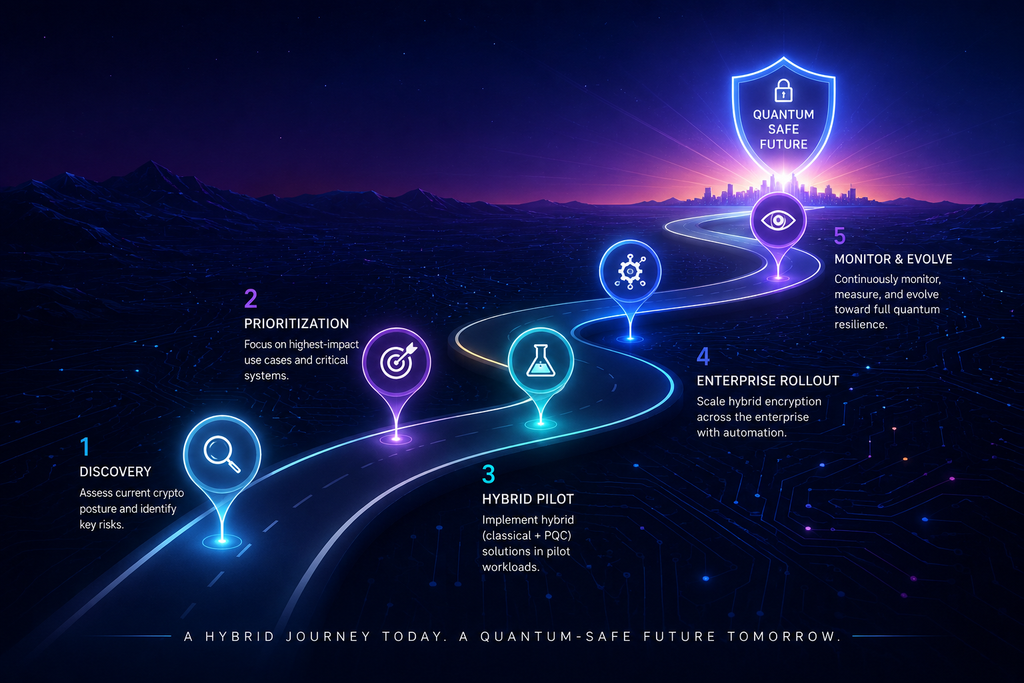
The second phase focuses on risk prioritization. Not every system needs to migrate simultaneously. Data with long confidentiality requirements, financial records, health data, government communications, should move to quantum-resistant encryption first. Systems handling short-lived, low-sensitivity data can follow later.
The third phase introduces hybrid cryptography into pilot environments. This allows teams to measure real-world performance impact, validate interoperability with partner systems, and adjust HSM capacity planning before a full production rollout.
The fourth phase expands crypto-agility across the enterprise, including key management, certificate lifecycle automation, and policy enforcement through a centralized PQC governance platform. The final phase involves continuous monitoring and periodic reassessment, since NIST and other standards bodies may refine algorithm recommendations as quantum computing research advances.
Governance, Policy, and Compliance in the PQC Era
Technical migration alone is not sufficient. Enterprises need governance structures that make PQC adoption auditable, consistent, and defensible to regulators. This includes clear policy definitions for which algorithms are approved for which use cases, audit logging that tracks cryptographic operations and policy changes, and role-based access controls governing who can modify cryptographic policy.
For regulated industries, particularly banking and financial services, this governance layer connects directly to existing compliance frameworks. RBI, SEBI, and PCI DSS v4.0 requirements around key management and data protection will increasingly expect organizations to demonstrate a documented quantum-readiness strategy, not just current-state compliance. A PQC policy engine that integrates with existing compliance reporting reduces the burden of proving readiness during audits.

Boards and executive leadership are also beginning to ask sharper questions about quantum risk. CTOs and CIOs who can present a documented migration roadmap, supported by audit trails and governance controls, are in a far stronger position than those relying on ad hoc technical fixes.
Governance also needs to account for third-party risk. Enterprises rarely operate in isolation, and vendors, payment processors, and cloud partners each carry their own cryptographic posture. A quantum-readiness policy that only covers internal systems leaves a gap wherever data crosses an organizational boundary. Mature governance frameworks extend policy requirements into vendor risk assessments, asking partners to demonstrate their own PQC migration timelines as part of ongoing due diligence.
Real-World Scenario: A Banking Institution’s Quantum-Safe Journey
Picture a mid-sized banking institution managing millions of encrypted customer transactions daily across on-premises data centers and multiple cloud providers. Its security team completes a cryptographic discovery exercise and finds that core banking APIs, mobile app authentication, and internal key signing workflows all depend on RSA-2048.
Rather than attempting an immediate full migration, the institution prioritizes its highest-risk data flows, primarily long-term customer financial records and internal signing infrastructure. It introduces hybrid encryption across its secure gateway infrastructure, pairing classical ECC with ML-KEM for key exchange. Within its HSM environment, it enables support for ML-DSA signing alongside existing RSA signatures, allowing a gradual transition without breaking downstream verification systems that have not yet updated.
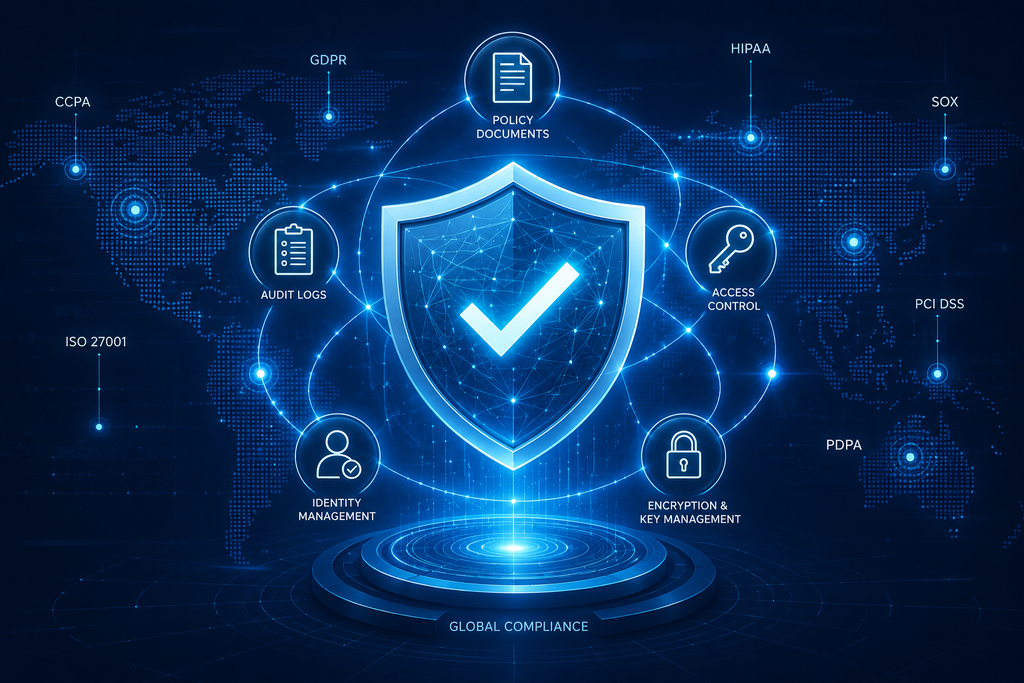
Over eighteen months, the institution expands crypto-agility across its multi-cloud key management layer, automates certificate renewal with quantum-resistant algorithms, and builds audit logging into its cryptographic policy engine. When regulators later request evidence of quantum-readiness planning, the institution has a documented, phased roadmap rather than a scramble to explain gaps.
How QuantumVault Enables Enterprise-Grade PQC Readiness
QuantumVault is built specifically for enterprises navigating this exact transition. Rather than treating post-quantum cryptography as a one-time algorithm swap, QuantumVault approaches PQC readiness as an ongoing operational capability supported by crypto-agile infrastructure.
At its core, QuantumVault provides centralized key management that supports hybrid classical and post-quantum algorithms simultaneously, allowing enterprises to migrate specific workloads at their own pace without disrupting systems that are not yet ready. Its PQC governance platform gives security and compliance teams policy-driven control over which algorithms apply to which use cases, backed by detailed audit logs that satisfy regulatory scrutiny for banking, financial services, and other regulated sectors.
For organizations operating across multi-cloud and on-premises environments, QuantumVault’s BYOK and HYOK capabilities extend crypto-agility without forcing a rip-and-replace of existing HSM investments. Its secure gateway architecture supports quantum-safe access and PQC tunnel protection for sensitive data in transit, while its signing workflow integration allows enterprises to introduce ML-DSA signatures alongside legacy algorithms during the transition window.
The result is a quantum-safe security platform that meets enterprises where they are today while positioning them for what comes next. Instead of reacting to a quantum threat after it materializes, security and infrastructure leaders can build measurable, auditable progress toward quantum-resistant encryption using a platform designed for exactly this kind of long-term cryptographic transition.
Enterprises evaluating their HSM infrastructure against this challenge should Prepare for post-quantum cryptography before migration becomes a regulatory deadline rather than a strategic choice.
Conclusion: Quantum Readiness Is a Now Decision, Not a Later One
Post-quantum cryptography is not a hypothetical future requirement. The harvest now, decrypt later threat means data encrypted today with classical algorithms is already at risk of future exposure. Enterprise HSM infrastructure, built around RSA and ECC for decades, faces real structural limitations when it comes to supporting larger PQC key sizes, hybrid algorithm workflows, and the governance demands of a quantum-safe security posture.
The organizations that will navigate this transition successfully are the ones building cryptographic agility now, running structured discovery, prioritizing high-risk data, piloting hybrid encryption, and establishing governance frameworks that make quantum-readiness auditable. Waiting for a clear quantum computing breakthrough before acting means migrating under pressure, with less control over timelines and higher operational risk.
CTOs and CIOs who start this planning process today, with a phased roadmap and the right crypto-agile infrastructure, will be the ones explaining their quantum-readiness strategy to regulators and boards with confidence, not scrambling to build one after the fact.
Frequently Asked Questions
1. What is post-quantum cryptography and why does it matter now? Post-quantum cryptography refers to encryption algorithms designed to resist attacks from quantum computers. It matters now because data encrypted today can be harvested and decrypted later once quantum computing matures, making early migration essential for long-lived sensitive data.
2. When will quantum computers actually break current encryption? Timelines remain uncertain, with estimates ranging widely among researchers. However, the harvest now, decrypt later risk means the exact timeline matters less than the confidentiality lifespan of your data.
3. What are the NIST post-quantum cryptography standards? NIST has standardized ML-KEM for key encapsulation, ML-DSA for digital signatures, and SLH-DSA as an additional hash-based signature option, providing algorithmic diversity for enterprise adoption.
4. Do we need to replace our existing HSM hardware for PQC? Not always immediately. Some HSM platforms support firmware updates enabling PQC algorithms, while others require hardware refresh cycles. A crypto-agile key management layer can bridge this gap during transition.
5. What is cryptographic agility and why is it important? Cryptographic agility is the ability to update or run multiple encryption algorithms without redesigning core systems. It reduces disruption during the PQC transition and prepares enterprises for future algorithmic changes.
6. What is hybrid encryption in the context of PQC? Hybrid encryption combines a classical algorithm with a post-quantum algorithm in a single operation, maintaining security even if one algorithm is later compromised while preserving compatibility with systems still on classical cryptography.
7. How does harvest now, decrypt later actually work? Adversaries intercept and store encrypted data today, then decrypt it once quantum computers become capable of breaking classical algorithms, exposing historical data that was considered secure at the time of transmission.
8. Which industries face the highest quantum risk? Banking, financial services, healthcare, government, and any sector handling long-term sensitive data face elevated risk, since their data confidentiality requirements often extend well beyond current quantum computing timelines.
9. How should we prioritize systems for PQC migration? Start with cryptographic discovery to inventory all systems using public-key cryptography, then prioritize based on data sensitivity and required confidentiality lifespan rather than migrating everything simultaneously.
10. What compliance frameworks are addressing post-quantum readiness? Regulators overseeing banking and financial services, including frameworks tied to RBI, SEBI, and PCI DSS v4.0, are increasingly referencing quantum-readiness expectations alongside existing key management and data protection requirements.
11. Can PQC algorithms slow down enterprise systems? Post-quantum algorithms generally require larger key sizes and more computational overhead than classical algorithms, which can affect throughput in high-volume environments unless infrastructure is properly capacity-planned.
12. What role does key management play in PQC readiness? Centralized key management enables policy-driven control over which algorithms apply where, supports hybrid classical and post-quantum workflows, and provides the audit trail needed for regulatory compliance.
13. Is quantum key distribution the same as post-quantum cryptography? No. Quantum key distribution requires specialized hardware to transmit keys using quantum physics principles, while post-quantum cryptography uses mathematically resistant algorithms that run on standard computing infrastructure.
14. How long does a typical enterprise PQC migration take? Timelines vary by organization size and complexity, but phased migrations involving discovery, prioritization, hybrid piloting, and full rollout commonly span twelve to twenty-four months for large enterprises.
15. Where should enterprise leaders start their PQC readiness planning? Begin with a cryptographic discovery exercise to understand current algorithm usage, then evaluate crypto-agile platforms capable of supporting hybrid encryption and centralized governance before committing to a full migration roadmap.