

There is a persistent myth in the smart contract development world: that automated tools have made manual review obsolete. On the other side, some traditionalists insist that only human expertise matters and that automated scanning is just a shortcut. Both views are wrong, and holding either one puts your protocol at risk.
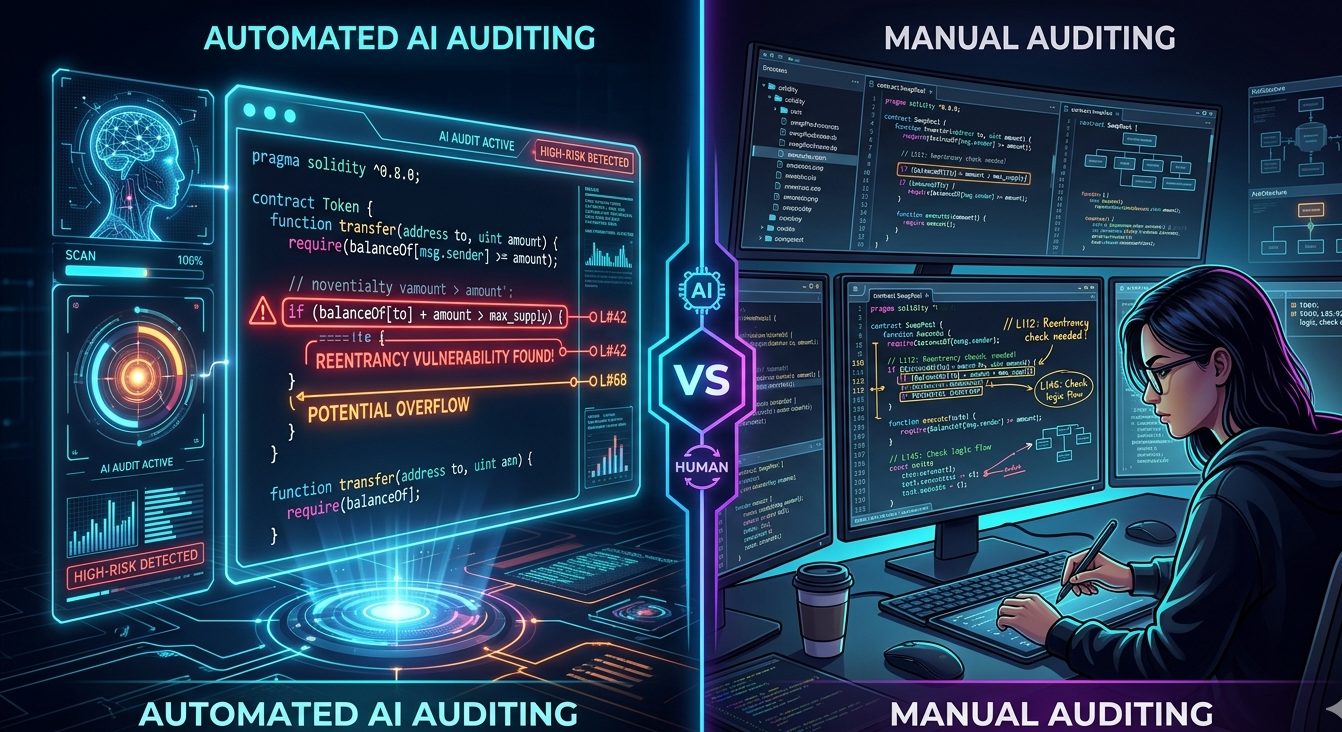
The reality of smart contract security is more nuanced. Manual and automated audits are not competitors. They are complementary layers that, when combined intelligently, produce dramatically better security outcomes than either approach alone. Understanding how they differ, where each excels, and how to integrate both is essential knowledge for any team building on-chain.
What Automated Auditing Actually Does
Automated audit tools analyze smart contract code programmatically. They use static analysis engines, formal verification frameworks, symbolic execution, and pattern matching to identify known vulnerability classes across an entire codebase in a fraction of the time any human reviewer could manage.
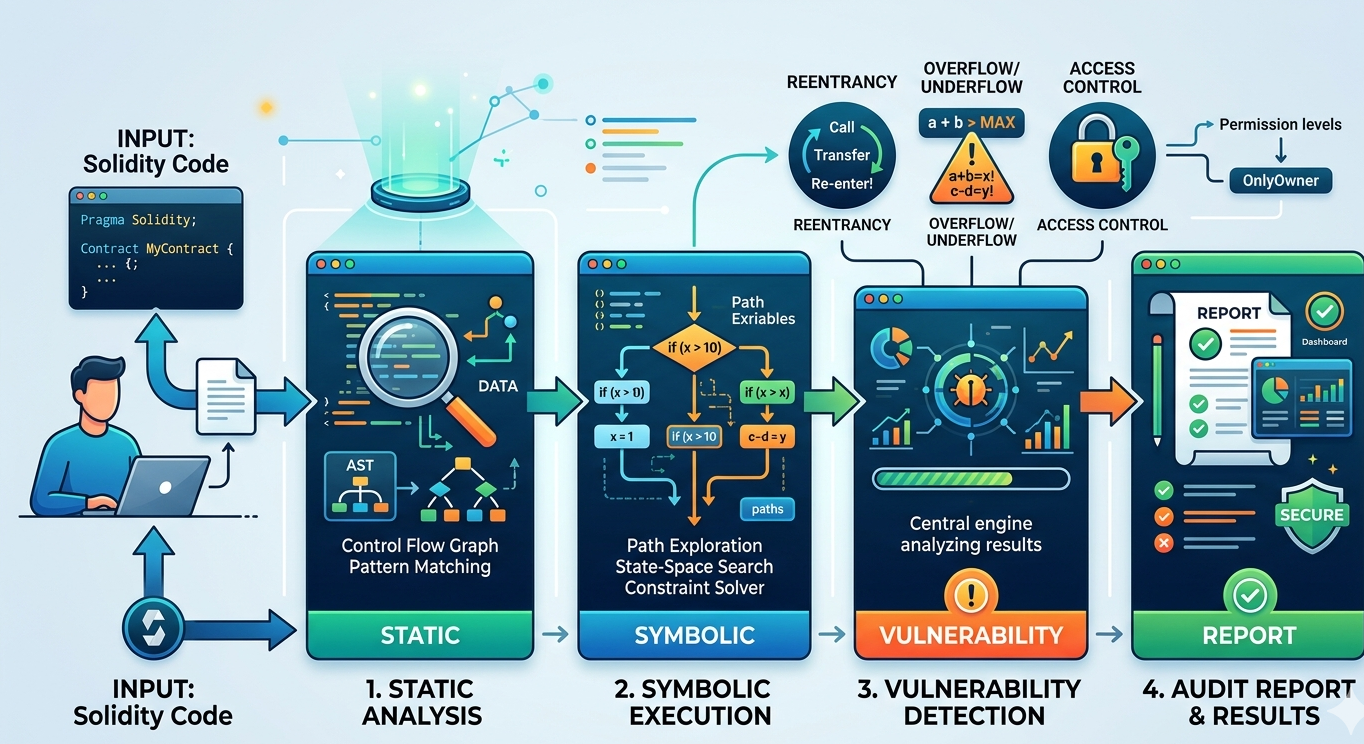
The strength of automated tooling lies in scale and consistency. A well-built scanner will check every function, every code path, and every state transition against a library of known vulnerability patterns without fatigue, bias, or distraction. It will catch reentrancy risks, integer overflow patterns, unchecked return values, and access control gaps with high reliability across thousands of lines of code.
Moreover, automated tools excel at enforcing coding standards and flagging deviations from best practices. They can be integrated into CI/CD pipelines, meaning every code commit triggers a security scan before it reaches review. This shifts security left, catching issues at the development stage rather than the deployment stage.
Where Automated Auditing Falls Short
The limitation of automated tools is equally important to understand. They identify patterns. They do not understand intent. A smart contract can be syntactically correct, pass every automated check, and still contain a critical logical vulnerability that an automated scanner cannot detect.
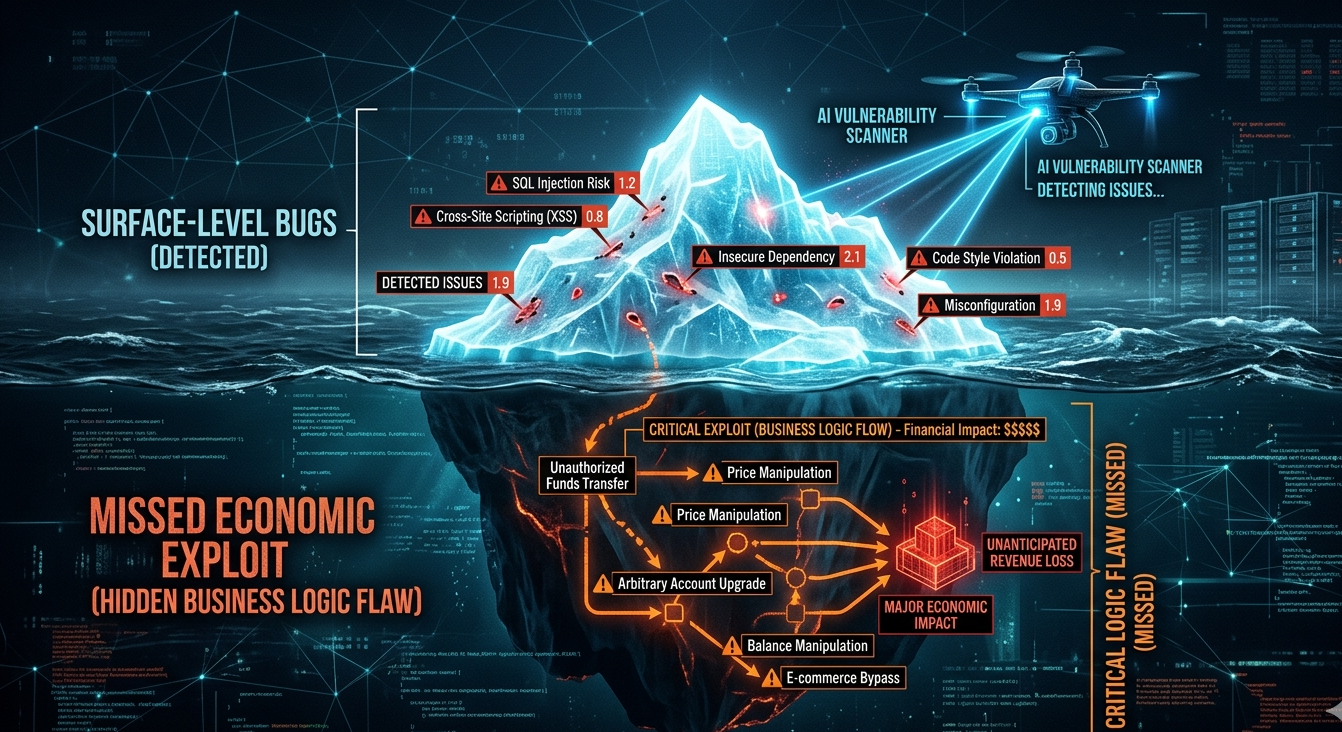
Business logic flaws are the most dangerous examples of this gap. If a protocol’s tokenomics create an incentive that allows an attacker to drain liquidity through a series of economically rational but malicious transactions, no static analyzer will flag it as a vulnerability. The code executes exactly as written. The vulnerability lies in what the code was designed to do, not in how it does it.
Similarly, cross-contract interaction risks, governance attack vectors, and oracle manipulation surfaces often require contextual understanding that automated tools lack. An experienced security researcher can read a contract, understand the broader protocol architecture, and identify risks that emerge from the interaction of multiple contracts, not from any single function in isolation.
The Role of Manual Review in Smart Contract Security
Manual audit review is where experienced security researchers bring judgment, contextual reasoning, and adversarial thinking to the codebase. They read the code the way an attacker would. They ask not just whether the code is correct, but whether a determined, well-resourced adversary could find a way to make it behave unexpectedly.

Skilled manual reviewers understand the meta-level of protocol design. They assess whether the upgradeability mechanism introduces centralization risk. They evaluate whether the admin key structure creates a single point of failure. They consider whether flash loan integration could destabilize the protocol’s economic assumptions.
Furthermore, manual reviewers bring institutional knowledge accumulated across hundreds of previous audits. They have seen the same vulnerability classes emerge repeatedly in different contexts. They know which attack patterns are currently popular in the wild. This experiential knowledge cannot be fully encoded into an automated tool, and it represents a form of intelligence that genuinely cannot be replicated by software alone.
The Hidden Cost of Relying on Either Alone
Teams that rely exclusively on automated audits often feel a false sense of security. Their scanners produce green results, and they interpret that as safety. But automated tools have known blind spots, and sophisticated attackers know those blind spots intimately. They specifically target the vulnerability classes that automation misses.
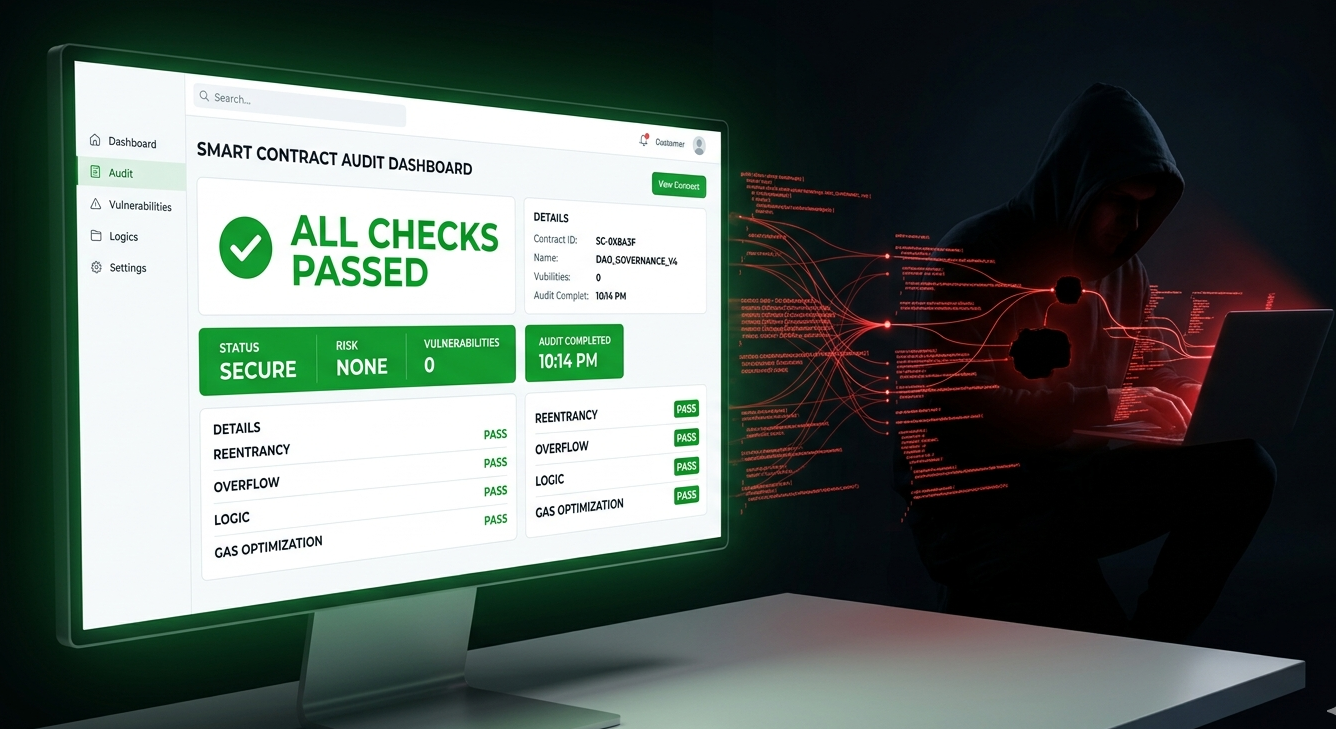
Teams that rely exclusively on manual review face a different problem: human reviewers are expensive, time-constrained, and fallible. Even the best security researchers have finite attention. They can miss common vulnerabilities that an automated scanner would catch instantly. A two-week manual audit with no automated pre-screening is likely to spend significant time on issues that tooling could have resolved in minutes.
The Harvest Finance exploit in 2020 is a useful reference point. The protocol had been reviewed, yet an economic attack exploiting flash loan mechanics caused 34 million dollars in losses. The vulnerability was not a code error in the traditional sense. It was a design assumption that broke under adversarial economic conditions, the kind of risk that requires human judgment to identify.
How Solidity Shield Bridges the Gap
Solidity Shield is built on the recognition that neither automated nor manual review alone is sufficient. It combines automated vulnerability detection with expert analysis to deliver a comprehensive pre-deployment review that addresses both pattern-based vulnerabilities and deeper architectural risks.
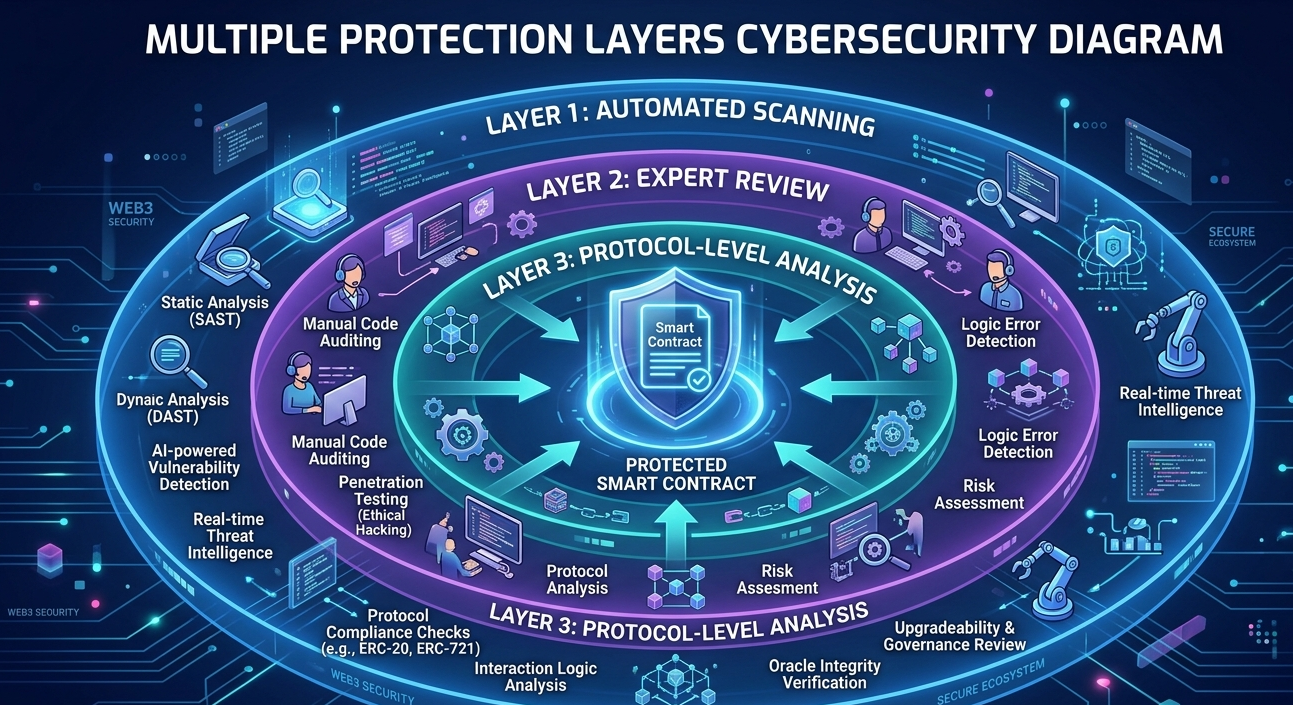
The automated layer of Solidity Shield scans for the full spectrum of known Solidity vulnerability classes, including reentrancy, integer issues, front-running exposure, delegate call risks, and improper access control. This layer runs fast and provides immediate feedback to developers during the build process.
The expert analysis layer then reviews the flagged issues in context, prioritizes them by severity and exploitability, and extends the review to include business logic assessment, protocol-level risk evaluation, and cross-contract interaction analysis. This layered approach ensures that neither common patterns nor sophisticated design flaws escape detection.
Speed vs. Depth: Understanding the Trade-offs
One practical consideration that development teams frequently encounter is the trade-off between speed and depth. Automated tools produce results in minutes. Manual audits take days or weeks. For teams under launch pressure, this creates a genuine tension.
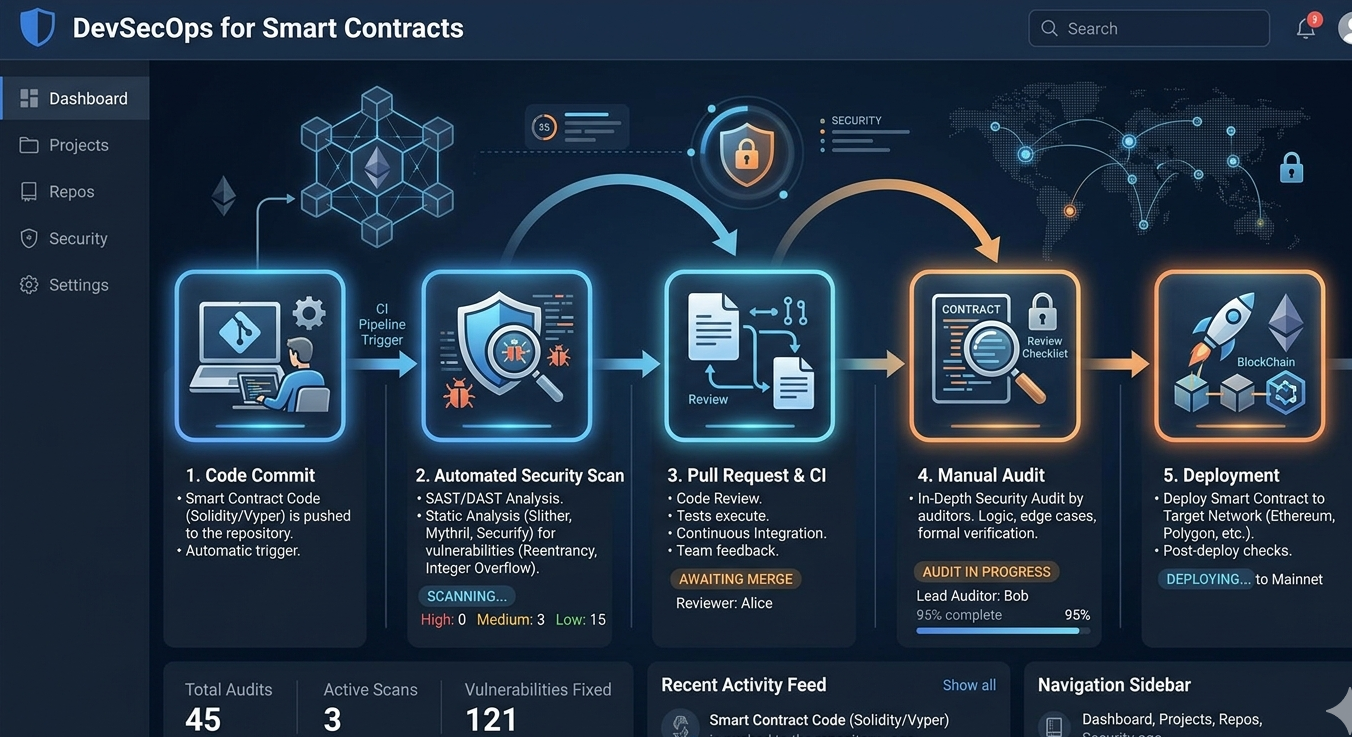
Integrating automated tools early in the development process, rather than treating them as a final pre-launch gate, resolves much of this tension. When developers run automated scans continuously during development, issues are caught and resolved incrementally. By the time a manual audit begins, the codebase is significantly cleaner, and the human reviewer can focus attention on the architectural and logical risks that actually require expert judgment.
This continuous integration approach represents the current best practice in professional smart contract development. It treats security as a development discipline, not an aftermarket add-on. Solidity Shield is designed precisely for this workflow, providing feedback that developers can act on in real time rather than receiving a report after significant development investment has already been made.
Formal Verification: A Third Dimension
Beyond automated scanning and manual review, formal verification represents a third dimension of smart contract security analysis. Formal verification uses mathematical proofs to demonstrate that a contract behaves correctly according to a formal specification. When applicable, it provides the highest possible assurance that specific properties hold under all possible inputs.
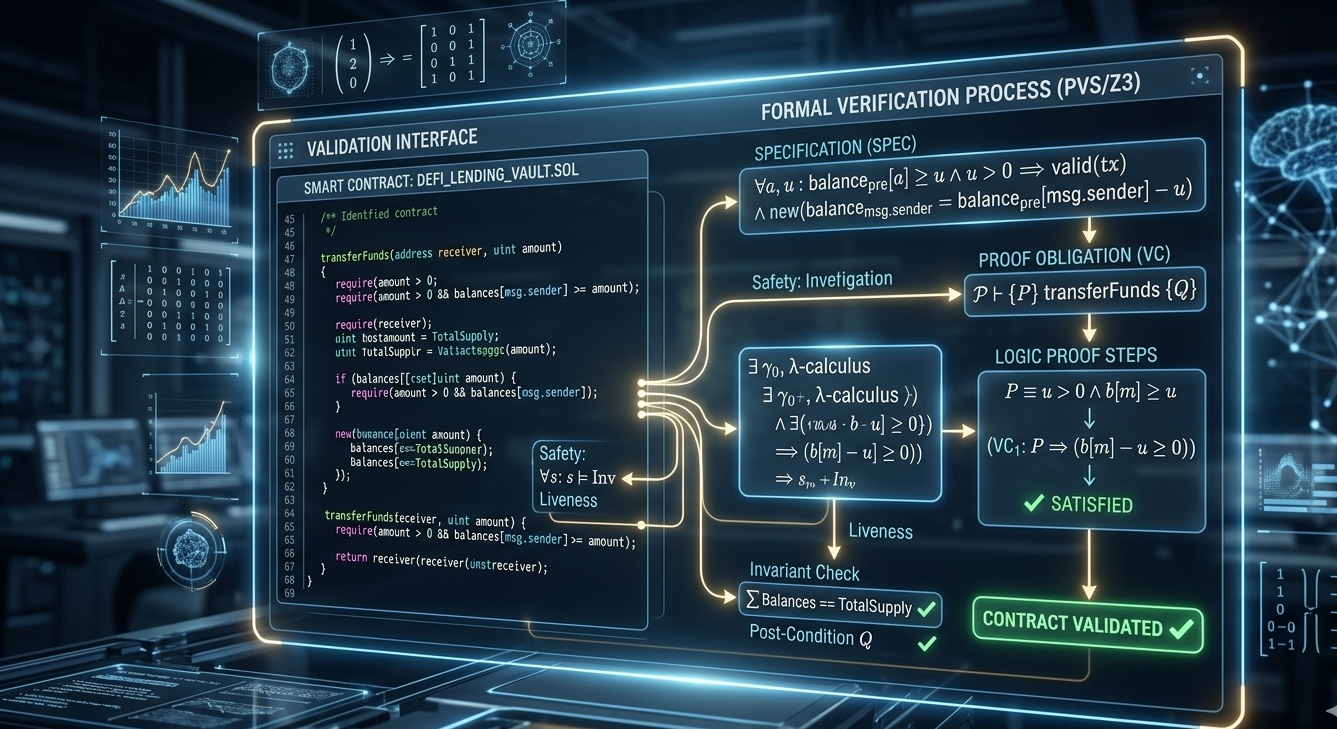
However, formal verification has practical constraints. It is expensive, time-consuming, and requires the security properties to be formally specified before verification can occur. It is most valuable for core protocol logic with well-defined invariants rather than for complex multi-contract systems with many interaction surfaces.
For most teams, formal verification is best reserved for the most critical protocol components. The broader security strategy remains built on the combination of automated scanning for known patterns and manual expert review for logical and architectural risks.
Building a Practical Audit Strategy
A practical smart contract security strategy integrates automated and manual review at different stages of the development lifecycle. Automated scanning should be part of every developer’s daily workflow, integrated into pull request review processes so that issues are caught before they even reach the main codebase.
Pre-launch, a formal manual audit remains essential for any protocol handling significant value. This audit should begin after the automated scanning baseline has been established and common issues resolved. The manual reviewer should receive a clean codebase to analyze, with documentation of the project’s architecture, threat model, and known design decisions.
Post-launch, automated monitoring complements both approaches by continuously checking on-chain behavior for patterns that suggest exploitation attempts. This is a separate concern from pre-deployment auditing but equally important for maintaining ongoing smart contract security.
The Quality Signal of a Combined Approach
There is a reputational dimension to security approach choices that is worth acknowledging. Sophisticated investors, institutional partners, and informed users increasingly understand the difference between a genuine security review and a checkbox exercise.
A protocol that has completed a comprehensive audit using both automated and manual review, with documented remediation of findings, sends a clear signal about its commitment to security. This matters for fundraising, for attracting quality liquidity, and for building the trust necessary to grow to meaningful scale.
Solidity Shield supports this credibility by providing documented, structured output that teams can share with stakeholders. The combination of automated findings and expert analysis creates an audit trail that demonstrates both the rigor of the review process and the seriousness with which identified issues were addressed.
Conclusion
The manual versus automated debate in smart contract security is a false choice. Both approaches are necessary, and the key to effective security is understanding what each does well and integrating them at the appropriate stages of development.
Automated tools provide speed, scale, and consistency. Manual reviewers provide judgment, contextual understanding, and adversarial thinking. Together, they cover the full spectrum of risk that smart contracts face. Solidity Shield is built to deliver exactly this kind of layered protection, ensuring that both common vulnerabilities and sophisticated design flaws receive the scrutiny they require before a single transaction reaches mainnet.
FAQ: Manual vs Automated Audits
1. Can automated tools replace manual audits for smart contracts?
No. Automated tools excel at detecting known vulnerability patterns quickly and consistently. Manual review is necessary for identifying business logic flaws, architectural risks, and context-dependent vulnerabilities that pattern matching cannot detect.
2. How early should automated scanning be integrated into development?
As early as possible. Integrating automated scanning into daily development workflows and CI/CD pipelines ensures issues are caught when they are cheapest to fix, long before a formal audit begins.
3. What types of vulnerabilities does automated scanning miss?
Automated scanning typically misses business logic flaws, economic attack vectors, governance design risks, and vulnerabilities that emerge from cross-contract interactions. These require human judgment and contextual understanding to identify.
4. How does Solidity Shield handle the gap between automated and manual review?
Solidity Shield combines automated vulnerability detection with expert analysis in a single workflow. The automated layer catches known patterns quickly, while the expert layer evaluates architectural risks, prioritizes findings, and provides remediation guidance that developers can act on directly.
5. Is formal verification necessary for all smart contracts?
Not universally. Formal verification provides the highest assurance for core protocol logic with well-defined invariants. For most protocols, the combination of automated scanning and manual expert review provides strong coverage without the added complexity and cost of formal verification for every component.