
If your organization verifies identity at scale, whether onboarding gig workers, checking guests at a hotel counter, or screening candidates during recruitment, you have probably run into the same wall. Aadhaar-based verification looks simple until you try to build it properly. That is where the Offline Verification Seeking Entity, or OVSE, framework comes in. UIDAI created this pathway specifically so businesses could verify Aadhaar holders without ever touching the central database, and understanding how to become one is now a real competitive advantage.
This guide walks through what an OVSE actually is, how the registration process works, what technology stack UIDAI expects you to run, and where this entire model is heading as enterprises shift toward self-sovereign identity and decentralized identity architectures. By the end, you will know exactly what UIDAI asks for and how to future-proof your compliance stack instead of rebuilding it every two years.
What Is an OVSE and Why It Matters Now
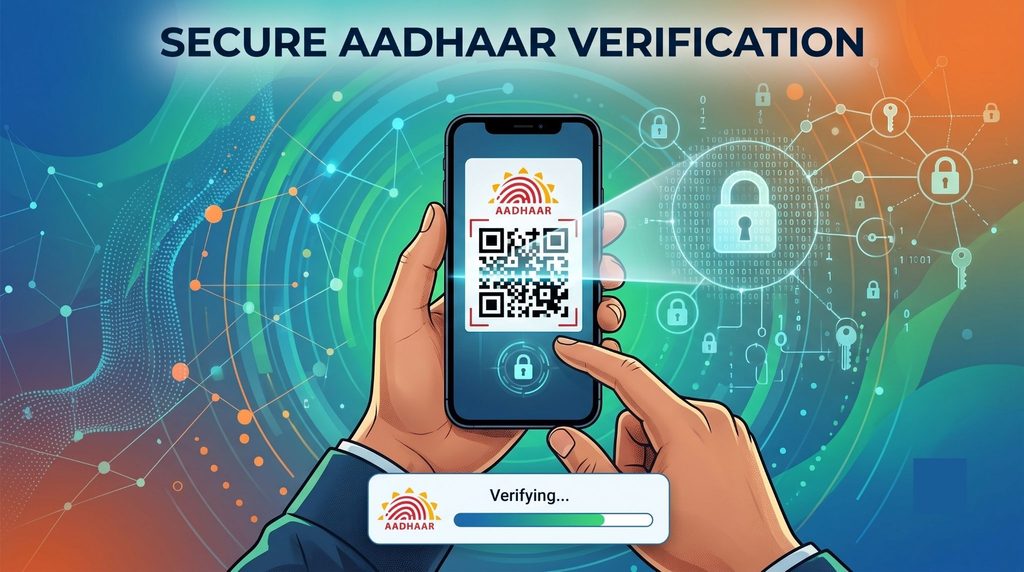
An Offline Verification Seeking Entity is any organization registered with UIDAI to perform offline verification of an Aadhaar number holder’s identity. Unlike traditional Aadhaar authentication, which pings UIDAI’s Central Identities Data Repository directly, offline verification happens entirely outside that system. Your organization reads a digitally signed Aadhaar QR code or an encrypted XML file, verifies the signature locally, and confirms identity attributes without ever connecting to UIDAI’s servers in real time.
This distinction matters more than it sounds. Direct authentication requires AUA or KUA licenses, which come with heavy compliance obligations and licensing fees. Offline verification through the OVSE route is lighter, faster to set up, and open to a much wider set of businesses. UIDAI has explicitly opened this to hospitality, healthcare, gig economy platforms, entertainment venues, real estate firms, education institutions, recruitment agencies, facility management companies, NGOs, government departments, and fintech players.
The appeal is obvious once you consider the alternative. Manual ID checks are slow, prone to forgery, and leave paper trails that create their own privacy risks. Offline verification gives you a cryptographically verifiable answer in seconds, and it does so while keeping the Aadhaar number holder in control of what gets shared. That consent-first design is not an accident. It is the same principle driving the broader shift toward self-sovereign identity and decentralized identity systems worldwide, and OVSE is, in many ways, India’s first large-scale experiment with that philosophy.
Who Can Actually Register as an OVSE
There is a common misconception that OVSE status is reserved for large enterprises with deep compliance teams. That is not accurate. Any registered entity, including startups, can apply as long as it has a legitimate and clearly stated reason for offline verification. There is no minimum revenue threshold and no requirement to be a licensed financial institution.
What UIDAI does expect is a genuine business use case. A recruitment platform verifying candidate identity before onboarding has an obvious need. A hotel chain confirming guest identity at check in has an obvious need. A random entity with no clear verification requirement will struggle to justify the application, and rightly so, because the framework exists to solve real identity problems, not to hand out data access.
The Step-by-Step Registration Process
Becoming an OVSE follows a fairly linear path, though the exact documentation UIDAI requests can vary slightly based on your sector and use case.
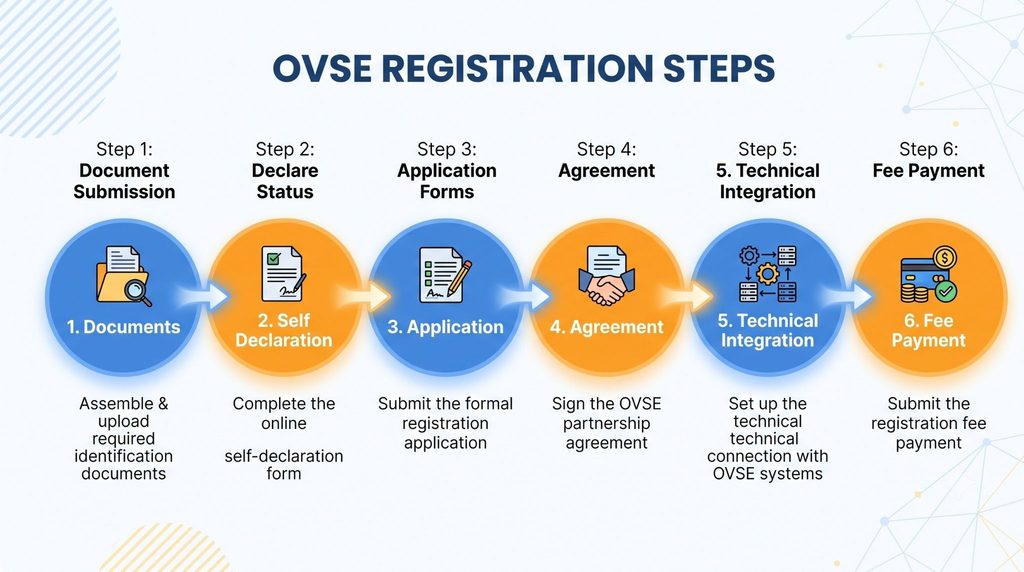
Step one: Prepare your organizational documents. You will need your Certificate of Incorporation or Registration, a company profile that clearly describes your business and why you need offline verification, and a Letter of Authorisation signed by a senior official empowering someone to act on the organization’s behalf.
Step two: Draft a self-declaration. UIDAI requires a formal commitment that your organization will comply with the Aadhaar Act, associated regulations, and data governance rules. This is not a formality. It is the legal backbone of your OVSE status, and violating it can lead to suspension or outright cancellation.
Step three: Submit the application. UIDAI provides an OVSE application form that captures both organizational details and technical specifications. Furthermore, this is where most applications either sail through or get delayed, because the technical section demands precision.
Step four: Sign the formal agreement with UIDAI. Once your application is reviewed favorably, you enter into an agreement that formalizes your obligations as an OVSE.
Step five: Complete technical integration. This involves setting up the callback infrastructure, certificates, and verification logic UIDAI expects, which we will cover in detail below.
Step six: Pay the registration fee. UIDAI charges a nominal registration fee, though the exact amount is not published broadly and is best confirmed directly through the official application channel.
On average, organizations report the entire journey taking anywhere from a few weeks to a couple of months, depending largely on how prepared the technical documentation is at submission time. Consequently, entities that treat this as an engineering project from day one, rather than a paperwork exercise, tend to move through the process considerably faster.
The Technical Requirements UIDAI Will Not Compromise On
This is where many applications stumble, not because the requirements are complicated, but because small errors cause outright rejection. UIDAI’s technical checklist for OVSE onboarding includes the following.
Logo file. Your organization’s logo must be submitted in SVG format and must be under 10KB in size. It appears inside the Aadhaar mobile application whenever a user interacts with your verification request, so oversized or incorrectly formatted logos are a common and entirely avoidable rejection reason.
Callback URL. You must provide a URL where UIDAI will post response data after a verification event. This URL must run over HTTPS. Encrypted connections are non-negotiable, and UIDAI actively tests these endpoints before approval, so an untested or misconfigured callback URL will delay your onboarding.
Organization name. This is the name displayed to Aadhaar holders inside the app when they are asked to consent to verification. Accuracy here builds user trust, since a mismatched or unclear name raises red flags for end users.
Domain name. UIDAI verifies domain ownership as part of the process. Any errors in how the domain is declared, or mismatches between the domain and your organizational identity, can lead to rejection.
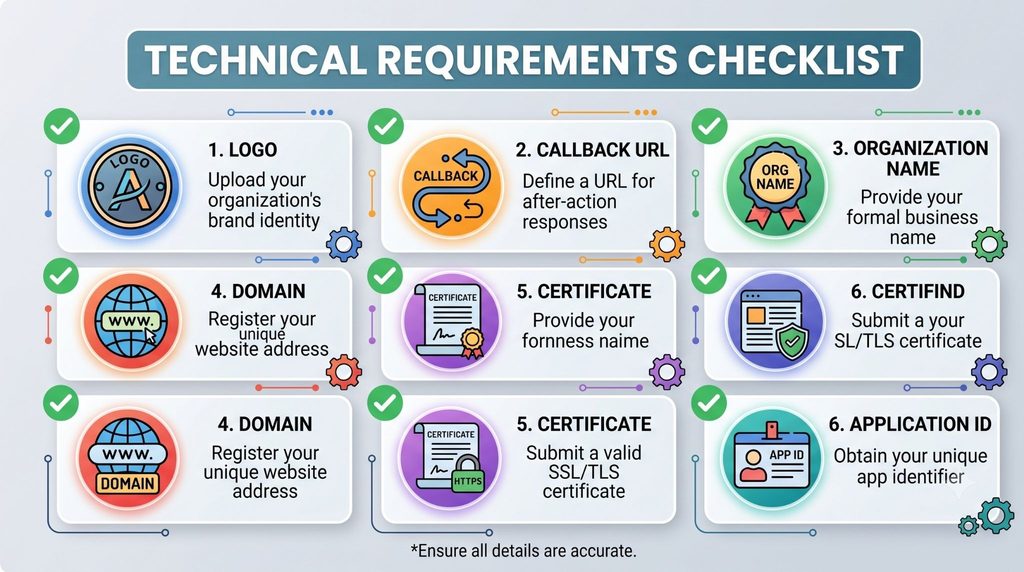
Public certificate. You need a public certificate with a minimum validity of two years. This certificate underpins the cryptographic trust relationship between your systems and UIDAI’s verification framework.
Application ID. If you are building app to app integrations for Android or iOS, meaning your users complete verification directly from within your mobile app through an intent call to the Aadhaar app, you will need to register application identifiers for both platforms.
Beyond these specific fields, your infrastructure needs to support QR code scanning, parsing of digitally signed and encrypted Aadhaar XML files, and validation of digital signatures locally. In other words, the actual verification logic, checking that the QR code or XML has not been tampered with, lives entirely on your side. UIDAI is not in the loop during the verification event itself. That is precisely what makes it “offline.”
Building the Technology Stack for OVSE Compliance
Once you have UIDAI approval in hand, the real engineering work begins. A compliant OVSE stack generally needs the following components working together.
A secure ingestion layer. This handles QR code scanning through camera or scanner hardware, and encrypted XML file uploads. It needs to be resilient to malformed inputs, since real-world usage will inevitably include damaged or expired QR codes.
A cryptographic verification module. This component validates UIDAI’s digital signature on the QR code or XML payload using public key cryptography. This is the heart of offline verification, and it must be implemented correctly, because any weakness here defeats the entire purpose of the framework.
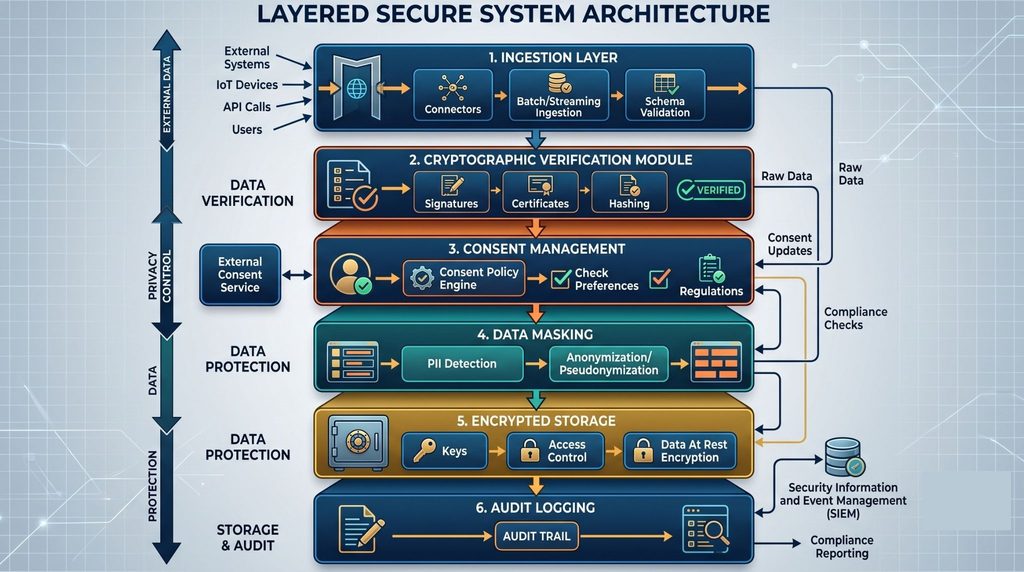
A consent management system. Every single verification event requires explicit, logged consent from the Aadhaar number holder before you process their data. Your system also needs to offer alternative verification methods for individuals who decline Aadhaar-based checks, since UIDAI mandates that Aadhaar cannot be the only path to service access.
Data masking and minimization logic. OVSEs are prohibited from storing the full Aadhaar number. You can only retain masked references, typically the last four digits, alongside whatever demographic attributes your use case genuinely requires. Storing more than necessary is itself a compliance violation, not just a security risk.
Encrypted storage infrastructure. Whatever data you do retain must sit behind encryption at rest, with strict access controls limiting who inside your organization can view verification records.
Tamper-proof audit logging. UIDAI expects a complete, immutable trail of every verification activity. This is not optional logging for internal debugging. It is a compliance requirement that regulators can request during an audit.
Periodic internal compliance audits. Beyond the technical build, OVSEs are expected to run their own internal reviews confirming that consent flows, data retention limits, and security controls remain intact over time.
Many organizations choose to build this stack independently, particularly if they already run mature engineering teams. Others integrate with certified verification providers who have already solved the QR parsing, signature validation, and consent orchestration problems. Either route works, provided the underlying architecture respects the core principles UIDAI has laid out.
Where OVSE Fits Into the Bigger Identity Picture
Here is the part that most compliance checklists skip entirely. OVSE is not just a regulatory hoop to jump through. It is a preview of where digital identity is heading globally, and understanding that trajectory will save you from rebuilding your stack every time the rules shift.
Aadhaar offline verification already embodies several principles central to self-sovereign identity and decentralized identity models. The Aadhaar holder controls what gets shared. Verification happens without a central authority being pinged in real time. Cryptographic signatures, not blind trust, establish authenticity. That is essentially the same logic driving verifiable credentials and DID-based systems worldwide, just implemented within a national identity framework rather than a fully decentralized one.
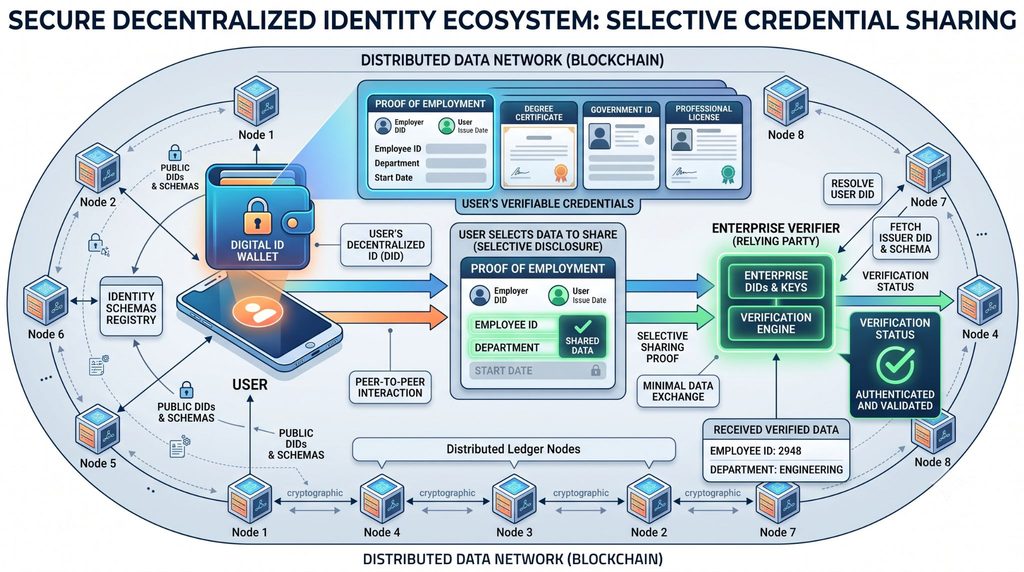
For enterprises thinking beyond immediate OVSE compliance, this connection matters. A privacy-first identity strategy built only around Aadhaar QR parsing will eventually need to interoperate with broader decentralized identity ecosystems, especially as customers and regulators increasingly demand systems that support passwordless identity, zero-trust identity, and portable identity wallets rather than siloed, single-purpose verification flows.
Why Enterprise SSI Is the Natural Next Step
Think about what your OVSE stack is already doing. It verifies a credential, checks a cryptographic signature, and confirms an attribute without storing unnecessary data. An enterprise self-sovereign identity solution extends that exact logic across every identity interaction your organization has, not just Aadhaar checks, but employee onboarding, customer KYC, vendor verification, and access management.
With a proper SSI platform, your organization can issue and verify verifiable credentials that employees or customers hold in their own identity wallet, presenting only the specific attribute needed for a given transaction. A recruitment platform, for example, could move from parsing Aadhaar QR codes for identity alone to accepting verifiable credentials for education, employment history, and background checks, all cryptographically signed and instantly verifiable, without a single phone call to a previous employer.
This is where blockchain identity and DID solutions for enterprises earn their place. Rather than every organization independently building consent flows, masking logic, and audit trails from scratch, a decentralized identity ecosystem lets credentials issued once by a trusted authority get verified anywhere, by anyone, instantly. It is the same efficiency OVSE brought to Aadhaar verification, applied across the entire enterprise identity stack.
SSI Versus Traditional Identity Management
Traditional identity management, including much of the current OVSE landscape, still relies on organizations storing and managing identity data themselves, even in masked form. Every additional data point retained is another liability sitting on your servers. SSI and DID based approaches flip that model. The organization verifies a credential’s authenticity without needing to become its permanent custodian.
For enterprises evaluating identity verification for compliance, this distinction directly affects risk exposure. A traditional identity database is a target. A decentralized identity architecture, where credentials live in the holder’s wallet and get verified cryptographically at the moment of need, dramatically shrinks that attack surface. This is precisely why zero-trust identity frameworks increasingly favor verifiable credentials over centrally stored identity records.
Common Compliance Pitfalls to Avoid
A handful of mistakes show up repeatedly among organizations pursuing OVSE status, and avoiding them saves significant time.
Underestimating the callback URL testing requirement is one of the most frequent issues. UIDAI actively validates that your HTTPS endpoint responds correctly before granting approval, so testing this thoroughly before submission prevents unnecessary rejection cycles.
Another recurring problem is treating consent as a checkbox rather than a real workflow. UIDAI expects genuine, logged, revisitable consent, along with a functioning alternative path for individuals who decline Aadhaar verification. Skipping the alternative pathway is a compliance gap that surfaces quickly during audits.
Storing more data than necessary is equally common and equally risky. Some organizations retain full verification payloads out of convenience, assuming it might be useful later. That habit alone violates the data minimization principle UIDAI mandates and creates unnecessary breach exposure.
Finally, many organizations treat OVSE registration as a one time project rather than an ongoing compliance obligation. Certificates expire after two years, audit logs need continuous monitoring, and internal compliance reviews are not optional extras. Building these into a recurring operational rhythm, rather than a one off launch task, is what separates OVSEs that stay in good standing from those that eventually face suspension.
Building for Compliance Today and Interoperability Tomorrow
The organizations getting the most value from OVSE registration are the ones designing their verification architecture with decentralized identity principles baked in from the start, even if their immediate need is simply Aadhaar offline verification. That means building consent management, credential verification, and audit logging as modular components rather than tightly coupled, Aadhaar-specific code.
This approach pays off because identity verification requirements rarely stay static. A hospitality company that starts with guest verification through OVSE often finds itself needing employee background verification, vendor KYC, and eventually customer-facing digital identity wallets within a few years. Systems built around verifiable credentials and DID standards from day one absorb these new requirements far more gracefully than systems hard-coded around a single national ID scheme.
At SecureDApp, we work with enterprises navigating exactly this transition, from meeting today’s UIDAI compliance requirements to building enterprise-ready SSI platforms that support verifiable credentials, decentralized identity wallets, and privacy-first digital identity architectures designed for regulated industries. The goal is never to treat compliance and innovation as separate tracks. A well-architected identity stack should satisfy today’s regulator and tomorrow’s interoperability standard at the same time.
Final Thoughts
Becoming an OVSE under UIDAI is genuinely achievable for organizations of nearly any size, provided you approach both the paperwork and the technical requirements with precision. Get your documentation right, build a callback infrastructure that passes UIDAI’s testing, respect the data minimization and consent rules without shortcuts, and treat ongoing compliance as a permanent operational responsibility rather than a launch day checkbox.
At the same time, it pays to look past the immediate requirement. Offline Aadhaar verification and self-sovereign identity share the same underlying philosophy: verify without over-collecting, empower the individual to control disclosure, and rely on cryptography rather than blind institutional trust. Organizations that build their OVSE compliance stack with that broader decentralized identity trajectory in mind will find themselves years ahead when enterprise self-sovereign identity solutions, verifiable credentials, and identity wallets move from emerging trend to standard practice across regulated industries.
Frequently Asked Questions
What is an OVSE under UIDAI?
An Offline Verification Seeking Entity is an organization registered with UIDAI to verify an Aadhaar number holder’s identity by reading a digitally signed QR code or encrypted XML file, without connecting to UIDAI’s central database in real time.
Who is eligible to register as an OVSE?
Any registered entity with a genuine business need for offline verification can apply, including startups. UIDAI has opened this to hospitality, healthcare, gig economy, entertainment, real estate, education, recruitment, facility management, NGOs, government departments, and fintech companies. There is no minimum revenue threshold.
What technical assets does UIDAI require during registration?
You need an SVG logo under 10KB, an HTTPS callback URL, your organization name as it should appear in the Aadhaar app, a verified domain name, and a public certificate valid for at least two years. App to app integrations additionally require Android and iOS application identifiers.
Can an OVSE store the full Aadhaar number?
No. OVSEs are prohibited from storing the complete Aadhaar number and may only retain masked references, such as the last four digits, along with whatever demographic attributes the declared use case genuinely requires.
Is OVSE the same as Aadhaar authentication through an AUA or KUA license?
No. AUA and KUA licenses involve direct, real-time authentication against UIDAI’s Central Identities Data Repository and carry heavier compliance obligations. OVSE registration is lighter, faster to obtain, and built specifically for offline, consent-based verification.
How does OVSE relate to self-sovereign identity and decentralized identity?
Both rely on the same underlying principles: the identity holder controls what gets shared, verification happens through cryptographic signatures rather than a central lookup, and only the minimum necessary data is disclosed. Enterprises that build their OVSE stack with modular, standards-based components are far better positioned to adopt verifiable credentials, identity wallets, and broader decentralized identity ecosystems as those models mature.