
Most enterprise security teams assume their cryptographic infrastructure is solid. They have hardware security modules in place, key rotation policies documented, and audit logs running in the background. On paper, it looks complete. In practice, something critical is missing.
The threat landscape has shifted. Quantum computing is no longer a theoretical concern reserved for academic papers. Nation-states and well-funded adversaries are already executing “harvest now, decrypt later” campaigns, collecting encrypted enterprise data today with the intention of decrypting it once quantum processors reach cryptographic relevance. For organizations that rely on classical RSA, ECC, or AES-128 implementations, the window for safe operation is narrowing faster than most realize.
Enterprise HSM key management is no longer just about protecting keys at rest. It is about building a cryptographic foundation that can survive the post-quantum transition without breaking existing workflows, compliance frameworks, or operational continuity.
This guide covers everything modern organizations need to know: from how enterprise HSM architectures work today, to why cryptographic agility has become the defining security requirement of the decade, to how a structured PQC migration roadmap keeps regulated enterprises both secure and audit-ready.
What Is Enterprise HSM Key Management and Why It Matters Now
A Hardware Security Module is a tamper-resistant physical device that generates, stores, and manages cryptographic keys in a hardened environment isolated from the main computing infrastructure. Enterprise HSM key management refers to the broader operational system surrounding these devices: how keys are provisioned, how policies govern their use, how they are rotated, and how every interaction is logged for compliance purposes.
For regulated industries such as banking, insurance, healthcare, and government contracting, HSM-backed key management is not optional. PCI DSS requires HSMs for PIN block encryption. RBI guidelines mandate secure key custodianship for payment infrastructure. SEBI frameworks increasingly expect cryptographic controls that match the sensitivity of financial data. Enterprise HSMs are the cornerstone of all of these requirements.

What has changed recently is the risk profile. Classical cryptographic algorithms that HSMs have historically protected are now under a different kind of threat. Shor’s algorithm, running on a sufficiently powerful quantum computer, can break RSA-2048 in hours rather than millennia. Grover’s algorithm effectively halves the security strength of symmetric encryption. The National Institute of Standards and Technology finalized its first set of post-quantum cryptography standards in 2024, including CRYSTALS-Kyber for key encapsulation and CRYSTALS-Dilithium for digital signatures. This is not speculation. It is an active industry transition.
Modern enterprise HSM key management must therefore account for quantum-safe key generation, hybrid encryption schemes that blend classical and PQC algorithms, and the governance infrastructure needed to manage this complexity at scale.
The Architecture of a Quantum-Safe Key Management System
Understanding what a quantum-ready key management architecture looks like is the first step toward building one. The components are more interconnected than most organizations expect.

The Core HSM Layer
At the foundation sits the HSM itself, responsible for all cryptographic operations inside a certified hardware boundary. FIPS 140-2 Level 3 and Level 4 certified devices provide the highest assurance for enterprise deployments. The HSM performs key generation using certified entropy sources, executes cryptographic operations without exposing raw key material, and enforces access controls that define which applications or users can invoke which keys.
In a quantum-safe architecture, the HSM must support post-quantum algorithms natively or through firmware extension. This is where many legacy HSM deployments hit a wall. Devices purchased before 2022 may not support CRYSTALS-Kyber or CRYSTALS-Dilithium, forcing organizations to either replace hardware or implement a hybrid model where classical algorithms handle current operations while PQC algorithms are layered in through a software-defined cryptographic gateway.
The Key Lifecycle Management Layer
Keys do not exist in a static state. They are generated, activated, used, rotated, suspended, and eventually retired. Each transition in this lifecycle represents a potential vulnerability if not governed by clear policy. Enterprise key management systems must define:
The creation policy, which determines what algorithm and key length is appropriate for each use case. The activation window, which controls when a key becomes operational and for how long. The rotation schedule, which ensures keys are refreshed before they accumulate enough exposed usage to become a meaningful attack target. The archival and destruction protocols, which define how retired keys are preserved for decryption of historical data and how they are eventually destroyed.
In a post-quantum context, this lifecycle becomes more complex. PQC keys have different size characteristics than classical keys. CRYSTALS-Kyber-1024 public keys are approximately 1,568 bytes, compared to 256 bytes for an ECC P-256 key. Systems that assumed small key sizes in their database schemas, network protocols, or certificate handling logic may need architectural updates before PQC key management can be implemented cleanly.
The Policy Engine Layer
Above the key lifecycle sits the policy engine: the intelligence layer that defines rules governing cryptographic operations across the enterprise. A well-designed PQC policy engine answers questions like:
Which applications are permitted to use which algorithms? How are exceptions handled when legacy systems cannot yet support post-quantum algorithms? What triggers an automatic key rotation? How is cryptographic agility maintained as NIST updates its PQC standards over time?
Without a centralized policy engine, enterprises face a sprawling patchwork of locally configured cryptographic settings that become impossible to audit, update, or secure consistently.
Why Cryptographic Agility Is the New Security Standard
Cryptographic agility is the architectural capacity to swap cryptographic algorithms without restructuring the underlying application or infrastructure. It sounds straightforward. In practice, most enterprise systems were built with a specific algorithm hardcoded into their design, making algorithm substitution a significant engineering project rather than a configuration change.
The reason cryptographic agility has moved from a nice-to-have to an essential requirement is NIST’s evolving PQC standard suite. When NIST finalized CRYSTALS-Kyber and CRYSTALS-Dilithium in 2024, it also announced continued evaluation of SPHINCS+ and FALCON. The PQC landscape is not static. An organization that commits rigidly to a single PQC algorithm today may find itself in a difficult position if that algorithm’s security properties are later revised.
Moreover, hybrid encryption, which combines classical and post-quantum algorithms in a single cryptographic operation, is the recommended transitional approach for most regulated enterprises. The reasoning is sound: if a classical RSA key exchange runs alongside a CRYSTALS-Kyber key encapsulation, an adversary needs to break both simultaneously to compromise the session. This provides forward security against both classical and quantum threats during the transition period.

Implementing hybrid encryption at scale requires an infrastructure that understands both algorithm families and can route cryptographic requests to the appropriate algorithm based on policy. That is not something most organizations can bolt onto an existing HSM deployment without purpose-built tooling.
Notably, cryptographic agility also protects against implementation vulnerabilities. History shows that even well-analyzed algorithms can have implementation flaws. An agile cryptographic infrastructure can rapidly migrate away from a compromised implementation without service disruption. For enterprises operating in regulated sectors where downtime carries regulatory consequences, this capability is not theoretical comfort. It is operational insurance.
PQC Migration: What a Structured Rollout Actually Looks Like
Most organizations understand that they need to migrate to post-quantum cryptography. Far fewer have a structured PQC migration plan. The gap between awareness and execution is where the real risk lives.
A production-grade PQC migration follows distinct phases, and each phase carries its own technical and organizational challenges.
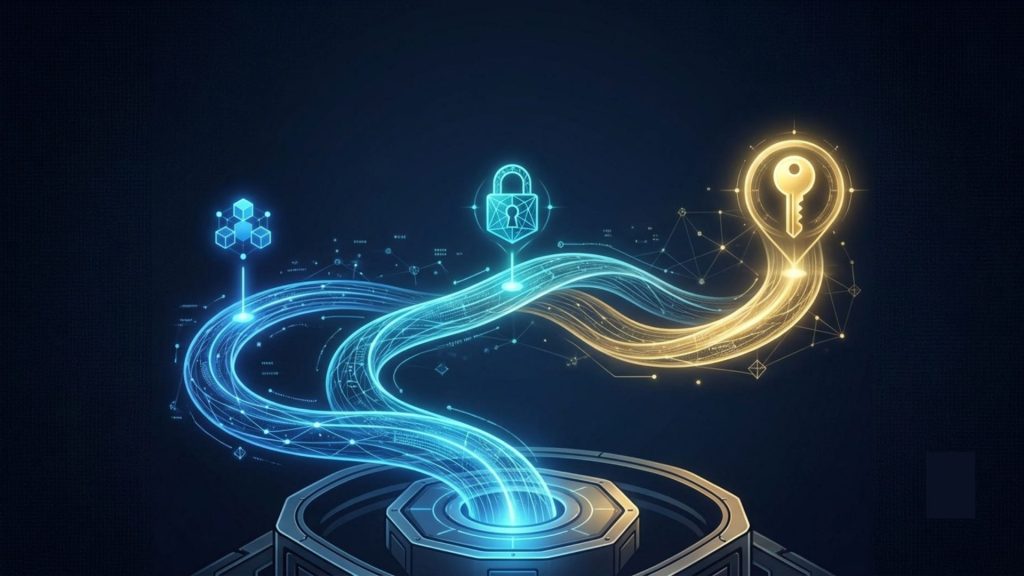
Phase One: Cryptographic Inventory and Risk Assessment
Before any algorithm can be migrated, organizations must know what cryptographic assets they have. This means identifying every system, application, and protocol that uses cryptographic operations: TLS connections, code signing workflows, certificate authorities, VPN tunnels, database encryption, API authentication, and IoT device communication.
For large enterprises, this inventory is rarely complete or accurate. Shadow IT systems, legacy applications with undocumented encryption implementations, and third-party integrations with unknown cryptographic configurations all introduce blind spots. PQC audit logs generated during this phase become the foundation for compliance reporting as the migration progresses.
The risk assessment maps each discovered cryptographic asset to a quantum risk timeline. Systems that encrypt long-lived data, such as patient records or financial archives, carry higher urgency because the harvest-now-decrypt-later threat applies most directly to data with value over a decade or more. Systems that handle ephemeral session data have more time, though not indefinite time.
Phase Two: Hybrid Deployment and Parallel Operation
Once the inventory is complete and risk-ranked, hybrid encryption deployment begins. In this phase, critical systems run both classical and post-quantum algorithms simultaneously. PQC key management infrastructure is provisioned alongside existing HSMs, and new connections begin negotiating hybrid cipher suites where protocol support allows.
This phase is where PQC governance becomes operationally visible. Policy decisions about which hybrid combinations are acceptable, how hybrid keys are logged, and how exceptions are tracked require active management rather than passive monitoring. The PQC policy engine defines which algorithm combinations are approved, which are deprecated, and which are temporarily permitted with enhanced logging.
A critical success factor in this phase is ensuring that the PQC migration does not degrade performance to the point where operational teams work around it. CRYSTALS-Kyber key encapsulation adds latency relative to ECDH. If that latency creates user experience problems, teams will disable the feature. Quantum-safe network design must account for performance budgets across every critical communication path.
Phase Three: Full PQC Rollout and Legacy Deprecation
As systems prove stable under hybrid operation, the classical algorithm component is progressively deprecated. This phase completes the PQC rollout and ultimately produces a cryptographic environment where post-quantum algorithms handle all key management operations.
Legacy systems that cannot be upgraded represent the hardest problem in this phase. Some are vendor-managed and upgrade timelines are outside the organization’s control. Others are custom-built applications with deeply embedded classical cryptography assumptions. The PQC compliance framework must define how these systems are handled: whether they are isolated in a secure enclave with controlled access, whether they are scheduled for replacement, or whether compensating controls are accepted for a defined period with enhanced monitoring.
Key Use Cases Where Quantum-Safe HSM Management Changes Everything
Abstract descriptions of PQC migration matter less than concrete scenarios. Here are the contexts where enterprise HSM key management decisions have the most direct impact on security outcomes.
Financial Services and Payment Infrastructure
Banks and payment processors operate cryptographic infrastructure that processes millions of transactions daily. PIN translation, card verification, inter-bank settlement, and API authentication between financial institutions all depend on HSM-backed key management. For these organizations, the harvest-now-decrypt-later threat is particularly acute: transaction records, account data, and contractual communications encrypted today may retain their value and sensitivity for decades.
A financial services firm implementing quantum-safe security must ensure that its HSMs can generate CRYSTALS-Kyber keys for key exchange, that its PQC signing workflow produces CRYSTALS-Dilithium signatures for transaction authorization, and that its compliance reporting captures algorithm usage at a granularity that satisfies RBI and PCI DSS auditors.
Healthcare and Clinical Data Protection
Healthcare organizations encrypt patient records, clinical trial data, genomic information, and administrative communications. The sensitivity of this data has no expiration date in many cases. A patient’s genomic profile or HIV status is as sensitive in 2035 as it is today.
PQC device security for medical equipment, quantum-safe access controls for EMR systems, and post-quantum secure signing for prescription workflows are all areas where quantum-resistant security decisions made today determine whether patient data remains protected a decade from now.
Enterprise Collaboration and Document Security
Internal communications, board-level documents, merger and acquisition materials, and intellectual property all flow through enterprise collaboration platforms. Most of these platforms rely on TLS and classical asymmetric encryption for protection in transit. PQC collaboration security addresses this gap by extending quantum-safe encryption to the communication layer.
PQC tunnel implementations for remote access, combined with quantum-safe gateway enforcement at the network perimeter, create an end-to-end security architecture where intercepted communications cannot be decrypted even by a future quantum adversary.
Code Signing and Software Supply Chain Security
Software supply chain attacks have become one of the most impactful attack categories in enterprise security. Code signing workflows that use quantum-vulnerable signature algorithms represent a future attack surface. If an adversary can forge code signatures using a quantum computer, they can distribute malware that appears to come from a trusted software vendor. PQC signing workflow implementation protects against this vector by replacing classical ECDSA signatures with CRYSTALS-Dilithium equivalents.
The Role of PQC Governance in Regulated Enterprise Environments
Governance is where most PQC implementations fall apart. An organization can deploy excellent quantum-safe technology and still fail a compliance audit because the policy framework, the audit trail, and the exception management process are inadequate.
PQC governance encompasses several interconnected disciplines.
PQC audit logs must capture every cryptographic operation with sufficient detail to reconstruct what algorithm was used, which key was involved, which application made the request, and what the authorization chain looked like. For regulated industries, these logs must be tamper-evident and retained according to jurisdiction-specific requirements.

PQC compliance reporting must translate raw audit logs into the format expected by each relevant framework. A single HSM deployment may need to produce compliance artifacts for PCI DSS, RBI guidelines, ISO 27001, and internal board-level reporting simultaneously. Automating this translation reduces the compliance burden and eliminates the risk of manual reporting errors.
PQC rollout governance defines the project management and decision authority structure for the migration. Who approves changes to cryptographic policy? How are exceptions escalated? What change management process governs HSM firmware updates? These questions are not technical. They are organizational. But unresolved, they create the conditions for shadow cryptography: developers who implement their own encryption schemes outside the governed HSM infrastructure because the official process is too slow.
How QuantumVault Addresses Enterprise HSM Key Management Complexity
The requirements described throughout this guide, from cryptographic inventory to hybrid deployment to PQC governance, represent a complex integration challenge that purpose-built tooling is far better positioned to address than stitched-together point solutions.
QuantumVault by SecureDApp is designed specifically for this problem space. It provides enterprises with a unified PQC platform that spans the full scope of enterprise HSM key management in the post-quantum era.
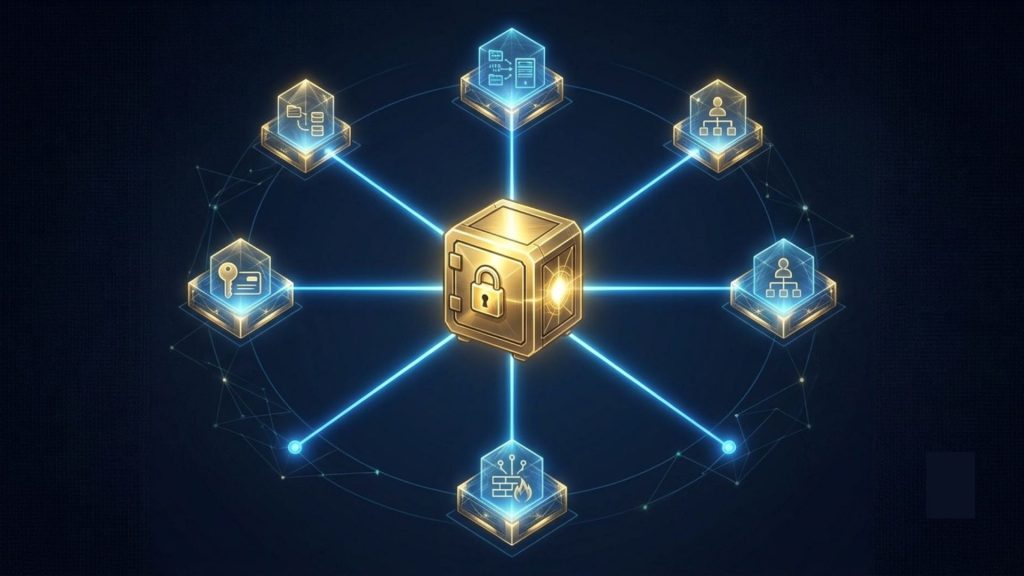
At the infrastructure layer, QuantumVault functions as a quantum-safe security platform that abstracts HSM complexity while providing a consistent policy interface across heterogeneous HSM environments. Organizations operating multiple HSM vendors, whether due to acquisitions, geography, or compliance requirements, gain a single control plane rather than managing each vendor’s proprietary management tools independently.

The platform’s cryptographic agility architecture supports hybrid PQC and classical encryption natively, enabling enterprises to implement hybrid cipher suites without custom engineering. As NIST updates its PQC standard suite, QuantumVault’s PQC governance platform accommodates new algorithms through policy configuration rather than infrastructure replacement.
For migration execution, QuantumVault’s PQC migration tooling provides the cryptographic inventory, risk scoring, and phased deployment controls that structured PQC rollout requires. PQC audit logs are generated in compliance-ready formats, and the policy engine enforces algorithm usage rules across connected applications and services.
The secure gateway capability ensures that all cryptographic traffic entering and leaving the organization flows through policy-enforced controls, enabling quantum-safe network architecture without requiring every endpoint to individually implement PQC algorithms. For remote workforce scenarios, the PQC tunnel implementation provides quantum-safe access to enterprise resources regardless of network environment.
QuantumVault’s PQC key management layer handles the lifecycle complexity introduced by post-quantum key sizes and algorithm requirements, ensuring that key rotation, archival, and destruction policies work correctly across both classical and PQC key material. For signing-intensive workflows, the PQC signing workflow module provides quantum-resistant signatures for code signing, document approval, and API authentication at enterprise scale.
This breadth matters because PQC migration is not a single-system upgrade. It is an enterprise-wide cryptographic transformation that touches every layer of the technology stack. A platform that addresses only HSM key storage without also handling policy governance, audit logging, and migration workflow creates gaps that fragment the security architecture and increase both risk and compliance cost.
Building Quantum-Safe Security: Where to Start
The most common barrier to beginning a PQC migration is not budget or technology availability. It is the absence of a clear starting point. The problem feels too large to approach incrementally, so organizations defer action until urgency becomes crisis.
A practical starting point looks like this:
First, commission a cryptographic inventory for your highest-sensitivity data stores and the systems that access them. Not everything at once. Start where the harvest-now-decrypt-later risk is highest and work outward.
Second, assess whether your current HSM infrastructure supports PQC algorithm extensions. If not, determine whether firmware updates are available or whether a hybrid software-defined gateway approach is the more practical near-term path.
Third, define your PQC governance framework before deploying any technology. Establish who owns cryptographic policy, what the exception process looks like, and how audit logs will be reviewed and retained. Technology deployed without governance becomes a compliance liability rather than a security asset.
Fourth, engage with a platform purpose-built for post-quantum enterprise key management rather than attempting to assemble the capability from generic components. The integration complexity of managing HSMs, key lifecycle, policy enforcement, audit logging, and PQC algorithm support simultaneously is significant. Purpose-built platforms reduce that complexity substantially.
Frequently Asked Questions
What is enterprise HSM key management and why is it critical for quantum security? Enterprise HSM key management refers to the full operational system for generating, protecting, rotating, and retiring cryptographic keys using tamper-resistant hardware modules. It is critical for quantum security because classical algorithms stored and managed by HSMs are vulnerable to quantum attacks. Migrating HSM key management to support post-quantum algorithms is the foundational step in building a quantum-resistant enterprise security architecture.
What is the difference between PQC and quantum encryption? Post-quantum cryptography refers to classical mathematical algorithms redesigned to resist attacks from quantum computers. These run on conventional hardware. Quantum encryption, most commonly referenced as quantum key distribution, uses quantum physics principles to distribute cryptographic keys. For enterprise deployments, PQC is the practical and scalable approach since it does not require specialized quantum networking hardware.
What does cryptographic agility mean in practice? Cryptographic agility means that an enterprise’s systems can switch between cryptographic algorithms without requiring significant engineering changes to applications or infrastructure. In practice, this means algorithm selection is controlled through policy configuration rather than hardcoded in application code, and new algorithm support can be activated centrally as standards evolve.
What is a hybrid encryption approach for PQC migration? Hybrid encryption combines a classical algorithm and a post-quantum algorithm in a single cryptographic operation. For example, key exchange may use both ECDH and CRYSTALS-Kyber simultaneously. An adversary must break both algorithms to compromise the exchange. This approach provides security against both classical and quantum threats during the transition period before full PQC deployment is complete.
How should organizations approach PQC migration without disrupting operations? The recommended approach is phased. Begin with a cryptographic inventory to identify and risk-rank assets. Deploy hybrid encryption on highest-priority systems first. Run classical and PQC algorithms in parallel during a transition period to validate stability and performance. Gradually deprecate classical algorithms as systems prove stable. Use a purpose-built PQC governance platform to manage policy, audit logs, and exception handling throughout.
What is a PQC policy engine and what role does it play? A PQC policy engine is the central governance component that defines and enforces rules about which cryptographic algorithms, key types, and operational parameters are permitted across enterprise systems. It ensures consistent algorithm usage, flags non-compliant cryptographic operations, manages hybrid encryption policies, and produces audit evidence for compliance reporting.
How do PQC audit logs support compliance in regulated industries? PQC audit logs capture detailed records of every cryptographic operation including algorithm used, key identifier, requesting application, timestamp, and authorization chain. These records provide the evidence base for compliance audits under frameworks such as PCI DSS, RBI guidelines, and ISO 27001. Tamper-evident logging ensures that audit records cannot be altered after the fact.
What is the harvest-now-decrypt-later threat and how serious is it? Harvest-now-decrypt-later refers to the strategy where adversaries collect encrypted data today, even though they cannot decrypt it currently, with the intention of decrypting it once quantum computers reach sufficient capability. This is a credible and active threat for long-lived sensitive data such as financial records, healthcare information, and government communications. Organizations protecting data with long-term sensitivity should treat PQC migration as urgent.
What makes a quantum-safe gateway different from a standard network gateway? A quantum-safe gateway enforces cryptographic policy at the network perimeter, ensuring that all traffic entering or leaving the enterprise uses approved quantum-resistant algorithms. Unlike standard gateways that pass through whatever cryptographic configuration the connecting application uses, a quantum-safe gateway actively negotiates PQC or hybrid cipher suites and blocks connections that do not meet the policy standard.
How does QuantumVault support enterprises that have multiple HSM vendors? QuantumVault provides a unified management plane that abstracts vendor-specific HSM interfaces, giving enterprises consistent policy enforcement, key lifecycle management, and audit logging regardless of which HSM hardware is in use. This eliminates the need to manage each vendor’s proprietary tooling independently and ensures that PQC governance policies apply uniformly across the full HSM estate.
What is a PQC compliance framework and how does it differ from general cryptographic compliance? A PQC compliance framework extends general cryptographic compliance requirements to address post-quantum algorithm selection, hybrid deployment governance, migration progress reporting, and algorithm lifecycle management. It defines the evidence standard for demonstrating PQC readiness to regulators, auditors, and customers. General cryptographic compliance frameworks were designed before PQC became a practical requirement and do not address quantum-specific risks.
How does quantum-safe remote access work for distributed enterprise workforces? Quantum-safe remote access uses PQC tunnel technology to protect VPN and remote access connections with post-quantum key encapsulation and authentication. Instead of relying on classical algorithms like RSA or ECDH for session establishment, the tunnel negotiates CRYSTALS-Kyber-based key encapsulation. This ensures that remote sessions cannot be decrypted by a future quantum adversary even if traffic is recorded today.
What are the performance implications of deploying post-quantum algorithms at scale? PQC algorithms generally have larger key and ciphertext sizes than classical equivalents, which affects memory, storage, and network overhead. Some PQC algorithms also have higher computational costs for key generation or encapsulation operations. However, CRYSTALS-Kyber and CRYSTALS-Dilithium are specifically selected for their favorable performance profiles at the security levels enterprises need. Purpose-built PQC platforms optimize algorithm scheduling and resource allocation to minimize performance impact on production systems.
How does PQC signing workflow differ from classical code signing? Classical code signing typically uses ECDSA or RSA signatures. PQC signing workflow replaces these with CRYSTALS-Dilithium or FALCON signatures that resist quantum attacks. The operational workflow, submitting code for signing, receiving a signed artifact, distributing signatures alongside code, remains similar. The difference is in the underlying algorithm, key sizes, and the signature verification infrastructure that consuming systems must support.
When should organizations begin their PQC migration? The answer for most regulated enterprises is now. Cryptographic inventory, governance framework establishment, and hybrid encryption deployment for highest-risk systems can and should begin immediately regardless of when large-scale quantum computers become available. The migration takes years to complete at enterprise scale, and organizations that defer face compressing timelines and potential compliance consequences as regulatory bodies begin requiring demonstrated PQC readiness.
Conclusion
Enterprise HSM key management has always been one of the less glamorous disciplines in enterprise security. It sits below the surface, invisible when working correctly and catastrophic when it fails. The post-quantum transition is changing its profile entirely, moving it from a background operational function to a strategic security priority that boards, regulators, and security leadership need to actively engage.
The core insight is this: the threat from quantum computing to classical cryptography is not a future risk to be addressed when quantum computers arrive. It is a present risk because adversaries are harvesting encrypted data now. Every month that enterprise HSM infrastructure operates on classical algorithms alone is a month where long-lived sensitive data accumulates quantum-era exposure.
Cryptographic agility, hybrid encryption deployment, structured PQC migration, quantum-safe governance, and purpose-built platforms for managing this complexity are not optional enhancements. They are the architecture of enterprise security in the post-quantum era.
Organizations that move deliberately and methodically through PQC migration, starting with inventory and governance, moving through hybrid deployment, and completing with full post-quantum rollout, will emerge with a cryptographic infrastructure that is not just quantum-resistant but more governable, more auditable, and more operationally resilient than what they had before.
QuantumVault exists to make that journey practical for enterprise organizations, providing the unified platform, policy engine, audit infrastructure, and migration tooling that makes quantum-safe security achievable without the complexity of assembling point solutions across every layer of the cryptographic stack.
The quantum era is not approaching. It is underway. The organizations preparing now are the ones that will maintain security continuity when it fully arrives.