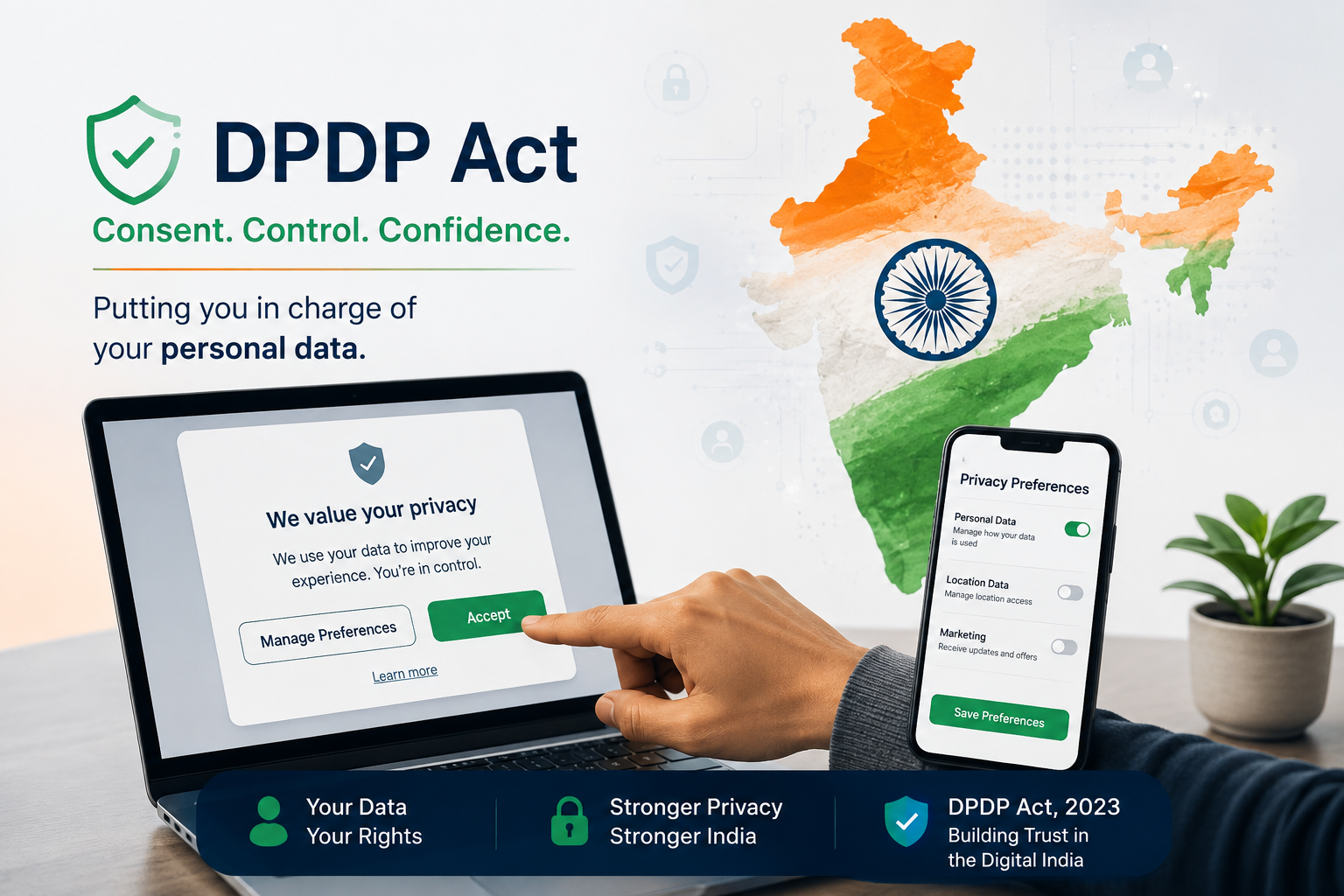

India’s data privacy landscape changed permanently when the Digital Personal Data Protection Act was signed into law in 2023. For millions of businesses collecting personal data from Indian users, the clock is ticking. The DPDP Act does not merely suggest consent best practices. It mandates them, with penalties reaching up to INR 250 crore for serious violations. And yet, a surprising number of organisations are still operating with fragmented cookie banners, disconnected consent forms, and no centralised record of what users actually agreed to.
The right DPDP Consent Management Platform India businesses need is not just a checkbox tool. It is a compliance infrastructure. Choosing one without understanding what it must contain is a costly mistake. This blog breaks down the seven features that separate a truly DPDP-ready consent platform from one that merely looks the part.
Why the DPDP Act Raises the Bar on Consent Management
Before examining features, it helps to understand what the DPDP Act actually demands. Under the Act, consent must be free, specific, informed, unconditional, and unambiguous. It must be as easy to withdraw as it is to give. Data principals have the right to access their consent records, correct personal data, and lodge grievances, all within defined timelines.
Furthermore, the Act introduces the concept of the Consent Manager, a registered intermediary that helps data principals manage their consents across multiple platforms. Whether your organisation becomes a consent manager or works through one, the technology you use must be built to handle these obligations at scale.
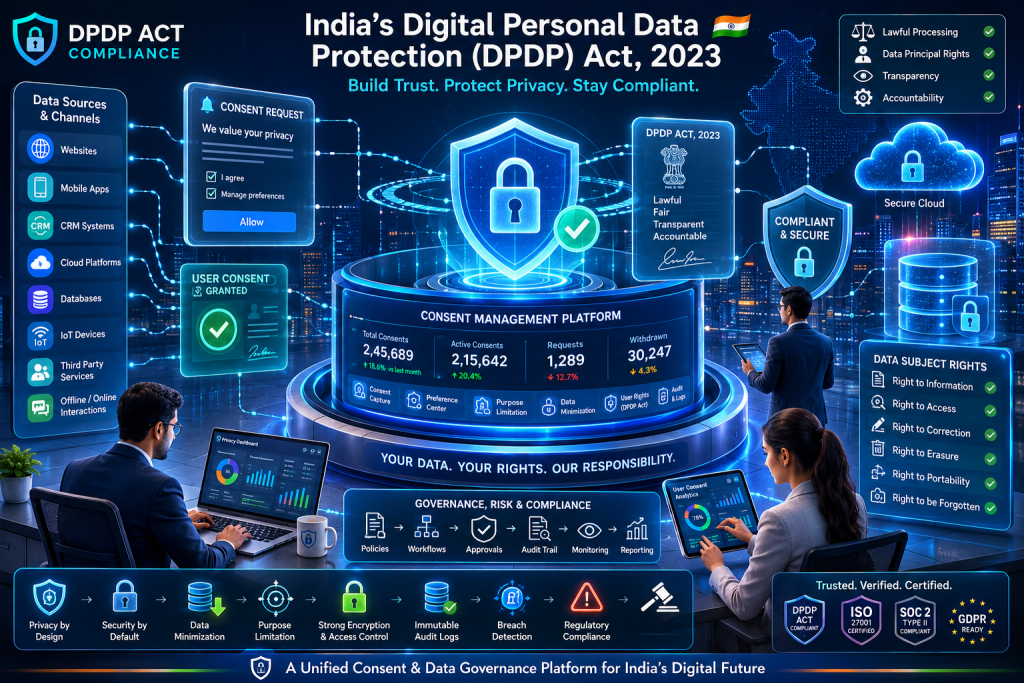
A generic cookie consent banner from 2019 will not get you there. You need a purpose-built, enterprise-grade consent management system designed around DPDP compliance requirements from the ground up.
Feature 1: Granular, Purpose-Based Consent Collection
The first and most foundational feature is granular consent capture. Under the DPDP Act, consent must be specific to each purpose for which personal data is processed. Blanket consent that covers everything under a single tick box is not compliant.
A robust DPDP Consent Platform must allow organisations to define distinct processing purposes, such as account creation, marketing communications, analytics, third-party sharing, or fraud prevention, and collect separate consent for each. Users must be able to selectively approve some purposes while rejecting others, and the platform must respect and enforce those choices downstream.

This granularity also extends to data categories. Processing a user’s financial data, health records, or location information each carries different sensitivity levels, and a mature consent solution must allow organisations to configure different consent flows accordingly.
What this looks like in practice: when a user registers on a financial services platform, they are presented with clearly separated consent requests for transaction processing, credit assessment, marketing emails, and analytics tracking. Approving one does not imply approval for the others. Each is recorded independently with its own timestamp and version.
SecureCMS supports this model natively, offering configurable consent templates that align with the DPDP Act’s purpose-specificity requirements and allow enterprises to adapt consent flows as their data processing activities evolve.
Feature 2: Multilingual Consent Notices in Plain Language
India is not a monolingual country. The DPDP Act explicitly anticipates this, stating that consent notices must be available in English and in any of the 22 scheduled languages listed under the Eighth Schedule of the Indian Constitution. This is not a courtesy. It is a legal requirement.
A DPDP-ready Consent Management System must therefore support multilingual notice delivery. More importantly, the notices must be written in clear, plain language that a reasonable person can understand. Legalese buried in long scrollable text does not constitute informed consent under the Act’s framework.

This requirement has significant technical and operational implications. Your platform must maintain version-controlled notice templates in multiple languages, ensure that translated notices accurately reflect the same legal intent as the original, and display the correct language version automatically based on user preference or device settings.
Beyond translation, the notice design itself matters. Short, layered notices that present key information upfront with the option to expand for detail perform better both in terms of user comprehension and regulatory defensibility. The goal is for users to genuinely understand what they are agreeing to, not simply to click through a wall of text.
Feature 3: Immutable Consent Logs and Audit-Ready Evidence
When a regulator asks whether a specific user gave consent for a specific purpose on a specific date, your answer cannot be “we believe so.” It must be a timestamped, tamper-proof record that you can produce on demand.
An audit-ready Consent Management Platform maintains comprehensive consent logs that capture: the exact version of the consent notice presented, the timestamp of each consent action, the channel through which consent was collected, whether consent was given, declined, or withdrawn, and any subsequent modifications to that consent record.
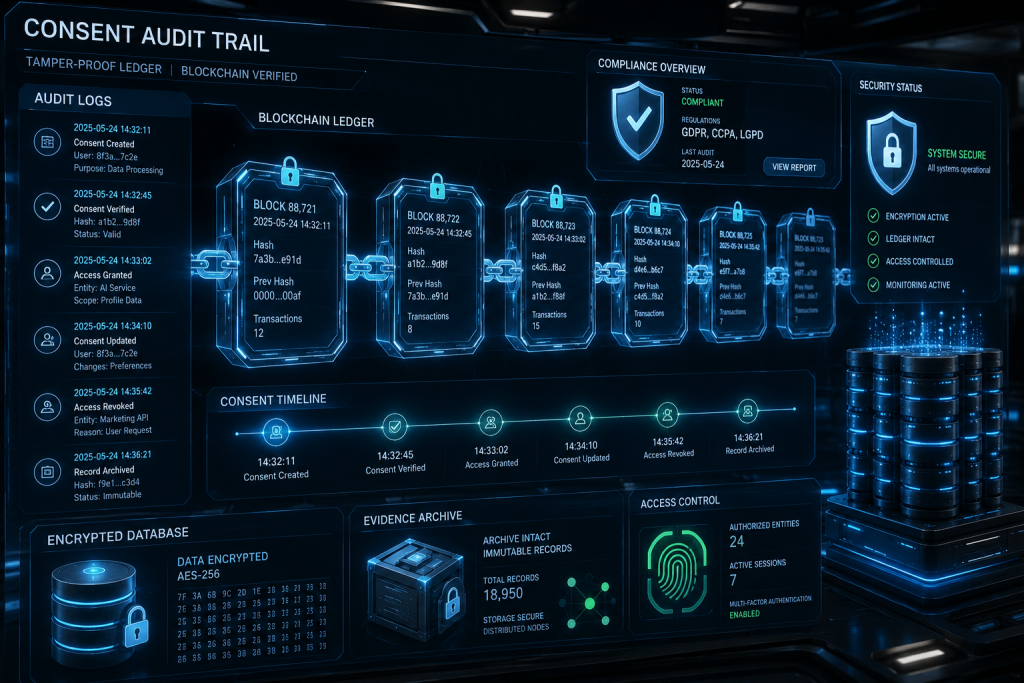
These logs must be immutable. Once recorded, they cannot be altered without generating an auditable change trail. This is the consent evidence that protects your organisation in a regulatory investigation or a user complaint proceeding before the Data Protection Board of India.
The storage and retrieval architecture matters as well. Consent logs must be searchable by user identifier, by processing purpose, and by date range. During an audit, you need to retrieve records quickly. A system that stores consent data in unstructured databases or flat files will struggle to meet this operational requirement.
SecureCMS is built with an immutable audit log framework at its core. Every consent interaction, from initial collection through modification to withdrawal, is captured in an evidence-grade record that satisfies the evidentiary standards the DPDP Act implicitly demands.
Feature 4: Real-Time Consent Withdrawal and Preference Management
Giving users control over consent collection is only half the obligation. The other half is ensuring they can withdraw that consent just as easily, and that the withdrawal takes effect immediately across all processing activities.
The DPDP Act is clear: withdrawal of consent must be as easy as giving it. That means your consent platform must expose a self-service preference centre accessible to every user at any time. Through this dashboard, users should be able to view all active consents, withdraw specific ones, update their contact preferences, and request a complete record of their consent history.
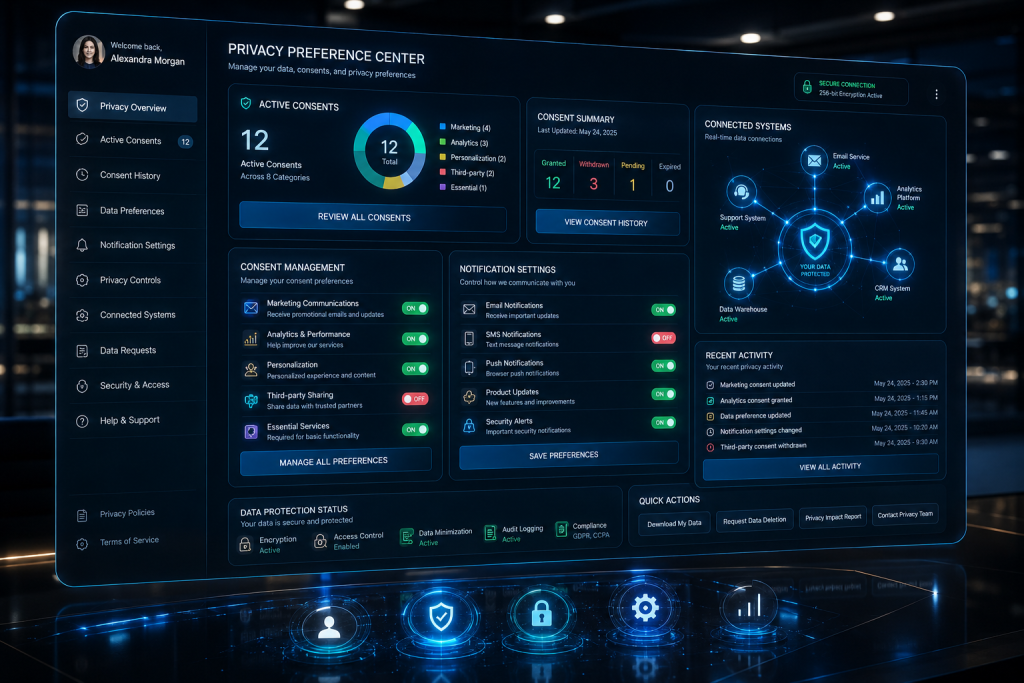
The backend implications are significant. When a user withdraws consent for a particular purpose, that signal must propagate across all systems that were relying on that consent within a reasonable timeframe. This requires tight integration between your consent platform and your downstream processing systems, whether those are CRM tools, email marketing platforms, analytics engines, or third-party data processors.
Importantly, withdrawal of consent does not retroactively invalidate processing that occurred while consent was valid. However, all future processing for that purpose must cease. Your consent management system must be capable of enforcing this distinction accurately.
A well-designed consent dashboard also helps organizations maintain ongoing engagement with users, offering clear visibility into what data is being used and why, which in turn builds the kind of trust that reduces opt-out rates over time.
Feature 5: Integration-Ready APIs for Seamless System Connectivity
Consent does not live in isolation. It intersects with every system in your organisation that touches personal data, including your website, mobile application, CRM, email service provider, data warehouse, and third-party analytics platform. A consent management system that cannot integrate with these systems is operationally useless regardless of how compliant its interface appears.
A truly enterprise-grade, API-based Consent Management Platform exposes well-documented REST APIs that allow development teams to embed consent collection directly into user journeys, push consent signals to downstream systems, query consent status before processing, and sync consent records across environments.

Mobile integration is equally critical. For organisations with both a website and a mobile app, the consent platform must provide consistent experiences across both channels, with consent records that reflect the user’s choices regardless of where they were made.
Developer experience matters here. A platform that requires weeks of integration work for each new touchpoint will slow down your product roadmap and create gaps in consent coverage. The best platforms offer SDKs, sandbox environments, and clear API documentation that make integration straightforward.
SecureCMS provides a developer-friendly API layer designed specifically for this integration complexity, enabling organizations to connect consent capture to existing tech stacks without rebuilding their data infrastructure.
Feature 6: Automated Consent Expiry and Re-Consent Workflows
Consent is not a one-time event. Over time, consents expire, processing purposes change, and new data categories come into scope. A DPDP-compliant organisation must proactively manage the lifecycle of each consent record, including identifying when re-consent is required and triggering the appropriate workflow.
An intelligent consent platform must therefore support configurable consent validity periods by purpose or data category, automated alerts when consents are approaching expiry, triggered re-consent campaigns when significant changes to processing purposes occur, and version tracking of consent notice updates with automatic re-consent where required.
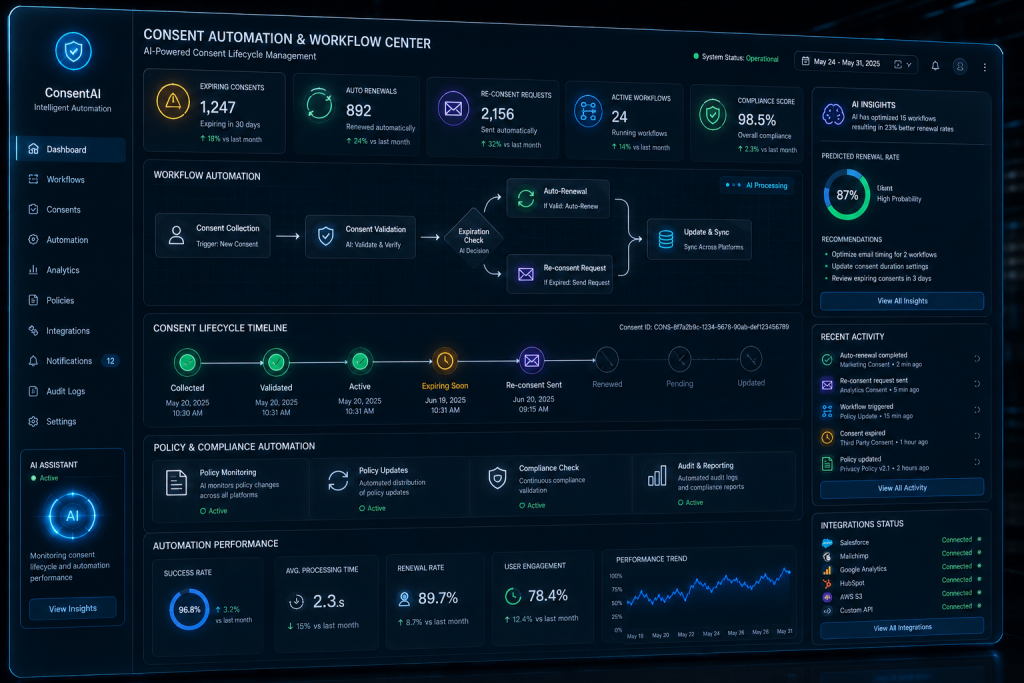
Consider the practical scenario: your organisation updates its privacy policy to include a new analytics vendor. Any users who consented under the previous policy have not consented to this new processing activity. Your platform must identify those users, flag their existing consent records as requiring refresh, and initiate an outreach workflow to collect fresh consent before the new processing begins.
Without automated expiry management, organisations end up either processing data under stale consents, which is a violation, or conducting manual audits that are both error-prone and resource-intensive. Automation is the only sustainable approach at scale.
Feature 7: Centralised Consent Dashboard with Real-Time Analytics
Finally, operational visibility across the entire consent ecosystem is non-negotiable for enterprise organizations. A centralised consent dashboard gives compliance teams, legal counsel, and data protection officers a real-time view into consent collection rates, withdrawal trends, purpose-level acceptance rates, and geographic or channel-level breakdowns.
This visibility serves multiple functions. It enables proactive compliance management, allowing teams to identify gaps before they become violations. It supports internal reporting obligations, particularly for organizations subject to board-level data governance requirements. And it provides the analytics foundation needed to optimize consent notice design and improve user acceptance rates over time.

A well-designed consent dashboard also surfaces anomalies. A sudden spike in consent withdrawals for a specific purpose may indicate a communication breakdown or a public perception issue that needs management attention. A drop in consent acceptance rates for a new product feature may signal that the consent notice is poorly worded or that users do not understand the value exchange.
Real-time orchestration of consent signals, combined with dashboard visibility, transforms consent management from a static compliance exercise into an ongoing, data-driven governance practice.
How SecureCMS Brings All Seven Features Together
SecureCMS was built specifically for the DPDP compliance context, with enterprise organizations in mind. It combines granular consent collection, multilingual notice delivery, immutable audit logging, real-time preference management, API-based integration, automated lifecycle workflows, and centralized analytics into a unified platform.
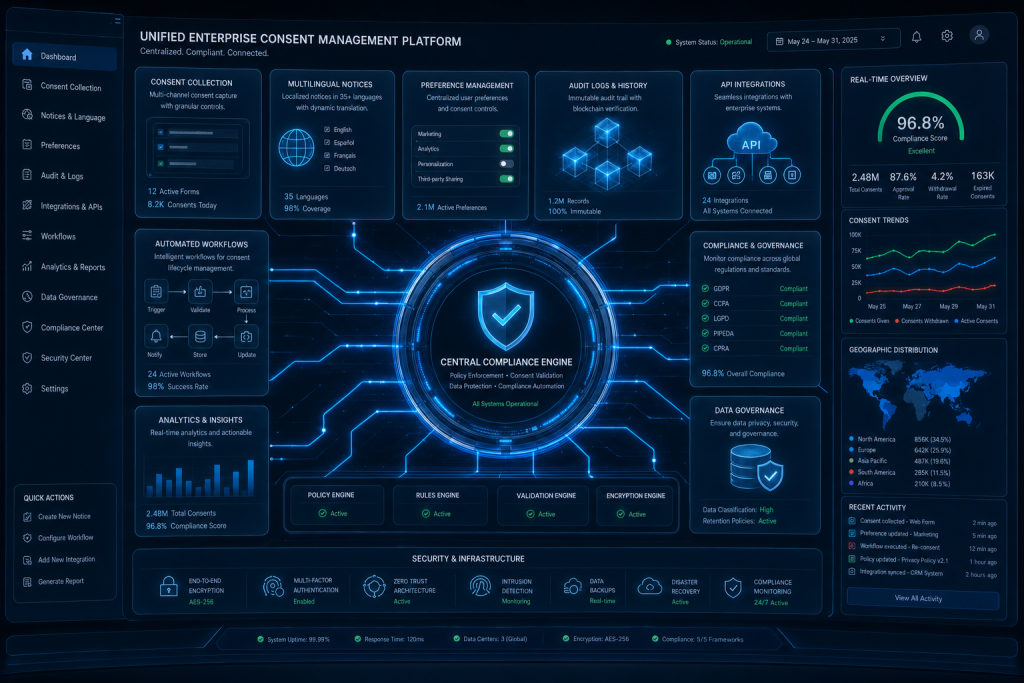
For organizations operating in India’s regulated sectors, including BFSI, healthcare, e-commerce, and SaaS, SecureCMS provides the consent infrastructure to meet DPDP Act requirements without disrupting existing systems or user experiences.
The platform’s architecture recognizes that compliance is not a one-time implementation project. It is an ongoing operational discipline that requires the right tools, the right data, and the right workflows to sustain.
Conclusion
The DPDP Act has set a new standard for how Indian organisations must approach user consent. Meeting that standard requires more than good intentions and a privacy policy update. It requires the right Consent Management Platform, one that is built for granularity, built for audit readiness, built for real-time enforcement, and built to scale with your organisation’s data operations.
The seven features outlined in this blog are not optional enhancements. They are the structural requirements of a DPDP-compliant consent infrastructure. Organisations that invest in getting this right today will not only avoid regulatory penalties. They will build the kind of user trust that becomes a genuine competitive advantage as India’s data privacy ecosystem matures.
SecureCMS provides the enterprise consent management foundation that makes DPDP compliance operational, sustainable, and effective.
Frequently Asked Questions
1. What is a DPDP-ready Consent Management Platform?
A DPDP-ready Consent Management Platform is a purpose-built software system that enables organizations to collect, record, manage, and enforce user consents in alignment with India’s Digital Personal Data Protection Act. It captures granular, purpose-specific consents, maintains immutable audit logs, supports consent withdrawal, and integrates with downstream data processing systems to ensure consent signals are respected across the entire data lifecycle.
2. Is a cookie banner enough for DPDP compliance?
No. A standalone cookie banner addresses only one narrow channel of consent collection and typically does not meet the DPDP Act’s requirements for granularity, purpose specificity, multilingual notice delivery, or immutable audit evidence. DPDP compliance requires a comprehensive consent management system that covers all personal data collection touchpoints, including websites, mobile apps, offline forms, and third-party integrations.
3. How long must consent records be retained under the DPDP Act?
The DPDP Act does not specify a universal retention period for consent records in its current framework, but regulatory guidance strongly suggests that consent evidence should be retained for as long as the personal data to which it relates is being processed, plus a reasonable period thereafter to defend against potential complaints or investigations. Organisations should align their consent record retention policies with their broader data retention governance frameworks.
4. What happens when a user withdraws consent under the DPDP Act?
When a user withdraws consent for a specific processing purpose, the data fiduciary must cease all processing for that purpose going forward. Withdrawal does not invalidate processing that occurred while consent was valid. However, the data fiduciary must also assess whether data collected under that consent should be deleted if there is no other legal basis for retention. The consent platform must enforce this withdrawal signal across all downstream systems promptly.
5. Can SecureCMS support consent management for both web and mobile apps?
Yes. SecureCMS provides API-based integration capabilities and platform-agnostic SDKs that enable organizations to embed consistent consent collection experiences across websites and mobile applications. Consent records are unified in a single platform regardless of collection channel, giving users a single preference centre to manage all their consents and giving organisations a single source of truth for compliance reporting.