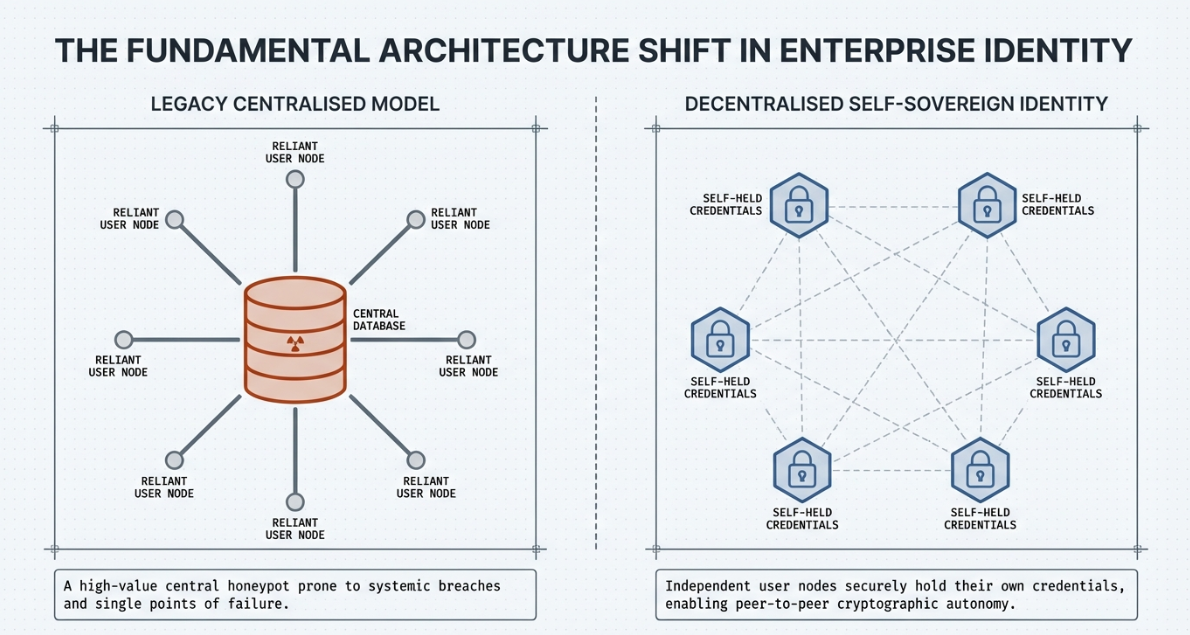

Blockchain technology has stormed onto the scene, transforming the way we store and share data. Yet for many people, it still feels mysterious. While Bitcoin helped bring blockchain into the spotlight, the underlying technology holds far more potential than just powering digital currencies.
In this blog, we’ll break down one of the most important components of blockchain systems: consensus mechanisms. We’ll explore how they maintain trust, compare different types through relatable scenarios, and understand their growing impact on future blockchain applications.
The Need for Consensus: Imagine a Classroom Project Gone Digital
Imagine a group project in a digital classroom. Your team must create a shared presentation or research document. In a traditional setup, a teacher would oversee edits, settle conflicts, and finalize the document.
However, blockchain networks don’t have a teacher or central authority. They operate in a decentralized environment. So how do these networks ensure everyone agrees on the content and the order of edits?
This is exactly where consensus mechanisms step in—they help a decentralized network reach agreement, even without a central supervisor.
The Players in the Consensus Game
Before we explore the mechanisms, let’s meet the key participants in a blockchain network:
Nodes
These are computers running blockchain software across the world. They verify and record transactions—similar to students checking and updating the shared document.
Miners / Validators
Depending on the mechanism, some nodes get additional responsibilities. They validate transactions (approve edits) and add new blocks (new sections) to the blockchain (the shared document).
Types of Consensus Mechanisms: A Buffet of Choices
Several consensus mechanisms exist today, each offering unique benefits and challenges. Let’s walk through the most common ones using simple real-world analogies.
1. Proof-of-Work (PoW): The Gold Rush Analogy
Imagine a gold rush. Miners compete to discover gold, and whoever finds it first wins a reward.
PoW works the same way. Miners race to solve complex cryptographic puzzles. The first to solve one gets to validate transactions and add a new block to the blockchain.
Although PoW is extremely secure, it’s also slow and energy-hungry—much like the environmental strain created during a real gold rush.
2. Proof-of-Stake (PoS): The Election Scenario
Now imagine a classroom election. Students with higher grades (representing cryptocurrency holders with larger stakes) have a better chance of being elected class representative (validator). These representatives then vote on the validity of edits.
PoS operates in a similar way. Validators are selected based on the amount of cryptocurrency they hold. As a result, PoS is far more energy-efficient than PoW.
However, it can still face risks if a few individuals hold too much stake—much like a group of top-grade students forming a dominant voting bloc.
3. Delegated Proof-of-Stake (DPoS): The Town Council Model
Imagine a town choosing a council. Citizens elect trusted delegates to make decisions on their behalf.
This mirrors DPoS. Token holders vote for delegates who are then responsible for validating transactions.
While DPoS offers fast transaction processing, it introduces some centralization because power rests with a small group of elected delegates.
4. Byzantine Fault Tolerance (BFT): The Byzantine Generals Problem
Picture a group of Byzantine generals planning an attack. Some generals might be traitors sending false messages. To win, the loyal generals must agree on a strategy despite misinformation.
BFT mechanisms allow nodes in a blockchain to reach agreement even when some participants act maliciously or fail altogether. Because of their complexity, BFT systems work best in permissioned blockchains, where participants are already known and trusted—such as banking consortia.
Choosing the Right Consensus Mechanism: A Balancing Act
Selecting the right mechanism depends on several factors:
Scalability
How many edits (transactions) can the network handle each second? Think of a classroom struggling to keep up with rapid document changes.
Security
How resistant is the system to attacks? Could a group of students collude to approve unauthorized edits?
Decentralization
How distributed is decision-making? Or does a teacher (central authority) still hold too much influence?
Energy Consumption
How much energy does the mechanism require? Newer systems aim to reduce this drastically.
Beyond the Buffet: Innovative Mechanisms on the Horizon
The world of consensus is expanding quickly. Here are some next-generation mechanisms gaining attention:
Proof-of-Burn (PoB)
Imagine users throwing tokens into a symbolic bonfire. The more tokens they burn, the higher their chances of validating a block. This reduces supply and can improve token value, though it may lead to coin scarcity or manipulation by large holders.
Proof-of-Identity (PoI)
This method uses verified real-world identities as validation tools. While secure and regulation-friendly, it raises privacy concerns and may limit participation.
Proof-of-Authority + Reputation (PoA+R)
Think of trusted validators who earn reputation scores based on good performance. This hybrid approach encourages honesty but still introduces some level of centralization.
The Future Is a Symphony of Choices
As blockchain technology evolves, the idea of using one universal consensus mechanism is fading. Instead, we will likely see custom blends designed for specific use cases.
For example:
- High-volume public blockchains may combine PoS with sharding for better scalability.
- Private or permissioned networks may choose PoA or PoA+R to balance efficiency and compliance.
- Supply chain systems may mix PoA with Proof-of-Contribution (PoC) to reward verified data providers.
Conclusion: A Decentralized Orchestra Awaits
Consensus mechanisms quietly conduct the rhythm of trust and security in blockchain networks. When you understand how they work, you gain a clearer picture of the power behind blockchain technology. As innovative models continue to emerge, the future promises a rich symphony of secure, scalable, and efficient systems that redefine how we share data and conduct transactions.