
Every enterprise that moves sensitive workloads to the cloud eventually asks the same question: who actually controls the encryption keys protecting that data? The answer shapes your compliance posture, your breach exposure, and increasingly, your readiness for the quantum computing era. This is why the BYOK HYOK comparison has become one of the most consequential decisions a CISO or CTO will make this year.
Three models dominate the conversation: Provider-Managed Keys, BYOK (Bring Your Own Key), and HYOK (Hold Your Own Key). Each offers a different balance of convenience, control, and risk. Choosing incorrectly can mean regulatory penalties, vendor lock-in, or worse, a false sense of security that collapses the moment quantum-capable adversaries arrive. Let’s break down each model, compare them directly, and explore what a genuinely quantum-ready key management strategy looks like.
What Is Provider-Managed Key Management?

Provider-managed keys represent the default state for most cloud deployments. When you spin up storage, a database, or a SaaS application, the vendor generates, stores, rotates, and destroys the encryption keys on your behalf. You get encryption at rest and in transit without lifting a finger.
This model is fast to deploy and requires minimal internal expertise. For low-sensitivity workloads, it is often sufficient. However, it also means your data protection is entirely dependent on the provider’s internal security practices, employee access controls, and incident response capabilities. If the provider is compromised, subpoenaed, or simply makes a configuration error, your keys, and therefore your data, are exposed to risks you cannot see or audit directly.
Regulated industries increasingly find this arrangement inadequate. Banking regulators, data protection authorities, and internal auditors want documented proof of who can access cryptographic material and under what conditions. Provider-managed keys rarely offer that transparency at the level enterprises now require.
What Is BYOK (Bring Your Own Key)?

BYOK shifts key generation back to the enterprise. Instead of letting the cloud provider create the encryption key, you generate it within your own hardware security module or key management system, then import it into the provider’s environment for use in encryption operations.
This gives you meaningful advantages. You control the key’s origin, its strength, and its rotation schedule. You can revoke access by disabling the key on your end, and many providers log every operation performed against imported keys, giving auditors a clearer trail.
The tradeoff is that once the key is imported into the provider’s infrastructure, it typically resides there in usable form, at least temporarily, for cryptographic operations to function. As a result, BYOK reduces risk compared to fully provider-managed encryption, but it does not eliminate the provider’s technical ability to access your key material during processing.
BYOK also demands operational maturity. Your organization needs a functioning key generation and lifecycle management process, secure key transport mechanisms, and clear internal ownership. Without this, BYOK can become a compliance checkbox rather than a genuine security control.
What Is HYOK (Hold Your Own Key)?

HYOK takes control a step further. Rather than importing your key into the provider’s environment, you retain the key entirely within your own infrastructure, often an on-premises HSM or a private key vault under your direct administrative control. The cloud provider never receives the raw key. Instead, encryption and decryption requests are routed back to your key management system, which performs the cryptographic operation or releases the key only for the duration needed.
This model dramatically reduces the provider’s technical capability to access your plaintext data, even under legal compulsion, since they never possess usable key material. For organizations in banking, defense, healthcare, and government sectors, HYOK is often the only model that satisfies strict data sovereignty and jurisdictional control requirements.
The cost of this control is architectural complexity. HYOK introduces latency, since every cryptographic operation may require a round trip to your key management infrastructure. It also requires high availability engineering, because if your key management system goes down, dependent applications can lose access to encrypted data entirely. Enterprises adopting HYOK need robust redundancy, monitoring, and disaster recovery planning built in from day one.
BYOK vs HYOK: Core Architectural Differences
The distinction between BYOK and HYOK often gets flattened in vendor marketing, but the architectural difference is significant.
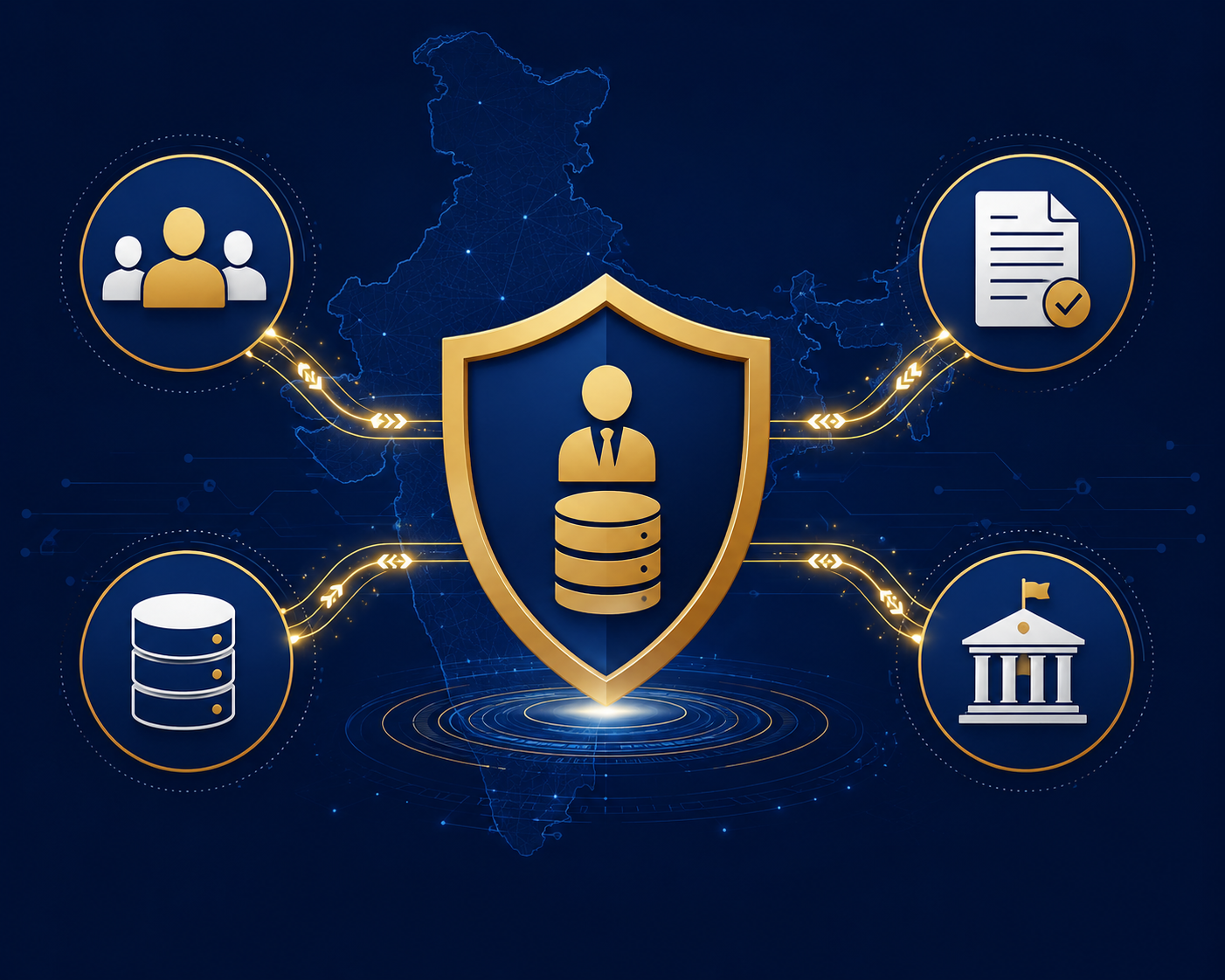
In BYOK, the key crosses the trust boundary into the provider’s environment, even if only briefly and under strict controls. In HYOK, the key never crosses that boundary. This single difference determines your exposure in nearly every threat scenario, from insider risk at the cloud provider to government data requests to large-scale infrastructure breaches.
Another key difference lies in operational responsibility. BYOK places generation and initial custody with you, but ongoing availability still depends heavily on the provider’s uptime and key management APIs. HYOK places both custody and availability squarely on your organization, which means your internal team, not the cloud vendor, becomes the single point of accountability for encryption uptime.
Finally, consider auditability. BYOK typically provides usage logs from the provider side. HYOK gives you complete visibility, since every key request originates and terminates within systems you directly control and monitor. For CISOs building a defensible audit trail for regulators, this distinction matters enormously.
There is also a meaningful difference in how each model behaves during an incident. If a cloud provider suffers a breach under a BYOK arrangement, your imported key could theoretically be exposed alongside provider infrastructure, even though you retain the ability to revoke it quickly. Under HYOK, the same provider breach would expose only encrypted data, since the key required to decrypt it was never transmitted in usable form. This does not make HYOK immune to incidents. If your own key management infrastructure is compromised, the consequences fall entirely on your internal team, with no provider safety net to fall back on.
Cost structures differ as well. BYOK generally fits within existing cloud billing models, since the provider still performs the cryptographic operations using your imported key, and you pay standard usage fees plus the cost of your key generation infrastructure. HYOK requires sustained investment in on-premises or dedicated key management hardware, redundant network paths to avoid latency spikes, and specialized personnel who understand both cryptographic operations and high-availability engineering. Enterprises often underestimate this ongoing operational cost when first evaluating HYOK, only to discover during implementation that true hold your own key architectures demand a level of infrastructure investment closer to running a small, highly available data center than simply configuring a cloud setting.
Provider-Managed Keys vs BYOK vs HYOK: Side-by-Side Comparison
| Factor | Provider-Managed | BYOK | HYOK |
|---|---|---|---|
| Key generation | Cloud provider | Enterprise | Enterprise |
| Key custody | Provider | Provider (imported) | Enterprise (never leaves) |
| Deployment speed | Fastest | Moderate | Slowest |
| Operational complexity | Low | Moderate | High |
| Regulatory suitability | Low sensitivity data | Moderate to high sensitivity | Highly regulated, sovereign data |
| Latency impact | None | Minimal | Present, requires optimization |
| Data sovereignty control | Low | Moderate | Highest |
| Vendor lock-in risk | High | Moderate | Low |
| Availability responsibility | Provider | Shared | Enterprise |
| Ideal for | Startups, low-risk workloads | Mid to large enterprises with compliance needs | BFSI, government, defense, critical infrastructure |
This comparison makes one thing clear. There is no universally correct model. The right choice depends on your regulatory exposure, your workload sensitivity, and your internal operational capacity.
Compliance and Regulatory Considerations for Indian and Global Enterprises
Indian enterprises face a rapidly tightening regulatory environment. The Reserve Bank of India has issued detailed guidance on data localization and cryptographic control for banking and payment systems. SEBI has similar expectations for capital markets infrastructure. The DPDP Act, alongside its associated rules, adds obligations around demonstrating meaningful control over personal data, which increasingly extends to how encryption keys protecting that data are managed.
Globally, frameworks like PCI DSS v4.0 require documented key management lifecycles, including generation, distribution, storage, rotation, and destruction, with clear accountability at each stage. Provider-managed keys make it difficult to produce this documentation with confidence, since much of the process happens inside the vendor’s black box.
BYOK improves this picture considerably, giving auditors visibility into key origin and rotation policy. HYOK goes further, allowing enterprises to demonstrate, with complete architectural proof, that sensitive cryptographic material never left their jurisdiction or control. For regulated Indian enterprises navigating both domestic mandates and cross-border data flows, this level of demonstrable control is quickly becoming not just advisable, but expected.
The Quantum Threat and Why Key Ownership Models Must Evolve

Here is the layer most BYOK and HYOK discussions miss entirely. Key ownership solves the question of who controls a key today. It does not solve the question of whether that key will remain secure tomorrow.
Cryptographically relevant quantum computers threaten to break the mathematical foundations underpinning current encryption, including RSA and elliptic curve cryptography, which sit beneath most BYOK and HYOK implementations. Adversaries are already engaging in harvest now, decrypt later strategies, capturing encrypted traffic today with the expectation of decrypting it once quantum capability matures. This means data protected under even the most rigorous HYOK architecture remains vulnerable if the underlying cryptographic algorithms themselves are not quantum-resistant.
This is where crypto-agility becomes essential. A quantum-safe security strategy cannot simply layer post-quantum cryptography on top of legacy key management. It requires a PQC governance platform capable of managing hybrid encryption, combining classical algorithms with quantum-resistant ones like ML-KEM and ML-DSA, across your entire key lifecycle, regardless of whether that lifecycle is provider-managed, BYOK, or HYOK.
Enterprises that treat key ownership and quantum readiness as separate initiatives are building on an incomplete foundation. The two must be engineered together.
Consider a bank that implements a textbook HYOK deployment, keeping every key strictly within its own HSM infrastructure and never exposing raw material to any third party. On paper, this looks like the strongest possible posture. Yet if the encryption algorithms protecting customer transaction data rely solely on RSA or elliptic curve mathematics, all of that architectural discipline becomes irrelevant the moment a sufficiently powerful quantum computer arrives. The data harvested today, whether from network interception or storage compromise, becomes readable retroactively. Key ownership determined who could access the key. It did nothing to determine whether the underlying mathematics would hold.
This is why forward-looking enterprises are shifting the conversation from key control alone to quantum-ready key control. A quantum-safe network strategy needs hybrid crypto approaches that run classical and post-quantum algorithms side by side, so that even if one layer is eventually broken, the other continues protecting the data. It also needs a rollout plan, since replacing cryptographic primitives across thousands of applications, APIs, and devices cannot happen overnight. A structured PQC rollout, prioritized by data sensitivity and exposure window, gives enterprises a realistic path rather than an overwhelming one.
How QuantumVault Enables Quantum-Safe BYOK and HYOK Architectures

QuantumVault was built specifically to close this gap. Rather than forcing enterprises to choose between operational key control and quantum readiness, QuantumVault functions as a PQC platform that supports BYOK and HYOK models natively, while embedding post-quantum cryptography throughout the key management lifecycle.
Within a BYOK deployment, QuantumVault allows enterprises to generate keys using quantum-resistant algorithms before they are imported into provider environments, ensuring that even keys temporarily exposed to third-party infrastructure carry quantum-safe protection. Its PQC key management engine handles rotation, versioning, and secure import workflows without requiring teams to rebuild existing cloud integrations from scratch.
For HYOK architectures, QuantumVault operates as a quantum-ready HSM and PQC gateway, keeping keys fully within enterprise-controlled infrastructure while enabling hybrid encryption for every cryptographic operation. This means classical and post-quantum algorithms run in parallel, so applications remain protected against both current threats and future quantum-capable attackers, all without the key ever leaving your environment.
QuantumVault also includes a PQC policy engine that lets security teams define cryptographic rules centrally, whether that means mandating hybrid encryption for specific data classes, enforcing PQC compliance for regulated workloads, or controlling which applications can request key release. Every operation is captured in detailed PQC audit logs, giving compliance teams the evidence base regulators increasingly expect.
For enterprises managing distributed teams, QuantumVault supports PQC signing workflows and PQC collaboration security, ensuring that document approvals, code signing, and transaction authorization remain quantum-resistant even across multiple departments or partner organizations. A built-in secure gateway extends quantum-safe access to remote users and branch offices, maintaining a consistent PQC tunnel for sensitive traffic regardless of where employees are working from.
Crucially, QuantumVault is designed around crypto-agility from the ground up. As NIST and international standards bodies refine PQC algorithms over the coming years, QuantumVault’s architecture allows enterprises to update cryptographic primitives without re-architecting their entire key management model. This is what a genuine PQC migration path looks like: incremental, auditable, and free of disruptive forklift upgrades.
Choosing the Right Model for Your Enterprise
Selecting between provider-managed keys, BYOK, and HYOK starts with an honest assessment of your data sensitivity and regulatory obligations. Ask a few grounding questions.
First, what happens if the cloud provider is compelled by a foreign government to disclose your data? If that scenario is unacceptable for your organization, provider-managed keys are immediately disqualified, and HYOK deserves serious consideration.
Second, does your organization have the operational maturity to manage key generation, rotation, and high-availability infrastructure internally? If not yet, BYOK offers a reasonable intermediate step while your internal capabilities mature.
Third, is your workload subject to sector-specific mandates like RBI’s cryptographic guidelines, PCI DSS, or DPDP accountability requirements? These often push organizations toward BYOK at minimum, with HYOK becoming the practical standard for the most sensitive data categories such as customer financial records or health information.
Finally, and this question is too often skipped, is your chosen model quantum-ready? A perfectly architected HYOK deployment still fails if it relies solely on classical cryptography vulnerable to future quantum attacks. The strongest enterprise strategy pairs key ownership control with a quantum-resistant security foundation from the outset.
Migration Best Practices: Moving to a Quantum-Ready Key Management Model
Transitioning from provider-managed keys to BYOK, or from BYOK to HYOK, should never happen as a single disruptive event. Begin with a full cryptographic inventory, identifying every system, application, and data flow currently relying on provider-managed encryption. Classify these by sensitivity and regulatory exposure so migration priority is based on actual risk rather than convenience.
Next, pilot the new model on a contained, lower-risk workload before expanding enterprise-wide. This allows your team to validate latency impacts, failover behavior, and integration points without threatening production stability. Throughout this process, build in hybrid encryption support from the start, rather than treating quantum-safe cryptography as a future add-on. Retrofitting PQC into an already-migrated key management system is significantly more expensive and disruptive than embedding it during initial rollout.
Establish clear internal ownership for key lifecycle management, including rotation schedules, incident response procedures for key compromise, and audit log review cadences. Finally, choose a PQC solution and PQC suite that supports both your current architecture and your long-term quantum-safe roadmap, so migration effort invested today continues paying dividends as post-quantum standards mature.
Frequently Asked Questions
What is the main difference between BYOK and HYOK? BYOK involves generating your own encryption key and importing it into a cloud provider’s environment for use, while HYOK means the key never leaves your own infrastructure. This difference determines how much technical access the provider retains to your key material.
Is HYOK always more secure than BYOK? HYOK offers stronger data sovereignty and reduces provider access to raw keys, but it introduces greater architectural complexity and availability responsibility. Whether it is more appropriate depends on your regulatory obligations and internal operational maturity, not security alone.
Can provider-managed keys ever be appropriate for enterprises? Yes, for low-sensitivity workloads without strict regulatory requirements, provider-managed keys offer speed and simplicity. However, regulated industries handling sensitive financial or personal data typically need the added control that BYOK or HYOK provides.
How does quantum computing affect BYOK and HYOK decisions? Quantum computing threatens the classical cryptographic algorithms underlying most BYOK and HYOK implementations today. Enterprises must pair their chosen key ownership model with quantum-resistant algorithms and hybrid encryption to remain protected as quantum capabilities advance.
How does QuantumVault support enterprises moving between these models? QuantumVault provides quantum-safe key generation, a centralized PQC policy engine, and detailed audit logging that work across BYOK and HYOK architectures alike, allowing enterprises to strengthen key control and quantum readiness together rather than as separate initiatives.
Conclusion
The BYOK HYOK comparison ultimately comes down to how much control your enterprise needs over cryptographic material, and how much operational responsibility you are equipped to take on in exchange for that control. Provider-managed keys offer simplicity but limited assurance. BYOK strikes a middle ground, giving enterprises meaningful oversight while retaining cloud convenience. HYOK delivers the strongest sovereignty guarantees for organizations that cannot compromise on data control.
Yet none of these models are complete without a quantum-safe foundation underneath them. As harvest now, decrypt later threats accelerate and post-quantum standards solidify, the enterprises that pair strong key ownership with genuine cryptographic agility will be the ones still standing secure years from now. QuantumVault was built to make that pairing seamless, supporting BYOK and HYOK architectures with post-quantum protection built in from day one, not bolted on as an afterthought.
If your organization is evaluating its key management strategy, now is the time to align key control decisions with quantum readiness planning, before migration becomes urgent rather than strategic.
Download the full comparison guide to map your current key management model against regulatory requirements and quantum-readiness benchmarks, or explore how BYOK and HYOK models are evolving across the industry.