
Introduction
As India accelerates its digital transformation in 2026, protecting personal data and building trustworthy digital infrastructure have become national priorities. In the second episode of SecureDApp’s Bharat Security Initiative (SBSI), cybersecurity expert and former Indian Navy officer Captain Prateek Bhamri shares practical insights into how blockchain technology can strengthen data privacy, improve regulatory compliance, and create transparent digital ecosystems. Drawing from his experience in defense innovation and enterprise cybersecurity, Captain Bhamri explains why technologies such as blockchain, AI, and secure data governance must work together to address modern privacy challenges under evolving regulations like the Digital Personal Data Protection (DPDP) Act. This discussion offers valuable guidance for enterprises, policymakers, developers, and cybersecurity professionals preparing for the future of secure digital transformation.
From Naval Service to Cybersecurity Leadership
Captain Bhamri’s journey demonstrates how national security expertise can align with corporate innovation.
He joined the Indian Navy in 2006 when the force began recruiting computer science graduates into its electrical branch. During his tenure, he worked on combat management systems, network integration, and joint tactical operations. While serving, he also completed his master’s at IIT Madras, which later supported his move to Vessi, a critical innovation unit within the Navy responsible for indigenization and advanced defense technologies.
At Vessi, he contributed to blockchain-based crypto systems, quantum technologies, and cloud infrastructure for defense. After completing his short-service tenure in July 2024, he transitioned to Spiro as Head of Cybersecurity and Blockchain. Today, he oversees security for one of Africa’s fastest-growing EV ecosystems, supported by the company’s tech hub in Pune, India.
Expertise Across Security Functions
Throughout his career, Captain Bhamri has led cross-functional teams across strategy, GRC, security operations, audits, and learning & development. His experience also spans prototyping, R&D, and engineering secure, high-assurance systems, making him a strong voice in India’s evolving digital security landscape.
Blockchain and India’s Data Privacy Challenges
When asked about blockchain’s role in solving India’s data privacy issues, Captain Bhamri emphasizes a crucial point: technology becomes impactful only when supported by strong regulatory frameworks. The Digital Personal Data Protection Act (DPDPA) provides this clarity and strengthens blockchain’s position as a tool for privacy, not just cryptocurrency.
The First Principle of Privacy: Data Minimization
According to Captain Bhamri, organizations often store unnecessary or duplicate data, resulting in shadow IT and unmanaged assets. He stresses that you can protect data only when you know what exists.
By minimizing redundant datasets, companies reduce risk and build the foundation for better control.
How Blockchain Enhances Data Transparency
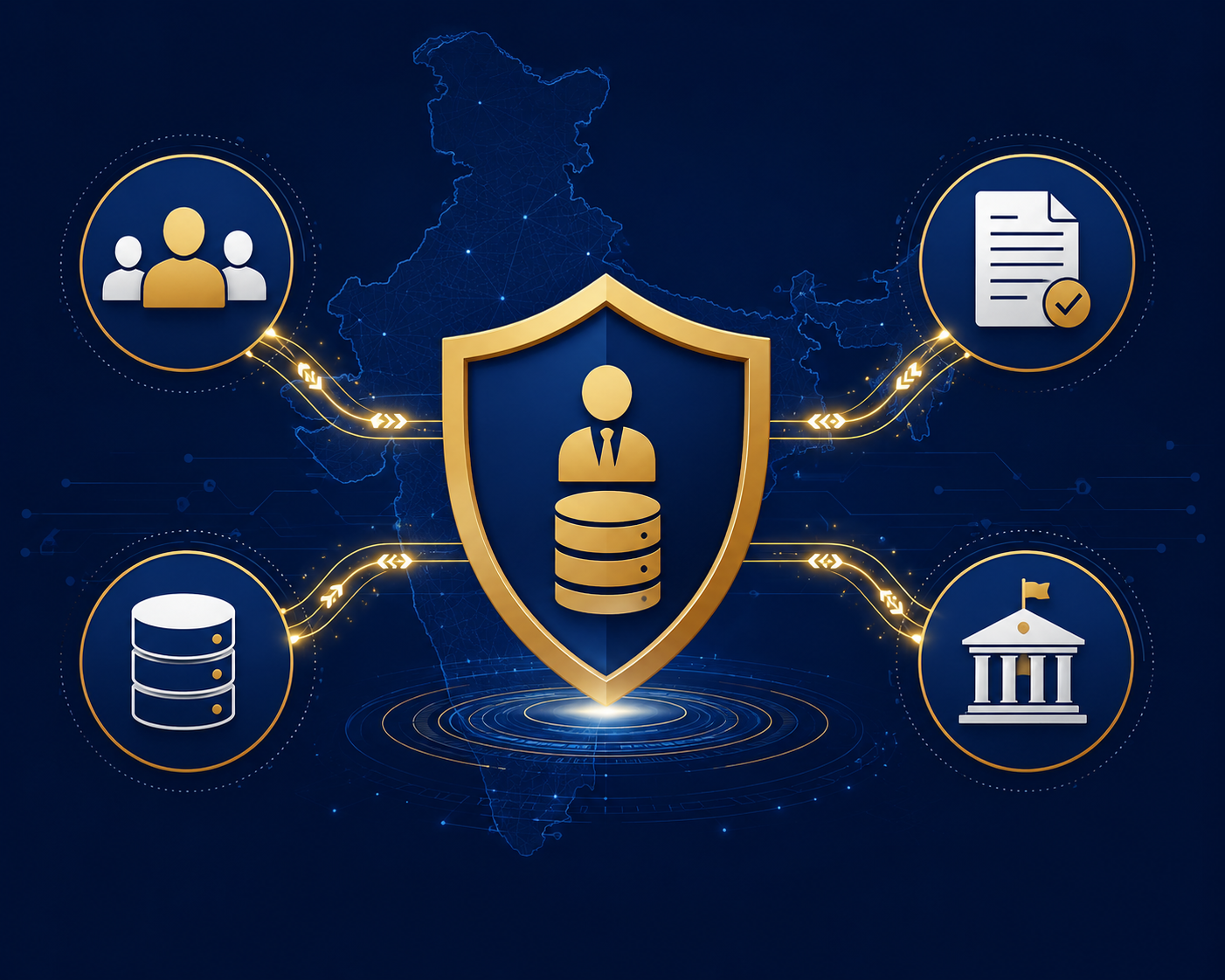
Blockchain offers several capabilities that directly support privacy and accountability:
- Tracing data flow across systems
- Identifying data owners and custodians
- Increasing visibility into where data resides
- Detecting changes or unauthorized actions
Earlier, organizations struggled with scattered data lakes and unstructured storage patterns. Today, with AI systems absorbing vast amounts of information, the stakes are even higher. Blockchain brings order to this complexity by enabling structured, tamper-evident tracking.
Introducing Data Supply Chain Management
One of Captain Bhamri’s most notable insights is the idea of data supply chain management, an approach that tracks data throughout its entire lifecycle.
Data continuously changes form. It moves between custodians, processors, and platforms. Understanding this evolution is essential. For example, when someone asks an AI model like ChatGPT a question, the response draws from several layers of data. But can users trace where that data came from?
Blockchain finally makes this possible by recording immutable hashes at each step.
Consent Management in the DPDP Act
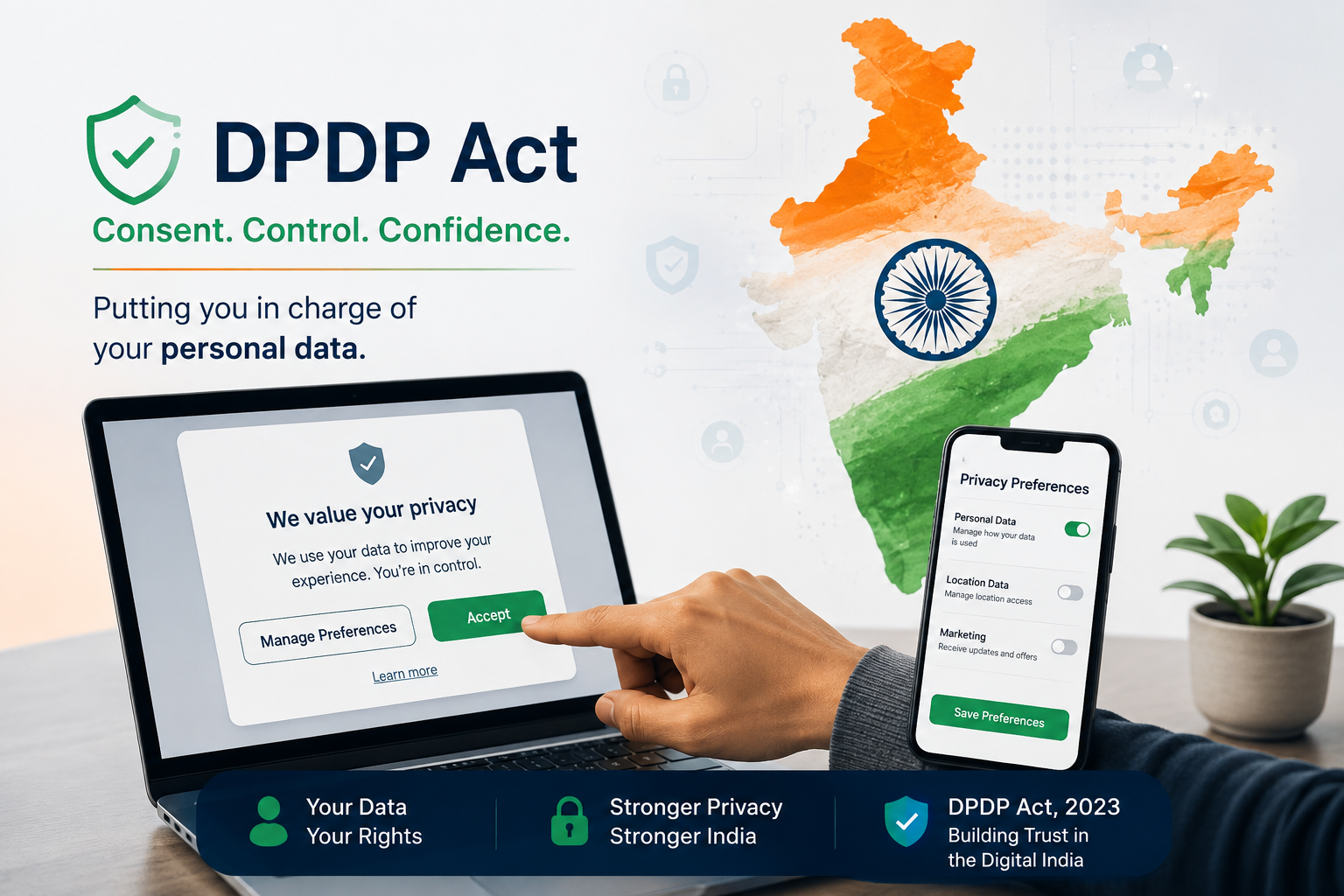
The DPDP Act grants data principals rights such as:
- Editing personal data
- Deleting data
- Modifying previously shared information
- Porting data to another provider
Captain Bhamri explains that consent mechanisms must be opt-in, not opt-out. In some regions, consent must even be refreshed every three months. Because of this, organizations must design simple, user-friendly consent systems that respect ownership rather than prioritize monetization.
Future: Blockchain-Based Consent Management
Looking ahead, Captain Bhamri believes that consent management will eventually move to blockchain.
In such a system, any action performed by a data processor or custodian becomes immediately visible to the individual. This transparency builds trust and creates a provable audit trail a powerful advantage in India’s expanding digital ecosystem.
SecureDApp’s Approach
With the belief that 97% of blockchain hacks are preventable, SecureDApp continues to highlight the importance of proactive security. Through the Bharat Security Initiative, experts like Captain Bhamri share ground-level insights that help organizations strengthen privacy, compliance, and blockchain security.
Expert Q&A Highlights
1. On His Journey from the Navy to Spiro
Captain Bhamri speaks about joining the Navy as one of the first computer science graduates, learning electrical systems, and managing combat networks. After his master’s at IIT Madras, he worked at Vessi on blockchain, quantum, and cloud technologies. In 2024, he moved to Spiro, where he now secures vast data ecosystems across Africa.
2. On Blockchain’s Role in Data Privacy
He notes that blockchain becomes powerful when paired with regulations like DPDPA. Its ability to trace data, reduce redundancy, prevent shadow IT, and provide transparency makes it ideal for privacy-centric environments.
3. On Data Supply Chain Management
He explains how organizations must track where data originated, how it changed, and who interacted with it. Blockchain’s immutable hashes allow this level of visibility.
4. On Consent Management
He highlights the DPDP Act’s requirement for opt-in consent and stresses that consent systems must be easy, transparent, and user-first. Blockchain can make this process fully auditable.
Conclusion
Captain Prateek Bhamri’s perspective highlights that effective data privacy extends far beyond regulatory compliance; it requires secure technology, transparent governance, and responsible data management throughout the entire lifecycle. As India’s digital economy continues to expand in 2026, blockchain has the potential to become a foundational technology for consent management, data provenance, and trustworthy AI systems.
By combining blockchain with strong cybersecurity practices, proactive monitoring, and privacy-by-design principles, organizations can strengthen user trust while meeting evolving compliance requirements. Through initiatives like the SecureDApp Bharat Security Initiative, industry leaders continue to share practical knowledge that helps businesses build resilient, transparent, and future-ready digital ecosystems.
FAQs
1. Why is blockchain becoming important for data privacy in 2026?
Blockchain provides immutable records, transparent audit trails, and decentralized verification, making it easier for organizations to track how personal data is collected, processed, and shared. These capabilities support stronger compliance with modern privacy regulations while improving user trust.
2. What is data supply chain management?
Data supply chain management refers to tracking the complete lifecycle of data from its creation and collection to processing, sharing, storage, and deletion. Blockchain helps create a tamper-proof record of every stage, improving accountability and regulatory compliance.
3. How does the DPDP Act influence blockchain adoption?
India’s Digital Personal Data Protection (DPDP) Act encourages organizations to improve consent management, data governance, and transparency. Blockchain technologies can support these objectives by providing verifiable records of consent, data access, and processing activities.
4. How can organizations improve blockchain-based data security?
Organizations should adopt a security-first approach by implementing smart contract audits, continuous blockchain monitoring, secure key management, regular vulnerability assessments, and employee cybersecurity awareness programs. Combining these practices helps reduce operational and compliance risks.
5. What role does AI play alongside blockchain in data privacy?
AI enables intelligent data analysis, anomaly detection, and automated compliance monitoring, while blockchain provides a secure and immutable record of data activities. Together, these technologies help organizations improve transparency, detect potential threats faster, and build more trustworthy digital services without compromising user privacy.