
Financial institutions have always been among the most attractive targets for cybercriminals. As digital banking, real-time payments, and tokenized assets become more common, traditional security models are struggling to keep pace with increasingly sophisticated attacks. Blockchain is emerging as more than just the technology behind cryptocurrencies; it’s becoming a powerful tool for strengthening cybersecurity across the financial sector. By combining decentralization, cryptographic verification, and immutable record-keeping, blockchain can help financial institutions improve data integrity, reduce fraud, and build more resilient systems. Understanding how blockchain is reshaping financial security is essential for organizations preparing for the next generation of digital finance.
Why Financial Institutions Need Blockchain-Powered Security
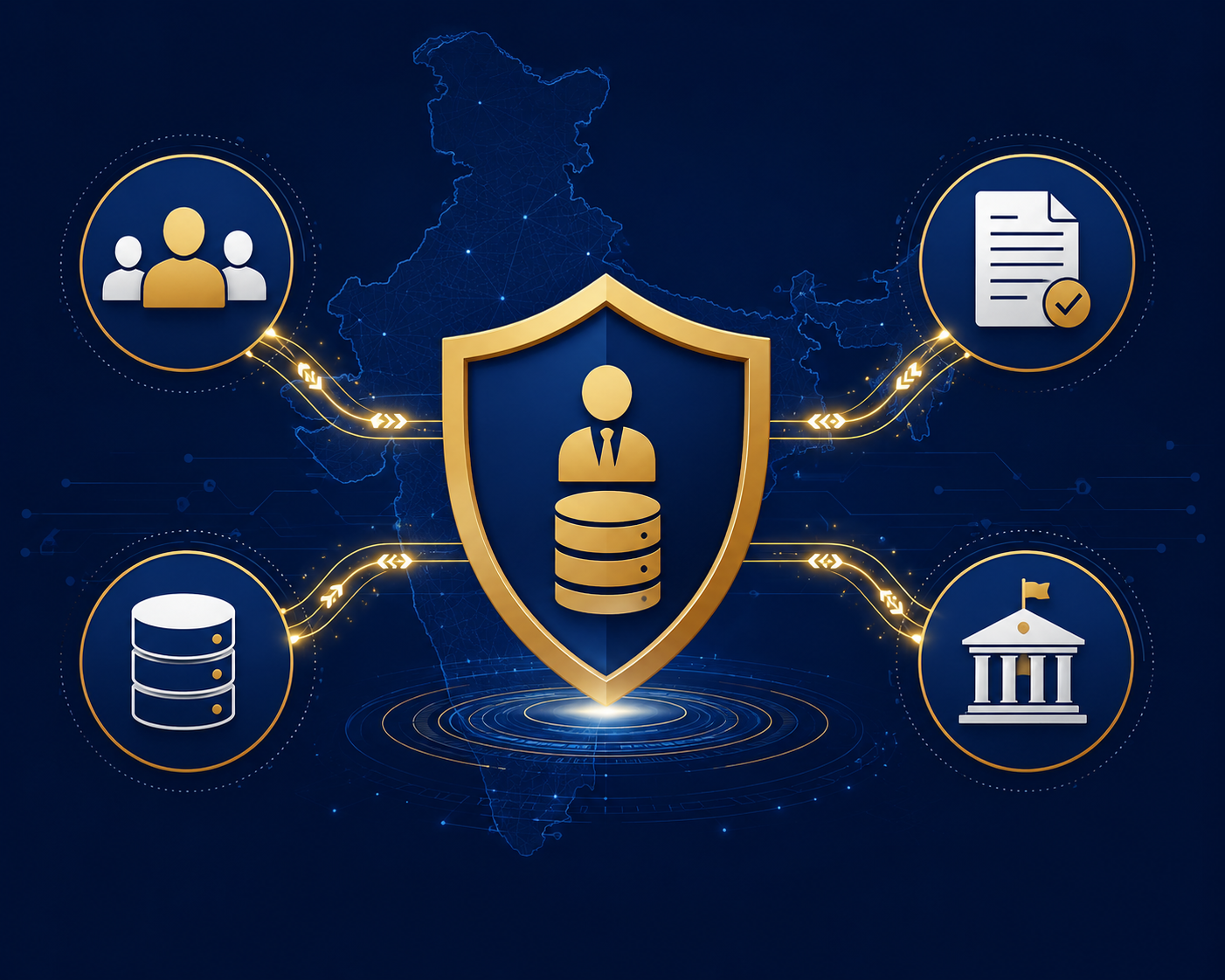
Centralised ledgers have long been the prime targets for cybercriminals seeking a single point of failure. A breach into one database can expose millions of customer records and transactional details. Blockchain shifts this paradigm by distributing transaction records across a peer‑to‑peer network. Each node maintains its own copy of the ledger and participates in consensus mechanisms to verify new entries. This model dramatically reduces the risk of unauthorised data alteration and increases transparency for regulators and auditors.
By eliminating single points of failure, blockchain makes it exponentially harder for attackers to compromise the system. The result is an infrastructure that inherently resists data tampering and malicious intrusion.
Immutable Ledgers and Data Integrity
Data immutability is the cornerstone of blockchain’s value in financial cybersecurity. Once a transaction is recorded on the chain, altering or deleting it requires consensus from the majority of nodes. This built-in audit trail not only simplifies compliance with regulations like AML and KYC but also provides instant proof of activity for internal and external reviews.
Immutable ledgers deter insider threats since no employee can covertly change records without leaving an indelible trace. Every action is timestamped and cryptographically linked to prior entries, creating a seamless chain of accountability.
How Blockchain Is Reshaping Cybersecurity in Financial Institutions Through Decentralisation
Decentralisation distributes trust among network participants rather than a single authority. This removes the attractive attack surfaces typical of centralised databases and forces adversaries to compromise a majority of nodes simultaneously a task that becomes near‑impossible as the network scales.
Permissioned blockchains offer financial institutions the ability to enforce identity and access controls while leveraging decentralised security. Consensus algorithms such as Proof of Stake or Practical Byzantine Fault Tolerance ensure that only validated participants can contribute to the network.
Secure Watch for Real‑Time Threat Monitoring
To complement on‑chain security, SecureDApp provides Secure Watch , a threat monitoring platform designed specifically for blockchain environments. Secure Watch analyses transaction patterns and node behaviour in real time to detect anomalies before they escalate into breaches.
Financial institutions can integrate Secure Watch directly into their blockchain infrastructure to receive automated alerts and forensic reports. This proactive threat intelligence streamlines incident response and reduces dwell time.
Smart Contract Audit with Solidity Shield
Smart contracts automate complex financial workflows from cross‑border settlements to syndicated loans. However, they also introduce vulnerabilities if not rigorously audited. SecureDApp’s Solidity Shield delivers end‑to‑end smart contract auditing services, combining static analysis, dynamic testing, and expert manual review to surface security flaws.
Solidity Shield provides a detailed risk assessment and remediation roadmap, ensuring institutions can deploy contracts with confidence and minimise the risk of costly exploits.
Enhancing Compliance and Regulatory Reporting
Blockchain’s transparent, tamper‑proof design simplifies adherence to financial regulations. Immutable records enable institutions to demonstrate compliance with anti‑money laundering, know‑your‑customer, and data protection requirements through verifiable transaction histories.
Automated reporting features reduce the time and cost associated with manual audits and allow compliance teams to focus on high‑value strategic oversight.
Interoperability for Secure Data Sharing
Global finance demands seamless data exchange between disparate systems. Blockchain interoperability standards enable secure value transfers across different networks without sacrificing privacy or security.
By adopting open protocols, institutions avoid vendor lock‑in and foster collaboration in multi‑party ecosystems requiring high trust and resilience.
Strategic Roadmap for Adoption
As blockchain matures, financial institutions should pursue pilot projects in back‑office reconciliation, cross‑border payments, and digital identity management. Collaboration between banks, fintech innovators, and cybersecurity providers will accelerate implementation and drive outcome‑based metrics.
Early adopters of blockchain‑based security solutions will gain a competitive advantage through reduced risk, lower operational costs, and enhanced customer trust.
Conclusion
Blockchain is no longer a speculative technology but a proven ally in cybersecurity for financial institutions. Its architecture delivers decentralised trust, transparency, and immutability, all critical attributes for defending against sophisticated threats. By integrating solutions like SecureDApp’s Solidity Shield banks can fortify their defences, automate compliance, and future‑proof their operations. This Underscores a transformative shift where distributed ledger technology becomes the backbone of secure, modern finance.
FAQs
1. How does blockchain improve cybersecurity for financial institutions?
Blockchain distributes transaction records across a decentralized network, reducing single points of failure and making unauthorized data manipulation significantly more difficult. Its cryptographic architecture also improves data integrity and transaction transparency.
2. Why are traditional financial systems more vulnerable to cyberattacks?
Many conventional financial systems rely on centralized databases. If attackers compromise a central server, they may gain access to large volumes of sensitive customer information and financial records.
3. Can blockchain completely eliminate cyber threats?
No. While blockchain strengthens security through decentralization and immutability, risks such as compromised private keys, phishing attacks, insecure applications, and vulnerable smart contracts still require strong cybersecurity practices.
4. How do smart contracts contribute to financial security?
Smart contracts automate financial processes while reducing manual intervention and operational errors. When properly designed, tested, and audited, they can improve efficiency while minimizing the risk of fraud and unauthorized transactions.
5. Which financial services benefit most from blockchain security?
Blockchain is increasingly being adopted for cross-border payments, digital identity management, trade finance, asset tokenization, regulatory reporting, fraud detection, and secure record management.