
Identity checks should not feel like paperwork, and self-sovereign identity can fix that. Yet most people still upload the same documents again and again, and most organisations still store them. Consequently, verification slows down while risk grows. Self-sovereign identity changes the pattern, and verifiable credentials are the tool that makes the change practical. In this guide, we will explain what verifiable credentials are, how they simplify digital identity verification, and how SecureX-DID brings the approach to enterprises.
Why Digital Identity Verification Feels So Heavy
Verification is a basic business step, but it carries a surprising amount of weight. Every onboarding, every access request, and every eligibility check depends on it. However, the way most teams run it has barely changed in years. Let us look at the three biggest sources of friction.
The Repetition Problem
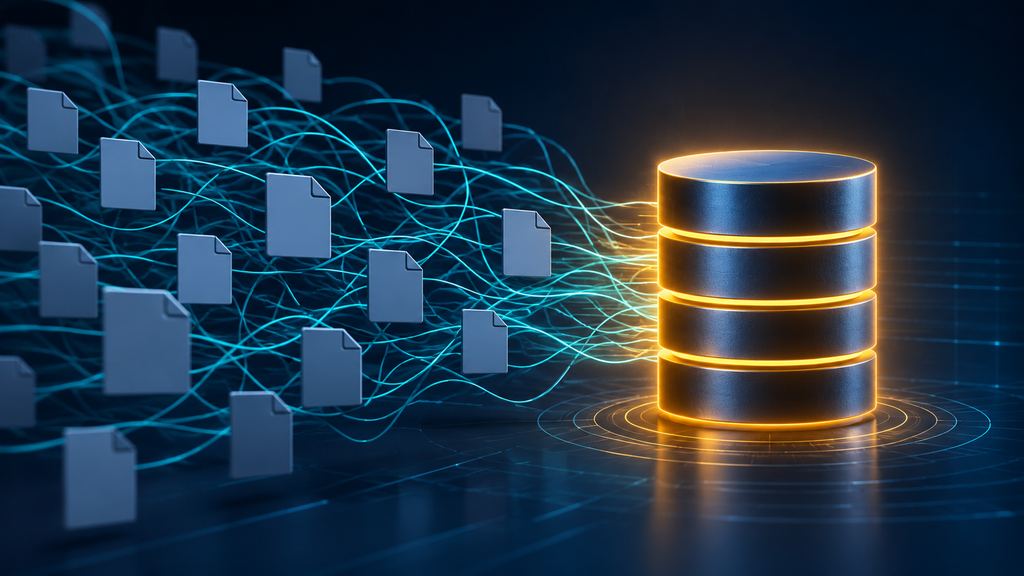
First, people repeat themselves constantly. A customer proves identity to a bank, then to an insurer, then to a telecom provider, and each time they upload the same documents. Meanwhile, each organisation builds its own process around those uploads. As a result, the person loses time and patience, and the organisation loses conversions.
The Manual Review Problem
Second, documents need checking. A reviewer, or a third-party service, must decide whether a scan looks genuine. That step takes time, and it still leaves room for doubt. After all, a scan is only a picture of a document. It cannot prove who issued it or whether anyone altered it.
The Data Hoarding Problem
Third, organisations keep what they collect. Stored documents must be secured, retained, and explained to regulators. Therefore, every verification leaves behind a liability. In short, the old approach makes verification slow for people and expensive to carry for organisations.
Self-sovereign identity offers a way out of this cycle. Instead of sending documents, a person presents proofs that a verifier can check instantly. Furthermore, the person keeps the underlying data.
Verifiable Credentials Explained
A verifiable credential is a digital statement that an issuer signs and a holder carries. It is the electronic equivalent of a physical document, such as an ID card, a diploma, or a licence. However, unlike a photocopy, it carries cryptographic proof of where it came from. W3C, the web standards body, defines the data model, so credentials can work across systems that follow the standard.
What a Credential Contains
A credential has three main parts. First, there is metadata, such as who issued it and what type it is. Second, there are claims, which are the facts being stated about the holder. Third, there is a proof, usually a digital signature from the issuer. Together, these parts let a verifier check authenticity without calling anyone.
Presentations and Selective Disclosure
Holders do not have to share a whole credential. Instead, the holder can create a verifiable presentation that contains only the assertions a verifier needs. This idea is called selective disclosure. For example, a person might share confirmation of eligibility without sharing every detail on the original document. Consequently, the verifier receives enough to decide and nothing more.
Why the Standard Matters
Standards also matter for business reasons. When credentials follow an open model, an issuer does not need a custom integration with every verifier. Similarly, a verifier does not need a custom integration with every issuer. Therefore, standardised credentials reduce the cost of adding new partners to a self-sovereign identity ecosystem. In practice, that benefit grows as more organisations join the ecosystem.
How Verifiable Credentials and Self-Sovereign Identity Fit Together
Verifiable credentials and self-sovereign identity are closely linked, but they are not the same thing. Self-sovereign identity is the broader approach, in which individuals control the information they use to prove who they are. Verifiable credentials are one of its core building blocks, alongside decentralised identifiers and a wallet.
The Trust Triangle
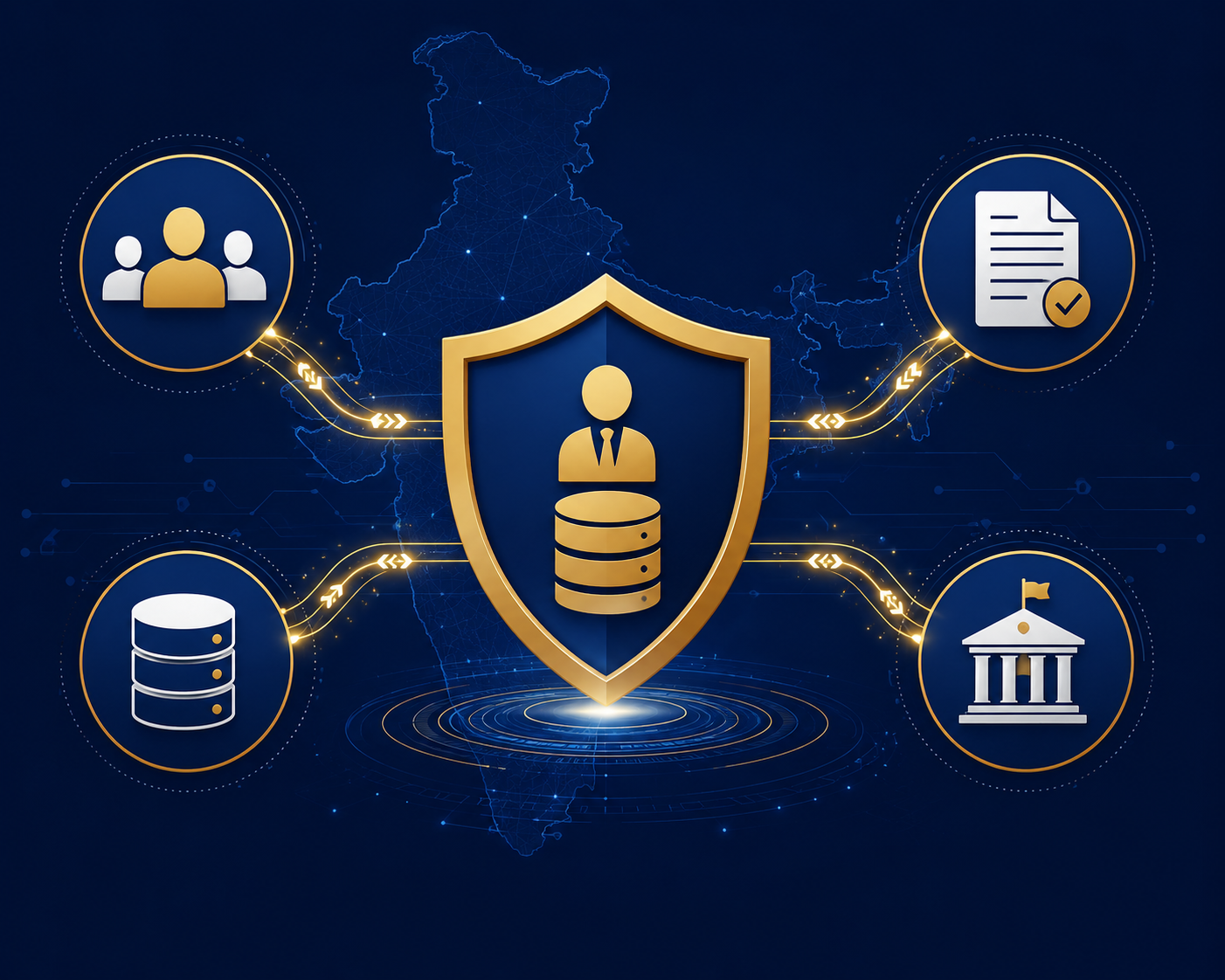
The relationship works as a triangle. An issuer signs a credential. A holder stores it. A verifier checks it. Importantly, each party has its own decentralised identifier, so signatures can be tied to a known controller. As a result, trust flows through cryptography instead of through a central database.
Why the Holder Sits at the Centre
In older models, the issuer or a central platform controls how data moves. With self-sovereign identity, the holder decides. The holder chooses when to share, what to share, and with whom. Moreover, the verifier checks the issuer’s signature directly, so the issuer does not need to know where the credential is used. That design reduces tracking and keeps the person in charge.
An Honest Clarification
Self-sovereign identity does not let anyone invent their own facts. Issuers still decide what is true, and verifiers still decide whom to trust. What changes is the path the data takes. Consequently, self-sovereign identity improves how proof is carried and checked, while the source of truth remains with trusted issuers.
Simplifying Digital Identity Verification With SecureX-DID
Now let us turn to a working platform. SecureX-DID is SecureDApp’s enterprise decentralised identity platform. It is built on self-sovereign identity principles for privacy-first authentication and document verification. Moreover, it combines decentralised identifiers, W3C verifiable credentials, and zero-knowledge proofs in a non-custodial design.
Credentials in the User’s Own Wallet
First, SecureX-DID puts credentials in the user’s own wallet. Users can issue, share, and verify standardised credentials, and the data stays on their device. SecureDApp describes the design as having no central storage and no intermediaries. Additionally, sensitive data is encrypted, processed locally, and shared only with the user’s explicit consent. As a result, the person holds the proof, and the verifier receives only what the person chooses to share.
Zero-Knowledge Proofs for Privacy
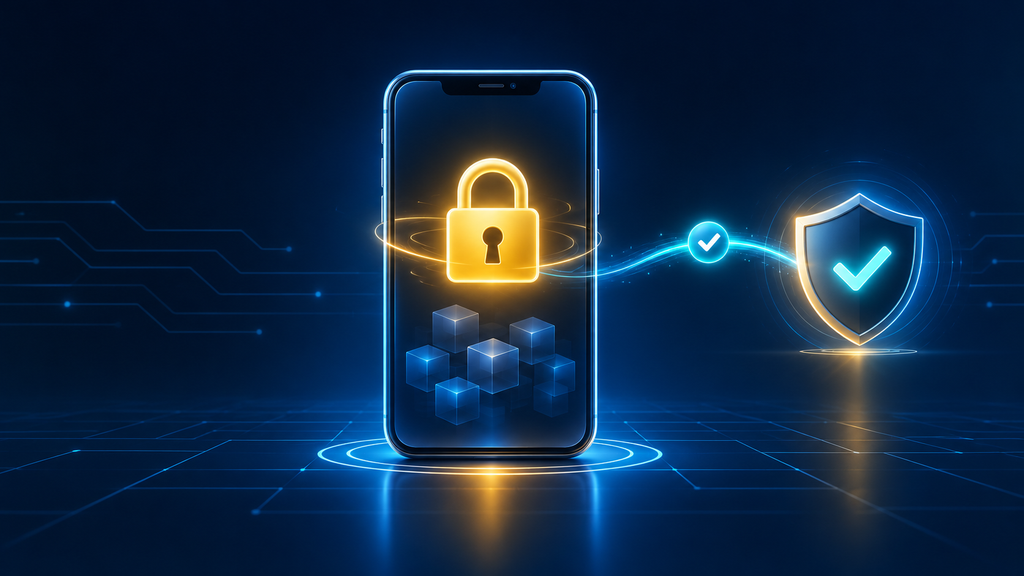
Next, zero-knowledge proofs add precision. A zero-knowledge proof lets a person show that a statement is true without revealing the data behind it. SecureX-DID builds its proofs with Circom circuits, a circuit language widely used for this purpose. For instance, someone can prove they meet an age requirement without exposing their birth date. Consequently, verification becomes simpler for the verifier, because the answer arrives as a clear proof instead of a document to inspect.
DIDs That Bind Credentials to Holders
In addition, SecureX-DID uses decentralised identifiers to tie each credential to the person who holds it. Because anyone can check the issuer’s signature, tampering becomes easy to spot. Therefore, a verifier gains confidence without relying on screenshots or photocopies.
UIDAI OVIS SE Approval
Finally, SecureX-DID is approved under UIDAI’s OVIS SE certification. This signals credibility within India’s identity ecosystem. However, the approval relates to the identity verification context that UIDAI defines. Therefore, enterprises should still assess their own regulatory requirements for each journey.
Control That Stays With the User
Throughout the journey, the user keeps control. They can manage, share, or delete credentials at any time. That control is the practical meaning of self-sovereign identity, and it is built into how the platform works.
Before and After: A Verification Journey Compared
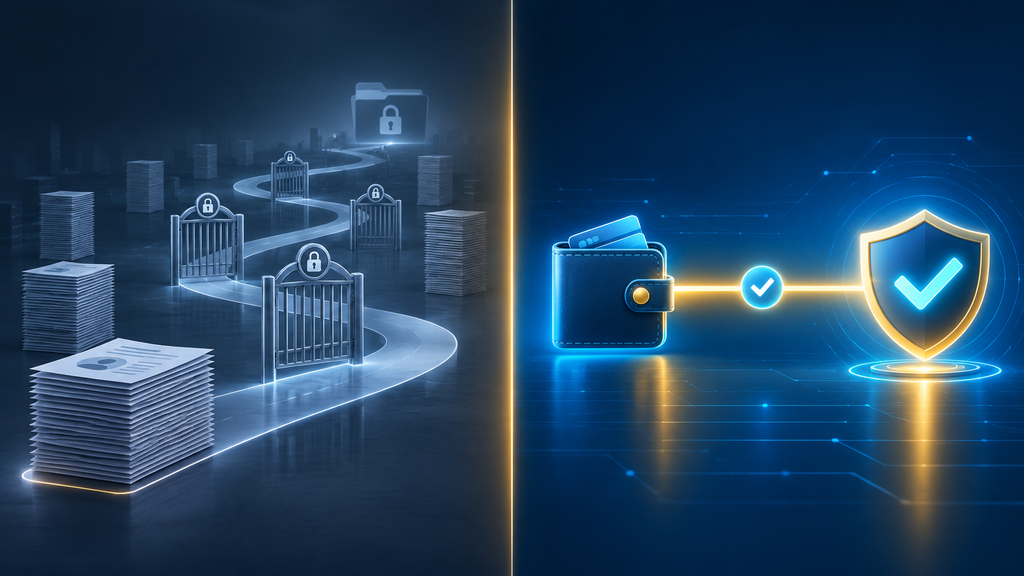
A direct comparison makes the simplification easy to see. Imagine a customer onboarding journey at a regulated organisation. Here is how it looks under each approach.
The Document-Heavy Way
First, the customer uploads an ID, a proof of address, and a photo. Next, the organisation reviews them, often with manual checks. Then it stores the files for later audits. Meanwhile, the customer waits, and the organisation carries the risk of holding sensitive copies. In short, the process is slow, repetitive, and data-heavy.
The Self-Sovereign Identity Way
Now consider the alternative. First, the customer opens their wallet and approves a request for specific proofs. For example, the proofs could confirm that identity is verified and that an eligibility threshold is met. Next, the verifier checks the signatures and proofs. Finally, the organisation keeps only the outcome of the check. As a result, the journey is faster, and far less personal data stays behind.
What Changes for the Team
For the business, the change is practical. Reviewers spend less time inspecting scans. Security teams protect less sensitive data. Compliance teams answer fewer questions about stored documents. Therefore, simplifying verification with self-sovereign identity helps several teams at the same time.
How Verification Works Step by Step With SecureX-DID
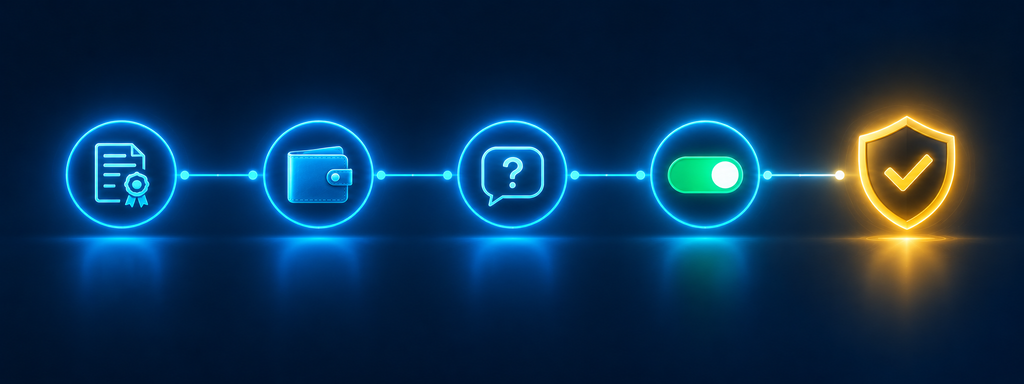
A clear walkthrough shows how little effort the person and the verifier need. The flow below follows the trust triangle of issuer, holder, and verifier. Every step keeps data with the holder for as long as possible.
Step One: An Issuer Signs a Credential
First, an issuer creates a credential and signs it. The credential could confirm, for example, that a person’s identity is verified. The issuer then hands it to the holder. Because the issuer has its own decentralised identifier, anyone can later check who signed it. As a result, the credential carries its own proof of origin.
Step Two: The Holder Stores It in a Wallet
Next, the holder keeps the credential in a wallet. With SecureX-DID, the wallet is non-custodial, so the data stays on the user’s device. Moreover, sensitive data is encrypted and processed locally. Consequently, no central database holds a copy of everyone’s credentials. This is self-sovereign identity at the storage level.
Step Three: A Verifier Requests a Proof
Then, a verifier asks for a specific proof. Instead of requesting a whole document, it names the fact it needs. For instance, it may ask for confirmation that an eligibility condition is met. Therefore, the request itself keeps the exchange small.
Step Four: The Holder Approves and Shares
After that, the holder reviews the request and decides whether to respond. Because sharing happens only with explicit consent, nothing leaves the wallet without the person’s approval. In addition, zero-knowledge proofs let the holder show that a statement is true without revealing the data behind it.
Step Five: The Verifier Checks and Records the Outcome
Finally, the verifier checks the issuer’s signature and the proof. If both pass, the verifier accepts the result. It then keeps only the outcome of the check. In other words, the organisation learns what it needs, and the person keeps the rest.
Common Questions Teams Ask Before They Begin
Teams new to this model usually raise the same few concerns. Therefore, it helps to address them directly.
Does the Verifier Need to Contact the Issuer Every Time?
Not for the signature check. A verifier can check the issuer’s signature on what the holder presents. As a result, the issuer does not learn where each credential is used. This design is one reason self-sovereign identity is considered privacy-friendly. Where a use case needs status checks, teams should design them carefully so that privacy is not lost.
What Happens if a Person Loses a Device?
This is a fair concern, and it deserves planning. Because a non-custodial wallet keeps data on the user’s device, recovery needs a clear design. Therefore, enterprises should discuss recovery and re-issuance with their technology and legal teams before launch. A simple rule helps here: plan the unhappy path as carefully as the happy path.
Will Users Find It Difficult?
It should not be difficult. A good wallet hides the cryptography behind a clear experience, such as a simple request and an approve button. Moreover, people already understand the idea of showing a card and keeping it. Consequently, the mental model is familiar, even though the technology underneath is new.
Can Existing Systems Keep Working?
Yes, in most cases teams can start with one journey and leave other systems untouched. A focused pilot adds a new option without a full rebuild. Over time, as more issuers and verifiers join, the benefits compound.
Measuring the Impact of Self-Sovereign Identity
Good projects need good measures. Without them, it is hard to show value to leadership. Fortunately, several simple metrics make the benefits of self-sovereign identity easy to track.
Speed and Completion
First, measure how long a verification takes and how many people finish it. Shorter journeys usually mean fewer drop-offs. Therefore, completion rate is one of the clearest signs of success.
Data Held
Second, measure how much personal data you store after verification. If the number falls, your exposure falls too. In many cases, this metric tells the strongest security story.
Review Effort
Third, measure how much manual review remains. When verification becomes a proof check, reviewers can focus on exceptions instead of routine scans. As a result, teams can use their time where it matters most.
Customer Confidence
Finally, listen to customers. Feedback on privacy and ease of use shows whether the change is landing well. Over time, that feedback can guide the next journey you move to self-sovereign identity.
Benefits for Individuals, Enterprises, and Compliance Teams
Different groups gain different things. Let us look at each one.
For Individuals
People gain convenience and control. They no longer re-upload the same documents for every service. Moreover, they decide what to share, and they can delete credentials when they choose. Consequently, privacy becomes part of the experience instead of an afterthought.
For Enterprises
Enterprises gain speed and lower exposure through self-sovereign identity. Verification becomes a proof check instead of a document review. Additionally, holding less data reduces the damage a breach can cause. Furthermore, standardised credentials make it easier to work with new partners over time.
For Compliance Teams
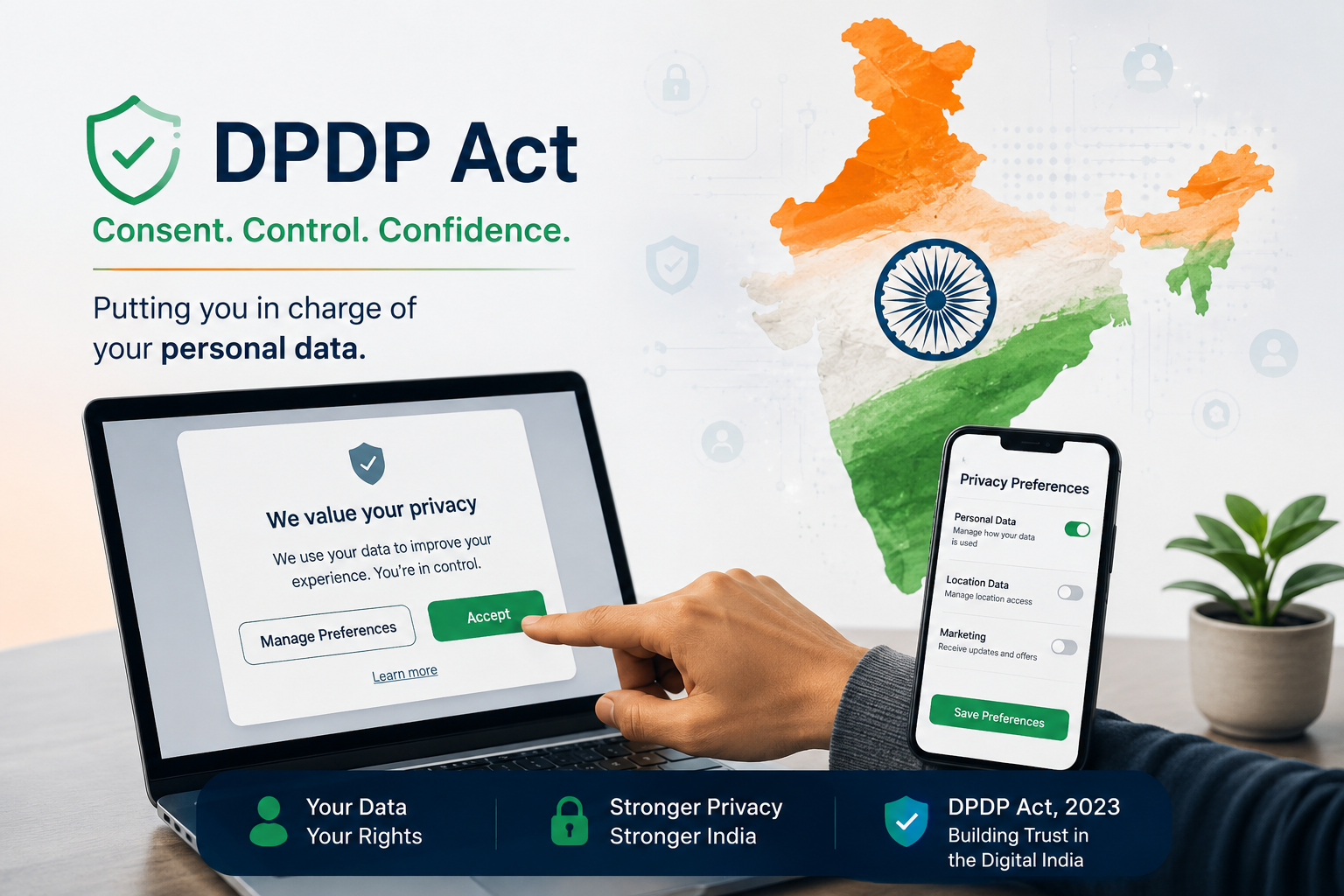
Compliance teams gain a clearer story. Data minimisation and purpose limitation are principles that privacy laws, including India’s DPDP Act, 2023, emphasise. Self-sovereign identity is architecturally aligned with those principles, but it is not a named compliance mechanism. Therefore, legal review of each design remains essential. For context, DPDP enforcement is phased, with full substantive obligations expected from May 2027.
Where Verifiable Credentials Apply in Practice
Several scenarios show how self-sovereign identity works. SecureDApp positions SecureX-DID for identity verification by organisations and services, academic and professional credential verification, and private document sharing.
Financial Services
A fintech platform completing KYC can ask for proofs instead of document copies. The customer shares them from a wallet, and the platform checks them quickly. As a result, onboarding feels lighter, and the platform stores less.
Healthcare
Similarly, a patient can share a credential that confirms they are the registered person. The provider checks the proof and proceeds. Meanwhile, the patient avoids handing over a stack of personal documents.
Government and Education
Likewise, a government department onboarding citizens can verify with trust instead of unnecessary data exposure. A university can issue academic credentials that employers later verify. In both cases, the holder carries the proof, and the verifier checks it.
Honest Limits and Practical Considerations
No approach solves everything, so planning matters. First, credentials are only as useful as the issuers behind them. Therefore, enterprises should decide which issuers they will trust. Second, user experience matters. A wallet must feel simple, or people will avoid it. Third, regulatory context differs by journey, so teams should confirm what each use case requires.
In addition, adoption takes time. Verifiers need to accept credentials, and issuers need to provide them. However, a focused pilot can show value without waiting for the whole ecosystem. Consequently, many teams start with one high-volume journey and expand from there.
How to Start Simplifying Verification
A practical path keeps risk low. Here is a short plan for your first self-sovereign identity rollout.
- Choose one journey. Pick a process with heavy document collection.
- Define the proofs you need. List the exact facts each step requires.
- Select trusted issuers. Decide who can sign the credentials you will accept.
- Pilot with a small group. Measure speed, drop-offs, and stored data.
- Review with legal and compliance. Confirm that the design fits your obligations, then expand.
Conclusion: Verification Without the Paperwork
Verification does not have to mean paperwork, and self-sovereign identity shows how. Verifiable credentials turn documents into proofs that a verifier can check in moments. Selective disclosure and zero-knowledge proofs then limit how much data moves. Together, they make digital identity verification simpler for people and safer for organisations.
Self-sovereign identity ties these ideas into one model, and SecureX-DID makes the model practical for enterprises. It combines decentralised identifiers, W3C verifiable credentials, and zero-knowledge proofs in a non-custodial wallet, and it is approved under UIDAI’s OVIS SE certification. Therefore, teams can explore a faster and more private path to verification today. In short, self-sovereign identity gives people control, gives verifiers confidence, and gives organisations a lighter, safer way to verify. Moreover, it does so without asking anyone to give up more data than a decision truly needs.
If your teams are ready to collect fewer documents and verify with more confidence, start with one journey. Talk to the SecureDApp team about SecureX-DID, and see how self-sovereign identity can simplify verification across your business.
Frequently Asked Questions
1. What is a verifiable credential?
A verifiable credential is a digital statement that an issuer signs and a holder carries. It contains metadata, claims, and a cryptographic proof. As a result, a verifier can check where it came from and whether anyone changed it.
2. How do verifiable credentials simplify digital identity verification?
They replace document uploads and manual review with proofs that a verifier can check quickly. In addition, the holder can share only what is needed, so the organisation collects and stores less personal data.
3. How are verifiable credentials related to self-sovereign identity?
Self-sovereign identity is the broader approach in which individuals control the information they use to prove who they are. Verifiable credentials are one of its core building blocks, alongside decentralised identifiers and a wallet.
4. How does SecureX-DID use verifiable credentials?
SecureX-DID is SecureDApp’s enterprise decentralised identity platform. It uses DIDs, W3C verifiable credentials, and zero-knowledge proofs in a non-custodial wallet, so users can issue, share, and verify standardised credentials while their data stays on their device.
5. Is SecureX-DID approved by UIDAI?
SecureX-DID is approved under UIDAI’s OVIS SE certification. This signals credibility within India’s identity ecosystem. However, the approval relates to the identity verification context that UIDAI defines, so enterprises should still assess their own regulatory requirements.