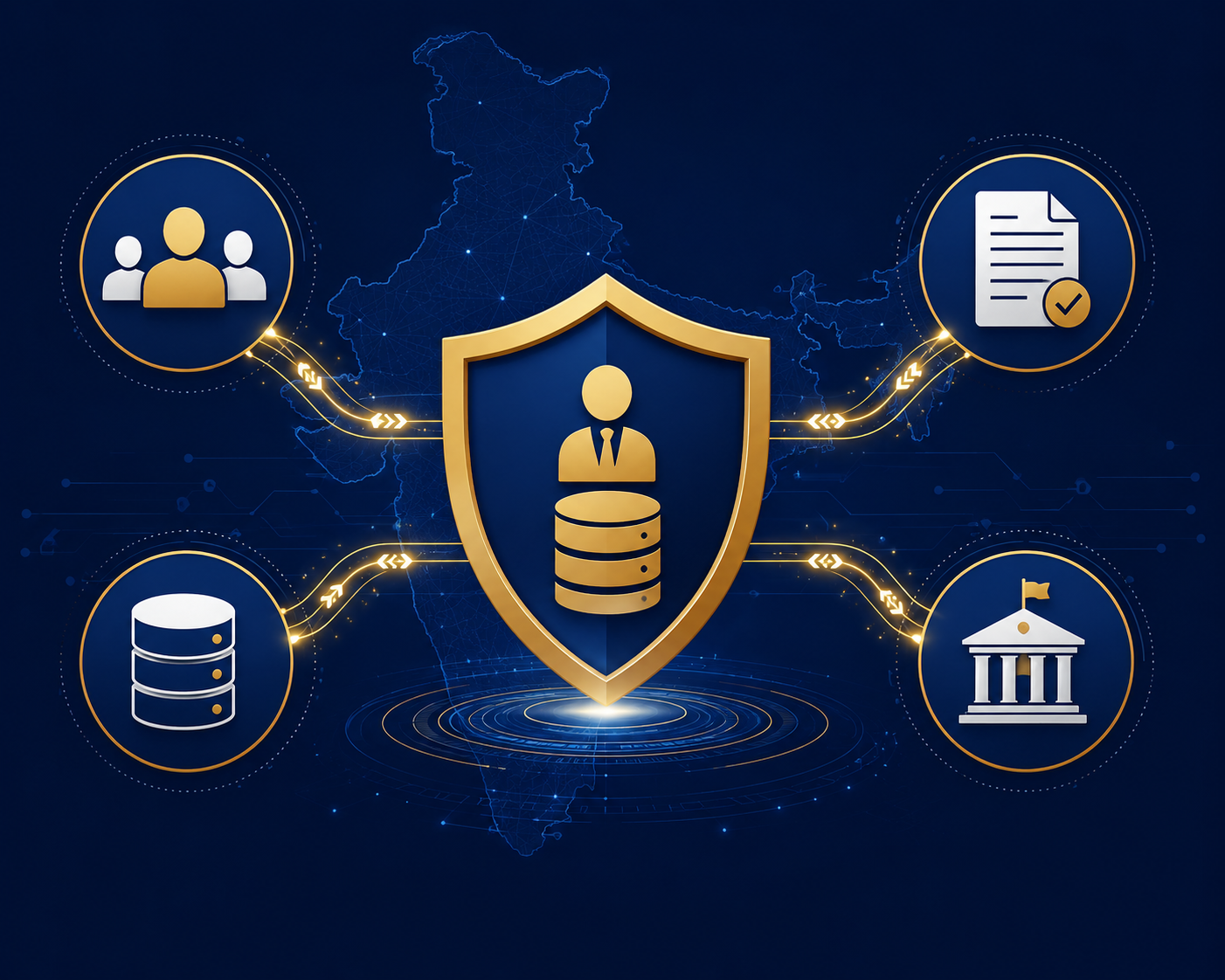
Picture this. A new user lands on your app and wants to sign up. Within seconds, your form asks for a name, a phone number, a home address, a birth date, and a photo of an ID card. Would you share all that with a stranger?
Most people would not. However, businesses do this every day, because they think it is the only way to verify user information. In truth, it is not. Moreover, it is a risky habit.
There is a better way, and it starts with a simple shift. Instead of collecting documents, you can check proofs. That is exactly what SecureX-DID, SecureDApp’s decentralized identity platform, is built to do. In this guide, we will first see why over-collection happens and what it costs. Then, we will see how SecureX-DID helps you verify user information with far less data. Finally, you will get a clear plan to start.
Why Do Businesses Collect So Much Personal Data?
Nobody wakes up and decides to hoard data. Instead, it happens slowly, because traditional identity verification has a built-in flaw. So, let us look at how it starts.
First, the old model has only one tool: the document. To check who a user is, a business asks for a copy of an ID. Then, it has to keep that copy as evidence. As a result, every check leaves a document behind. In other words, the old model forces you to collect when you verify user information.
Second, the old model cannot answer small questions. A business may only need to know that a user is over 18. However, the ID card shows the name, address, and full birth date too. Therefore, the business receives far more than it asked for.
Third, old forms never die. Someone built a signup form years ago with ten fields. Since nobody questioned it, those ten fields are still there. Meanwhile, marketing, sales, finance, and support each keep adding their own wishes.
Finally, storage is cheap. Because of that, many teams think, “Why not keep everything?” However, cheap storage does not mean cheap risk. In fact, every extra record is one more thing to protect, explain, and delete.
So, what does this habit really cost? Let us find out.
What Excessive Data Collection Costs You
At first glance, extra data looks harmless. However, the hidden costs pile up fast. Therefore, it helps to look at them one by one.
A Bigger Target for Attackers
Attackers love data. Consequently, a database full of IDs, addresses, and phone numbers looks like a treasure chest to them. On the other hand, data you never collected cannot be stolen. Simply put, the safest way to verify user information is to avoid keeping extra copies.
Privacy Risks That Follow Your Users
When documents spread across inboxes, shared drives, and old databases, users lose control. Moreover, one leak can expose a person’s name, address, and ID number together. As a result, the harm reaches far beyond your business. It reaches your users. That is why a careful way to verify user information protects people, not just systems.
Operational Weight Every Month
Stored data needs servers, backups, security tools, and staff time. Besides that, each record needs care when a user asks for correction or deletion. Consequently, more data means more work and more money. Therefore, a lean way to verify user information saves real budget.
Lost Trust and Lost Signups
Users notice when you ask for too much. For instance, a food delivery app that asks for a passport scan feels odd. As a result, people leave the page. In other words, a heavy way to verify user information can push good customers away.
The Legal Angle, Kept Simple
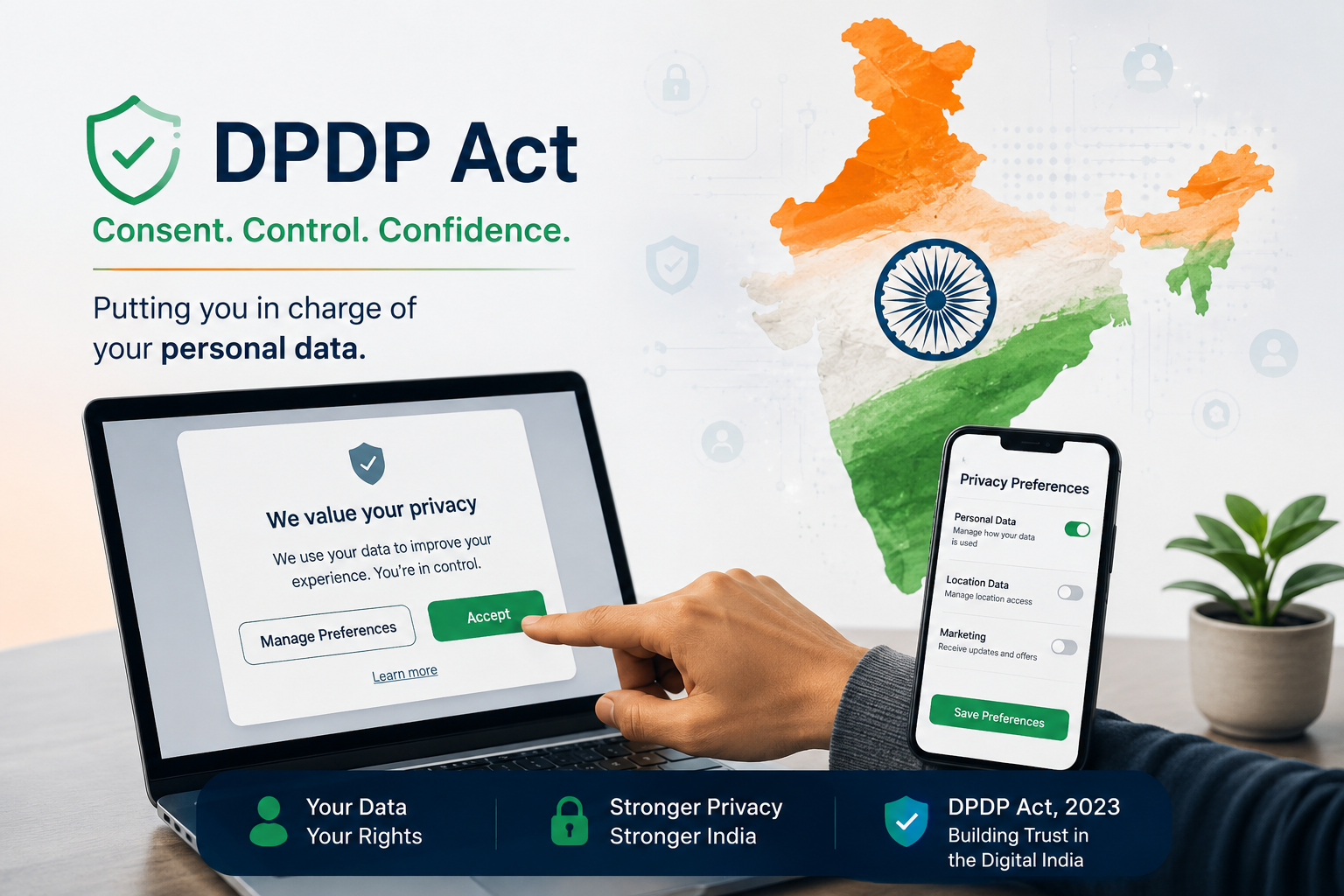
India’s Digital Personal Data Protection Act, 2023 (the DPDP Act) points in the same direction. For example, it expects businesses to ask only for data that is necessary for a stated purpose, and to erase it once that purpose is served. Meanwhile, enforcement is phased, with full substantive obligations expected from May 2027. Therefore, data minimization is no longer just good manners. It is smart planning.
The Big Idea: Verify the Fact, Not the Whole Person
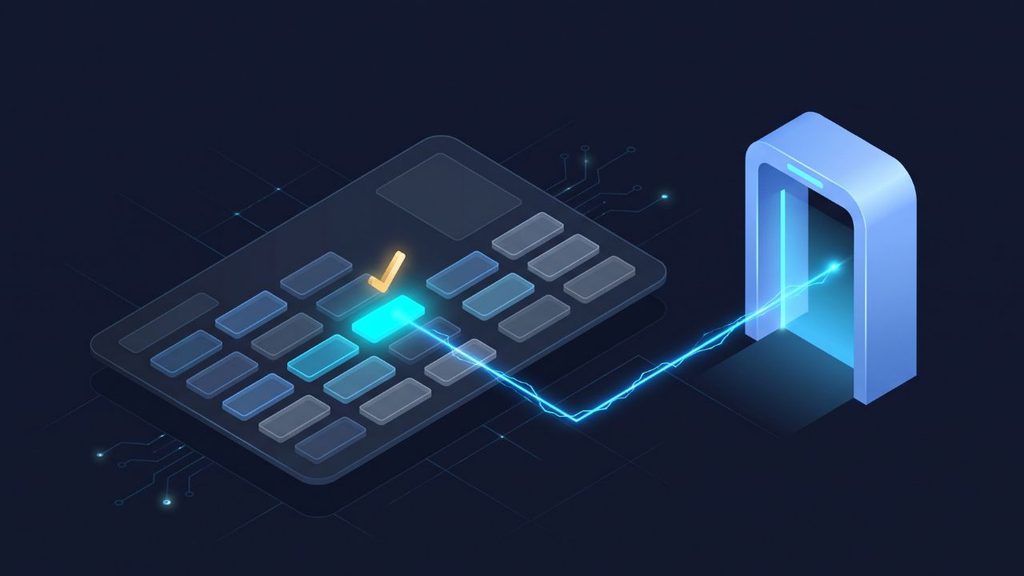
Here is the idea that changes everything. Most of the time, you do not need to know everything about a person. Instead, you only need to confirm one small fact. That is the lightest way to verify user information.
Let us look at a few examples:
- A gaming platform needs to know a user is over 18. It does not need an exact birth date.
- A lender needs to know an applicant lives in a certain city. It does not need every utility bill.
- A clinic needs to know a patient is the registered person. It does not need a stack of photocopies.
In each case, the business needs an answer, usually a simple yes or no. It does not need the raw document behind it.
Notice that none of these checks needs a full file. So, whenever you design a step to verify user information, ask one question: “What is the single fact I need to confirm here?” Then, build the step around that fact alone.
Verification Is a Moment, Storage Is a Choice
Here is an insight most teams miss. Verification happens in one moment. Storage, however, is a separate choice that lasts for years.
Unfortunately, most businesses treat the two as one step. They check an ID, then they keep a copy forever. As a result, a ten-second check turns into a ten-year risk.
This Is the SecureX-DID Philosophy
SecureX-DID is built on exactly this thought. It lets a business ask for a proof of a fact, and not a copy of a document. Consequently, the question changes from “What can we collect?” to “What must we confirm?” Very often, the answer to “What must we keep?” is “almost nothing.”
To see how that works, we first need to understand a few building blocks. Do not worry, because the ideas are simpler than the names.
How Decentralized Identity Works in Simple Words
Think about a movie theater. The guard at the door does not ask for your bank statement. Instead, he looks at your ticket and checks the stamp. If the stamp is real, you walk in. That is all he needs.
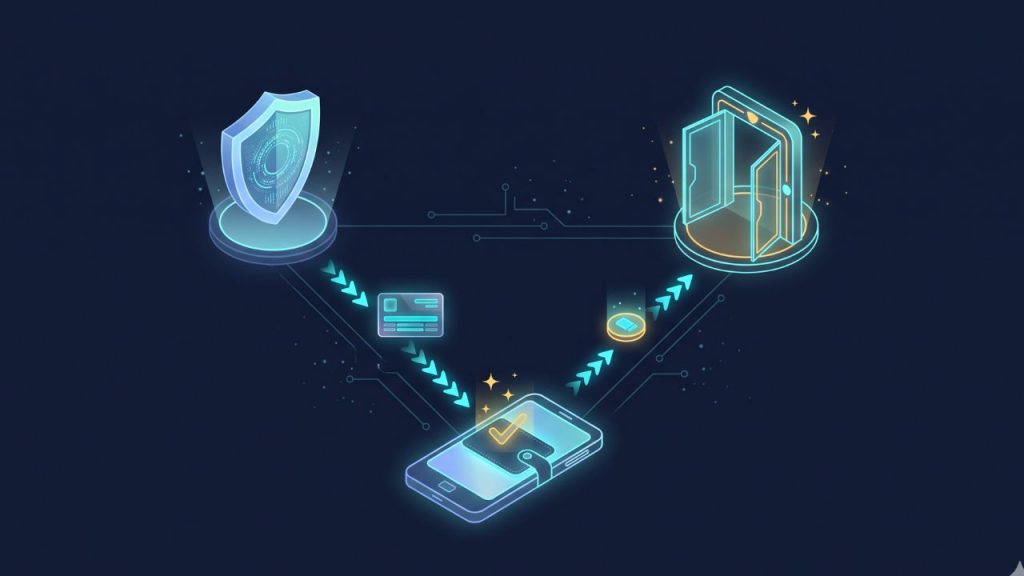
Decentralized identity works in a similar way. The user holds their own proofs. The business only checks them. Let us meet the main parts. In short, decentralized identity gives you a safer way to verify user information.
Self-Sovereign Identity (SSI)
Self-sovereign identity means the user owns and controls their digital identity. It does not live inside one company’s database. Instead, the user carries it in a secure digital wallet and decides who sees what.
Decentralized Identifiers (DIDs)
A DID is a unique digital identifier that the user controls. It is not tied to one company’s records. Moreover, it links to public keys that others can use to check signatures. In simple words, a DID helps prove that a proof really belongs to the right person.
Verifiable Credentials (VCs)
A verifiable credential is a digital version of an ID card, certificate, or license. A trusted issuer, such as a bank or a government office, signs it. Because of that signature, a business can check that nobody has changed it.
Selective Disclosure
Selective disclosure lets the user share only the part of a credential that the business needs. For example, a user can share a name without sharing an address. Similarly, they can share a degree without sharing their marks.
Zero-Knowledge Proofs (ZKPs)
A zero-knowledge proof goes one step further. It lets a user prove that a statement is true without revealing the data behind it. For instance, a user can prove “I am over 18” without showing a birth date at all.
Together, these parts form the engine behind privacy-first identity checks. Next, let us see how SecureX-DID puts them to work.
How SecureX-DID Helps You Verify User Information With Less Data
Now, let us move from ideas to action. SecureX-DID is SecureDApp’s enterprise decentralized identity platform. It is built on self-sovereign identity principles for privacy-first authentication. So, how does it help you verify user information with less data? Let us go through each capability and see what it adds.
Think of SecureX-DID as a set of layers. Each layer removes one reason to collect extra data. Moreover, each layer builds on the one before it. So, let us see how each part helps you verify user information in a privacy-first way.

Self-Sovereign Identity: Proof Stays With the User
With SecureX-DID, users hold their credentials in their own wallets. Therefore, your servers do not need to store a copy of every ID or certificate. In short, you can verify user information without becoming a vault of documents. After all, you cannot lose what you never held.
DIDs: A Trusted Link Between User and Proof
SecureX-DID uses decentralized identifiers to tie each credential to the person who holds it. As a result, your business can confirm that a proof belongs to the user in front of you. Importantly, it does this without building a new profile for every visitor. This helps you verify user information without a central profile.
Verifiable Credentials: Proof You Can Check
Instead of a photocopy, your system receives a signed credential. Because the issuer’s signature can be checked, tampering becomes easy to spot. In contrast, a scanned image of an ID is hard to trust, since anyone can edit it. Consequently, you gain stronger proof while holding less data. Therefore, credentials make it simpler to verify user information with trust.
Selective Disclosure: Ask for Fields, Not Files
Your business can request only the fields it needs. For example, a bank may ask for a verified name and nothing else at the first step. In addition, the user sees what is being asked and chooses what to share. Therefore, consent becomes part of the flow, and not an afterthought. Consequently, your team can verify user information step by step, and not all at once.
Zero-Knowledge Proofs: Answers Without the Data
With ZKPs, a user can answer a yes-or-no question without exposing the raw detail. For instance, a platform can confirm that a user meets an age rule without ever seeing a birth date. Notably, this is the purest form of verifying the fact, not the whole person. Because of this, you can verify user information even when the raw data stays private.
User-Controlled Sharing
Every share is the user’s choice. Moreover, users decide which credential goes to which business. As a result, trust builds on both sides. Users feel safe, and your team receives cleaner, purpose-fit data. Over time, this makes it easier to verify user information at scale, without growing your data pile.
Putting It All Together
Each part solves a different problem. Self-sovereign identity removes central storage. DIDs link proofs to people. Credentials make proofs trustworthy. Selective disclosure limits the fields. Zero-knowledge proofs hide the data completely. Together, they let you verify user information with proof, not paperwork.
UIDAI OVIS SE Approval
SecureX-DID is approved under UIDAI’s OVIS SE certification. This signals credibility within India’s identity ecosystem. However, it is important to be precise. The approval relates to the identity verification context that UIDAI defines. It does not replace other checks that a regulated business may still need to run.
A Note on DPDP Alignment
Self-sovereign identity is architecturally aligned with DPDP principles such as data minimization and purpose limitation. Yet it is not a named compliance mechanism on its own. You still need clear notices, sound policies, and strong governance around it.
Real-World Scenarios: SecureX-DID in Action
Ideas feel better when you see them at work. So, let us walk through one real-world pattern and two illustrative examples.
The Real-World Pattern: The ID Copy Problem
Across the world, businesses keep copies of ID documents “just in case.” Over time, these copies spread across inboxes and old databases. Then, when a breach happens, many identity documents leak at once. The cause is rarely the check itself. Instead, it is the copy that stayed behind.
Illustrative Example: A Digital Lender
Imagine a digital lender that onboards thousands of customers each week. Today, it collects ID scans and address proofs, then stores them all.
Now, imagine the lender adds SecureX-DID to its onboarding journey. First, the customer shares a signed identity credential from their wallet. Next, they share only the fields the lender requests. Finally, the lender checks each signature and records the outcome, along with the purpose and time.
Of course, the lender must still follow every applicable KYC and regulatory requirement. However, it can meet those duties while holding far fewer raw documents. As a result, an attacker finds much less to steal. In short, the lender can verify user information without owning the whole file.

Illustrative Example: A Hospital Front Desk
Now, picture a busy hospital front desk. Currently, staff photocopy ID cards for every visit. Those papers pile up in drawers and scanners.
With SecureX-DID, a patient shares a credential that confirms they are the registered person. The desk can verify user information in seconds, and no photocopy is made. Meanwhile, the hospital still follows its own health-data and record-keeping rules. Therefore, privacy improves without breaking process.
Notice the pattern in both examples. The check gets faster, and the data trail gets shorter. Moreover, trust goes up on both sides.
A Step-by-Step Plan to Adopt SecureX-DID
Ready to start? Good news: you do not need to rebuild everything on day one. Instead, follow these steps, one at a time. Each step helps you verify user information with less data.
Step 1: Map Where You Collect Identity Data
First, list every form, app screen, and document request you use to verify user information. Then, note who asked for each field and why. Often, this reveals fields nobody needs.
Step 2: Name the Fact You Actually Need
Next, write down the single fact for each check. For example, write “over 18” instead of “birth date.” This small habit changes how your team thinks about how to verify user information.
Step 3: Pick One High-Value Journey
Then, choose one journey, such as customer onboarding or staff access. Because the scope is small, you learn fast and risk little. Moreover, you can measure drop-offs and completion rates from day one.
Step 4: Pilot With SecureX-DID
After that, run a pilot where users share credentials and your system checks proofs. Meanwhile, keep your existing checks as a backup. In this way, your team gains confidence before a full rollout.
Step 5: Set Retention Rules and Review Often
Finally, keep only the outcome of each check, along with its purpose and time. Delete everything else on a clear schedule. In addition, review your forms every quarter, or old habits will creep back in.
Common Mistakes to Avoid
Even good plans can go wrong. So, watch out for these traps.
- Collecting first, deciding later. Define the purpose before you add a field.
- Treating consent as a checkbox. Consent must be clear and specific.
- Keeping proofs “just in case.” If you do not need it, delete it.
- Ignoring governance. Technology helps, but policies and people matter too.
Frequently Asked Questions
1. How does SecureX-DID help verify user information without collecting excessive data?
SecureX-DID lets users share signed credentials from their own wallets. Your business checks the proof and keeps only the outcome. Therefore, you verify user information without storing full documents.
2. What is the difference between selective disclosure and zero-knowledge proofs?
Selective disclosure shares chosen fields from a credential, such as a name. A zero-knowledge proof goes further and proves a statement, such as “over 18,” without showing the data. Both reduce what the business sees.
3. Does collecting less data make verification weaker?
No. A digitally signed credential from a trusted issuer is often harder to fake than a photocopy. Moreover, holding fewer documents lowers your exposure. So, you can verify user information with confidence while holding less.
4. Does SecureX-DID make my business compliant with the DPDP Act?
No tool can do that alone. SecureX-DID is architecturally aligned with DPDP principles such as data minimization and purpose limitation. However, you still need consent notices, policies, and governance. Ask your legal team to review the full setup.
5. Which businesses benefit most from SecureX-DID?
Any business that must verify user information can benefit. However, the gains are biggest in banking, financial services, healthcare, and government services. These sectors handle sensitive data and face strict rules, so holding less data matters most.
Final Thoughts: Verify With Proof, Not Paperwork
Let us bring it all together. Businesses collect too much data because the old model leaves them no other tool. However, that habit now brings real cost, real risk, and real legal pressure. Clearly, the best way to verify user information is to ask for proof, not paperwork.
The good news is that you can change course. First, shift your thinking: verify the fact, not the whole person. Next, separate the moment of checking from the choice of storing. Then, use technology that lets users share proofs instead of piles of paper.
Think about the outcomes. Onboarding gets faster. Breach exposure shrinks. Audits get easier, since you hold less to explain. Meanwhile, users feel respected. That is the business case for SecureX-DID.
That is the role SecureX-DID plays. With self-sovereign identity, DIDs, verifiable credentials, selective disclosure, and zero-knowledge proofs, it helps you verify user information while holding far less data. As a result, you protect people, cut risk, and build trust at the same time.
Ready to move beyond traditional identity verification?
With SecureX-DID, your organization can explore a privacy-first approach to identity verification using decentralized identifiers, verifiable credentials, and zero-knowledge proofs.
Book a SecureX-DID demo and discover how to verify identities with proof, not excessive personal data.