Your encryption is only as strong as the system that guards its keys. Yet most procurement teams still score a key management service on price, cloud region support and a familiar logo. Meanwhile, attackers are already collecting encrypted data today, planning to unlock it once quantum computers mature.
That shift changes how KMS vendor selection should work. A key management service bought in 2026 will still hold your most sensitive secrets in 2034. Therefore, the real question is no longer “Does this vendor manage keys well?” It is “Will this vendor still protect my keys when the cryptography underneath them has to change?”
This guide gives CTOs and IT procurement leads a practical framework for vendor evaluation. You will get a scorecard, a set of RFP questions, a KMS comparison model and a rollout plan built around post-quantum cryptography (PQC) and crypto-agility.
Why KMS Vendor Selection Has Become a Board-Level Decision
Not long ago, picking a key manager was an infrastructure task. Today it touches compliance, resilience, vendor lock-in and long-term risk. So what changed?
The quantum clock is now a procurement deadline
In August 2024, NIST finalized its first post-quantum standards: FIPS 203 (ML-KEM) for key establishment, FIPS 204 (ML-DSA) for digital signatures and FIPS 205 (SLH-DSA) as a hash-based signature backup. NIST later selected HQC as an additional key-encapsulation algorithm. Moreover, NIST’s transition guidance proposes deprecating RSA and elliptic curve algorithms by 2030 and disallowing them by 2035.
Those dates sound distant. However, enterprise contracts often run three to five years, and large migrations take longer than that. A vendor you sign today will be in the middle of this transition, whether you plan for it or not.
Harvest now, decrypt later is already happening

Adversaries do not need a working quantum computer to cause damage today. They can capture encrypted traffic and stored archives now, then decrypt them later. As a result, any data with a long shelf life, such as health records, financial contracts, source code and identity data, is already exposed in principle.
This is the insight many buyers miss. The threat is not a future event you can schedule around. It is a present-day collection problem with a future payoff for the attacker.
Regulation and national programs are moving too
Globally, agencies are publishing quantum-readiness timelines for critical systems. In India, the National Quantum Mission has pushed quantum technologies, including secure communication, into national planning. Consequently, regulated sectors such as banking, insurance, telecom and government suppliers should expect auditors to ask about PQC compliance sooner than they expect.
What a Key Management Service Actually Controls
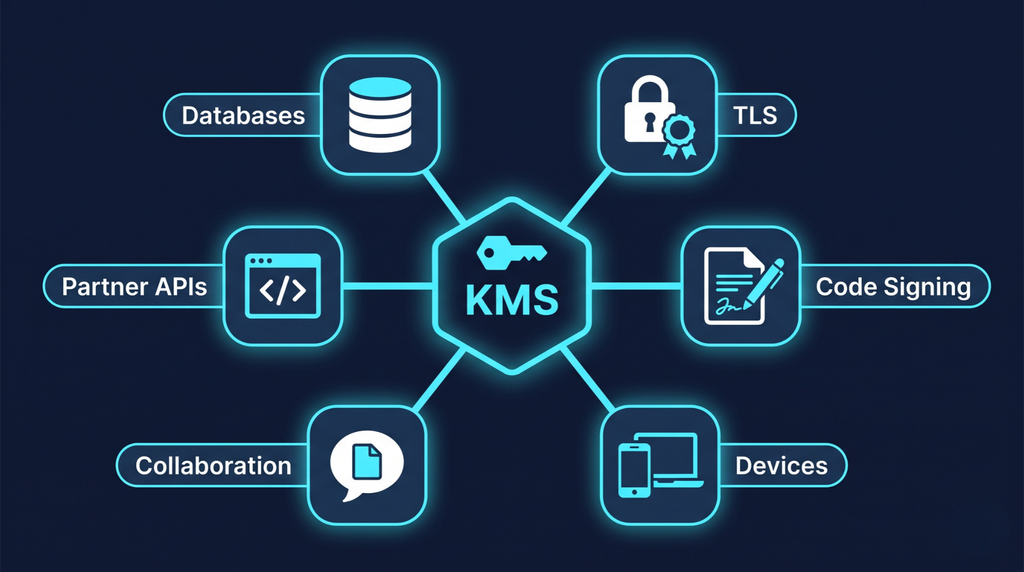
Before comparing vendors, it helps to see what is really at stake. A key management service does far more than store keys.
It generates keys with strong entropy, controls who can use them, rotates them on schedule, and records every action. In addition, it often anchors your signing workflows, API authentication, database encryption, device identity and remote access.
Think of it as the lock-maker, the key cabinet and the security camera for your entire encryption estate. If the vendor’s cryptography is outdated, every system that depends on it inherits the weakness.
The hidden dependency map
Consider where keys quietly live in a typical enterprise:
- Database and storage encryption
- TLS certificates for web, mobile and server traffic
- Code and document signing
- Employee devices and remote access
- Collaboration tools and internal messaging
- Partner APIs and machine identities
Notably, each of these can break differently during a cryptographic migration. A KMS that cannot reach all of them forces you to run several tools, and that is where gaps appear.
The Core Criteria for KMS Vendor Selection
Every credible KMS comparison starts with fundamentals. Review sites such as TrustRadius’s encryption key management category are a useful way to shortlist vendors and read peer feedback. However, ratings rarely test quantum readiness, so treat them as a starting filter, not a final verdict.
Here are the baseline criteria every vendor must meet.
Key lifecycle management
A vendor should handle creation, distribution, rotation, suspension, archival and destruction. Furthermore, ask whether rotation can be automated by policy and whether revoked keys are truly unusable across all connected systems.
Hardware root of trust
Look for support for FIPS 140-3 validated hardware security modules (HSMs), or equivalent protection. In addition, confirm whether keys can be generated and used without ever leaving the secure boundary.
Access control and separation of duties
Strong role-based access, dual control for sensitive operations and clear admin boundaries are non-negotiable. After all, insider misuse and stolen admin credentials remain common causes of key compromise.
Integration and API depth
Your KMS must plug into cloud platforms, databases, Kubernetes, CI/CD pipelines and legacy applications. Therefore, test the API and SDK quality in a real proof of concept rather than relying on a feature list.
Availability and recovery
Key management sits in the critical path. If it goes down, applications stop. Ask about multi-region replication, failover time objectives and tested disaster recovery.
The Criteria Most Buyers Miss: Quantum Readiness
Here is where traditional scorecards fall short. Most of them reward what exists today and ignore what must exist soon. A modern KMS vendor selection process needs a second layer of criteria focused on quantum-safe security.
Do they support NIST-standardized PQC algorithms?
A quantum-resistant KMS should support ML-KEM, ML-DSA and SLH-DSA, with a clear roadmap for new algorithms. Be careful with vendors who describe themselves as “quantum-ready” without naming the algorithms. Ask for specifics, implementation details and third-party validation status.
Is the platform truly crypto-agile?
Cryptographic agility is the ability to swap algorithms without rebuilding applications. It is the single most valuable trait in this market. Algorithms get deprecated, parameters get tightened and new attacks appear. Consequently, a platform that hard-codes one algorithm creates a fresh migration project every few years.
A genuinely crypto-agile platform separates the policy from the code. You change a rule, and the platform applies a new algorithm everywhere that rule applies.
Does it support hybrid cryptography?
Nobody should switch to post-quantum algorithms overnight and abandon proven classical ones. Instead, hybrid crypto combines a classical algorithm with a PQC algorithm, so security holds if either one fails. This approach is why hybrid PQC and classical encryption platforms are becoming the practical standard for transition periods.
Can it protect the whole stack, not only stored keys?
Quantum risk is not limited to data at rest. It reaches network traffic, remote access, signing and device trust. A strong PQC solution therefore covers keys, gateways, tunnels and workflows in one governed system. We will return to this point shortly.
KMS Evaluation Scorecard: A Weighted Model for Procurement
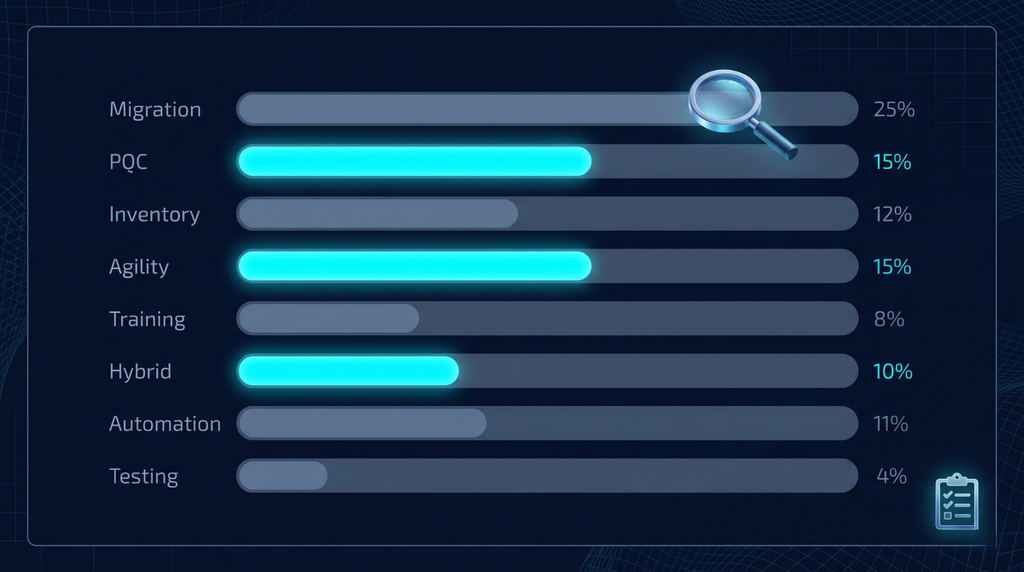
Procurement teams need numbers they can defend. The table below offers a weighted scorecard you can adapt. Weights reflect a regulated enterprise planning for a 5 to 10 year horizon.
| Evaluation Area | Weight | What to Verify |
|---|---|---|
| Core key lifecycle and HSM support | 15% | Rotation, destruction, FIPS 140-3 hardware, dual control |
| PQC algorithm coverage | 15% | ML-KEM, ML-DSA, SLH-DSA, roadmap for new standards |
| Cryptographic agility | 15% | Policy-driven algorithm swaps without code changes |
| Hybrid encryption support | 10% | Classical plus PQC in tunnels, signing and key wrapping |
| Governance and audit | 15% | Policy engine, immutable audit logs, compliance reports |
| Integration and coverage | 10% | Web, mobile, server, device, cloud and legacy support |
| Availability and operations | 10% | Failover, SLAs, incident response, support model |
| Commercial terms and exit options | 10% | Pricing clarity, data portability, no lock-in |
Notice that PQC coverage, agility and hybrid support together carry 40 percent. That is intentional. In 2026, these are the areas that separate a future-proof investment from a stopgap.
How to use the scorecard
First, score each vendor from 1 to 5 in every area. Next, multiply by the weight. Finally, review the lowest-scoring areas and ask whether they are fixable by roadmap or fundamental to the architecture. Importantly, a vendor who scores high overall but fails on agility is often a bigger risk than one who scores slightly lower but adapts easily.
Governance: The Capability That Decides Whether Migration Succeeds
Ask a CTO why cryptographic migrations stall, and the answer is rarely the algorithm. It is visibility. Teams cannot migrate what they cannot see.
Discovery and inventory
Before replacing anything, you need to know where cryptography lives. A PQC governance platform should help build a cryptographic inventory covering certificates, libraries, protocols, key stores and dependencies. Without this map, a PQC migration becomes guesswork.
A policy engine that enforces, not just documents
Many tools record policy in a spreadsheet and hope teams follow it. A real PQC policy engine enforces rules automatically. For example, it can require hybrid key exchange for external traffic, block deprecated algorithms or demand stronger signing for financial approvals.
Audit logs that survive an audit
Regulators and internal auditors want proof. Therefore, PQC audit logs should record who used which key, which algorithm applied, what policy allowed it and when it happened. Tamper-evident storage and exportable reports make PQC compliance reviews far less painful.
The overlooked insight: governance is the product
Many buyers treat governance as a reporting add-on. In practice, it is the part that determines whether your migration finishes in 18 months or drifts for five years. A vendor with excellent algorithms but weak governance leaves you with strong math and no control.
From Keys to Coverage: What an Enterprise-Grade PQC Suite Should Protect
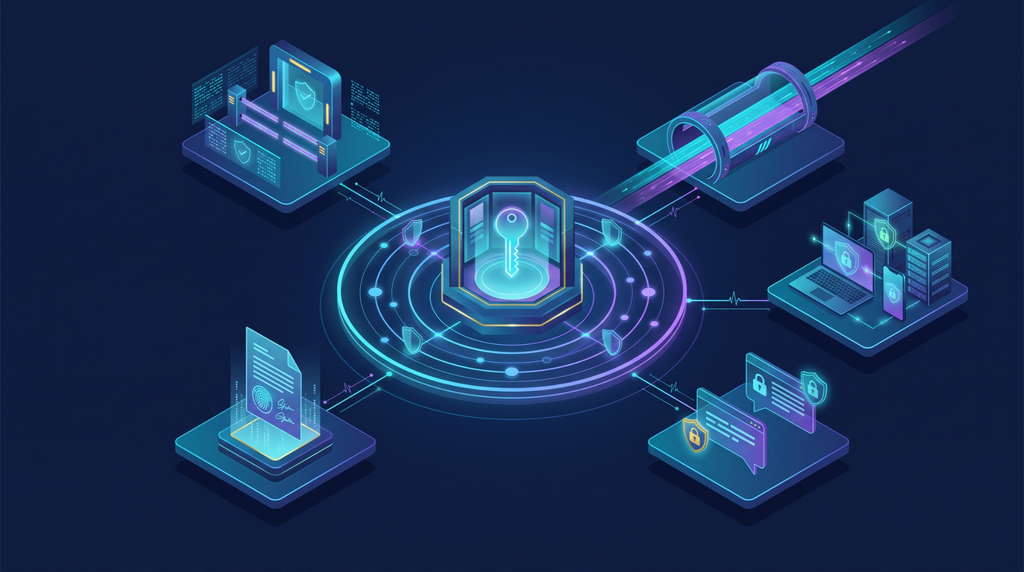
A key manager alone cannot secure an enterprise. The strongest vendors offer a PQC suite for enterprise quantum-safe security, where key management connects to the places keys are actually used. Let us walk through the main surfaces.
Gateways and policy enforcement
A quantum-safe gateway for cryptographic policy enforcement sits between users, applications and services. It terminates connections, applies PQC and hybrid algorithms and enforces rules consistently. Because it centralizes control, teams can upgrade protection without touching every legacy application.
Tunnels and remote access
Remote workforces and branch offices depend on VPN-style connections. A PQC tunnel protects this traffic against harvest-now, decrypt-later collection. Likewise, quantum-safe remote access and tunnel security ensures that contractors and employees reach internal systems over channels that will not become readable in the future.
Web, mobile, server and device security
Enterprises need quantum-resistant security for web, mobile, server and devices. Mobile apps, IoT endpoints and employee laptops each carry their own keys and certificates. Consequently, PQC device security must include identity, firmware trust and certificate lifecycle, not only encryption.
Signing and approval workflows
Digital signatures prove that a contract, release or payment is authentic. Many signatures must stay valid for ten years or more, which makes them especially exposed to future forgery. A PQC solution for secure signing and approval workflows protects these records with quantum-safe signatures and captures who approved what, and when.
Collaboration security
Documents, chats and file sharing hold sensitive strategy and customer data. PQC collaboration security applies quantum-safe protection to this daily traffic, an area many migration plans overlook.
Where QuantumVault Fits in Your Vendor Evaluation
Every criterion above points toward one conclusion. Buyers need a platform that treats key management, policy and enforcement as one connected system. This is the design thinking behind QuantumVault.
QuantumVault is a quantum-safe security platform with cryptographic agility, built for enterprises that must move from classical to post-quantum cryptography in controlled stages. Instead of selling a standalone key store, it brings PQC key management, a PQC gateway, PQC tunnel security, signing workflows and governance under one policy layer.
How QuantumVault maps to the scorecard
- PQC and hybrid coverage: Supports hybrid encryption that pairs classical and quantum-resistant algorithms, so teams can transition without losing compatibility.
- Cryptographic agility: Algorithm choices are driven by policy, which lets security teams update protection centrally as standards evolve.
- Governance: The PQC policy engine and PQC audit logs give CTOs and compliance leads a single source of truth for who used what, and under which rule.
- Coverage: Gateway, tunnel, device, collaboration and signing capabilities extend protection beyond stored keys into the quantum-safe network and quantum-safe access layers.
- Regulated use: Built for post-quantum cryptography for regulated enterprises, with reporting that supports PQC compliance conversations.
Importantly, the aim is not to replace every tool you own on day one. It is to give you a governed path, so each system moves to quantum-safe protection in the order your risk demands.
A Practical Use Case: Two Vendors, One Regulated Bank
Theory is useful, but procurement decisions happen in specific situations. Consider this illustrative scenario.
A mid-sized financial institution has two finalists for its new key management service. Vendor A offers excellent HSM integration, strong cloud connectors and a competitive price. Vendor B scores slightly lower on price but offers PQC key management, hybrid TLS and a policy engine that can change algorithms centrally.
On paper, Vendor A wins by a small margin. Then the team runs three stress tests.
- Algorithm swap test. The team asks each vendor to move a payment API from RSA to a hybrid scheme. Vendor A needs application code changes across eleven services. Vendor B changes a single policy.
- Audit test. An internal auditor requests proof of which keys signed last quarter’s loan approvals. Vendor A exports raw logs that need manual correlation. Vendor B produces a mapped report in minutes.
- Exit test. Procurement asks how keys and policies could be exported if the contract ended. Vendor A offers a proprietary format. Vendor B supports open standards.
After these tests, Vendor B’s lifetime cost and risk profile look far better. The lesson is simple. Always test agility, audit and exit during vendor evaluation, because a feature list never shows how a platform behaves under change.
Questions to Put in Your RFP
A good RFP forces specific answers. Use these questions to separate real capability from marketing.
Cryptography and standards
- Which NIST PQC algorithms do you support today, and in which products?
- How do you implement hybrid crypto, and can customers choose the combination?
- What is your process for adding or retiring an algorithm?
- Which components hold third-party validations, and which are pending?
Governance and compliance
- How does your PQC policy engine enforce rules, and can it block non-compliant usage?
- What do your PQC audit logs capture, and how are they protected from tampering?
- Which compliance frameworks do your reports support?
Architecture and operations
- Can we deploy on-premises, in the cloud or in a hybrid model?
- What are your failover times and tested recovery procedures?
- How do you handle key export, portability and contract exit?
Migration support
- Do you provide cryptographic discovery and inventory?
- What does a phased PQC rollout look like for an organization our size?
- What professional services support our team during the first year?
Furthermore, require written answers and ask for reference customers in your industry. Vague replies on algorithms or agility are themselves a data point.
Red Flags That Should Slow Your Decision
Experienced buyers learn to spot warning signs early. Watch for these patterns.
- “Quantum-ready” with no algorithm list. The phrase means little without named standards and validation status.
- Hard-coded algorithms. If swapping one requires a software release, agility is missing.
- No hybrid option. A pure switch to new algorithms is risky for compatibility and trust.
- Governance as an afterthought. Weak logging and policy tools turn migration into manual work.
- Proprietary key formats. These increase lock-in and complicate exit.
- Roadmap-only PQC. Promises are fine, but production capability matters more than slides.
In contrast, vendors who answer these topics openly, including their limitations, tend to be more reliable partners.
Building Your PQC Rollout Plan After Selection
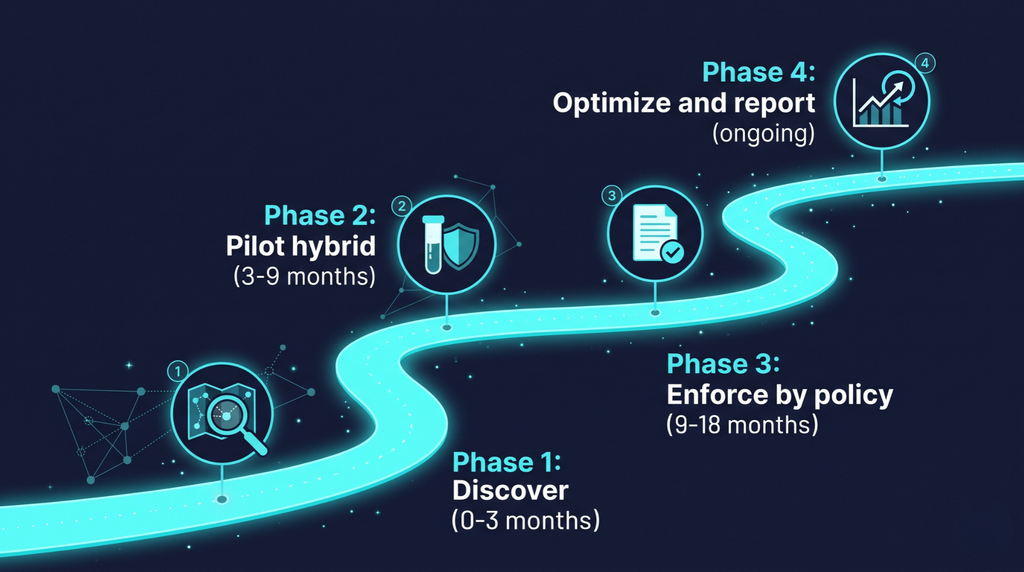
Choosing the vendor is only the midpoint. A strong PQC rollout turns the decision into measurable progress.
Phase 1: Discover and prioritize (months 0 to 3)
Inventory cryptographic assets and rank them by data sensitivity and shelf life. Prioritize systems that protect long-lived data, since those face the highest harvest-now risk.
Phase 2: Pilot with hybrid protection (months 3 to 9)
Start with a contained, high-value path such as an external API, a remote access tunnel or a signing workflow. Apply hybrid encryption, measure performance and capture lessons.
Phase 3: Enforce through policy (months 9 to 18)
Expand coverage by writing policies instead of rewriting applications. Use the PQC governance layer to block deprecated algorithms and track adoption.
Phase 4: Optimize and report (ongoing)
Review audit logs, update policies as standards evolve and report progress to the board. Because a cryptographic agility platform keeps change cheap, later algorithm updates become routine instead of disruptive.
Frequently Asked Questions
1. What is KMS vendor selection?
KMS vendor selection is the process of comparing key management providers against technical, security, compliance and commercial criteria. It ends with a vendor that fits your current needs and your long-term cryptographic roadmap.
2. Why does PQC matter when choosing a key management service?
Quantum computers could break RSA and elliptic curve cryptography, which protect most keys today. Choosing a PQC-capable KMS now helps you avoid a forced, costly migration later.
3. What is crypto-agility, and why is it important?
Crypto-agility is the ability to change cryptographic algorithms without rebuilding applications. It matters because standards evolve, and agile platforms let you adapt through policy changes.
4. What is hybrid encryption?
Hybrid encryption combines a classical algorithm with a post-quantum algorithm. Security holds as long as either one remains unbroken, which makes it a safe transition strategy.
5. Which NIST standards should a quantum-safe KMS support?
At minimum, look for ML-KEM (FIPS 203), ML-DSA (FIPS 204) and SLH-DSA (FIPS 205). Also ask how the vendor plans to support additional algorithms such as HQC.
6. How is a KMS different from an HSM?
An HSM is secure hardware that protects keys. A KMS is the management layer that controls creation, access, rotation and auditing, often using HSMs underneath.
7. How long does a PQC migration take?
Timelines vary by size and complexity. Many enterprises plan 18 to 36 months for meaningful coverage, with phased rollouts starting at the highest-risk systems.
8. What is harvest now, decrypt later?
It is an attack strategy where adversaries store encrypted data today and decrypt it when quantum computers become capable. Long-lived sensitive data is the main target.
9. What should procurement teams ask in a KMS RFP?
Ask about supported algorithms, hybrid options, policy enforcement, audit logging, validation status, exit terms and migration services. Request written answers and industry references.
10. How do PQC audit logs support compliance?
They provide verifiable records of key use, algorithms and policies. Auditors can then confirm that cryptographic controls match regulatory and internal requirements.
11. Can I adopt PQC without replacing existing systems?
Often, yes. A gateway and policy layer can add quantum-safe protection in front of legacy systems, which reduces the need to modify each application.
12. What makes a PQC governance platform different from a standard KMS?
It adds cryptographic inventory, policy enforcement and migration tracking. As a result, teams can manage the entire transition, not just store keys.
13. Who should own the KMS decision in an organization?
Typically, the CTO or CISO leads, with procurement, compliance and infrastructure teams involved. Cross-functional ownership prevents gaps between security needs and commercial terms.
Conclusion: Choose the Vendor That Can Change With You
Strong KMS vendor selection is about more than matching features. It is about picking a partner whose platform can absorb the biggest cryptographic shift in a generation. Three insights should guide your final decision.
First, quantum risk is a present-day data collection problem, so timelines matter now. Second, crypto-agility and governance often decide whether a migration succeeds, even more than the algorithms themselves. Third, the best KMS comparison tests behavior under change, through algorithm swaps, audits and exit scenarios.
If you want a platform designed around these realities, QuantumVault offers a PQC suite that unites PQC key management, gateway enforcement, secure tunnels, signing workflows and governance in one quantum-safe security platform. It gives CTOs and procurement leaders a controlled path from classical to quantum-resistant protection, with the audit evidence to prove it.
Ready to put your shortlist through a real evaluation? Evaluate KMS vendors with a structured scorecard, or Schedule a Consultation with the QuantumVault team to map your cryptographic estate and plan your first rollout phase.