Picture a Tuesday afternoon. Your protocol holds hundreds of millions in user funds, your audit report is framed on the wall, and your team is deep in sprint planning. Meanwhile, a transaction lands on-chain that looks ordinary for about two seconds. Then your liquidity pool starts bleeding, and by the time anyone opens a chat window, the money is gone.
That scenario is not hypothetical anymore. Recent DeFi incidents show how quickly a clean-looking protocol can turn into a crime scene. Consequently, real-time threat monitoring has moved from a nice extra to the core of any serious security strategy. In this guide, we will unpack why attacks move so fast, where traditional defenses fall short, and how live detection plus automated response protects both treasuries and trust.
Along the way, we will look at real numbers, real attack patterns, and a practical playbook you can start using this quarter. So, let’s dive in.
Why DeFi Losses Keep Climbing Despite More Audits
First, let’s look at the scoreboard. According to industry trackers, DeFi hacks produced more than $840 million in losses during the first five months of 2026. Moreover, April alone saw over $600 million stolen, driven largely by two huge incidents: the KelpDAO exploit at roughly $292 million and the Drift Protocol breach at roughly $285 million. In addition, the second quarter set a record for incident count, with about 70 exploits in a single quarter.
Now, here is the uncomfortable part. Most of these protocols had been audited. Many had experienced teams and healthy budgets. Nevertheless, attackers still found a way in.
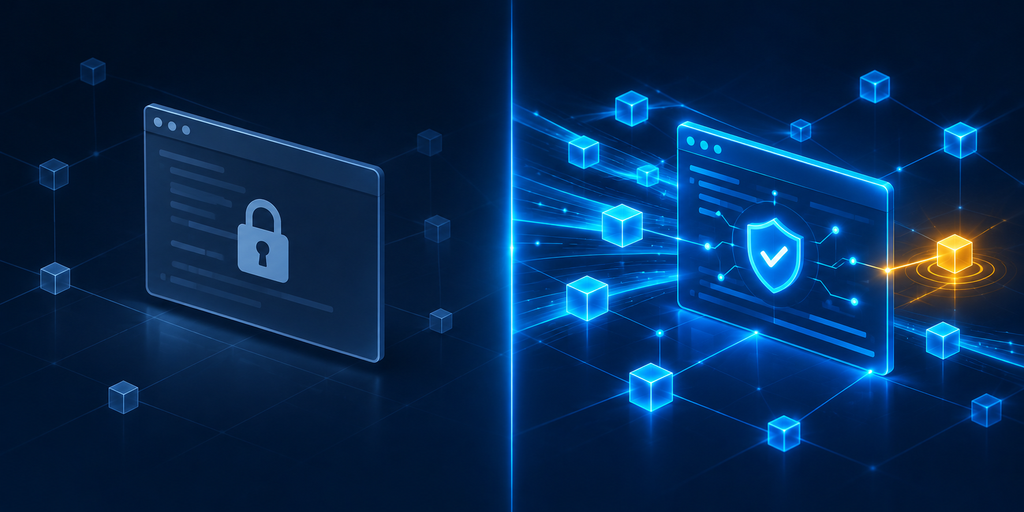
Why does this keep happening? Simply put, an audit is a snapshot. It tells you that your code looked sound on a specific day, under specific assumptions. However, DeFi is a moving system. New integrations arrive, liquidity shifts, oracle feeds change, and admin keys get used. As a result, risk is created every hour, long after the audit report is signed.
Furthermore, the nature of attacks has shifted. Analysts tracking 2026 incidents report that stolen keys and credential theft account for roughly 72% of losses, rather than classic smart contract bugs. Therefore, a protocol can have flawless Solidity and still lose everything to a compromised signer. In other words, you cannot audit your way out of a runtime problem.
That is precisely where real-time threat monitoring enters the picture. Instead of asking “was this code safe last month,” it asks “is anything dangerous happening right now.” That change in question changes everything.
What Real-Time Threat Monitoring Actually Means in DeFi
Before going further, let’s define the term clearly, because it gets used loosely. Real-time threat monitoring is the continuous observation of on-chain activity, contract state, and related signals, paired with immediate analysis and alerting. In practice, it watches transactions as they enter the mempool and as they confirm, then flags behavior that looks like an attack.
Importantly, this differs from a dashboard you check once a day. A dashboard shows history. Live monitoring, on the other hand, reacts to events within seconds. Consequently, it can catch the early steps of an exploit rather than writing the post-mortem afterward.
So what does a capable system actually watch? Typically, it tracks several layers at once:
- Transaction behavior: unusual call sequences, sudden large transfers, and abnormal function usage.
- Contract state: sharp changes in reserves, balances, or collateral ratios.
- Privileged actions: admin changes, upgrades, role grants, and signer activity.
- Price and oracle data: feed deviations, stale updates, and suspicious liquidity moves.
- Fund movement: outflows toward newly funded wallets or known laundering paths.
Additionally, good monitoring does not just list events. It scores them, correlates them, and decides which ones deserve a human’s attention. After all, a thousand raw alerts help nobody. A handful of accurate ones save the protocol.
The Speed Problem: Attacks Finish Before Humans React
Now let’s talk about the single biggest reason live detection matters: speed. Reports on the April 2026 incidents describe how fast modern attacks execute. For example, the Drift drain was described as moving roughly $285 million in about ten seconds. Meanwhile, the KelpDAO attacker reportedly consolidated stolen funds in under two hours.
Think about what that means for your response process. A typical incident workflow looks like this: someone notices a strange alert, posts in a channel, waits for a colleague, convenes a call, checks a block explorer, and finally debates whether to pause the protocol. Realistically, that sequence takes many minutes, and sometimes hours. Unfortunately, the attack window may be only seconds.

Flash loans make the gap even wider. A flash loan is an uncollateralized loan that must be borrowed and repaid within one transaction. Therefore, an attacker can access enormous capital, manipulate a price, extract value, and repay everything inside a single block. The January 2026 Makina Finance exploit, for instance, used a flash loan combined with oracle manipulation to pull out roughly $4 million in one go.
Consequently, human-speed response is structurally too slow for the fastest attack types. You need detection that operates at machine speed, and ideally response that does too. Otherwise, you are bringing a stopwatch to a lightning strike.
How Live Detection Stops Common DeFi Attack Patterns
Let’s make this concrete. Different attacks leave different footprints, and real-time threat monitoring is designed to recognize them early. Below are the patterns that cause the most damage.
Flash Loan Attacks
Flash loan attacks often start with a recognizable preparation phase. For example, an attacker funds a fresh wallet, deploys a helper contract, and then calls a protocol with an unusually large borrowed position. Accordingly, monitoring rules can flag a brand-new address interacting with high-value functions at the same moment a massive flash loan appears. Even a few seconds of warning can matter.
Oracle Manipulation
Next, consider oracle manipulation. Here, the attacker pushes a price feed away from reality, often by trading heavily in a thin market, and then exploits the distorted price. Fortunately, this leaves visible signals. A live system can compare a feed against independent sources, watch for sudden deviations, and alert when a price moves in a way that liquidity cannot justify. As a result, a lending pool can be paused before bad debt piles up.
Compromised Keys and Privileged Abuse
Meanwhile, stolen keys are now the leading loss driver. These attacks are tricky because the transaction may be technically valid, since it carries a real signature. However, behavior still gives it away. A sudden ownership transfer, an unexpected upgrade, or a large withdrawal from a treasury at an odd hour all deviate from normal patterns. Therefore, monitoring privileged actions gives you a chance to react even when the signature checks out.
Bridge and Cross-Chain Exploits
Finally, bridges remain a high-risk surface, since they concentrate value and connect different trust assumptions. Unusual mint events, mismatched supply across chains, and abnormal message flows are all detectable. Consequently, watching both sides of a bridge in parallel can reveal trouble that a single-chain view would miss.
From Alert to Action: Why Automated Response Changes the Outcome
Detection alone is only half the story. After all, an alert that nobody reads in time is just a notification of your own loss. For that reason, the most effective setups combine live monitoring with automated response.
Here is the logic. Suppose a monitoring engine detects a pattern that matches an active exploit. Instead of waiting for a human to confirm, it triggers a predefined protective action, such as pausing a contract, freezing a market, or halting withdrawals. This approach is often called an emergency stop or circuit breaker. In effect, it buys time.
That time is valuable for several reasons. First, it stops the bleeding while the team investigates. Second, it prevents attackers from repeating the exploit across multiple pools. Third, it protects user confidence, since users see that the protocol defended itself rather than collapsing. Therefore, the financial benefit goes well beyond the funds saved in a single incident.
Of course, automation needs guardrails. A pause that fires on a false alarm creates its own cost, because users get locked out and trust takes a hit. Consequently, good systems use tuned thresholds, multi-signal confirmation, and clear escalation paths. In other words, the goal is a fast response that is also a smart response.

This is the idea behind SecureWatch, the AI-driven on-chain monitoring product from SecureDApp. It watches protocol activity continuously and pairs detection with AutoPause, a response mechanism designed to halt suspicious activity quickly instead of waiting on manual approval. Because it correlates signals rather than reacting to single events, it aims to cut noise while keeping response times short.
The Real Cost Math: Monitoring Versus a Single Incident
Next, let’s talk about money, because ultimately this is a business decision. Many teams hesitate to invest in monitoring since it feels like an ongoing expense with no visible payoff. However, the math looks very different when you compare it with the cost of one serious exploit.
Consider the direct losses first. Even a “small” incident in the low millions can wipe out a protocol’s runway. In contrast, a large one can end the project. Beyond that, there are indirect costs that rarely show up in headline numbers:
- Liquidity flight: users withdraw, and total value locked drops sharply.
- Token price damage: confidence erodes, and the token often falls.
- Investigation and legal costs: forensic work, counsel, and regulator conversations add up.
- Recovery expenses: compensating users, rebuilding, and re-auditing take months.
- Lost momentum: partnerships stall and growth plans freeze.
Additionally, there is a compounding effect. When one major protocol is hit, the damage often spreads. For example, analysts noted that the April incidents contributed to billions in lost DeFi total value locked as users pulled funds across the ecosystem. Thus, a failure at one project can hurt its neighbors too.
Now compare that with the cost of continuous monitoring. It is a predictable operating expense, typically small relative to the assets it protects. Moreover, it often pays for itself the first time it catches a probe, a suspicious test transaction, or a misconfiguration before it becomes a loss. So, framed correctly, monitoring is not overhead. It is insurance that also happens to give you visibility.
Layered Defense: Where Monitoring Fits With Audits and Controls
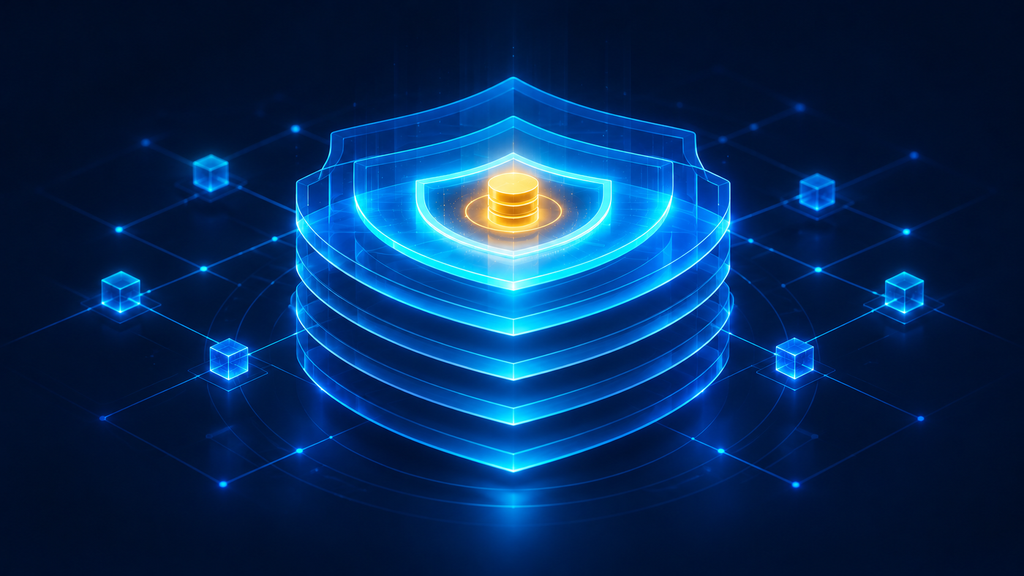
At this point, you might wonder whether live monitoring replaces audits. It does not, and treating it that way would be a mistake. Instead, the strongest security posture layers several defenses, each covering gaps the others leave.
Here is how the layers fit together:
- Secure design and audits: reduce the number of bugs that ship. They remain essential, since a cleaner codebase means fewer emergencies.
- Access control and key hygiene: use multisigs, hardware signers, timelocks, and least-privilege roles. These limit how much damage one stolen credential can do.
- Safe oracle design: combine time-weighted pricing, bounds, and multiple sources to reduce manipulation risk.
- Real-time threat monitoring: watch everything live and catch what slipped through the earlier layers.
- Automated and rehearsed response: pause, contain, and communicate fast.
- Forensics and recovery: trace funds and support investigations when something still goes wrong.
Notice the pattern. Each layer assumes the previous one can fail. That assumption is healthy, because in security, something eventually does fail. Therefore, monitoring acts as the safety net beneath the other controls.
Similarly, post-incident capability matters. If attackers do get funds out, quick tracing improves the odds of freezing or recovering assets. In that spirit, SecureDApp’s wider toolset includes Solidity Shield for smart contract auditing and SecureTrace for forensic tracing, so teams can cover prevention, live defense, and investigation within one security approach.
A Practical Playbook for Deploying Real-Time Threat Monitoring
Knowing the theory is useful, but execution is what protects funds. So, here is a step-by-step playbook your team can follow.
Step 1: Map Your Attack Surface
Start by listing every contract, admin role, oracle dependency, bridge route, and treasury wallet you operate. Then rank each one by the value at risk. Unsurprisingly, you will protect the biggest exposures first. Additionally, this exercise often reveals forgotten permissions, which are free wins.
Step 2: Define What “Abnormal” Means for You
Every protocol has a normal rhythm. Withdrawal sizes, swap volumes, and admin activity all follow patterns. Consequently, you should document baselines and set thresholds that reflect them. For example, a withdrawal ten times larger than your usual maximum deserves attention even if it looks valid.
Step 3: Choose Response Tiers
Next, decide what happens at each severity level. Low-severity signals might notify the on-call engineer. Medium ones might page the whole security group. Critical ones, such as a confirmed exploit pattern, might trigger an automatic pause. Because these decisions are hard to make during a crisis, make them now.
Step 4: Protect the Response Path
Importantly, the pause mechanism itself must be secure. Who can trigger it, and who can reverse it? If one compromised key can disable your emergency stop, you have created a new weak point. Therefore, use role separation and clear governance around pausing.
Step 5: Rehearse and Tune
Finally, test your setup. Run tabletop drills based on real incidents, such as a flash loan sequence or a signer compromise. Then measure how long detection and response took, and improve the weak spots. Moreover, review false positives monthly, since tuning keeps alerts trustworthy over time.
Common Mistakes Teams Make With Live Monitoring
Even well-funded teams stumble here, so let’s review the most frequent errors.
The first mistake is alert overload. When a system fires hundreds of low-quality alerts daily, people stop reading them. Consequently, the one critical alert gets buried. The fix is correlation and prioritization, not more notifications.
The second is monitoring only the contracts while ignoring the humans behind them. Since key theft drives so many losses, signer behavior, deployer wallets, and admin transactions deserve equal attention.
Third, some teams detect threats but have no authority to act. An engineer sees an exploit in progress yet cannot pause anything without three approvals. As a result, the attack finishes during the approval chain. Clear, pre-authorized response rules solve this.
Fourth, teams often monitor a single chain while their risk spans several. Because attackers love cross-chain seams, coverage should follow your actual deployment footprint.
Lastly, many forget about the quiet period. An attacker may probe your protocol for days before striking. Therefore, treat unusual test transactions as intelligence, not noise. Early probes are often your best warning.
What Strong Monitoring Looks Like in 2026 and Beyond
Looking ahead, the direction is clear. Attackers are getting faster, better funded, and more organized. Meanwhile, DeFi keeps growing, which means more value, more integrations, and more surface to defend. Consequently, protocols that rely on periodic reviews alone will fall behind.
Several trends are shaping what good looks like. First, AI-assisted detection is improving at separating real exploits from harmless oddities, which reduces false alarms. Second, response is becoming more automated, since human reaction time cannot match machine-speed attacks. Third, security is shifting from a launch-time checkbox to a continuous discipline, similar to how uptime monitoring became standard for web services.
Additionally, users and institutions are paying attention. Funds, treasuries, and enterprise participants increasingly ask what live protections a protocol runs before they deposit. Therefore, visible, well-run monitoring can become a competitive advantage, not just a defensive cost. In short, the protocols that earn trust fastest will be those that can show how they defend themselves in real time.
Conclusion: Make Real-Time Threat Monitoring Part of Your Core Stack
To summarize, DeFi losses in 2026 have shown that audits alone cannot protect a live protocol. Attacks move in seconds, keys get stolen, and oracles get manipulated. Therefore, real-time threat monitoring is the layer that watches the system as it actually runs, catches the early signs of an exploit, and gives your team a chance to act before funds disappear.
Moreover, pairing detection with automated response closes the gap between alert and action. That is the thinking behind SecureWatch and its AutoPause capability: see the threat quickly, stop it quickly, and keep users’ funds where they belong. Combined with strong audits, careful key management, and forensic readiness, it forms a security posture that matches the speed of modern attackers.
So, ask yourself one honest question today. If an exploit started in the next ten seconds, would your protocol notice, and would it respond before the money moved? If the answer is uncertain, now is the time to fix it. Reach out to the SecureDApp team to see how SecureWatch can sit in front of your protocol before the next attack arrives.
Frequently Asked Questions
1. What is real-time threat monitoring in DeFi?
Real-time threat monitoring is the continuous, automated observation of on-chain activity, contract state, and privileged actions to detect attacks as they happen. Instead of reviewing history, it flags suspicious behavior within seconds, so teams can respond before an exploit drains funds.
2. Why aren’t smart contract audits enough to prevent DeFi losses?
Audits capture a snapshot of code at one moment in time. However, risk changes constantly through new integrations, oracle shifts, and key usage. In fact, stolen keys and credential theft drove the majority of 2026 losses, which no code audit can fully prevent. Live monitoring covers that runtime gap.
3. Can real-time monitoring stop flash loan attacks?
Often, yes, at least partially. Flash loan attacks leave patterns such as fresh wallets, oversized borrowed positions, and sudden price deviations. Detecting these signals quickly and triggering an automatic pause can limit or block the damage. Because the attack happens inside one transaction, speed and automation are critical.
4. What is AutoPause and how does it reduce financial losses?
AutoPause is a response capability in SecureWatch that halts suspicious protocol activity automatically when a threat pattern is detected. By acting at machine speed instead of waiting for manual approval, it buys the team time to investigate, which can prevent repeated drains and reduce total losses.
5. How do I avoid false alarms from a monitoring system?
Start by documenting your protocol’s normal behavior and setting thresholds around it. Then use correlation, so several signals must align before a critical action fires. Finally, review false positives regularly and tune your rules. This keeps alerts accurate and prevents unnecessary pauses.