Every Web3 founder eventually hears the same advice: get your code audited before launch. That advice is correct. However, it tells only half of the story. Smart contract audits show how your code behaves on the day a reviewer reads it. They cannot show what an attacker will try next month, next quarter, or at 3 a.m. on a holiday weekend.
That gap explains a pattern the industry keeps repeating. Protocols pass their reviews, launch with confidence, and still lose funds. Meanwhile, the teams that avoid the worst outcomes usually share one habit. They pair smart contract audits with real-time threat monitoring, and they treat both as ongoing work rather than a launch checkbox.
In this guide, we compare the two approaches honestly. First, we look at what each one does well. Next, we examine where each one falls short. Finally, we show how SecureDApp’s Solidity Shield and SecureWatch fit together into one practical security lifecycle.
Why Smart Contract Audits Still Matter for Web3
Let us start by giving smart contract audits the credit they deserve. Smart contract code is public, immutable in most cases, and directly responsible for user funds. Therefore, a single logic error can turn into a permanent loss. A careful review before deployment is the cheapest moment to catch that error.
What Strong Smart Contract Audits Cover
Good smart contract audits do far more than scan for known bugs. First, reviewers read the code line by line and compare it with the intended design. Second, they test edge cases that normal users never trigger. Third, they check access control, upgrade paths, and token math. As a result, the team receives a list of findings ranked by severity, along with fixes to apply.
In addition, smart contract audits force a team to explain its own design. Writing documentation for a reviewer often exposes weak assumptions before anyone looks at a single function. Consequently, the process improves the code even before the report arrives.
Why Smart Contract Audits Are Not Optional
Investors, exchanges, and users now expect an audit report before they trust a protocol. Moreover, an unaudited launch sends a clear signal that the team is willing to gamble with other people’s money. Because trust is the real currency of DeFi, skipping this step is rarely worth the saving.
Still, an audit report is not a guarantee. A clean report means that reviewers found nothing serious within the scope, the time, and the code version they were given. That sentence has three limits, and each one matters. Understanding them is the first step toward a stronger security model.
What Smart Contract Audits Cannot See
Smart contract audits are powerful, yet they are not all-seeing. Their limits do not reflect poor work by reviewers. Instead, they come from the nature of an audit itself. Let us walk through the three biggest blind spots.
A Snapshot in Time
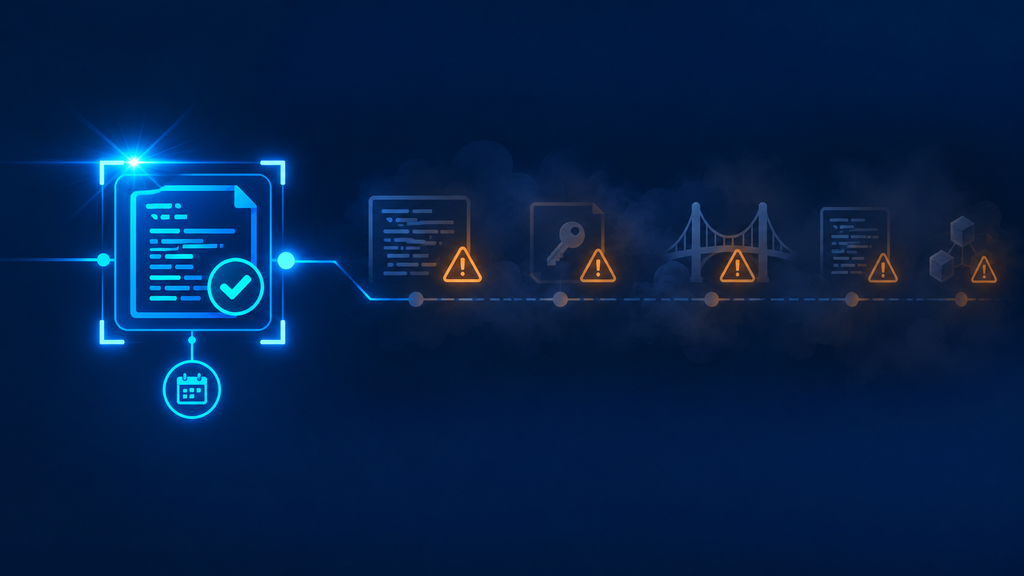
An audit examines one version of the code at one moment. However, protocols rarely stand still. Teams ship upgrades, add new pools, change parameters, and integrate new partners. Each change can introduce a new path that the original review never saw.
For example, a team might audit its core contracts in March and add a new vault in June. If the new vault interacts with the old contracts in unexpected ways, the March report says nothing about the risk. Therefore, the report ages quickly, even when the code looks unchanged from the outside.
Risks Outside the Code
Many modern losses do not start with a coding mistake at all. Industry data for the first half of 2026 shows a record number of incidents, with major losses tied to compromised keys, social engineering, and cross-chain configuration errors. In April 2026 alone, two attacks on large DeFi platforms, reported at roughly 285 million and 290 million dollars, were linked to those operational weaknesses rather than classic contract bugs.
Smart contract audits focus on contract logic. Consequently, they cannot fully cover a stolen signing key, a phished developer, or a misconfigured bridge setting. Those risks live in people, processes, and infrastructure. Even the best report cannot protect against them on its own.
Behavior That Emerges After Launch
Finally, some risks only appear once real money and real users arrive. Attackers study live protocols patiently. They test liquidity conditions, price feeds, and composability with other protocols. Moreover, they often combine several small weaknesses into one large exploit.
A reviewer working from a static codebase cannot predict every combination. By contrast, a system that watches live activity can notice when behavior starts to look wrong. That observation leads directly to the second layer of defense.
What Real-Time Threat Monitoring Does
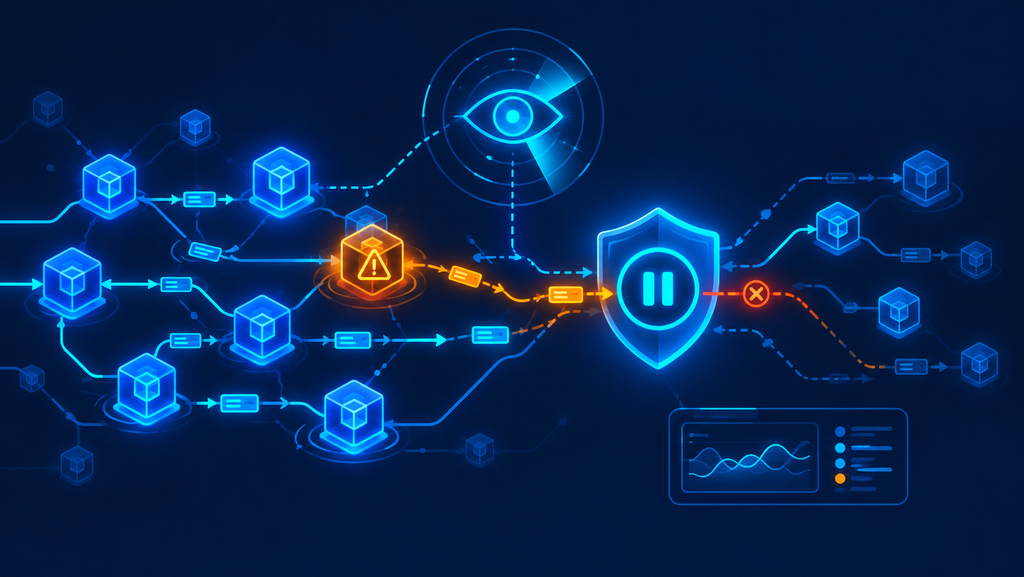
Real-time threat monitoring watches a protocol while it runs. Instead of reading code in a quiet room, it observes transactions, balances, and contract calls as they happen on-chain. In other words, audits ask whether the code is safe, while monitoring asks whether the protocol is behaving safely right now.
Watching Live On-Chain Behavior
Every exploit leaves a pattern. Funds move in unusual sizes, calls arrive in odd sequences, and new addresses interact with sensitive functions. Because blockchains are transparent, these signals are visible to anyone who knows where to look.
SecureWatch applies AI-driven on-chain monitoring to these signals. It tracks protocol activity continuously and flags behavior that departs from normal patterns. As a result, a team gains visibility that no manual process can match. Humans sleep, but a monitoring system does not.
From Alert to Action
Detection alone is not enough. A warning that arrives after the funds have left is only a report. Therefore, speed of response matters as much as accuracy of detection.
This is where SecureWatch’s AutoPause capability becomes important. When a pattern crosses a defined risk threshold, AutoPause can halt sensitive protocol functions before the attack finishes. Consequently, the team moves from reacting to a headline toward containing an incident in progress. Every minute that an exploit stays open increases the loss, so even a small head start can change the final number.
Where Monitoring Alone Falls Short
Real-time threat monitoring has limits too, and honest security planning admits them. Monitoring detects and contains, but it does not fix the underlying flaw. If a bug sits in the code, the team still has to patch it. Furthermore, a fast exploit that completes within a single transaction leaves very little time for any system to react.
Because of this, monitoring works best when the code is already as clean as possible. That requirement brings us back to audits. The two layers do not compete. Instead, each one covers the weakness of the other.
Smart Contract Audits vs Real-Time Threat Monitoring: A Direct Comparison
Now that we understand each layer, a side-by-side view makes the difference clear. The comparison below covers timing, focus, and the cost of missing each one.
When Each Layer Works
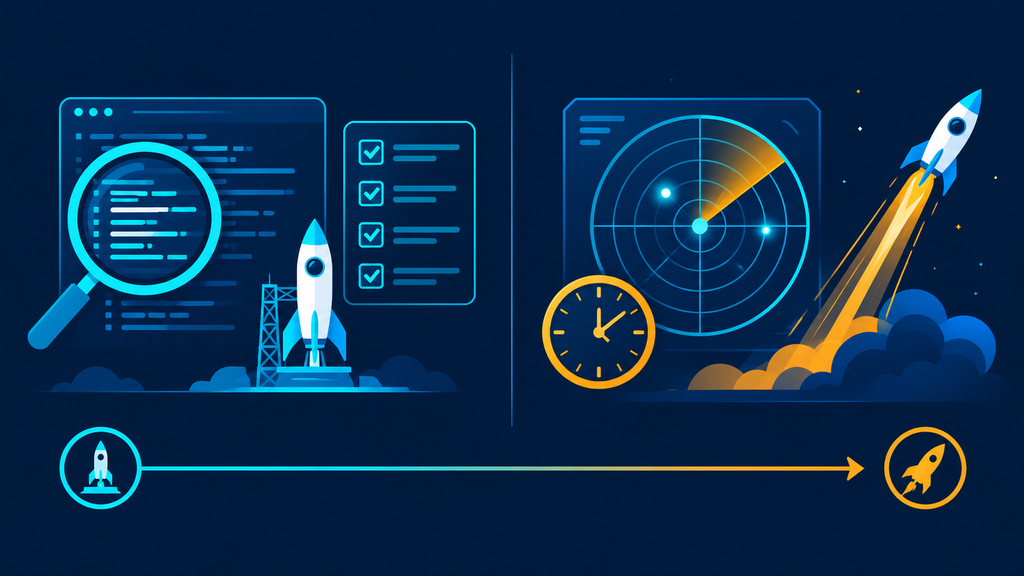
Smart contract audits work before deployment and again before each major upgrade. They are periodic by design. Real-time threat monitoring works after deployment, every second of every day. It is continuous by design.
Therefore, the two approaches cover different parts of the protocol timeline. Audits shape the starting point. Monitoring protects the journey that follows.
What Each Layer Finds
Smart contract audits find logic errors, unsafe patterns, weak access control, and arithmetic mistakes. Monitoring finds live anomalies, suspicious flows, abnormal call sequences, and early signs of an attack. In addition, monitoring can surface problems that originate outside the code, such as a compromised admin account acting in unusual ways.
Put simply, smart contract audits examine what the code could do. Monitoring watches what the protocol is doing. Both questions deserve an answer.
What Happens When You Skip Each One
Skipping smart contract audits raises the chance that a preventable bug reaches production. In contrast, skipping real-time threat monitoring raises the chance that an exploit runs to completion without anyone noticing. The first mistake invites the attack. The second mistake lets the attack succeed.
Consequently, a protocol with only audits has a strong door and no alarm. A protocol with only monitoring has an alarm and a weak door. Neither situation is comfortable for a team that manages user funds.
Real Incidents That Show Why One Layer Is Not Enough
Theory is useful, but real events make the argument concrete. The examples below come from publicly reported incidents. Figures differ slightly between trackers, so treat the amounts as approximate.
The Cetus Exploit
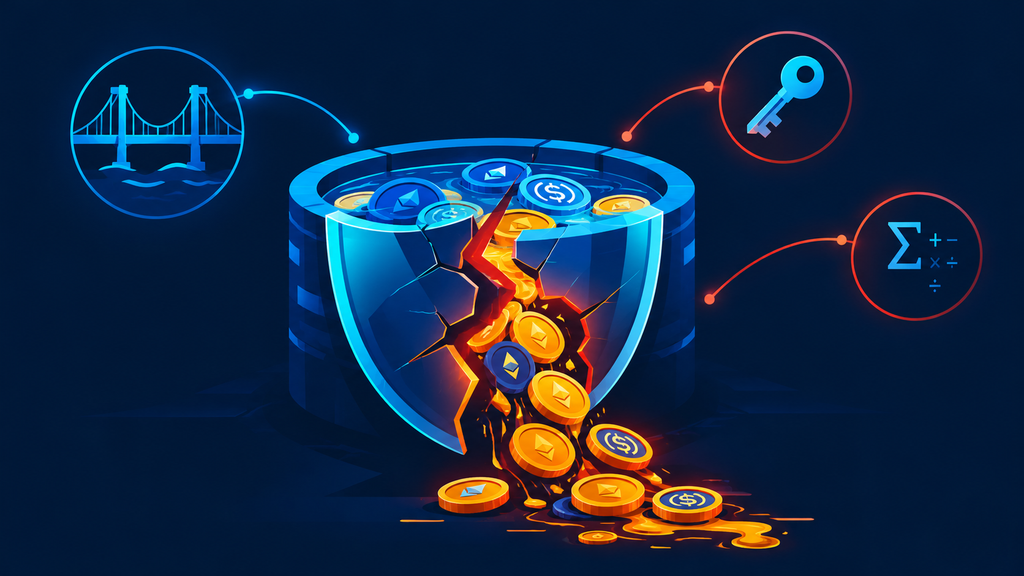
In May 2025, a leading decentralized exchange on the Sui network lost roughly 223 million dollars through a flaw in its pool math. The attacker drained liquidity quickly, and the team paused its contract in response. The network’s validators then froze about 162 million dollars of the stolen assets, while around 60 million dollars had already moved to Ethereum.
This case teaches two lessons. First, a single mathematical flaw can empty a protocol in minutes, which shows why careful pre-launch review matters. Second, the speed of the response decided how much stayed recoverable. Funds that crossed to another chain were far harder to reach. Therefore, the earlier a protocol can halt activity, the more it can save.
The Balancer V2 Exploit
In November 2025, older stable pool code in Balancer V2 suffered an exploit that cost more than 120 million dollars across several chains. The flaw involved a subtle rounding issue in swap calculations. Notably, the codebase had reportedly gone through multiple smart contract audits over the years, yet the weakness still reached production.
This incident shows why a clean report is not a permanent shield. Complex math, composability, and long-lived legacy code create corners that no single review can fully illuminate. Meanwhile, the attack unfolded across several networks within hours. A monitoring layer that spots abnormal swap behavior early could have helped teams act faster.
The 2026 Shift Toward Operational Attacks
Industry tracking for the first half of 2026 shows a record number of incidents, even though total losses stayed below the peak years. Analysts also describe a clear shift. Losses now come more often from compromised keys, privileged access, and cross-chain configuration errors than from isolated contract bugs.
This shift matters for your security plan. If attackers increasingly target people and infrastructure, then code review alone leaves a growing share of risk uncovered. Therefore, continuous monitoring becomes more valuable each year, not less.
How Solidity Shield and SecureWatch Work Together
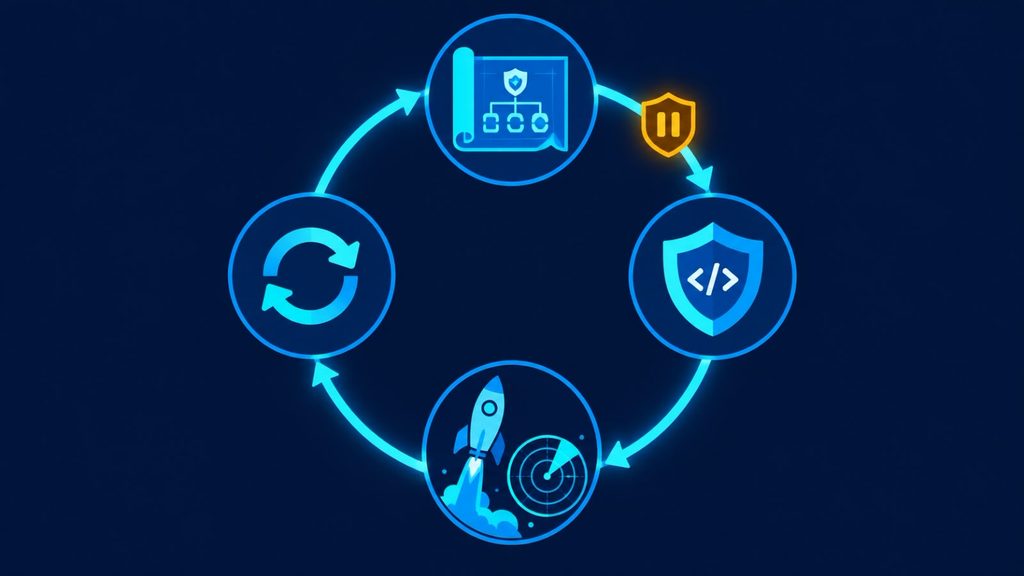
SecureDApp built its tools around this exact idea. Solidity Shield supports the smart contract auditing side of your lifecycle. SecureWatch supports the live monitoring side, with AutoPause as its containment mechanism. Together, they form a loop rather than two separate products.
Before Launch: Build on a Clean Foundation
Start with smart contract audits through Solidity Shield. Fix the findings, retest, and document the final state of the code. In this way, you enter production with fewer known weaknesses and a clear record of what was reviewed.
After Launch: Watch What Actually Happens
Next, connect SecureWatch to the deployed contracts. It observes live activity and learns what normal looks like for your protocol. As a result, unusual behavior stands out quickly, whether it comes from a code flaw, a compromised key, or a manipulated market.
During an Incident: Contain First, Investigate Second
When risk crosses your chosen threshold, AutoPause can halt sensitive functions. This step buys time for the team to investigate calmly. Afterward, the lessons from the incident feed back into the next round of audits. Consequently, each cycle leaves the protocol stronger than before.
A Practical Security Lifecycle for Web3 Teams
Many teams ask how to turn this idea into a routine. The lifecycle below keeps the process simple and repeatable.
Phase One: Design and Threat Modeling
Begin with a written threat model. List the assets at risk, the privileged roles, and the external dependencies. Moreover, decide in advance which events should trigger an emergency pause. Clear rules made in calm moments prevent confusion during a crisis.
Phase Two: Audit and Remediation
Run smart contract audits on every contract in scope. Then fix every high and medium finding, and retest the changes. Additionally, freeze the audited version and record its hash, so nobody confuses it with a later build.
Phase Three: Monitored Launch
Deploy with monitoring already active. Do not wait for the first scare. Set alert thresholds for large withdrawals, unusual privileged calls, and abnormal price movements. Furthermore, test your pause procedure on a testnet so that the team knows exactly what happens when it triggers.
Phase Four: Continuous Review
After launch, repeat the cycle. Every upgrade deserves fresh smart contract audits. Every new integration deserves a fresh threat model. Meanwhile, review monitoring alerts weekly, even when nothing serious happened, because near misses reveal where your defenses need tuning.
How Different Protocol Types Should Balance Both Layers
Not every project faces the same risk, so the balance between the two layers should shift with your design. Still, no protocol should drop either layer completely. Let us look at three common cases.
Lending and Borrowing Protocols
Lending platforms hold large pools of collateral and depend on price feeds. Therefore, smart contract audits should focus on liquidation logic, oracle handling, and interest math. At the same time, real-time threat monitoring should watch for sudden collateral swings, abnormal borrowing spikes, and strange oracle updates. Because these protocols connect to many others, a problem elsewhere can reach them within minutes.
Decentralized Exchanges and Liquidity Pools
Exchanges live and die by their pricing math. As a result, smart contract audits should test swap logic, fee calculation, and rounding behavior under extreme conditions. Meanwhile, real-time threat monitoring should track unusual swap sequences, repeated small trades that drain a pool slowly, and large withdrawals from liquidity providers. These patterns often appear before the final, largest transaction lands.
Bridges and Cross-Chain Applications
Bridges move value between networks, so they attract some of the most determined attackers. For this reason, smart contract audits should cover message verification, signer thresholds, and configuration settings. In addition, real-time threat monitoring should watch minting and release events on both sides of the bridge. If the numbers on each chain stop matching, the team needs to know immediately.
Who Owns Security Inside Your Team
Technology alone does not create a secure protocol. People and ownership matter just as much. Therefore, assign clear responsibility for each layer before launch.
Developers should own the response to every audit finding. Security leads should own the monitoring rules and alert thresholds. Meanwhile, founders and risk heads should own the pause policy, because pausing a protocol is a business decision as well as a technical one.
Moreover, rehearse the whole chain at least twice a year. Run a tabletop exercise where an alert fires at midnight, and see who answers. If the answer is unclear, the plan needs work. Consequently, the next real alert will meet a prepared team instead of a confused group chat. Smart contract audits and real-time threat monitoring only deliver value when people know exactly how to act on what they reveal.
Common Mistakes Teams Make
Even careful teams repeat a few predictable errors. Recognizing them early saves both money and reputation.
One common mistake is treating the audit report as a finish line. Teams celebrate, publish the report, and stop thinking about security until the next funding round. However, attackers do not follow that calendar.
Another mistake is auditing once and upgrading freely afterward. Every upgrade changes the risk profile. Therefore, a code change without a matching review quietly cancels part of the value of the original audit.
A third mistake is deploying monitoring without a response plan. Alerts only help when someone knows what to do with them. Consequently, every alert type needs an owner, a decision rule, and a clear escalation path.
Finally, many teams ignore operational risk. They protect the contracts but leave signing keys, admin panels, and deployment pipelines loosely guarded. Because modern attackers target these weak points, a complete plan must cover them too, even though they sit outside the code.
Conclusion: Smart Contract Audits and Monitoring Belong Together
The debate between smart contract audits and real-time threat monitoring is a false choice. Smart contract audits reduce the number of weaknesses that reach production. Monitoring limits the damage when a weakness slips through anyway. One without the other leaves a gap that attackers are very good at finding.
To recap, begin with thorough smart contract audits, and fix what they reveal. Then add real-time threat monitoring, so your team sees live behavior as it unfolds. Finally, define clear response rules, including when to pause, so that detection turns into action within minutes.
If you want a lifecycle that pairs smart contract audits with live protection, SecureDApp can help. Solidity Shield supports your audit work, and SecureWatch watches your protocol around the clock with AutoPause ready to contain a threat. Reach out to the SecureDApp team to build a layered defense before your next launch or upgrade.
Frequently Asked Questions
1. What is the difference between smart contract audits and real-time threat monitoring?
Smart contract audits review code before deployment to find logic errors and unsafe patterns. Real-time threat monitoring watches the live protocol and flags suspicious behavior as it happens. In short, audits prevent known weaknesses from launching, while monitoring detects and helps contain attacks afterward.
2. If my code is audited, do I still need monitoring?
Yes. An audit covers one code version at one moment, within a defined scope. New upgrades, integrations, compromised keys, and market manipulation can all create risk after the report is written. Therefore, monitoring adds protection during the time that audits cannot cover.
3. Can real-time threat monitoring replace smart contract audits?
No. Monitoring detects and contains attacks, but it does not remove the flaws that make them possible. Moreover, some exploits finish within a single transaction. For that reason, audits remain essential for reducing the number of weaknesses before launch.
4. How often should a protocol repeat smart contract audits?
At a minimum, repeat them before every major upgrade, new contract deployment, or significant integration. In addition, schedule a periodic review even without changes, since new attack techniques emerge constantly. Continuous monitoring then covers the periods between reviews.
5. How do Solidity Shield and SecureWatch fit together?
Solidity Shield supports the audit stage, helping teams find and fix issues before launch. SecureWatch supports the live stage, using AI-driven on-chain monitoring and AutoPause to detect and contain threats. Together, they create a repeating cycle where each incident improves the next audit.