A single stolen signing key can turn your own software into a weapon. Attackers do not need to break your firewall when they can publish malware that your endpoints already trust. That is why HSM digital signatures have moved from a compliance checkbox to the center of enterprise security architecture.
Now add a second pressure. Quantum computing will eventually break the RSA and ECDSA signatures that hold today’s public key infrastructure together. Security architects and DevOps teams must therefore build signing infrastructure that is hardened today and quantum-safe tomorrow.
This guide explains how to do both. We will cover how hardware security modules protect digital signatures and code signing, where classical designs fall short, and how a PQC suite with cryptographic agility gives you a clear path forward.
Where Enterprise Signing Breaks Down Today
Most signing failures are not cryptographic failures. The math works. The weakness sits in how keys are stored, shared, and approved. Consequently, the strongest algorithm in the world cannot save a private key that lives on a build server.
Security teams keep finding the same patterns during audits:
- Code signing certificates stored as files on shared CI runners.
- Developers who hold personal copies of signing keys “just in case”.
- No separation between who requests a signature and who approves it.
- Signing logs scattered across tools, with no single audit trail.
- Algorithm choices hardcoded into scripts.
Together, these create a signing environment that nobody can fully explain during an incident.
The Real Cost of a Compromised Signing Key
The SolarWinds supply chain attack in 2020 showed how far a trusted build process can be abused. Attackers inserted malicious code into legitimate updates, and customers installed them because the signatures looked valid. Similarly, the leak of code signing certificates from a major chip vendor in 2022 let criminals sign malware with a trusted identity.
These events share one lesson. A valid signature proves that a key was used, not that the right person used it for the right reason. Therefore, enterprises need controls around the key and the workflow, and not only around the algorithm.
Why Authentication Depends on Signatures
Signatures also sit underneath authentication. TLS certificates, device identities, document approvals, and API tokens all rely on a chain of signed trust. If the signing layer is weak, every authentication decision built on it inherits that weakness.
So what does a strong signing layer look like? The answer starts with hardware.
How HSM Digital Signatures Protect Authentication and PKI
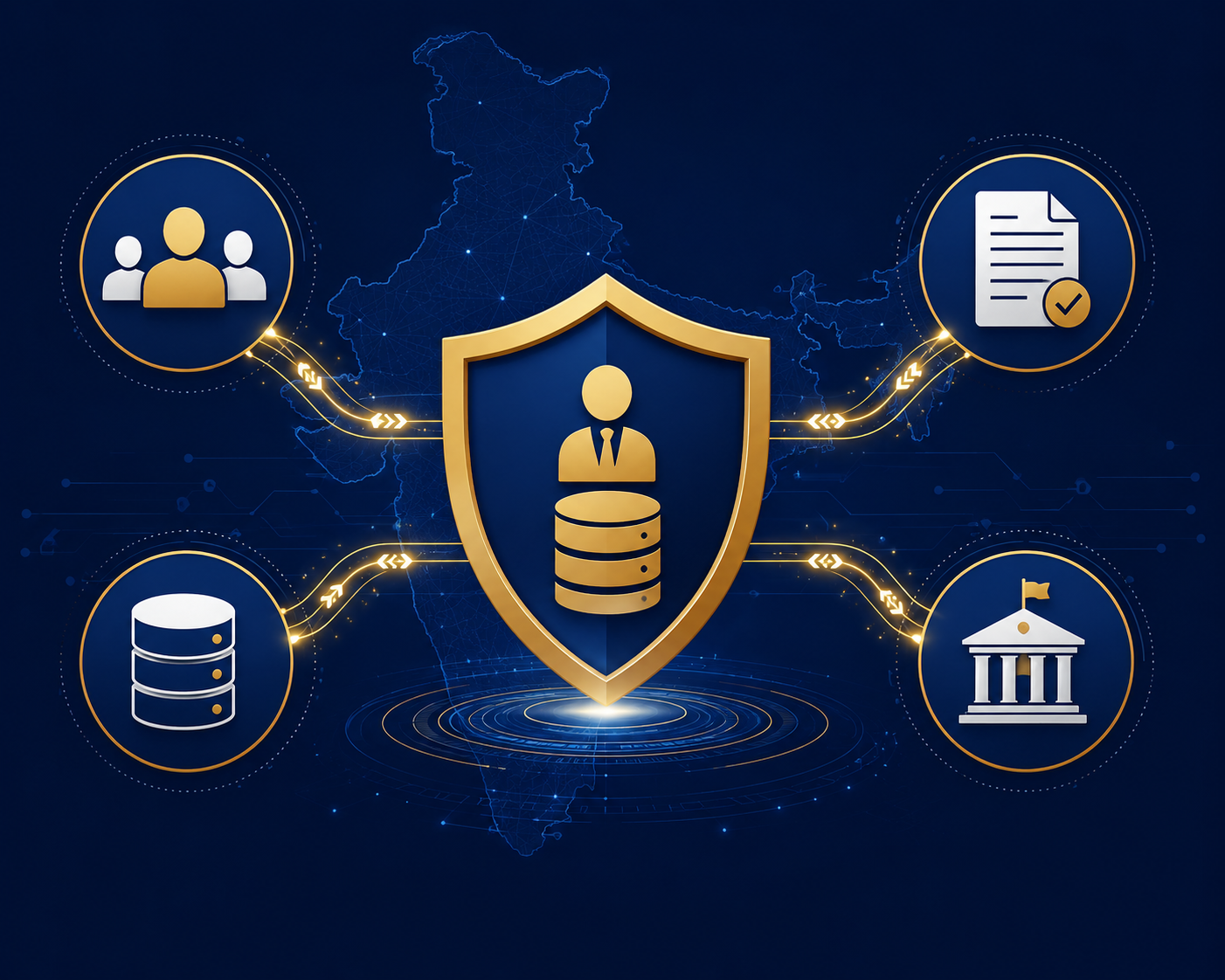
HSM digital signatures start with the hardware itself. A hardware security module is a tamper-resistant device that generates keys, stores them, and performs cryptographic operations inside a protected boundary. The private key never leaves that boundary in plaintext. Instead, applications send data in, and the HSM returns a signature.
This design changes the threat model completely. An attacker who owns the build server can still request signatures, but cannot copy the key. As a result, a breach becomes a contained event rather than a permanent loss of trust.
Keys That Never Leave the Boundary
Software key storage relies on file permissions and operating system hygiene. HSM-backed storage relies on certified hardware with physical and logical protections. Notably, standards such as FIPS 140-2 and FIPS 140-3, along with Common Criteria evaluations, give buyers an independent way to compare assurance levels.
Cloud key management services follow the same principle. For example, IBM’s key management offerings show how HSM-backed custody and customer-controlled keys have become a baseline expectation. Even so, a general-purpose key service protects keys. It does not, by itself, govern who may sign what, under which policy, and with which algorithm.
Dual Control and Quorum Approval
Strong HSM deployments never rely on one administrator. Instead, they use quorum rules, often written as M-of-N. A sensitive action, such as activating a root signing key, requires several authorized people to approve it.
This matters for public key infrastructure in particular. A root CA key is the anchor of trust for thousands of certificates. Therefore, its use should be rare, ceremonial, and fully recorded.
A Layered Public Key Infrastructure
A well-designed public key infrastructure avoids using one key for everything. Typically, an offline root signs a few intermediate CAs. Those intermediates then issue certificates for code signing, document signing, and device authentication.
Separation limits the blast radius. If a code signing intermediate is compromised, you revoke it without rebuilding the whole hierarchy. Moreover, each layer can have its own policy and HSM partition.
Code Signing Needs Stricter Controls Than Document Signing
Here is a useful way to think about it. A document signature affects one transaction. A code signature affects every machine that runs the software. The risk scales with distribution, which is why code signing deserves its own control set.
Public trust rules already reflect this. Since mid-2023, the CA/Browser Forum baseline requirements have required that publicly trusted code signing private keys be stored on hardware that meets FIPS 140-2 Level 2 or Common Criteria EAL 4+. In other words, the industry has already declared that file-based code signing keys are not acceptable.
Securing the Build Pipeline
DevOps teams often worry that HSM digital signatures will slow releases. In practice, the opposite is true when the integration is designed well. The pipeline calls a signing service, the service enforces policy, and the HSM signs. No developer ever touches a key.
A strong code signing workflow includes these elements:
- Identity-bound requests. Every signing request carries a verified service or user identity.
- Artifact verification. The service checks hashes, provenance, and scan results before signing.
- Policy gates. Production keys sign only artifacts from approved branches and protected pipelines.
- Approval steps. High-risk releases require a second human approval.
- Timestamping. Signatures carry trusted timestamps so they remain valid after certificates expire.
Importantly, each step creates evidence. When an auditor asks who signed release 4.2.1 and why, the answer should take minutes, not days.
Real-World Scenario: A Signing Key on a Build Server
Imagine a mid-sized software vendor in Bengaluru that ships a desktop agent to banking customers. Its signing certificate sits in an encrypted file on a shared build server. One compromised contractor account is enough for an attacker to copy that file.
Within hours, a malicious installer carrying the vendor’s valid signature circulates to customers. Revoking the certificate helps, yet every endpoint that already trusted it must be cleaned up. Had the key lived in an HSM behind a policy-enforced signing service, the attacker could not have exported it at all.
The Quantum Problem Hiding Inside Your Public Key Infrastructure
Most conversations about quantum risk focus on encryption. Attackers can record encrypted traffic today and decrypt it later, a strategy often called “harvest now, decrypt later”. That threat is real, but it is not the whole picture.
Here is the insight many teams miss. Signatures face a different quantum risk. Nobody can retroactively forge a signature that was verified years ago in a live handshake. However, long-lived trust anchors, firmware signatures, and archived legal documents must stay trustworthy for ten, fifteen, or twenty years. If a quantum computer can forge an RSA root signature in 2035, then anything that still trusts that root is exposed.
The Standards Are Ready
NIST finalized its first post-quantum cryptography standards in August 2024. FIPS 203 defines ML-KEM for key establishment. FIPS 204 defines ML-DSA, the general-purpose post-quantum signature. FIPS 205 defines SLH-DSA, a conservative hash-based signature. A fourth standard, FN-DSA under FIPS 206, has remained in draft.
In addition, national security guidance such as the NSA’s CNSA 2.0 puts software and firmware signing among the first areas to transition. Consequently, regulated enterprises that supply government or critical infrastructure customers should treat post-quantum signing as a near-term requirement.
Why Quantum-Ready Does Not Mean Quantum-Only
A common misconception is that migration means swapping RSA for a new algorithm and moving on. Reality is messier. Older devices cannot verify new signatures. Some partners will lag behind. Meanwhile, the newest algorithms have a shorter track record than RSA.
For that reason, most security leaders favor hybrid crypto during the transition. A hybrid signature combines a classical signature with a post-quantum one. If either algorithm holds, the signature remains trustworthy. Likewise, hybrid encryption protects data in transit while verifiers catch up.
Designing HSM Infrastructure for Quantum-Safe Signing
Now we can turn principles into architecture. A quantum-safe signing platform has to solve four problems at once: key protection, algorithm flexibility, workflow control, and evidence. Skipping any one of them creates a gap that attackers or auditors will find.
Choose Algorithms by Use Case
No single algorithm fits every signing job. The table below shows a practical starting point for post-quantum signing choices.
| Use case | Primary choice | Contingency or note |
|---|---|---|
| General code and artifact signing | ML-DSA | Hybrid with ECDSA during transition |
| Root CA and long-lived trust anchors | ML-DSA or SLH-DSA | SLH-DSA offers a conservative, hash-based fallback |
| Firmware and bootloader signing | LMS or XMSS (NIST SP 800-208) | Stateful schemes need strict state management |
| Compact signature needs | FN-DSA, once finalized | Evaluate after FIPS 206 is published |
| Document and approval signing | ML-DSA with trusted timestamps | Plan for long-term validation |
Benchmark Before You Commit
Post-quantum signatures are larger than ECDSA signatures, and signing speed varies by algorithm and hardware. Therefore, pipelines that sign thousands of artifacts per hour need real benchmarks. Furthermore, check whether your current HSM firmware supports the new algorithms at all. Many older modules do not.
Build for High Availability and Recovery
Signing services become production dependencies. If the service is down, nothing ships. A resilient design includes clustered HSMs across zones, key backup under quorum control, and a recovery runbook. Notably, teams should rehearse that runbook once a year.
Protect the Surrounding Network Path
Signing requests travel across your network, and so do verification calls and administrative sessions. A quantum-safe network design protects these paths with a PQC tunnel and hybrid key exchange. In addition, a secure gateway can enforce which services may reach the signing layer at all.
Admins who manage HSMs remotely deserve special care. Quantum-safe remote access and tunnel security keep those sessions private against future decryption, which matters because admin traffic often carries the most sensitive operations.
Cryptographic Agility and Governance: The Control Plane Most Teams Skip
Buying an HSM solves storage. It does not solve governance. So who decides which algorithm each team may use? Who proves that a retired algorithm is truly gone from production?
Cryptographic agility is the answer to the first question. It means your systems can change algorithms through configuration and policy, without rewriting applications. When NIST finalizes FIPS 206 or a vulnerability appears in a specific parameter set, an agile organization updates policy and rolls forward.
What a PQC Policy Engine Does
A PQC policy engine turns cryptographic rules into enforceable controls. For example, it can state that production code may only be signed with hybrid ML-DSA and ECDSA, that RSA-2048 is blocked for new certificates after a set date, and that root operations require quorum approval.
A written standard that nobody enforces is only a document. An enforced policy is a control.
PQC Audit Logs and Evidence
Auditors rarely ask whether you use strong cryptography. They ask for proof of how HSM digital signatures are governed. PQC audit logs record who requested each signature, which key and algorithm were used, which policy allowed it, and who approved it.
When these logs are tamper-evident and centralized, PQC compliance reporting becomes routine. As a result, teams in banking, insurance, healthcare, and critical infrastructure spend less time assembling evidence and more time improving controls.
Why Governance Beats Inventory Alone
Many programs start with a cryptographic inventory. That is wise, but an inventory goes stale quickly. A PQC governance platform keeps it current, ties each asset to a policy, and tracks PQC migration progress over time.
The shift in thinking is simple. Treat cryptography as a managed service with owners, policies, and metrics.
How QuantumVault Delivers HSM Digital Signatures With PQC Readiness
So far we have described the requirements for HSM digital signatures at enterprise scale. The remaining question is how to meet them without stitching together five separate products. QuantumVault is built as a quantum-safe security platform that brings HSM-backed signing, PQC key management, policy enforcement, and governance into one coherent control plane.
Signing Workflows With Built-In Control
QuantumVault’s PQC signing workflow connects your CI/CD pipelines, release tools, and approval processes to HSM-protected keys. Pipelines request signatures through an authenticated service. The platform checks policy, collects any required approvals, and then signs inside the HSM.
For teams that want to see this in practice, you can sign code securely with HSM using policy-controlled workflows that keep private keys out of developer hands. Because the workflow is policy-driven, switching from a classical to a hybrid or post-quantum algorithm becomes a governed change instead of a pipeline rewrite.
One Platform, Several Quantum-Safe Layers
Signing rarely stands alone. QuantumVault extends the same governance model across the rest of the environment:
- PQC gateway. A quantum-safe gateway for cryptographic policy enforcement at the edge of web, mobile, and server traffic.
- PQC tunnel. Hybrid PQC and classical encryption for site links, remote access, and service-to-service traffic.
- PQC key management. Lifecycle control for classical and post-quantum keys under one set of rules.
- PQC device security. Strong identity and signed updates for managed endpoints and devices.
- PQC collaboration security. Protection for approvals and shared documents that move between teams and partners.
This breadth is the point. A PQC suite for enterprise quantum-safe security works best when every layer answers to the same policy engine and writes to the same audit trail.
How This Compares With Point Solutions
Most enterprises combine a standalone HSM, a cloud key management service, and custom scripts. Each piece does its own job well. However, governance disappears in the seams between them.
Nobody owns the questions of which algorithm is allowed, who approved the signature, and how fast the organization can change course. QuantumVault treats those questions as first-class capabilities through cryptographic agility and governance, rather than leaving them to custom code.
Illustrative Use Case: A Regulated Fintech
Picture a payments company that ships mobile and server releases weekly under strict regulatory expectations. Its security architect wants hybrid production signing, HSM custody, and two-person approval for major releases.
With QuantumVault, the team defines a policy once. Every pipeline inherits it. Routine builds sign automatically after checks pass, while major releases pause for approval. Meanwhile, the audit log captures every event, so compliance can answer a regulator in a single report.
When a new standard is finalized, the architect updates the policy and runs a staged PQC rollout without editing hundreds of build scripts.
A Practical PQC Migration and Rollout Plan
Migration succeeds when it is sequenced. Trying to change everything at once usually stalls. The plan below works well for security architects and DevOps leaders who want visible progress within a quarter.
Phase 1: Discover and Prioritize (Weeks 1 to 6)
Start by finding where signing happens. Map every code signing key, certificate authority, document signing process, and device identity. Then rank them by trust lifetime and blast radius. Long-lived roots and firmware keys come first.
Phase 2: Centralize Keys in HSMs (Weeks 6 to 12)
Move any file-based signing keys into HSM-backed storage, so every signature becomes an HSM digital signature. Introduce quorum controls and a central signing service. At this stage, you are not changing algorithms. You are removing the largest existing risk.
Phase 3: Add Policy and Agility (Months 3 to 6)
Deploy the policy engine and audit logging. Define algorithm rules per use case. Begin hybrid signing in non-production environments, and benchmark performance on real pipelines.
Phase 4: Roll Out Hybrid Signing (Months 6 to 12)
Enable hybrid signatures for production code and new certificate hierarchies. Update verifiers on devices and partner systems. Track adoption through governance dashboards, and extend the PQC tunnel and gateway layers in parallel.
Phase 5: Retire Legacy Algorithms (Year 2 and Beyond)
Block new RSA and ECDSA-only issuance according to your policy timeline. Keep a contingency algorithm ready, such as SLH-DSA for roots. Finally, review the program against NIST and sector guidance, since deprecation dates continue to evolve.
Frequently Asked Questions
What are HSM digital signatures?
HSM digital signatures are signatures created inside a hardware security module. The private key stays within tamper-resistant hardware and never appears in plaintext on a server, which sharply reduces the risk of theft.
Why does code signing require an HSM?
Code signing keys let you publish software that devices trust. Since mid-2023, public code signing rules require keys to be stored on certified hardware, because file-based keys are too easy to steal and misuse.
Can quantum computers break digital signatures?
A large, fault-tolerant quantum computer could break RSA and ECDSA signatures using Shor’s algorithm. Today’s machines cannot, yet long-lived trust anchors need protection well before that capability arrives.
What is the difference between ML-DSA and SLH-DSA?
ML-DSA is lattice-based, faster, and suited to general signing. SLH-DSA is hash-based, slower, and produces larger signatures, but it relies on more conservative assumptions, which makes it a good fallback.
What is hybrid crypto, and why use it?
Hybrid crypto combines a classical algorithm with a post-quantum one. If either remains secure, the result stays secure. It also supports older systems that cannot yet verify new algorithms.
What is cryptographic agility?
Cryptographic agility is the ability to change algorithms, keys, and parameters through policy rather than code rewrites. It lets organizations respond quickly to new standards or newly discovered weaknesses.
Do I need to replace my existing HSMs?
Not always. First check whether your HSM firmware supports post-quantum algorithms and whether throughput meets your needs. Some teams upgrade firmware, while others add newer modules.
How long does a PQC migration take?
Most enterprises plan for multi-year programs. However, you can reduce the biggest risks within a few months by centralizing keys in HSMs and adding policy and audit controls.
What are PQC audit logs?
PQC audit logs are tamper-evident records of signing and key events. They capture identity, algorithm, policy, and approvals, which makes PQC compliance reviews faster and more reliable.
How does a PQC policy engine help DevOps teams?
It enforces algorithm and approval rules automatically inside pipelines. Developers keep their velocity because compliant builds sign without manual steps, while risky changes are stopped or escalated.
Is post-quantum cryptography relevant for regulated enterprises?
Yes. Banks, insurers, healthcare providers, and critical infrastructure operators hold data and software with long lifespans. Regulators increasingly expect a documented quantum-safe roadmap.
Does QuantumVault support both classical and post-quantum algorithms?
Yes. QuantumVault is designed as a hybrid PQC and classical encryption platform, so teams can run both during the transition and shift toward quantum-resistant algorithms under governed policy.
Conclusion: Trust Is a System, Not a Certificate
Digital signatures only deliver trust when the keys behind them are protected, the workflows around them are controlled, and the algorithms beneath them can evolve. HSM digital signatures provide the first piece. Policy, audit, and cryptographic agility provide the rest.
The quantum transition raises the stakes. Standards are final, guidance is firming up, and long-lived trust anchors are already in scope. Security architects and DevOps teams that act now will migrate on their own schedule, while those who wait will migrate on someone else’s.
In summary, secure your keys in hardware, govern every signature through policy, adopt hybrid signing, and keep your algorithms replaceable. QuantumVault brings these capabilities together as a quantum-safe security platform with a PQC governance layer, so your signing infrastructure stays trusted through the transition.
Ready to see how policy-controlled HSM signing fits your pipelines? View Solution
Related reading: PQC governance platform for secure cryptographic migration | Cryptographic agility for enterprises | Post-quantum cryptography for regulated enterprises