
As your organization grows, consent stops being a single decision. It becomes an ecosystem. A user grants permission for location tracking on a mobile app, withdraws it via settings, then requests access to everything you hold about them through a support form. Meanwhile, your compliance team is fielding emails from the Data Protection Board about audit trails, your engineering team is debugging why consent withdrawal did not sync to the analytics backend, and your legal team is asking whether you can prove that you honored all of this on time.
This fragmentation is not a process problem. It is an architecture problem. Most organizations managing consent today do so across disconnected systems: a consent banner collects the initial signal, a database logs it, a CSV export goes to compliance, and a manual email process handles data principal requests. Each layer works in isolation, and each gap between them becomes a vulnerability during an audit.
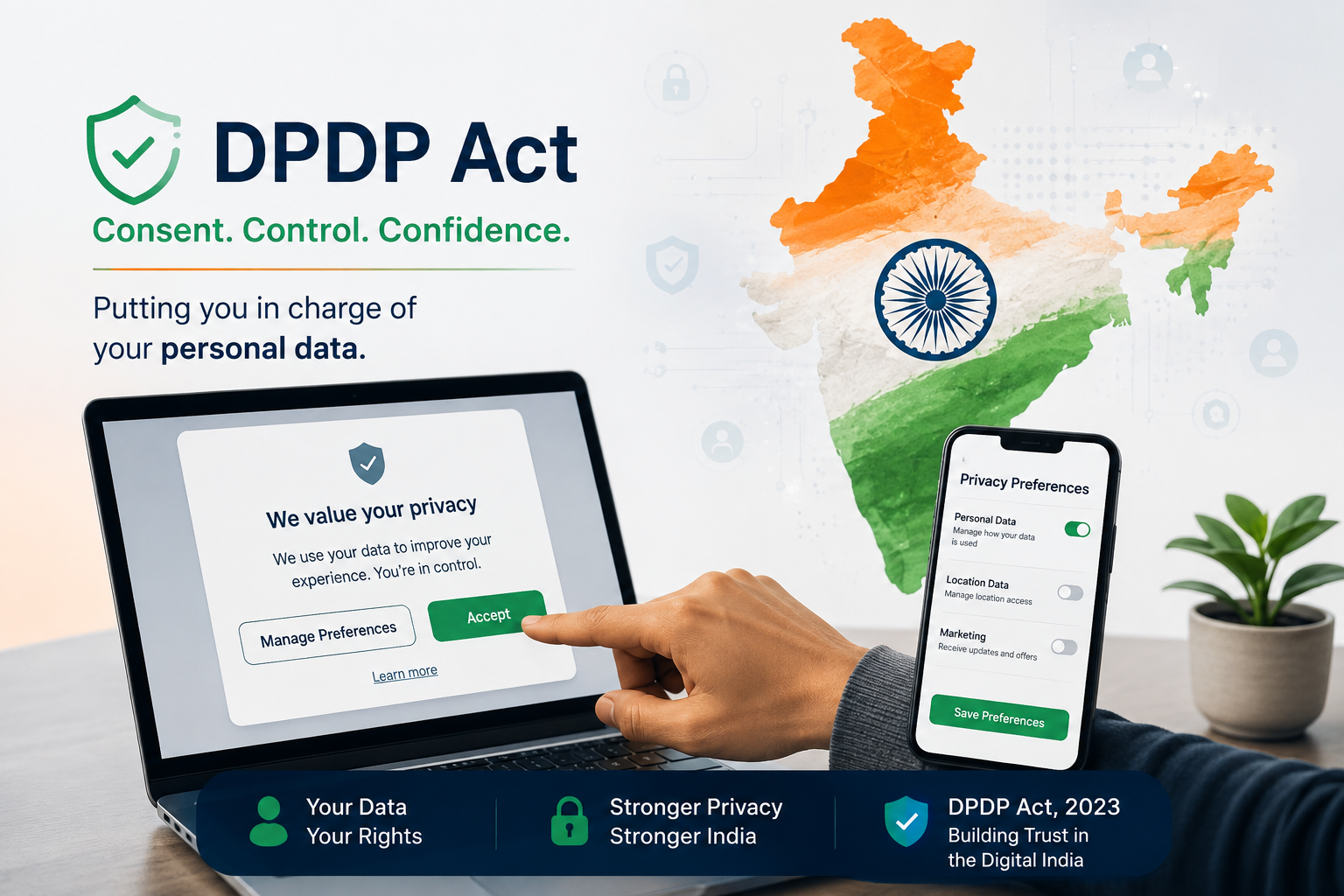
The challenge has intensified dramatically with the Digital Personal Data Protection Act, 2023. DPDP does not just require that you collect consent. It mandates that you capture it in a specific, granular, and easily withdrawable way, that you maintain an immutable audit trail, that you fulfill data principal access, correction, and erasure requests within statutory timelines, and that you can demonstrate all of this to a regulator on demand. None of these requirements work well when consent lives in fragments across your technology stack.
This is where a modern consent management platform becomes essential infrastructure, not a compliance checkbox. But not all consent platforms are built the same way. The difference between a platform that merely captures consent and one that unifies consent access control with compliance reporting directly determines whether you pass your next audit smoothly or spend months untangling contradictions between what your systems claim and what the Data Protection Board can verify.
The Problem: Consent in Silos Versus Unified Access Control
Here’s the operational reality most organizations face. Consent capture happens in the customer-facing layer: a mobile app permission prompt, a website consent banner, or an onboarding screen. That event gets logged somewhere, maybe multiple somewheres, depending on which engineering team built which system. Your analytics platform has its own view of consent status. Your marketing automation tool has another. Your backend database has a third. Your third-party data processors, the ones you shared user data with, have their own partial understanding based on whatever sync mechanism runs between your systems and theirs.
When a user withdraws consent, a signal travels from the UI to maybe one or two of those systems. But it rarely reaches all of them in real time. A user turns off location tracking in your app’s settings, thinking they have opted out completely, while your analytics SDK continues quietly pinging their location in the background because that withdrawal signal never reached the backend process that manages SDK consent state.

Consequently, when the Data Protection Board asks you to demonstrate that withdrawal was honored, you cannot produce a complete, consistent answer. You have evidence that some systems respected it. Other systems either ignored it or did not receive the signal at all. You have just created a paper trail that works against you.
Moreover, this fragmentation creates operational inefficiency beyond compliance risk. Your engineering teams duplicate consent logic across codebases. Your customer support team handles data requests manually through email. Your legal team reconstructs consent timelines from spreadsheets. Each function operates independently, creating silos that breed inconsistency.
This is the distinction between managing consent and managing consent access control. Consent access control means having a single source of truth for what each user has consented to, enforcing that consent consistently across every system that processes personal data, and being able to prove that enforcement in an audit.
Most organizations do not have that. They have consent capture scattered across multiple platforms. They do not have consent access control. Instead, they have consent aspiration: they hope withdrawal works end to end, they assume consent status is accurate, and they pray that during an audit, nobody discovers the gaps between these assumptions and reality. Furthermore, this gap widens as organizations scale, adding more systems, more processors, and more complexity to an already fragmented landscape.
The cost of this fragmentation compounds. Every new data pipeline requires manual consent logic. Every new processor integration involves custom sync logic. Every data breach response requires days of investigation to understand who saw what. Every compliance report requires manual data gathering from disconnected systems. Meanwhile, every user rights request becomes a project that involves multiple teams and multiple weeks.
What Unified Compliance Reporting Actually Requires
Now layer compliance reporting on top of this fragmentation, and the picture becomes even clearer. Compliance reporting is not just generating a monthly dashboard showing “we collected X consents this month.” It is producing evidence that satisfies these specific regulatory requirements: an immutable, tamper-evident record of every consent event, proof that every data principal request was fulfilled within timelines, documentation that every withdrawal propagated to every processor, and a complete audit trail that can be reviewed and verified by an external auditor.
In other words, compliance reporting is documentation that goes to a regulator, not a sales metric that goes to a dashboard.
This distinction matters enormously because it changes what infrastructure you actually need. A conventional compliance reporting system pulls data from your various consent capture points, aggregates it, and generates a report. But if the underlying consent data is already inconsistent across systems, the report is just formalizing that inconsistency. You are not solving the problem, you are documenting it in an official format.
Additionally, consider what happens when you try to scale fragmented consent management. As your organization adds new data pipelines, integrates new processors, or expands into new markets with different regulatory requirements, each addition multiplies the complexity. A compliance report that pulls data from ten systems is already difficult to verify. A report pulling from fifty systems is nearly impossible to defend against detailed regulatory scrutiny.
Unified compliance reporting requires unified data upstream. It requires that every consent event, every withdrawal, every rights request, flows through a central system that serves as the system of record. Only then can your compliance reporting accurately reflect what actually happened and produce defensible evidence. Moreover, this central system must not only capture data, it must enforce it, ensuring that consent recorded in the system is the same consent that gets enforced across every downstream process.
Furthermore, unified compliance reporting needs to integrate with your incident response workflows. When a breach occurs, your notification obligations kick in immediately. You must notify the Data Protection Board within timelines, and you must notify affected individuals. But which individuals were affected? That depends on who had consented to the specific data categories that were compromised. If your consent records are fragmented, answering that question accurately takes time you do not have. A unified system lets you answer it in minutes.
In addition, unified compliance reporting transforms how you approach regulatory investigations. Rather than scrambling to reconstruct what happened from disconnected systems, you produce the contemporaneous record of what actually happened. Instead of hoping your reconstruction is accurate, you show mathematical proof through cryptographic verification. This shift from reconstruction to documentation is not merely a process improvement. It is a fundamental change in how organizations can defend their compliance posture.
How SecureCMS Bridges the Consent Access Control and Compliance Reporting Gap
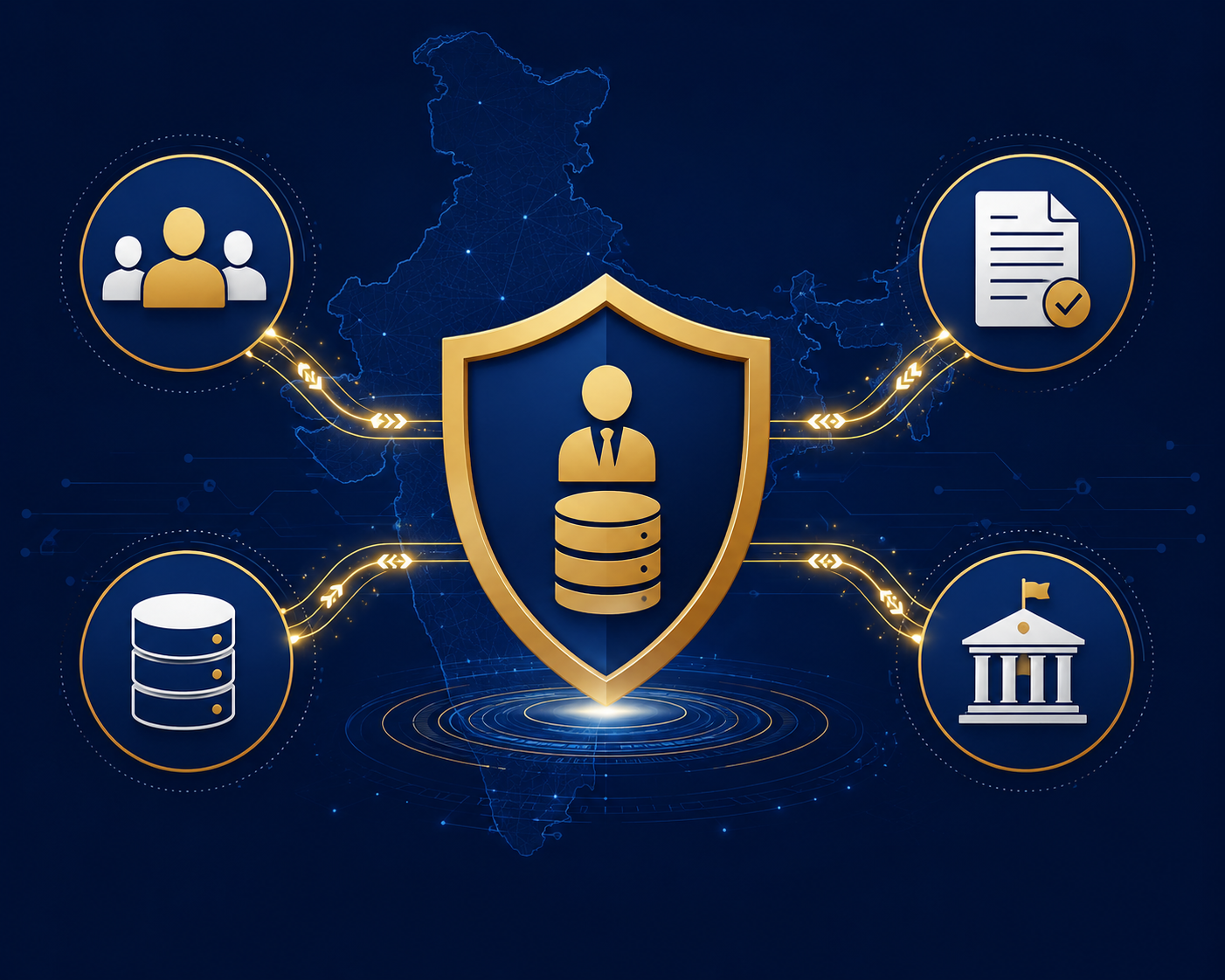
SecureCMS was built from the ground up to unify these two functions: consent access control and compliance reporting. Rather than treating consent capture as a front-end feature and compliance as a back-end data extraction problem, SecureCMS treats consent as a first-class data object that flows through your entire data pipeline and serves as the authoritative source of truth for both operational enforcement and regulatory evidence.
Here’s how that works in practice. When a user grants or withdraws consent in SecureCMS, that event is recorded in a tamper-evident, cryptographically verifiable audit log. This is not a standard database entry that an engineer with admin access could theoretically modify. It is a cryptographically signed event that cannot be altered after creation without producing mathematically detectable evidence of tampering. For a compliance manager facing scrutiny from the Data Protection Board, this distinction is everything. You are not claiming your consent records are accurate. You can prove they are.

Moreover, SecureCMS exposes that consent state through APIs that every system in your data pipeline can query in real time. Your mobile app checks consent status before reading the user’s location. Your analytics backend checks before logging behavior data. Your third-party data processors check before processing any personal information. Consent is no longer something that happens once during onboarding. It becomes a real-time access control layer that enforces data principal preferences continuously.
Consequently, when a user withdraws consent, the signal propagates through SecureCMS to all downstream systems instantly. There is no delay waiting for a scheduled sync job. There is no possibility that one system honored the withdrawal while another did not. Withdrawal becomes an operational reality, not a process that happens in the UI while the backend quietly ignores it.
On the compliance side, SecureCMS generates automated compliance reports directly from that same immutable audit log. Instead of extracting data from fragmented systems and hoping the picture is consistent, your compliance reporting is drawing from a single authoritative source. That report is defensible because every event it documents is cryptographically verifiable.
Consent Access Control in Action: Real-Time Enforcement
Let’s walk through a specific scenario to see how this unification actually changes operations. Imagine a fintech app where a user has consented to collect their transaction history for fraud detection purposes. Later, that user decides they no longer want that processing and withdraws consent through the app’s settings.
In a fragmented system, here’s what typically happens. The mobile app updates a local consent flag and shows the user a confirmation message. That signal might eventually reach the backend database, where it updates a row indicating the user has withdrawn. But the data has already been passed to three different processors: a fraud detection service, an analytics tool, and a credit scoring system. The withdrawal message either never reaches them or reaches them hours later through an asynchronous sync job. Meanwhile, those processors continue accessing and processing the user’s historical transaction data based on the previous consent state.
The user thinks they have opted out. Regulators would later discover they have not. That gap between user expectation and actual behavior is exactly the kind of violation the Data Protection Board targets first.

In SecureCMS, the same scenario unfolds differently. The withdrawal request reaches the SecureCMS platform immediately. The system updates the consent record, creates an immutable audit log entry, and broadcasts the consent state change through its API layer. The fraud detection service checks SecureCMS before processing any new data and sees the withdrawal. It stops immediately. The analytics tool checks and stops. The credit scoring system checks and stops. All of this happens in milliseconds, not hours.
Additionally, SecureCMS logs each of these enforcement events. You have a complete audit trail showing when the withdrawal happened, when each downstream system was notified, and when each system stopped processing the data. That audit trail is what regulators actually want to see. It proves that withdrawal was not just a UI gesture. It was an operational reality enforced across your entire system.
Moreover, this real-time enforcement model changes your compliance posture fundamentally. You are no longer managing consent as a data attribute that might get respected. You are managing it as an access control layer that blocks data processing automatically when consent is absent. This shift from consent as context to consent as control means that violations become technically impossible, not just organizationally discouraged.
Consider also the operational visibility this provides. Your compliance team can query SecureCMS at any time and see exactly which users have consented to which purposes, when their consent was granted, and whether any pending withdrawal requests exist. If a surge in withdrawal requests occurs following a news story, you spot it immediately and can respond before the Data Protection Board asks you about it. If a data processor is requesting access to data for a user who has withdrawn consent, the system prevents that request automatically rather than relying on a human to notice and enforce the policy.
Furthermore, this access control model extends beyond withdrawal. It applies to every data processing activity. Before your recommendation engine retrieves user preferences to personalize search results, it checks consent. Before your analytics tool logs user behavior, it verifies consent. Before a third-party processor accesses personal data, it confirms consent. Every single data access becomes a consent check. This means that consent is not a one-time decision captured at a single moment. It becomes a continuous enforcement mechanism operating throughout the entire data lifecycle.
Compliance Reporting That Survives Regulatory Scrutiny
Now shift perspective to compliance reporting. It is Tuesday morning, and the Data Protection Board sends your organization a formal information request. They want to know about all data principal access requests received in the past six months, whether each one was fulfilled on time, and what data was returned.
In a fragmented system, answering this takes weeks. You need to pull access request tickets from your support system, trace them through to fulfillment, verify that the data sent matched what was requested, and then produce a consolidated report. If requests fell through cracks, got delayed, or were partially fulfilled, you discover this during the investigation process. The report you eventually produce shows hesitation and gaps. Even if you eventually answered all requests, the investigation itself raises questions.

In SecureCMS, the same scenario is different. Every data principal request flows through the same system that manages consent. When a user requests access to their personal data, SecureCMS logs that request with a timestamp, routes it automatically to every system holding that user’s data, collects the information, and generates a response. All of that is documented in the same immutable audit log as your consent events.
When the Data Protection Board requests information, you pull a report directly from SecureCMS. The report shows every access request received, exactly when it was received, exactly when it was fulfilled, and what data was provided. The report is also automatically timestamped and cryptographically verifiable. You are not reconstructing what happened. You are producing the contemporaneous log of what actually happened.
That difference, between reconstructed history and contemporaneous documentation, is often what determines whether an audit proceeds smoothly or escalates into an investigation.
Breaking Down Consent Withdrawal at Scale
Consider another complex scenario: mass consent withdrawal. Suppose a news story surfaces suggesting your organization mishandled personal data, and thousands of users simultaneously request to withdraw consent and erase their data. This is a scenario most organizations are not prepared for operationally. Coordinating erasure requests across multiple databases, processors, and backup systems requires orchestration that most legacy compliance processes cannot handle.
SecureCMS treats this scenario as a normal operational load, not an emergency. When thousands of withdrawal and erasure requests hit the platform simultaneously, the system processes them uniformly, logging each one, coordinating erasure across configured data stores, and producing evidence that the erasures were completed. Your compliance team can generate a single report showing that all requests were fulfilled, and that report is defensible because it is backed by immutable logs.
Furthermore, the system handles the data subject rights automation that DPDP requires. Access requests, correction requests, and erasure requests are not routed through a manual support queue where they compete for attention with password resets and billing inquiries. They are processed programmatically, with the user receiving automated confirmation of fulfillment.
Sector-Specific Compliance Through Unified Architecture
Different sectors face different compliance pressures. A healthcare app must handle health data with extreme care. A fintech app must manage financial information and transaction history. Both face DPDP obligations, but the specific risks and requirements differ.
SecureCMS handles this through configurable consent flows that map directly to sector-specific data categories. A healthcare provider configures consent for treatment records, appointment history, and prescription information as separate purposes, each with its own withdrawal mechanism. A fintech app configures consent for transaction history, payment method details, and credit scoring separately. The underlying architecture remains unified, but the configurations reflect sector reality.
This means compliance reporting also becomes sector-specific. Your healthcare compliance report shows how you managed health data specifically. Your fintech compliance report focuses on financial information. The unified platform produces different reports for different contexts, all drawn from the same immutable audit log.
Integration With Existing Data Governance
A critical question for any organization evaluating a consent management platform is integration. Most organizations already have existing data governance tools, data lineage systems, and compliance infrastructure. They cannot rip and replace everything just to implement consent management.
SecureCMS is designed with integration-first architecture. It exposes its consent state through APIs that existing systems can query. It publishes consent change events that other tools can subscribe to. It produces standardized compliance reports that fit into existing reporting pipelines. The platform does not require you to rebuild your data governance. It adds a consent layer that works alongside your existing infrastructure.
This also means that implementation does not require a complete organizational restructuring. Teams can adopt SecureCMS for critical workflows first, then gradually expand to other systems over time. The unified architecture is there from day one, but adoption can proceed at a realistic pace.
Moreover, integration with existing systems means your data already flowing through those systems benefits immediately from unified consent management. Your analytics tool that was previously operating without consistent consent enforcement can now check real-time consent status from SecureCMS. Your customer data platform that was previously storing consents in its own database can now reference the canonical consent record in SecureCMS. Your third-party processors that were previously unable to verify consent status can now query SecureCMS APIs to ensure they are only processing data the user has actually consented to.
Additionally, this integration-first approach reduces implementation risk dramatically. Rather than attempting a big-bang replacement of all consent infrastructure at once, you can integrate SecureCMS piece by piece. Your mobile app can start using SecureCMS for its consent management today. Your website can integrate SecureCMS next quarter. Your backend data pipeline can integrate SecureCMS the quarter after that. Each integration strengthens your overall compliance posture without requiring perfect coordination across all teams simultaneously.
Furthermore, integration with existing tools means you leverage investments already made in your data governance infrastructure. If your organization already has a data lineage tool, SecureCMS can feed consent state into that tool so your data lineage becomes consent-aware. If you have a data loss prevention tool, it can query SecureCMS to understand whether data is moving to consented destinations. If you have a customer data platform, it can treat consent as a first-class attribute that flows alongside other customer attributes. You are not replacing these tools. You are making them consent-aware through SecureCMS.
Building an Audit-Ready Compliance Posture
Most organizations think about audit readiness only when an audit is imminent. By then, it is too late. True audit readiness requires infrastructure that maintains compliant state continuously, not systems that scramble to produce evidence when questioned.
SecureCMS builds audit readiness into its architecture. Every consent event is logged. Every withdrawal is documented. Every rights request is tracked. Compliance reporting happens continuously, not as an ad hoc fire drill. When an audit actually occurs, you are not discovering problems. You are producing documentation that proves you have been operating compliantly all along.
This posture shift, from compliance as an answer to questions to compliance as continuous practice, is what separates organizations that pass audits smoothly from those that face investigations.

Moreover, audit readiness extends beyond just having documentation. It means having documentation that is defensible against technical scrutiny. When the Data Protection Board’s technical team reviews your audit trail, they will look for gaps and inconsistencies. A standard database log can contain gaps and inconsistencies. A user could have withdrawn consent, but that event could have failed to log if the database was under heavy load. Or an administrator could theoretically have modified a log entry. These are edge cases, but regulators specifically look for them.
SecureCMS eliminates these edge cases through cryptographic verification. Every consent event is signed. Withdrawal events are timestamped with absolute precision. Access logs show exactly which systems checked consent status and when they made their decisions. This technical rigor transforms your audit trail from “we believe this is accurate” to “we can mathematically prove this is accurate.”
Additionally, continuous audit readiness changes how your organization responds to evolving regulatory guidance. As the Data Protection Board issues clarifications on specific aspects of DPDP compliance, you can immediately query your SecureCMS audit trail to understand how your existing practices compare to the new guidance. Rather than worrying about whether you are compliant retroactively, you have contemporaneous data showing whether you have been compliant all along.
Furthermore, audit-ready compliance reduces your insurance and legal costs. Organizations that face investigations require legal representation, forensic analysis, and often substantial penalties. Organizations with continuous audit readiness rarely face investigations at all. Regulators can see from the outset that the organization has maintained immutable, verifiable compliance records. That certainty leads to smoother interactions and fewer adversarial dynamics.
The Path Forward: Unified Consent Infrastructure
As DPDP enforcement intensifies through 2026 and into 2027, the regulatory environment will reward organizations that built unified consent infrastructure early. Businesses that fragmented consent across multiple systems will face escalating penalties and investigation costs as regulators discover inconsistencies between what different systems claim and what actually happened.
Conversely, organizations that unified consent access control and compliance reporting will face audits that proceed quickly and smoothly. They will produce evidence immediately rather than months later. They will demonstrate compliance automatically rather than through manual reconstruction.
The choice between fragmented consent management and unified consent infrastructure is ultimately a choice between compliance risk and compliance confidence. SecureCMS provides the platform to make that choice toward confidence.
Moreover, the organizations that move earliest gain competitive advantages beyond compliance. They build deeper customer trust because their privacy practices actually match their commitments. They reduce operational costs by automating consent management across their entire infrastructure. They move faster in responding to customer requests because their systems are not fragmented across competing processes.
Furthermore, unified consent infrastructure positions your organization to adapt to future regulatory changes. The DPDP framework continues to evolve. The Data Protection Board will issue clarifications on edge cases. Possibly, new data categories will be classified as sensitive. An organization with unified consent infrastructure can adapt to these changes systematically, updating consent flows across all systems simultaneously. An organization with fragmented consent management scrambles to update each system independently, introducing inconsistencies in the process.
Additionally, consider the talent advantage. Your engineering teams, compliance team, and customer support team all prefer working with unified systems rather than fragmented ones. Unified consent infrastructure reduces the cognitive load on every team, making it easier to hire and retain talent, easier to onboard new team members, and easier to move people between roles because the underlying systems are coherent rather than scattered.
In essence, unified consent infrastructure is not just a compliance mechanism. It is a fundamental business platform that changes how your organization operates at scale.
Frequently Asked Questions
1. How does SecureCMS ensure consent withdrawal reaches all data processors in real time?
SecureCMS maintains a real-time consent state API that every system holding personal data queries before processing. When a user withdraws consent, the platform updates consent state atomically and publishes the change through event streaming. Configured data processors, both internal and external, receive immediate notification. The system logs each enforcement event, creating an immutable audit trail showing when withdrawal occurred and when each downstream system stopped processing.
2. Can SecureCMS handle multiple consent purposes for the same data category?
Yes. SecureCMS supports granular purpose-based consent where different uses of the same data require separate opt-ins. For example, a single phone number might require consent for SMS notifications, marketing calls, and support contact separately. Each purpose has its own consent state, withdrawal mechanism, and audit trail. This satisfies DPDP’s requirement for specific, unambiguous consent.
3. How does the tamper-evident audit log work technically?
Every consent event is cryptographically signed using block-anchored verification. This creates mathematical proof that the record has not been altered since creation. An engineer with database admin access cannot modify a historical consent record without generating detectable evidence of tampering. During regulatory review, this technical verification replaces organizational claims about data accuracy.
4. What compliance reports does SecureCMS generate automatically?
SecureCMS generates reports for data principal access requests, fulfillment timelines, erasure verification, withdrawal tracking, consent grant history, and breach impact analysis. All reports draw from the immutable audit log and include timestamps, cryptographic verification, and evidence of fulfillment. Reports are customizable to sector requirements and regulatory frameworks.
5. How long does implementation typically take, and does it require replacing existing systems?
Implementation timelines range from four to twelve weeks depending on organizational complexity. SecureCMS is designed for integration with existing infrastructure, not replacement of it. You can implement consent management for critical workflows first, then expand to other systems gradually. APIs and event streams ensure that existing data governance tools can consume consent state without modification.