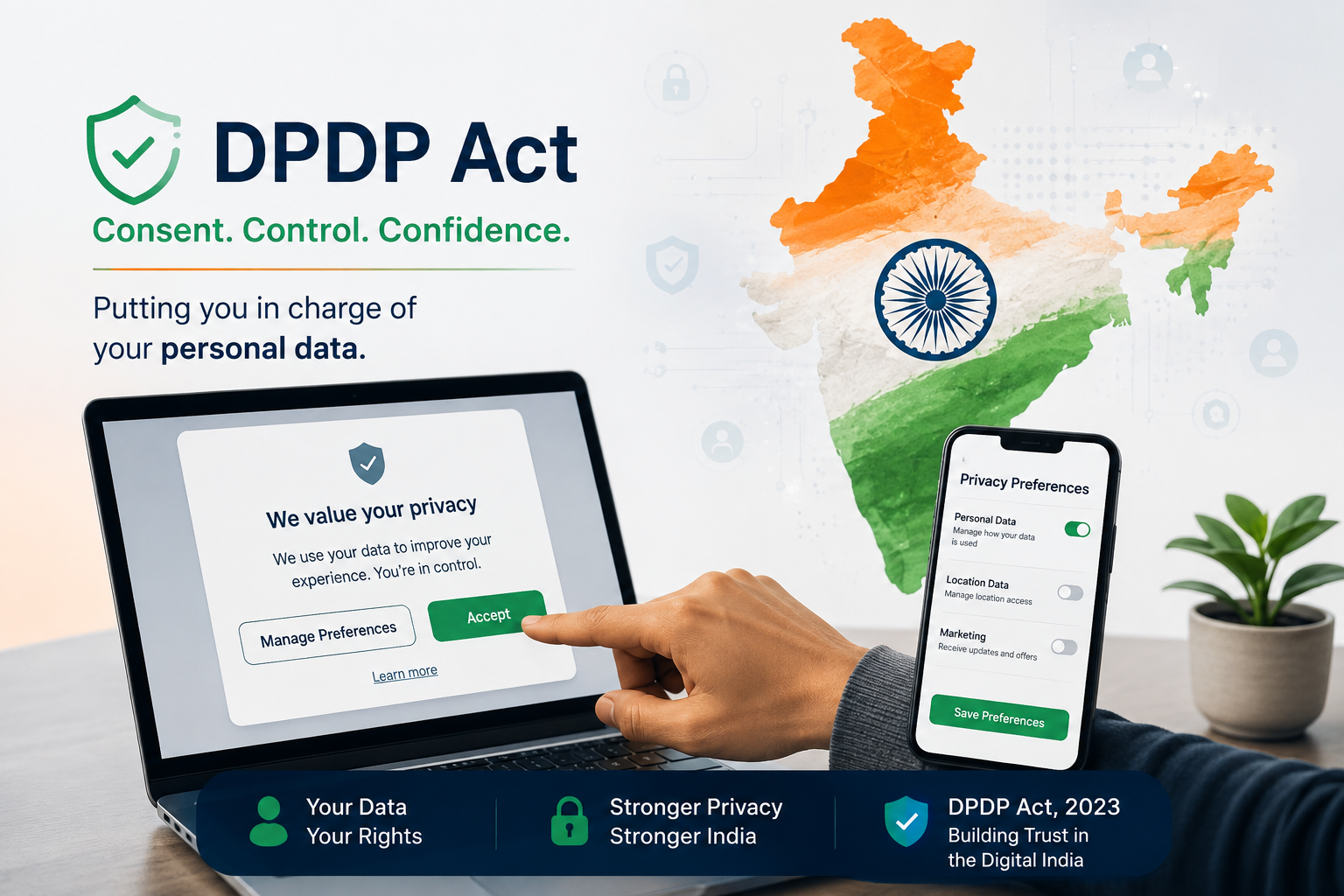

India’s Digital Personal Data Protection Act (DPDP Act, 2023) has fundamentally changed how organizations must handle personal data. Every business that collects, processes, or stores personal information from Indian users now needs a defensible, auditable, and enforceable consent framework. Many organizations respond to this requirement by bolting a generic consent management platform (CMS), often built for GDPR or CCPA, onto their existing infrastructure and calling it “compliant.”
This is a mistake that is only now becoming visible.
A DPDP Consent Management Platform India businesses can actually rely on is not simply a cookie banner or a form that logs a checkbox click. It is infrastructure, a system that captures explicit informed consent, enforces purpose limitation at runtime, proves consent lineage during audits, and executes withdrawal instantly across every connected system. Generic Consent Management Platform tools built for Western regulatory regimes were never designed with the DPDP Act’s specific obligations in mind, and the gaps show up exactly when they matter most: during a Data Principal rights request, a regulatory audit, or a data breach investigation.
This article walks through why DPDP compliance is a fundamentally different engineering problem than GDPR or CCPA compliance, where generic CMS platforms fall short, and how a purpose-built solution like SecureCMS closes those gaps with real, verifiable capability, not just policy documentation.
1. DPDP Is Not “GDPR With an Indian Accent”
A common assumption among compliance teams is that a platform built for GDPR can be lightly reconfigured for DPDP. This assumption causes more compliance debt than almost any other decision in the privacy stack.
The DPDP Act introduces requirements that simply do not map cleanly onto GDPR-era consent tooling:
Explicit, itemized, purpose-specific consent. DPDP requires that consent be free, specific, informed, unconditional, and unambiguous, with a clear affirmative action tied to a specific purpose. Bundled or pre-ticked consent, a pattern still common in many generic cookie consent platforms, does not satisfy this bar.
Consent Manager as a distinct regulatory concept. The DPDP Act references “Consent Managers” as registrable entities that let Data Principals manage, review, and withdraw consent across data fiduciaries through a single interface. Most global consent tools have no concept of this architecture because no equivalent role exists in GDPR or CCPA.
Mandatory, traceable proof of consent. Under DPDP, the burden of proving consent was validly obtained sits with the data fiduciary, not the individual. A screenshot of a checkbox is not evidence. Organizations need timestamped, tamper-evident, retrievable consent records that can be produced on demand to the Data Protection Board of India.
Instant enforcement of withdrawal. DPDP is unambiguous that withdrawal of consent must be as easy as giving it, and that data processing must stop once consent is withdrawn, not “within 30 days” as some legacy systems assume by default.
Data Principal Rights specific to Indian law. Access, correction, erasure, grievance redressal, and rights of nomination (in case of death or incapacity) are DPDP-specific constructs. Generic consent software often has none of these workflows pre-built and requires expensive custom development to retrofit them.
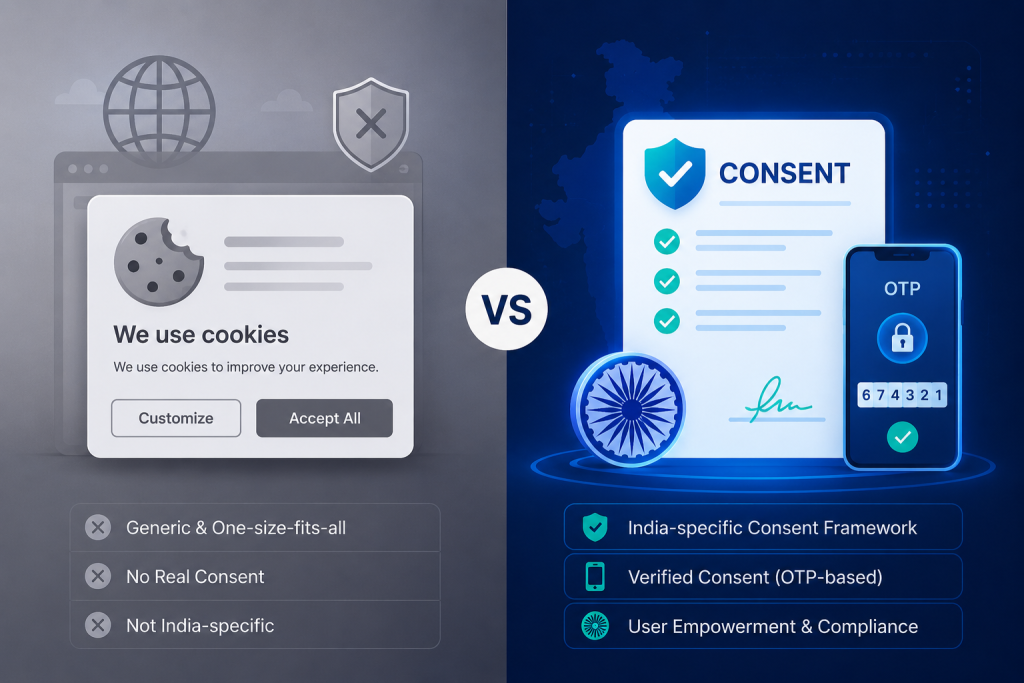
This is the essential argument for why a DPDP Compliance Consent Management Platform cannot simply be a relabeled GDPR tool. The underlying data model, audit trail, enforcement logic, and rights-management workflows all need to be designed around the Act itself.
2. What “Purpose-Built for DPDP” Actually Means
When evaluating any Consent Management Platform for DPDP, it helps to break the requirement down into the actual operational capabilities the law demands, rather than marketing language. Based on a detailed capability mapping against DPDP obligations, here is what a genuinely purpose-built platform needs to deliver.
Consent Collection That Is Actually Defensible
DPDP requires informed, affirmative consent capture, not implied consent, not pre-checked boxes, and not vague blanket permissions. A compliant DPDP consent form needs to present the purpose of data collection clearly at the point of collection, allow granular acceptance or rejection per purpose, and generate a verifiable record the moment consent is given.
SecureCMS approaches this with consent management supported by OTP verification across Email, SMS, and WhatsApp, meaning consent isn’t just “given,” it’s authenticated to the individual providing it. This closes a major evidentiary gap that generic platforms leave open: proving that the specific data principal, not just a browser session or IP address, gave that consent.
Consent Notice Management With a Real Purpose Catalogue
A Consent Management Platform needs to communicate exactly why data is being collected, in language a layperson understands, tied to a specific and limited purpose. This is where purpose management, backed by a structured data catalogue, becomes essential, not a static privacy policy PDF, but a living registry of purposes mapped to the data being collected under each one.
Consent Withdrawal That Actually Executes
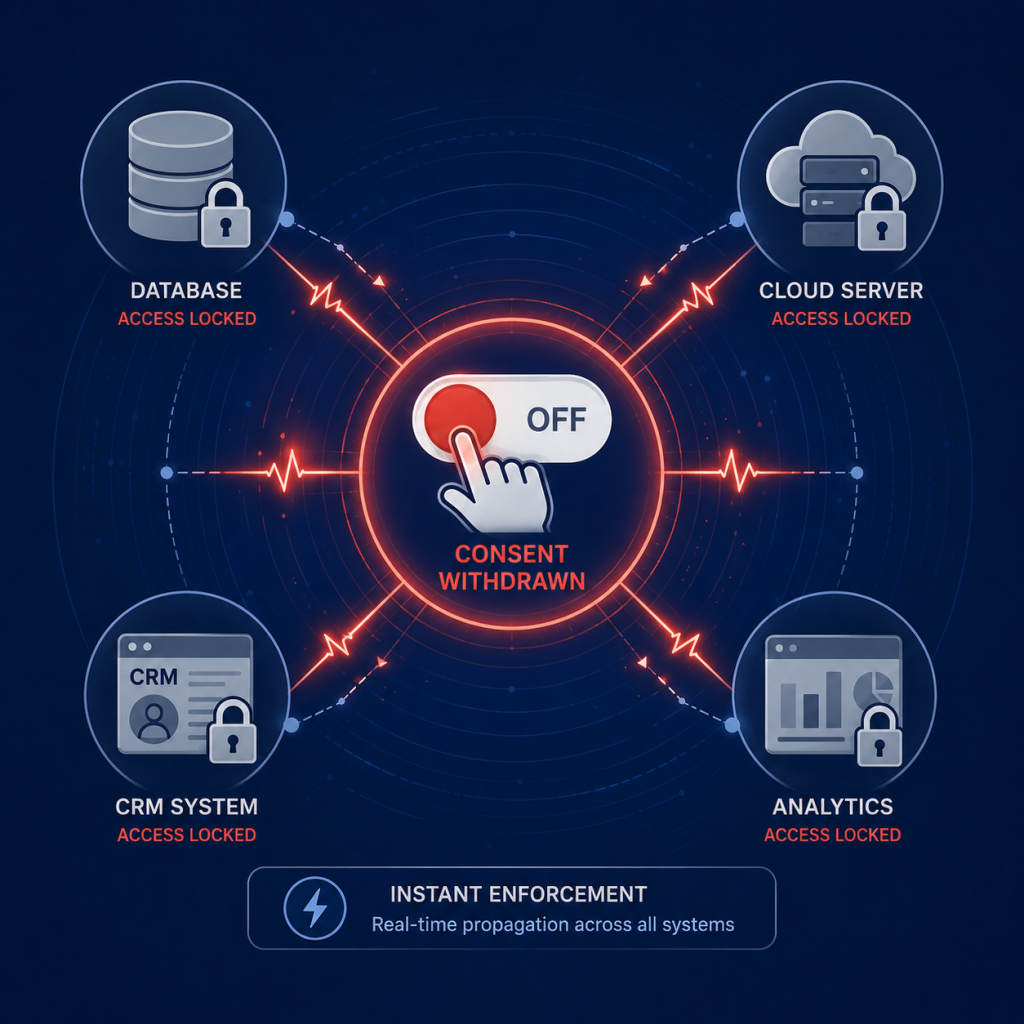
This is one of the biggest gaps between marketing claims and technical reality across generic tools. Plenty of platforms let a user click “withdraw consent”, few actually propagate that withdrawal instantly across every downstream system using that data. SecureCMS is built around consent withdrawal and modification handling combined with instant consent revocation enforcement, which means withdrawal isn’t a database flag sitting unused; it’s an enforcement event that cuts off further processing in real time.
Purpose Limitation, Enforced, Not Just Documented
Purpose limitation is one of the most commonly claimed but rarely engineered capabilities in privacy tooling. Most platforms document purposes in policy but don’t actually restrict system behavior based on them. A true Enterprise Consent Management System enforces field-level and purpose-level restrictions through real-time APIs and SDKs, meaning if a user consented to marketing communications but not analytics profiling, the enforcement layer actively blocks the analytics use case at the point of data access, not just in a policy document nobody reads.
Consent Proof and Traceability You Can Actually Produce in an Audit
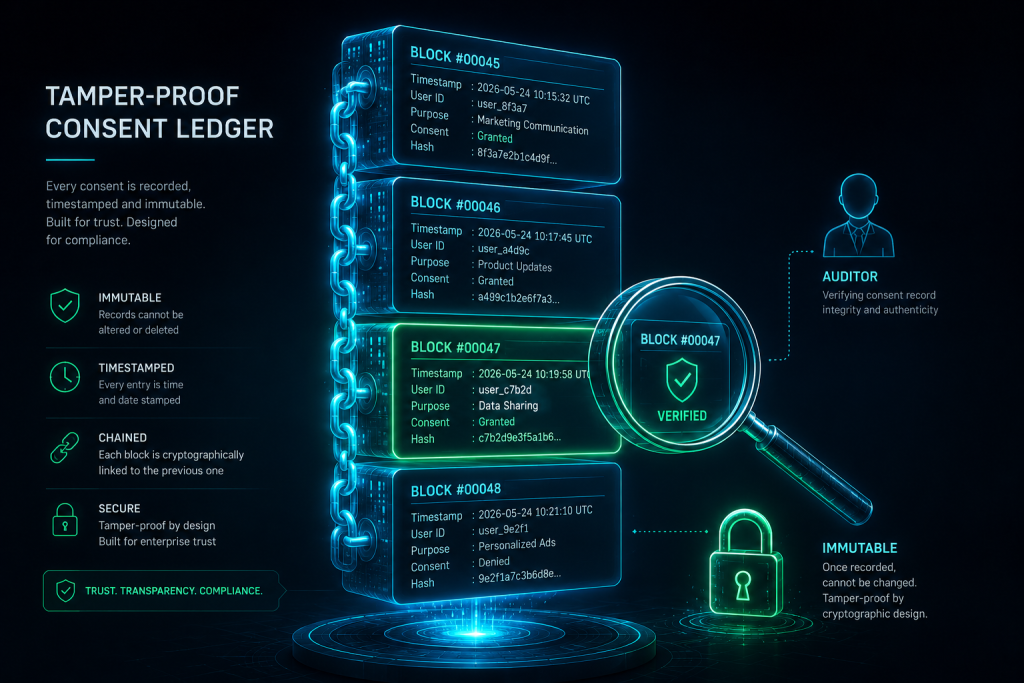
When a regulator, auditor, or court asks “prove this individual consented, and prove nothing has been altered since,” a screenshot or database row isn’t sufficient. This is where immutable, blockchain-backed audit logs matter, not as a buzzword, but as a structural guarantee that consent records cannot be silently modified after the fact. An Audit-Ready Consent Management Platform needs this kind of tamper-evident logging built into its core architecture, not added as an afterthought.
Data Principal Rights, Automated
DPDP grants individuals rights to access, correct, and erase their data, and mandates a grievance redressal mechanism with escalation to a Data Protection Officer. Automating Data Subject Request (DSR) workflows, rather than routing them through manual email chains, is the difference between a compliance program that scales and one that collapses under regulatory scrutiny the moment volume increases.
Governance That Reflects Organizational Reality
DPDP places real accountability on a designated DPO, and larger organizations need governance structures with segregation of duties, multi-role RBAC, tenant-level administration, and platform-level oversight for auditors and compliance officers. A Centralized Consent Management Platform must support this layered governance model out of the box, not require custom development to bolt it on.
3. Where Generic CMS Platforms Fall Short
Most generic cookie or Cookie Consent Platform tools were built to solve a narrower problem: capturing a “yes/no” on cookie tracking for GDPR’s ePrivacy requirements. They were never architected to handle the breadth of obligations DPDP imposes. Here’s where the gaps typically show up.
No purpose-level runtime enforcement. Generic tools record a consent decision but rarely enforce it at the API or data-access layer. This means a “withdrawn” consent might still technically allow downstream systems to keep using the data, because nothing is actually blocking the call.
Weak or absent proof-of-consent mechanisms. Most Western consent tools rely on session cookies or browser fingerprints as consent evidence. Under DPDP, where the burden of proof sits with the fiduciary, this is a fragile foundation. Immutable, cryptographically verifiable consent logs are a materially stronger position to be in.
No DPDP-specific rights workflows. Rights of access, correction, erasure, grievance escalation to a DPO, and nomination in case of death or incapacity are DPDP constructs that most generic platforms simply don’t model.
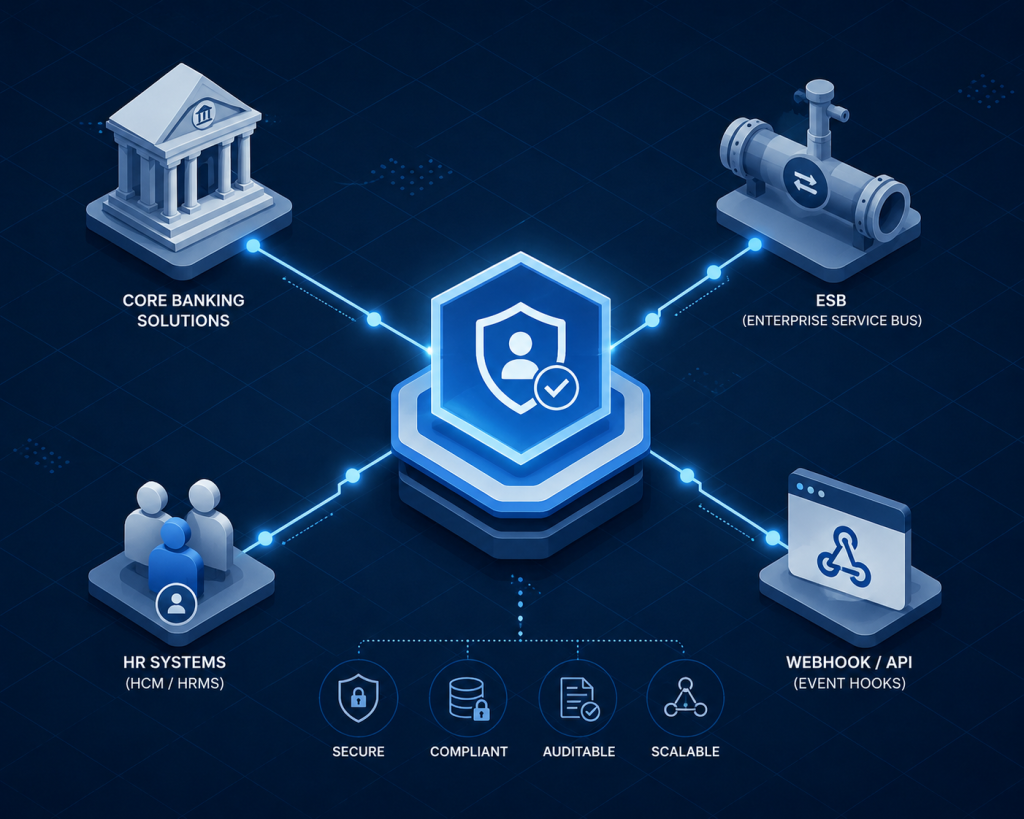
Limited enterprise integration for India-specific systems. Indian enterprises, particularly in banking, insurance, and financial services, run on systems like Core Banking Solutions (CBS), Enterprise Service Bus (ESB) platforms, and other legacy infrastructure. Generic global CMS vendors rarely offer native integration patterns for this stack, leaving compliance teams to build expensive custom middleware.
No India-specific deployment or data residency options. DPDP compliance often intersects with data localization expectations and sector-specific regulatory requirements (RBI, IRDAI, SEBI guidelines). A platform without an India-first operating model creates additional legal and operational risk.
Cookie-centric design that ignores non-web consent channels. DPDP applies as much to a bank collecting KYC data over a call center as it does to a website visitor. A pure Cookie & Preference Consent Management Platform designed only for web tracking consent misses the much larger surface area DPDP actually covers, OTP-based verification across SMS, WhatsApp, and email being one clear example of where India-specific consent flows differ from Western norms.
4. A Practical Consent Management Checklist for Startups
Startups and growing businesses in India often assume DPDP compliance is a “later” problem, something to solve once they scale. This assumption is increasingly risky given the Act’s financial penalties and the growing regulatory attention on data handling practices. Here is a practical Consent Management checklist for startups evaluating their options.
Map every data collection point. Before selecting any tool, list every place your product or service collects personal data, sign-up forms, checkout flows, support tickets, marketing opt-ins, embedded widgets, and third-party integrations. Each collection point needs a defined, specific purpose.
Verify OTP or authenticated consent capture is available. Consent tied only to a browser session is weak evidence. Look for platforms offering OTP verification across email, SMS, or WhatsApp to strengthen the evidentiary chain linking consent to an actual verified individual.
Confirm real-time enforcement, not just logging. Ask any vendor directly: “If a user withdraws consent, does that block data access at the API level immediately, or does it just update a database flag?” This single question separates genuinely purpose-built platforms from relabeled cookie tools.
Check for immutable audit trails. Ensure consent records cannot be silently edited after the fact. Blockchain-backed or cryptographically hashed logs provide a materially stronger audit posture than a standard mutable database table.
Look for built-in DSR and grievance workflows. Manual handling of access, correction, deletion, and grievance requests does not scale. Automated workflows with DPO escalation paths save enormous operational overhead as your user base grows.
Evaluate integration flexibility. Even early-stage startups eventually need to connect consent enforcement to their CRM, marketing stack, and product analytics. A platform with API-first, developer-friendly integration avoids costly rework later.
Assess multi-tenant and RBAC support early. If you plan to serve multiple business units, client organizations, or regional entities, confirm the platform supports tenant separation and role-based governance before you’re locked into a single-tenant architecture.
Ask about compliance reporting. You will eventually need to produce evidence for auditors, investors during due diligence, or regulators. Confirm exportable compliance reports are a native feature, not a manual export process your team has to build.
This checklist reflects a broader truth: DPDP compliance automation is not a single feature, it’s an operating model that spans consent capture, enforcement, proof, and governance simultaneously.
5. The DPDP Awareness Gap, And Why It’s a Business Risk
A significant and underdiscussed challenge in the Indian compliance landscape is DPDP awareness among users. Many Data Principals, the individuals whose data is being collected, remain unfamiliar with their rights under the Act, including their ability to withdraw consent, request correction, or file a grievance. This creates a paradox: businesses can technically be compliant on paper while users remain unaware of the protections available to them.
This gap cuts both ways for organizations. On one hand, low user awareness might seem to reduce short-term pressure on compliance teams, fewer DSR requests, fewer grievances. On the other hand, as awareness grows (driven by media coverage, advocacy groups, and eventual enforcement actions by the Data Protection Board of India), organizations that have not built genuinely transparent, easy-to-use consent interfaces will face a wave of catch-up requests, reputational scrutiny, and potential penalties simultaneously.
A well-designed DPDP Consent Management Platform addresses this proactively by making consent notices genuinely understandable, plain language, itemized purposes, clear withdrawal mechanisms, rather than legally defensible but practically incomprehensible text walls. This isn’t just good compliance practice; it’s a trust-building exercise that reduces support burden and grievance volume over time, because users who understand what they agreed to are less likely to feel deceived or file complaints later.
6. Consent Lifecycle Management: The Real Differentiator
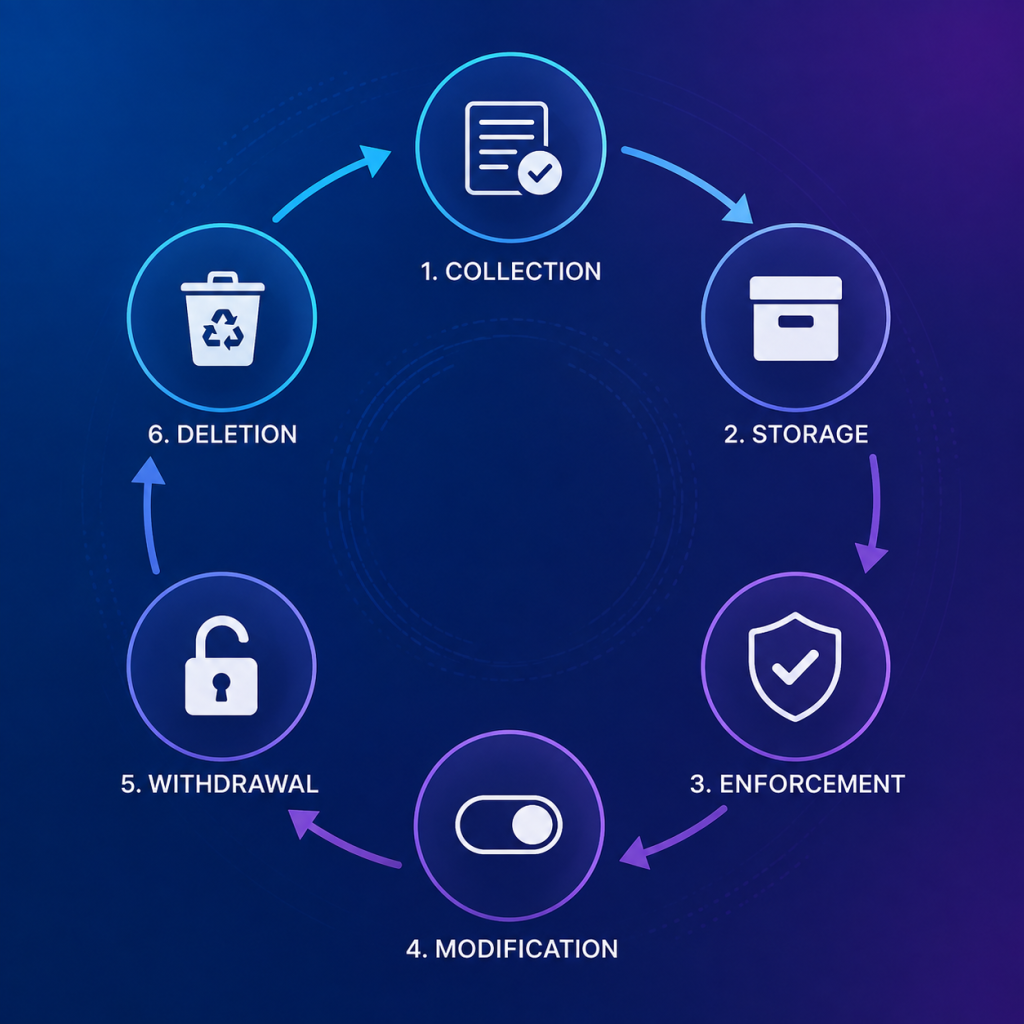
Much of the conversation around consent tooling focuses narrowly on the moment of collection, the banner, the checkbox, the form. But consent lifecycle management in India under DPDP spans a much longer arc: collection, storage, enforcement, modification, withdrawal, and eventual data deletion, each with its own compliance obligations.
Collection must be explicit, itemized, and tied to a specific purpose, ideally verified through a strong authentication mechanism like OTP.
Storage requires policy versioning, meaning if your privacy policy or consent terms change, the system needs to track which version of the policy a user consented under, not just the latest version.
Enforcement is the ongoing, real-time layer that ensures data is only used for the purposes actually consented to, at the API and field level, for as long as that consent remains valid.
Modification covers scenarios where a user wants to change their consent, opting into some purposes while opting out of others, without needing to withdraw and re-consent entirely.
Withdrawal must trigger immediate enforcement changes across every connected system, not a delayed batch process.
Deletion ties back to data minimization principles, once a purpose is no longer valid or consent is withdrawn and no legal retention obligation exists, the underlying data should be eligible for deletion, not indefinitely retained “just in case.”
A platform that only handles the first stage, collection, is not a lifecycle solution. It’s a form builder. Real consent lifecycle management requires all six stages to be connected end-to-end, with each stage feeding auditable evidence into the next. This is precisely the architecture gap that separates generic tools from purpose-built platforms: generic tools optimize for the collection moment because that’s what’s visible to end users, while the harder engineering, enforcement, modification handling, and lifecycle-linked deletion gets deprioritized or ignored entirely.
7. Security as a Compliance Requirement, Not an Add-On
DPDP’s “reasonable security safeguards” obligation is not a soft suggestion, it’s a legal requirement tied directly to breach notification duties and liability exposure. This is where the line between a Secure Consent Management Platform and a merely functional one becomes critical.
Security-hardened consent infrastructure should include mutual TLS (mTLS) for service-to-service communication, IP whitelisting for administrative access, PKI-based authentication for system integrations, and strong identity controls for both administrators and end users. These aren’t generic “nice to have” security features, they map directly to DPDP’s safeguards obligation and reduce the organization’s exposure in the event of an incident.
An API-Based Consent Management Platform built with security-first architecture also matters for a more practical reason: consent enforcement only works if the systems checking consent status can trust the API responses they’re receiving. If the consent API itself isn’t secured against tampering or spoofing, the entire enforcement chain becomes unreliable, which defeats the purpose of building enforcement logic at all.
8. Enterprise Reality: Integration, Multi-Tenancy, and Scale
For larger Indian enterprises, banks, NBFCs, insurers, telecom operators, DPDP compliance cannot exist in isolation from the systems already running the business. A Global Consent Management Platform with DPDP capability needs to plug into existing enterprise infrastructure, not require a rip-and-replace of core systems.
This means native support for integration with systems like Core Banking Solutions, Enterprise Service Bus platforms, treasury and risk management systems, asset and investment management platforms, non-performing asset tracking systems, and HR/customer information systems commonly used across Indian financial services and enterprise environments. Real-time event communication through webhooks allows consent status changes to propagate instantly to every connected system, critical for satisfying the immediate-enforcement requirement DPDP places on withdrawal.
Multi-tenant governance also matters more in the Indian enterprise context than many vendors initially design for. A single organization might need to manage consent separately across business units, subsidiaries, or client organizations, each with its own administrative boundary, while still allowing centralized platform-level oversight for group compliance and audit purposes. This is the difference between a Unified Consent Management System that scales with organizational complexity and a single-tenant tool that requires a separate deployment for every business unit.
9. Developer Experience Matters More Than Vendors Admit
A Developer-Friendly Consent Management Platform isn’t a marketing nicety, it’s often the deciding factor in whether consent enforcement actually gets implemented correctly across an organization’s full technology stack. If integrating consent checks into an application requires weeks of custom engineering per system, teams will inevitably cut corners, leaving gaps in enforcement coverage.
Real-time consent enforcement APIs and SDKs, clear documentation, and an Embedded Consent Management Platform model that lets consent flows live directly inside existing applications (rather than redirecting users to a separate domain) all reduce the friction of proper implementation. This matters because a Real-time Consent Orchestration Platform is only as effective as its actual deployment coverage, a beautifully engineered enforcement API that only 60% of an organization’s systems actually call is still a 40% compliance gap.
10. Making the Case for Purpose-Built Infrastructure
Stepping back, the core argument here is straightforward: DPDP is a distinct regulatory framework with distinct technical requirements, and treating consent management as an interchangeable commodity, where any GDPR-era tool with an India-branded landing page will do, creates real legal and operational exposure.
A genuinely purpose-built Intelligent Consent Management Platform for the Indian market needs to combine several things generic tools rarely deliver together: OTP-authenticated consent capture across the channels Indian users actually use, real-time and granular enforcement down to the field and purpose level, immutable audit trails that hold up under regulatory scrutiny, automated Data Principal rights and grievance workflows with DPO escalation, enterprise-grade security hardening aligned to DPDP’s safeguards obligation, and integration architecture built for the systems Indian enterprises actually run.
This is the underlying philosophy behind SecureCMS: DPDP compliance isn’t a checkbox to bolt onto existing infrastructure, it’s an operating layer that needs to be engineered around the specific letter and intent of Indian law, verified through auditable evidence, and enforced in real time rather than documented in policy alone. Organizations evaluating any Consent Management Platform should hold vendors to this standard, asking not “do you have a consent banner” but “can you prove, in an audit, exactly when, how, and from whom you obtained consent, and can you show that withdrawal was enforced within seconds, not days.”
That is the bar DPDP sets. Purpose-built infrastructure is what meets it.
Frequently Asked Questions
1. What makes a DPDP Consent Management Platform different from a standard GDPR consent tool?
A DPDP-specific platform is built around obligations unique to Indian law, including OTP-verified consent capture, instant withdrawal enforcement, DPO-led grievance escalation, and Data Principal rights like correction and nomination. GDPR-era tools typically lack native support for these workflows because no equivalent requirements exist under GDPR in the same form.
2. How does consent withdrawal actually get enforced under DPDP, and why does it matter?
DPDP requires that withdrawing consent be as easy as giving it, and that data processing stop promptly once consent is withdrawn. A purpose-built platform enforces this through real-time APIs that block downstream data access immediately after withdrawal, rather than relying on a database flag that other systems may continue to ignore.
3. Why is immutable audit logging important for DPDP compliance?
Under DPDP, the burden of proving valid consent rests with the organization, not the individual. Immutable, tamper-evident logs (such as blockchain-backed audit trails) give organizations verifiable, court- and regulator-ready evidence of when and how consent was obtained, modified, or withdrawn, something a standard mutable database record cannot reliably guarantee.
4. Can a small startup realistically implement DPDP-compliant consent management, or is it only for large enterprises?
Startups can and should implement DPDP compliance early using a practical checklist: mapping data collection points, verifying authenticated consent capture, confirming real-time enforcement (not just logging), and ensuring DSR and grievance workflows exist from day one. API-first, developer-friendly platforms make this achievable without large upfront engineering investment.
5. How does purpose limitation get enforced in practice, beyond just being written into a privacy policy?
Purpose limitation is enforced through field-level and purpose-level access controls built into real-time consent APIs. Rather than relying on documentation alone, the platform actively checks consent status before allowing a system to access or process specific data fields for a specific purpose, blocking unauthorized use at the point of access rather than after the fact.