The smart contract security audit market has exploded. Dozens of firms now claim to offer comprehensive blockchain security reviews. Some have exceptional track records and deep technical expertise. Others have polished websites, professional-looking reports, and methodologies that amount to little more than running your code through an open-source scanner.

The stakes are not abstract. Billions of dollars in user funds sit in smart contracts across DeFi, NFT, and Web3 infrastructure. When a security firm misses a critical vulnerability, the consequences fall on your users. Choosing the right audit partner is one of the most consequential technical decisions your team will make.
This guide gives you a systematic framework for evaluating audit firms, separating substance from surface, and finding a partner whose capabilities actually match your protocol’s risk profile.
Start With Track Record, Not Marketing
The most important filter you can apply to any audit firm is this: what have they actually caught? Not what they claim to catch. What specific vulnerabilities, in what protocols, have they identified and documented?
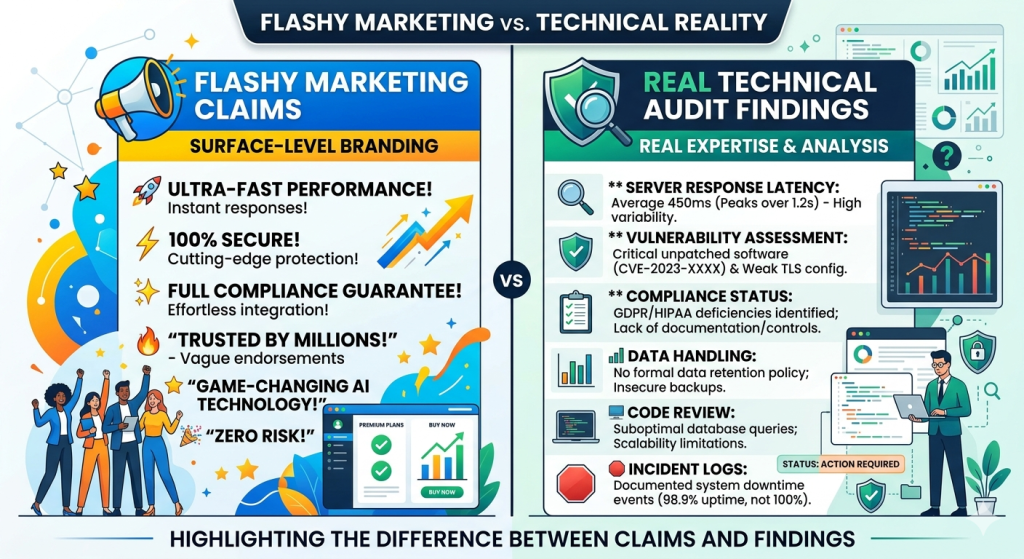
Reputable firms publish their public audit reports. Review them. Look for findings that go beyond obvious patterns. Critical vulnerabilities in complex logic, economic attack vectors, and subtle reentrancy paths are what separates thorough auditors from those who run basic checks.
Also look at what happened to protocols they audited. If a protocol received a clean report and was exploited shortly after, that is not automatically the auditor’s fault. However, if multiple firms have a pattern of clean reports followed by exploits, that is a signal worth taking seriously.
Understand the Difference Between Automated and Manual Audits
This is the single most important technical distinction in the audit market. Many founders do not realize that the word ‘audit’ covers an enormous range of actual methodologies.
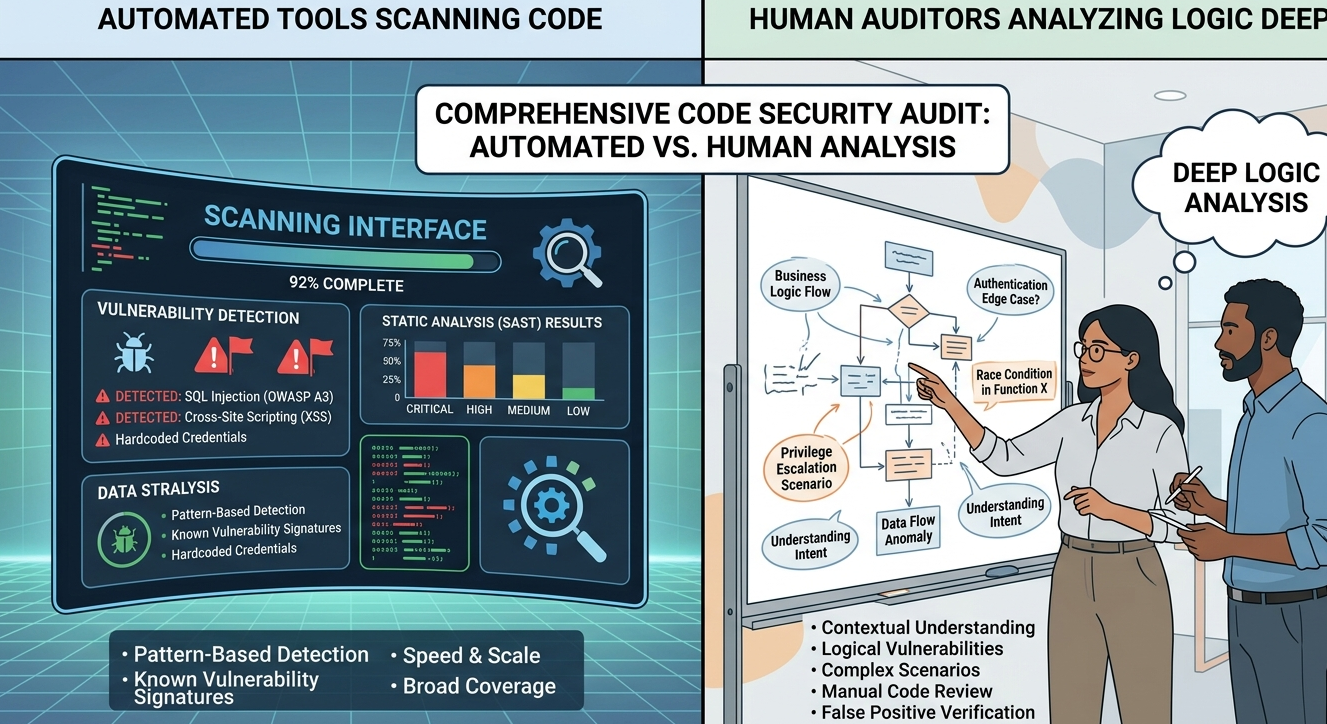
Automated audits use tools like Slither, Mythril, or proprietary scanners to analyze bytecode or source code for known vulnerability patterns. They are fast, often inexpensive, and useful for catching common issues. However, they are fundamentally pattern-matching systems. They cannot understand the intent of your code, trace complex economic logic, or identify vulnerabilities that emerge from the interaction between multiple contracts.
Manual audits require experienced auditors who read your code the way a sophisticated attacker would. They trace execution paths, consider edge cases, and ask what could go wrong that the code’s authors did not anticipate. This approach is slower and more expensive, but it catches vulnerabilities that automated tools miss entirely.
The best firms combine both. Automated tools handle the known pattern library efficiently. Human auditors focus their time on logic, architecture, and economic design. Ask any firm you are evaluating to describe their methodology in specific terms. Generic answers about being thorough are not enough.
Evaluate the Auditors, Not Just the Firm
A firm is only as good as the people doing the actual work. Ask who will be assigned to your audit. Look at their backgrounds. Experienced smart contract auditors typically have deep Solidity expertise, a history of participating in bug bounties, and ideally some track record of finding vulnerabilities in production protocols.
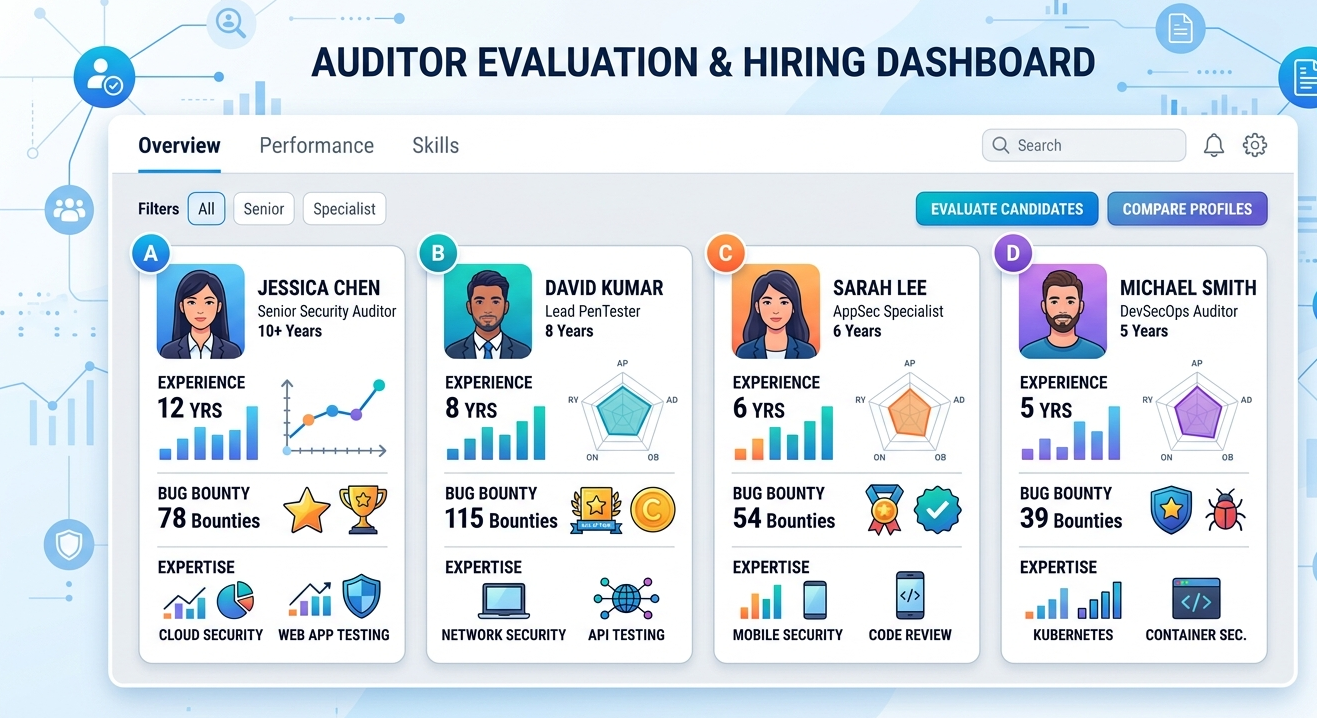
Be cautious of firms that pitch senior talent in the sales process and then assign junior staff to the actual engagement. Ask directly whether the people you are meeting will be the ones auditing your code. Get it confirmed in writing.
Additionally, look for auditors who specialize in your protocol type. A firm with a strong background in gaming NFT contracts may not be the right fit for a complex DeFi protocol with intricate tokenomics. Protocol type expertise matters.
Check How They Handle Your Specific Protocol Type
Different protocol types carry different risk profiles and require different audit expertise. DeFi protocols need auditors who understand flash loans, oracle manipulation, liquidity mechanics, and economic attack surfaces. NFT projects have different concerns around minting logic, royalty handling, and metadata integrity. Bridge contracts require expertise in cross-chain message verification and asset locking mechanics.
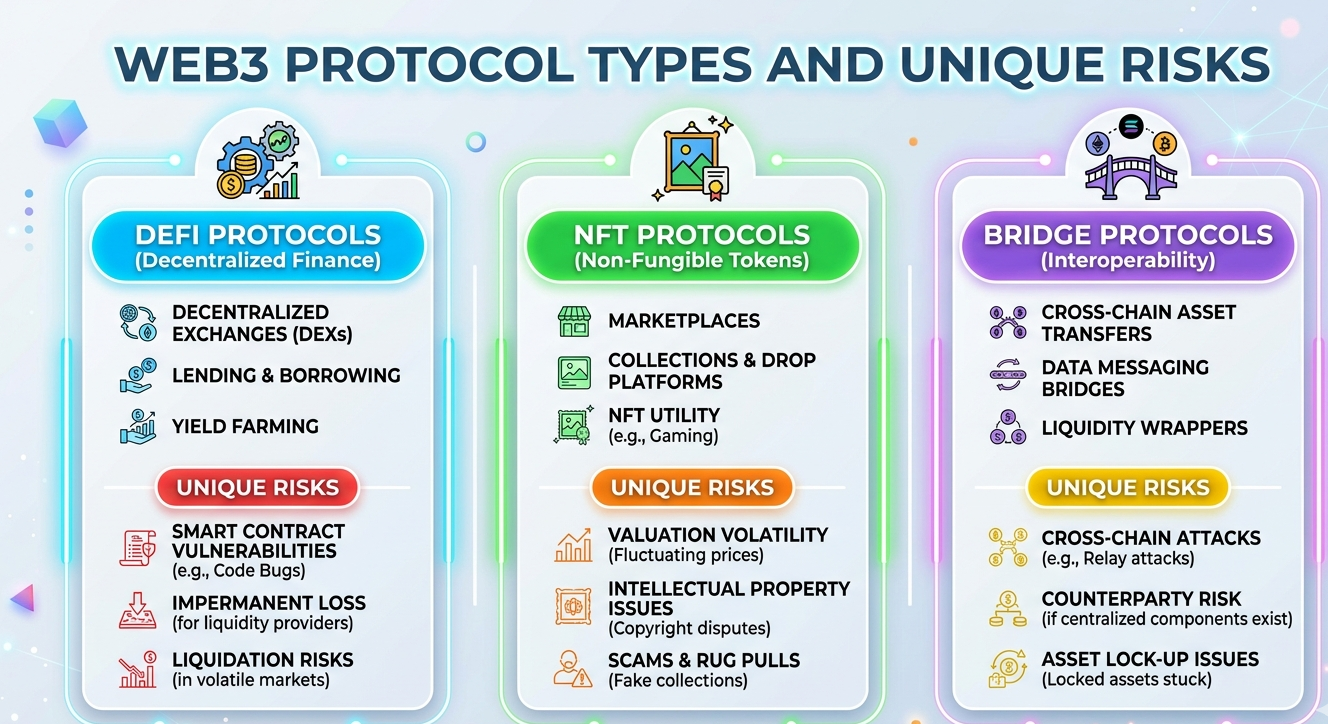
Ask firms specifically about their experience with protocols similar to yours. Ask for examples of relevant findings from comparable projects. A firm that cannot point to specific relevant experience in your protocol category is a less reliable choice than one that can.
Scope Definition: A Critical Differentiator
How a firm defines and manages audit scope tells you a great deal about their professionalism. Scope definition should be a collaborative process. The firm should review your codebase, ask detailed questions about intended functionality, and propose a scope that covers all meaningful attack surfaces.
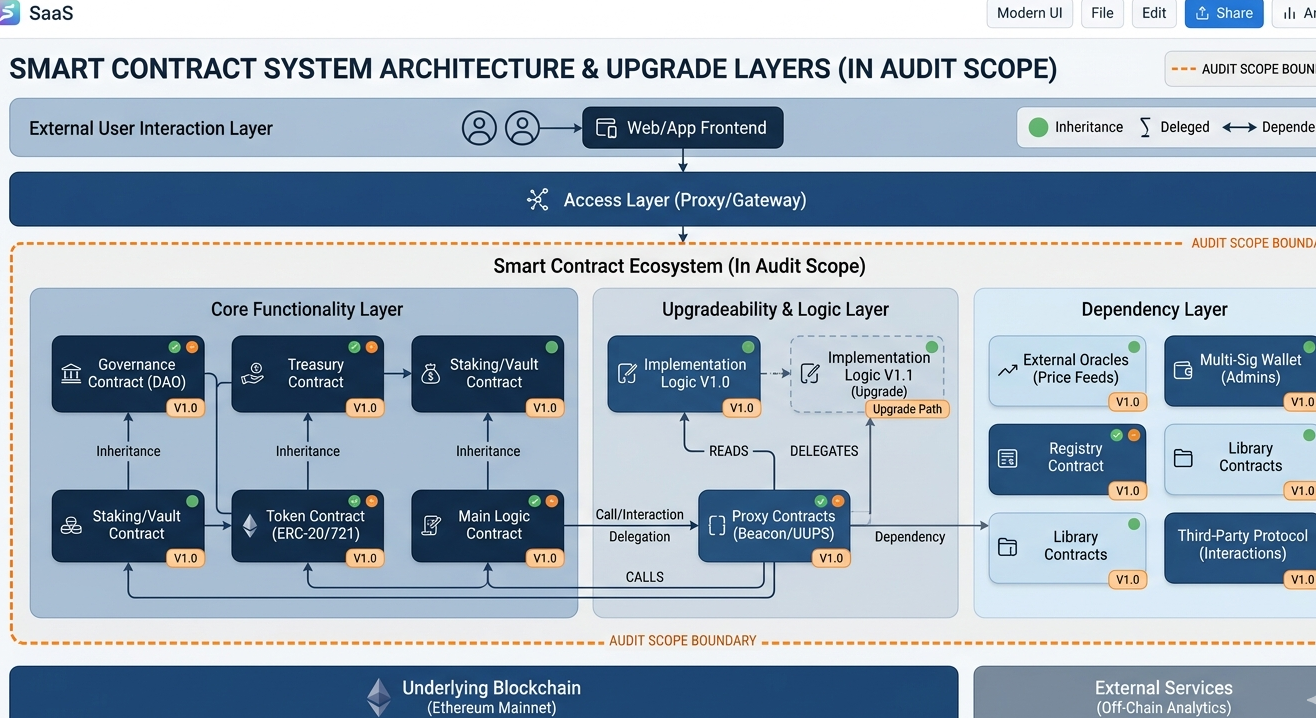
Red flags in scope definition include overly broad scopes designed to inflate hours, overly narrow scopes that exclude components that clearly matter, and firms that accept your scope definition without pushback. A good auditor will tell you when you are proposing to exclude something that should be included.
Make sure the scope explicitly covers all contracts in your system, including any dependencies, proxies, and upgrade mechanisms. Upgrade logic is a common source of vulnerabilities that narrow scopes miss.
Remediation Support: Often Undervalued
The audit report is not the end of the engagement. It is the beginning of the critical phase. Your team will address findings, and those fixes need to be verified. A finding marked as resolved is only actually resolved if a qualified auditor confirms the fix is correct and has not introduced new issues.

Ask every firm how they handle remediation review. Some include it in the base price. Others charge separately. Some provide a single round of review. Others provide multiple iterations.
Also ask how they communicate during the audit. The best firms maintain active dialogue throughout the engagement, flagging critical findings as they emerge rather than waiting for the final report. This allows your team to begin working on the most severe issues before the engagement ends.
Understand What They Will Not Catch
Any auditor who claims their review will make your protocol completely safe is either uninformed or dishonest. Responsible firms are transparent about the limitations of their methodology.
Pre-deployment audits evaluate your code at a specific point in time. They cannot account for how market conditions might create new attack surfaces, how future upgrades might interact with current logic, or how newly discovered vulnerability classes might apply to your contracts.
This is not a criticism of auditing. It is an honest description of what auditing is and is not. Understanding this distinction is important because it affects how you should think about security holistically. Pre-deployment review addresses the known-at-time-of-review risks. Post-deployment monitoring addresses the evolving risk landscape.
SecureDApp’s Solidity Shield is designed specifically for the pre-deployment phase. It combines deep automated analysis with a curated vulnerability library to give your team comprehensive coverage before launch, ensuring that the known risk surface is as small as possible when you go live.
Pricing Transparency and Contract Terms
Clear pricing is a quality signal. Firms that provide detailed, itemized quotes with specific deliverables, timelines, and scope definitions are easier to hold accountable than firms that provide vague estimates.
Review the contract carefully. Understand what is included in the base price, what triggers additional charges, and what the firm’s liability looks like if they miss a critical vulnerability. Liability provisions vary enormously across the industry. Some firms offer warranties. Others disclaim all liability. Know what you are agreeing to.
Also clarify publication rights. Will the audit report be made public? Many protocols publish their audit reports as a trust signal for users. If confidentiality is important to your strategy, confirm the firm’s policies around report publication.
The Role of Tooling and Automation
Modern audit workflows increasingly integrate specialized tools. Slither, Echidna, Foundry-based fuzzing, and formal verification tools like Certora are all part of the serious auditor’s toolkit. Ask firms what tools they use and how those tools are integrated into their manual review process.
Tooling is not a substitute for expertise. However, firms that use no tools at all are likely missing efficiency and coverage that tooling provides. Firms that rely exclusively on tools are almost certainly missing the depth that human expertise delivers. The right answer is a thoughtful combination of both.
Solidity Shield integrates automated vulnerability detection with deep Solidity-specific analysis, giving development teams a powerful layer of pre-audit preparation and ongoing security coverage that complements the work of human auditors.
Making Your Final Decision
After evaluating several firms against these criteria, you will likely find that the field narrows significantly. A few firms will stand out for their transparency, their specific expertise in your protocol type, their documented track record, and their clear explanation of methodology and scope.
Do not make the final decision purely on price. The cost difference between a thorough audit and a superficial one is trivial compared to the cost of a serious exploit. Make the decision based on the evidence of capability and the credibility of their approach.
Smart contract security is a discipline, not a transaction. The firms worth working with understand that and will approach your engagement accordingly.
Frequently Asked Questions
How many firms should I get quotes from before choosing?
Three to five firms is typically sufficient for meaningful comparison. Getting more than that often creates decision fatigue without adding useful information. Focus on depth of evaluation over breadth.
Should I choose a local firm or is geography irrelevant?
For smart contract security, expertise matters far more than location. The best auditors work remotely with clients globally. Do not limit your search geographically. Focus on track record, methodology, and fit.
What should I do if two firms give very different assessments of the same codebase?
Different assessments are normal and informative. Ask each firm to explain their reasoning in detail. Significant divergence often reveals either different scope assumptions or different methodological depth. Understanding why they differ helps you evaluate both.
Is it worth using Solidity Shield alongside a manual audit firm?
Yes. Using Solidity Shield during development and before engaging a manual audit firm often results in cleaner code going into the audit, allowing human auditors to focus their time on the most complex logical issues rather than catching basic patterns.
Can I rely on a firm’s certification claims as proof of quality?
Certifications and affiliations can be useful indicators, but they should not replace direct evaluation of track record and methodology. Ask for specific evidence of findings rather than relying on credentials alone.